Scientists Propose Existence of Naked Singularities That Could Solve Physics’ Biggest Mysteries
Physicists suggest primordial naked singularities from the early universe could offer a unique window into the extreme gravity hidden inside black holes.
Theoretical physicists have proposed a provocative new addition to the early universe’s inventory: primordial naked singularities. Unlike black holes, which cloak their innermost gravitational extremes behind an impenetrable event horizon, these hypothetical objects would leave their central regions exposed to the cosmos. If these structures formed during the dawn of time, they could serve as unique natural laboratories for testing the boundaries of general relativity and searching for the long-sought laws of quantum gravity.
- Researchers suggest that the violent gravitational collapse of matter in the early universe could produce naked singularities rather than standard black holes.
- These objects might exist either as fleeting, transient phenomena or as enduring, stable structures.
- While the proposal offers a potential bridge between gravity and quantum mechanics, it remains entirely theoretical and awaits rigorous observational verification.
The study, published in the Journal of Cosmology and Astroparticle Physics by Pankaj Joshi of Ahmedabad University and Sudip Bhattacharyya of the Tata Institute of Fundamental Research, explores the mechanics of gravitational collapse in the infant cosmos. By modeling how dense regions of matter might have imploded long before the first stars ignited, the researchers suggest that the outcome of such collapses is not limited to black holes. Instead, specific conditions may allow for the creation of singularities that remain visible to distant observers.
Peering Beyond the Event Horizon
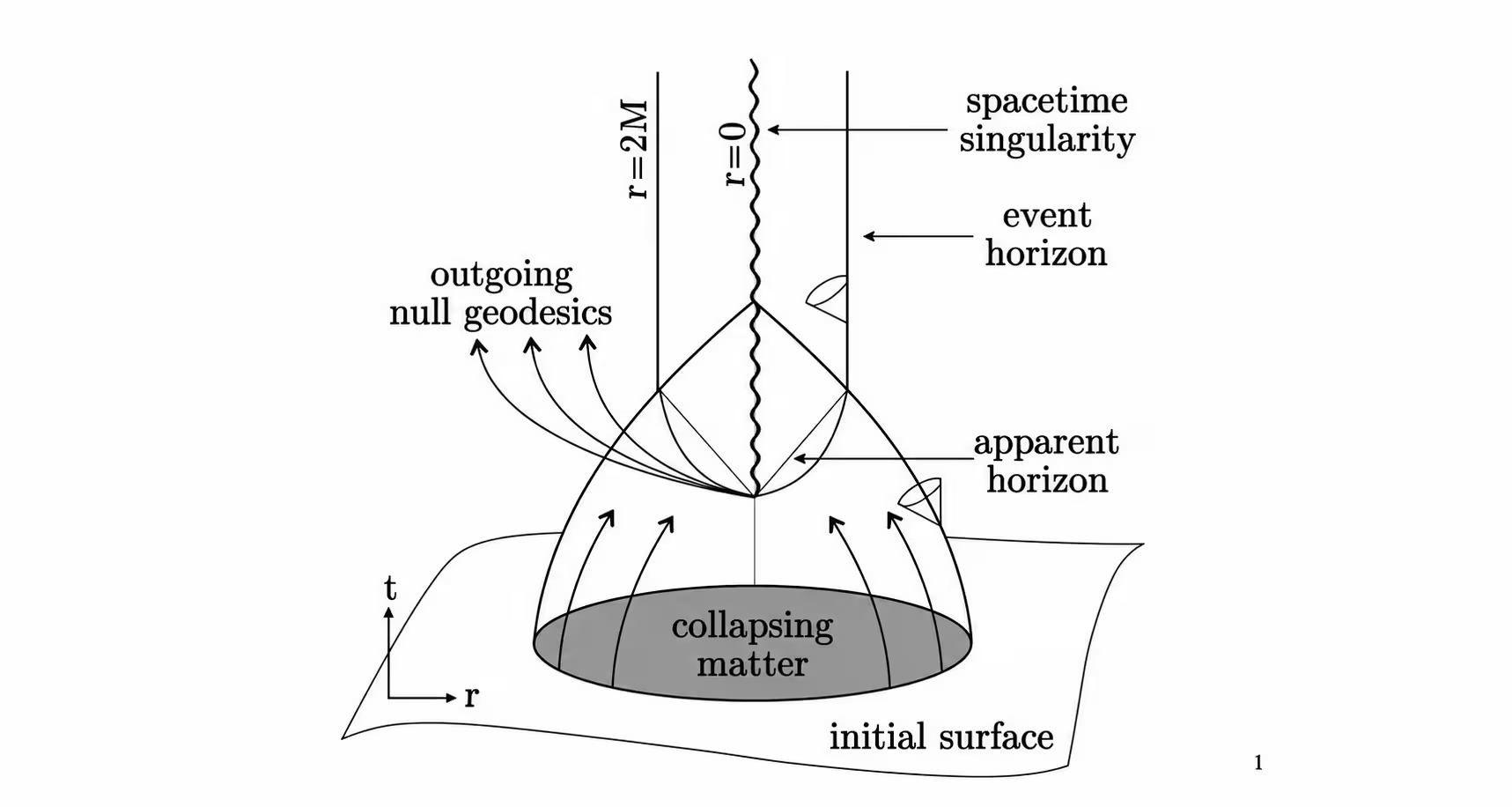
The fundamental allure of this theory lies in the limitation of our current tools. When studying black holes, astronomers are effectively limited to observing the periphery. Because an event horizon serves as a one-way boundary for light and information, any physical processes occurring at the central singularity—where density reaches mathematically infinite levels in classical models—are perpetually hidden. A naked singularity would strip away this veil, potentially providing a window into the intersection of quantum effects and intense gravitational fields.
However, “naked” in this context refers to the absence of a horizon, not necessarily an object that is easily spotted. Detecting such an entity would require distinguishing its unique signature from other high-energy phenomena, a task that currently demands the development of clear, testable observational predictions.
Formation in the Primordial Soup
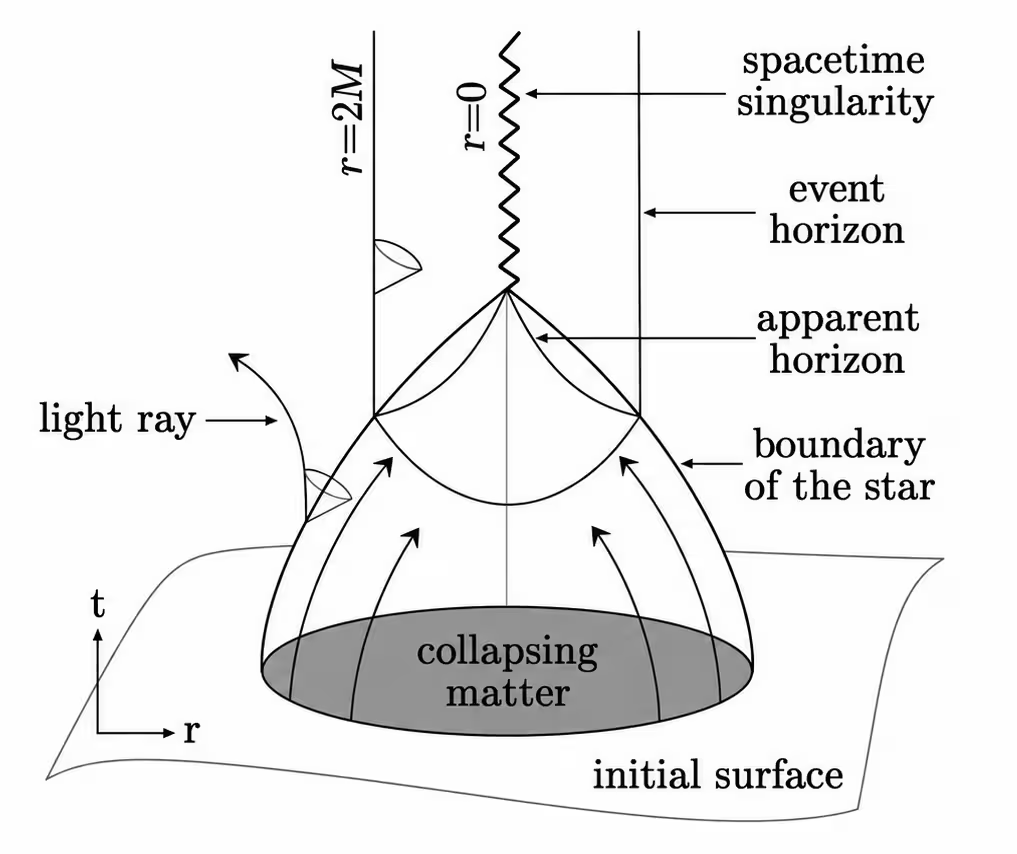
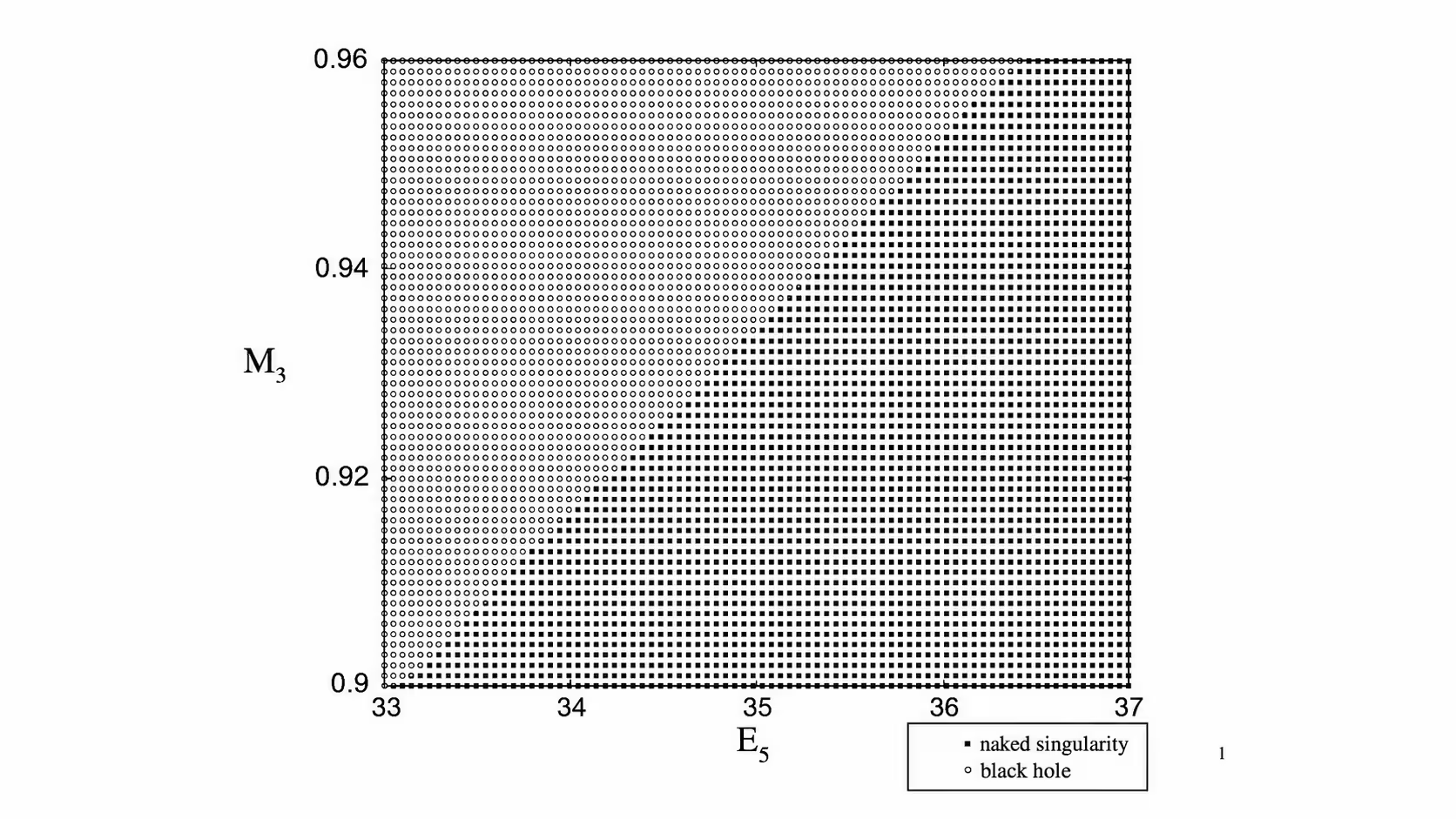
The researchers utilized various models involving fluids and scalar fields to simulate how the early universe might have birthed these objects. By analyzing how density fluctuations in the pre-stellar era amplified into gravitational collapses, the team identified potential pathways that lead to exposed singularities. The study categorizes these into “event-like” singularities—which might be transient, appearing briefly during a collapse—and “object-like” configurations that could potentially persist as stable entities.
The validity of these models hinges on how accurately they describe the behavior of matter under extreme pressure and gravity. This, in turn, influences the hunt for dark matter. While primordial black holes are already considered candidates for this mysterious substance, primordial naked singularities would require a distinct set of parameters, including calculations regarding their mass, abundance, and how they might manifest in our current cosmic epoch.
Bridging Theory and Observation
The challenge for future research is to move beyond the mathematical framework and identify the physical fingerprints of these objects. Because different models of gravity can produce similar “shadow” effects—as highlighted in studies featured in Physical Review D—scientists must exercise extreme caution. An observation that looks like a singularity may be interpreted in several ways, necessitating a multi-faceted approach to verification.
As the scientific community continues to reconcile the microscopic world of quantum mechanics with the macroscopic curvature of general relativity, the possibility of naked singularities provides a compelling focus. By treating them as theoretical candidates, physicists are establishing a roadmap for future observations, aiming to determine whether these extreme regions are merely a mathematical curiosity or a tangible part of the universe’s hidden history.
Further Reading
This article has been fact checked for accuracy, with information verified against reputable sources. Learn more about us and our editorial process.
Last reviewed on .
Article history
- Latest version
Reference(s)
- Joshi, Pankaj S.., et al. “Primordial naked singularities.” Journal of Cosmology and Astroparticle Physics, vol. 2025, no. 01, January 9, 2025, pp. 034 IOP Publishing, doi: 10.1088/1475-7516/2025/01/034. <https://iopscience.iop.org/article/10.1088/1475-7516/2025/01/034>.
- <https://ahduni.edu.in/>.
- “Tata Institute of Fundamental Research | TIFR.” <https://www.tifr.res.in/>.
- Joshi, Ashok B.., et al. “Shadow of a naked singularity without photon sphere.” Physical Review D, vol. 102, no. 2, July 7, 2020 American Physical Society (APS), doi: 10.1103/PhysRevD.102.024022. <https://journals.aps.org/prd/abstract/10.1103/PhysRevD.102.024022>.
Cite this page:
- Posted by Aisha Ahmed