NASA’s Space Lab Cooling Atoms to Near Absolute Zero Unveils New Quantum Frontier
NASA’s upgraded Cold Atom Lab on the ISS creates Bose‑Einstein condensates in microgravity, opening a new window into quantum physics.
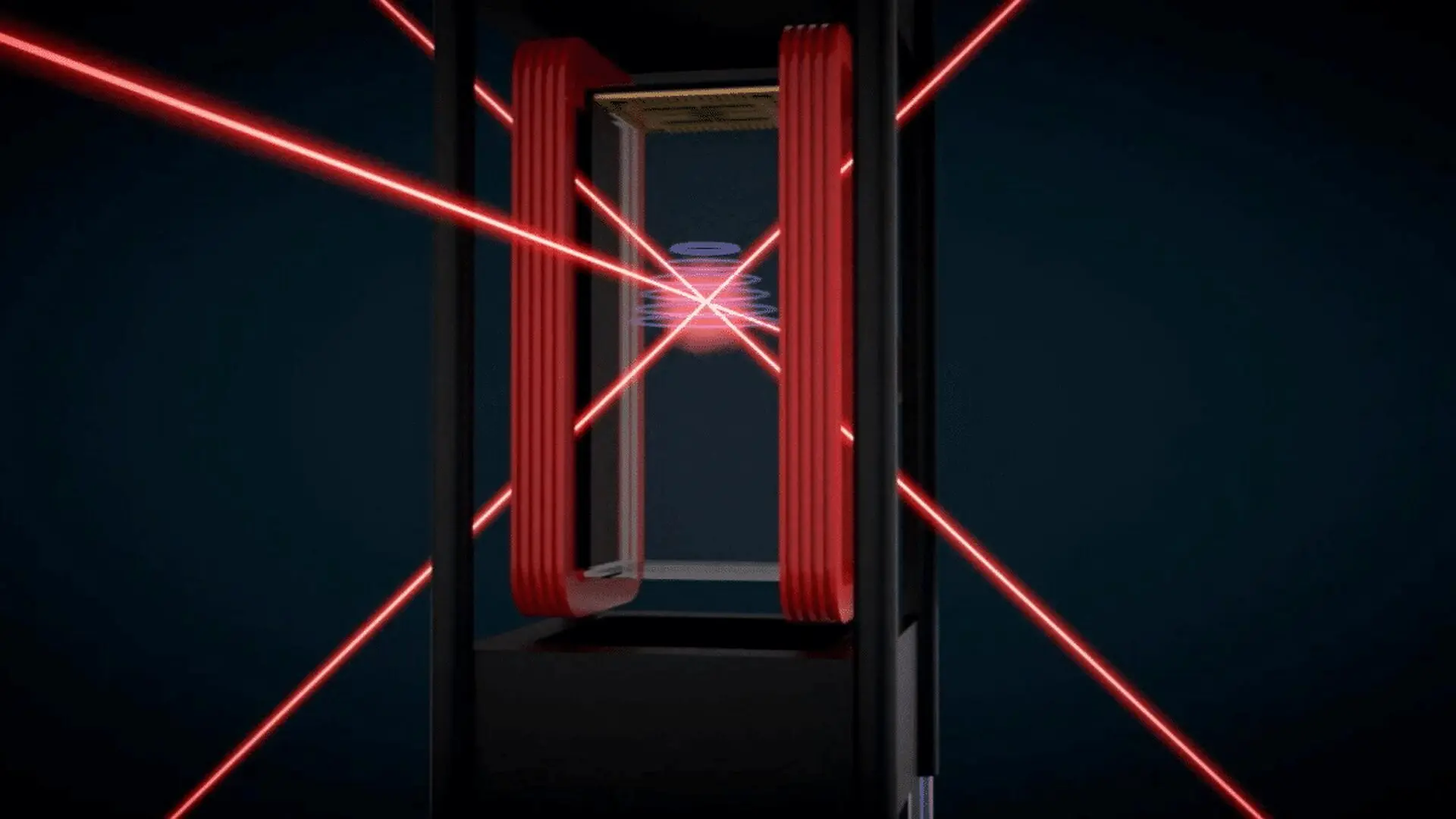
NASA’s Cold Atom Lab aboard the International Space Station has received its fourth major hardware upgrade, giving researchers the ability to explore quantum matter in a weightless environment that cannot be replicated on Earth.
Microgravity on the ISS Provides an Unmatched Platform for Quantum Experiments
According to NASA, the station’s sustained microgravity eliminates the constant pull of Earth’s gravity on ultracold atoms, allowing scientists to monitor their quantum wavefunctions for far longer intervals, which translates into cleaner data and the detection of subtle effects that would otherwise vanish.
Bose‑Einstein condensation, a state first theorized in 1924 by Albert Einstein and Indian physicist Satyendra Nath Bose, was only realized experimentally in 1995—a breakthrough that earned the Nobel Prize in Physics.
Bose‑Einstein Condensates Open Pathways to Next‑Generation Technologies
When matter is cooled to within a few billionths of a degree above absolute zero, individual atoms lose their distinct identities and merge into a single coherent quantum entity, offering a macroscopic window into quantum mechanics.
The newly installed upgrade equips the Cold Atom Lab with additional instrumentation, expanding the range of phenomena that can be probed, from superfluid flow to superconducting behavior, and laying groundwork for future quantum devices.
“In the previous century, there was a quantum revolution that led to lasers, cellphones, and MRIs for medical imaging. We’re performing quantum 2.0—direct manipulation of large quantum states—and we hope for similar gains in quantum tech by advancing this science in orbit.”
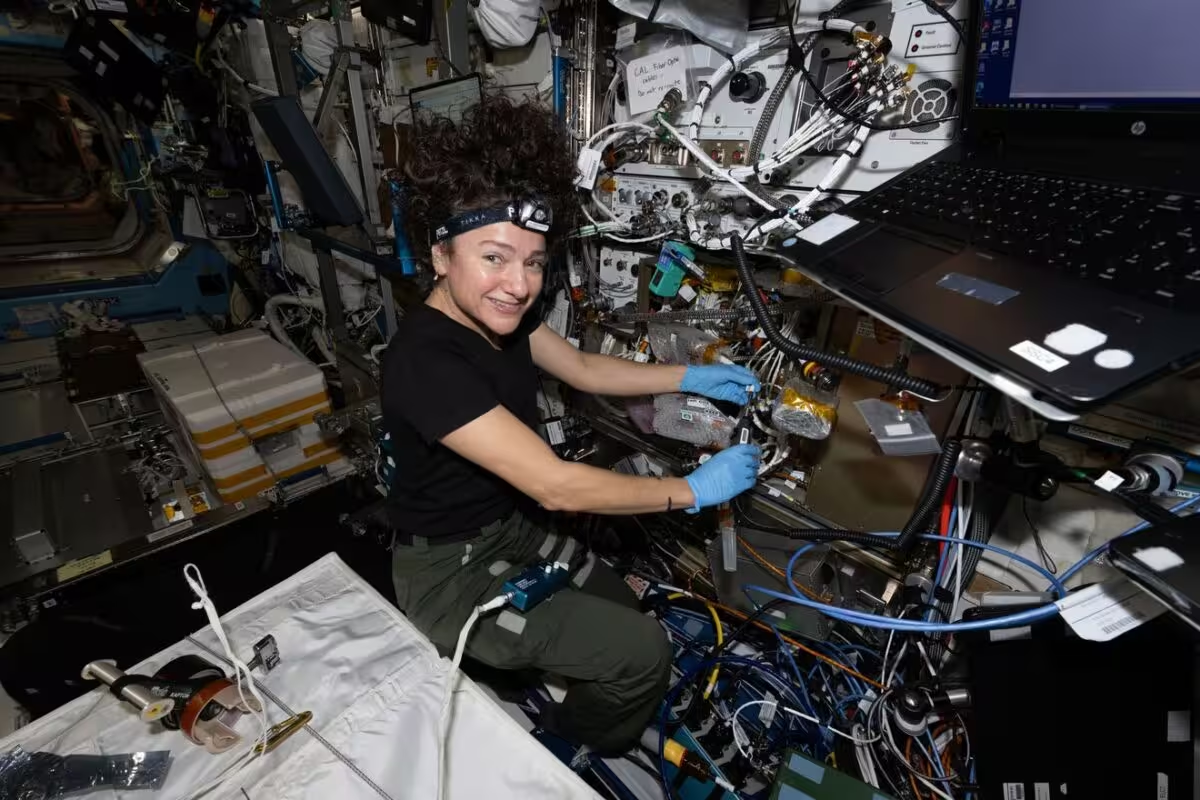
Creating Near‑Absolute‑Zero Conditions in Space Demands Cutting‑Edge Engineering
Inside the lab, strips of rubidium or potassium are heated until they release clouds of atoms into an ultra‑high vacuum chamber; a series of precisely tuned lasers then extracts kinetic energy, slowing the atoms and bringing them close to absolute zero.
In the weightless environment of orbit, these ultracold clouds remain stable for significantly longer than on Earth, giving researchers unprecedented measurement precision.
Jason Williams, a JPL scientist affiliated with the Cold Atom Lab, explained:
“Ultracold matter can behave in ways that are not only unexpected but that also enable extremely precise measurements of time, gravity, and motion. The lab has lots of tools—especially with this latest upgrade—to let us probe the nature of the universe.”
Such high‑resolution measurements could sharpen time‑keeping, improve gravity sensing, and enhance motion detection, with downstream benefits for navigation, scientific instrumentation, and other precision‑dependent technologies.
New Hardware Enhancements Expand the Frontier of Quantum Research
The fourth upgrade adds sophisticated hardware that raises both the complexity and accuracy of experiments, pushing the boundary between classical and quantum physics ever farther outward.
Project manager Kamal Oudrhiri described the importance of this milestone by saying:
“It’s the closest thing we have to controlling the boundary of the quantum world. This new upgrade pushes that boundary even further.”
Each investigation on the International Space Station is not merely a test of existing models but a step toward unlocking capabilities that may one day underpin quantum computers, next‑generation sensors, ultra‑precise clocks, and entirely novel scientific tools.
This article has been fact checked for accuracy, with information verified against reputable sources. Learn more about us and our editorial process.
Last reviewed on .
Article history
- Latest version
Cite this page:
- Posted by Farah Siddiqui