Vesta’s Bright Spots Act As A Light‑Based Archive Pinpointing Fresh Avalanches
Study shows Vesta’s avalanche brightness marks surface freshness, offering a new method to track regolith evolution on airless bodies.
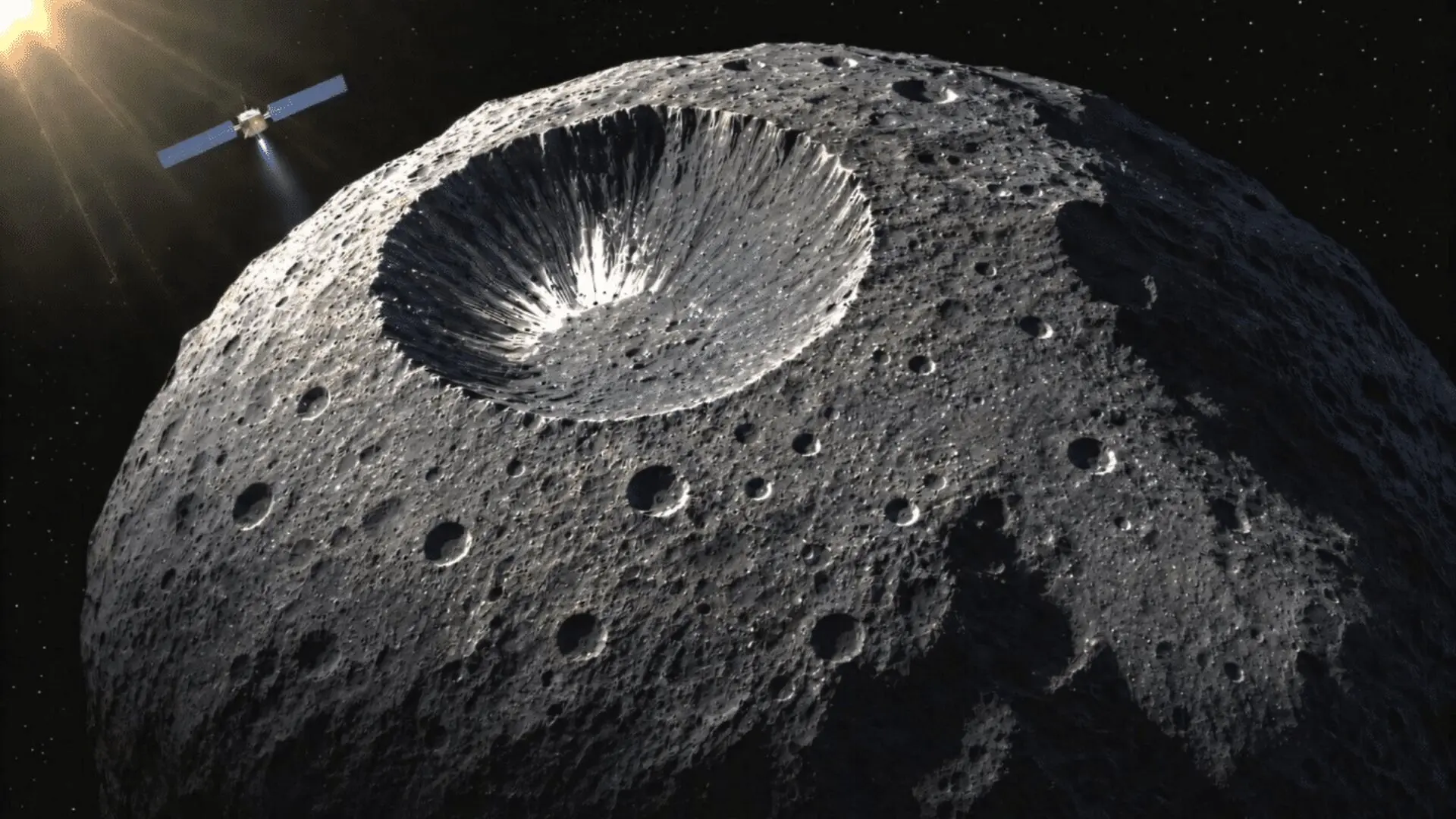
New analysis of Dawn spacecraft photographs shows that subtle variations in reflectance across asteroid Vesta’s landscape can be interpreted as a record of recent landslides, impacts and material transport, providing a novel way to read the geological timeline of an airless world.
In a paper appearing in Astronomy & Astrophysics, researchers combined high‑resolution imaging with sophisticated photometric techniques to demonstrate that the brightest patches consistently coincide with the most recently disturbed surfaces. This approach transforms simple brightness measurements into a diagnostic of surface age where traditional erosion mechanisms are absent.
Dynamic Terrain on Vesta Revealed by Light Patterns
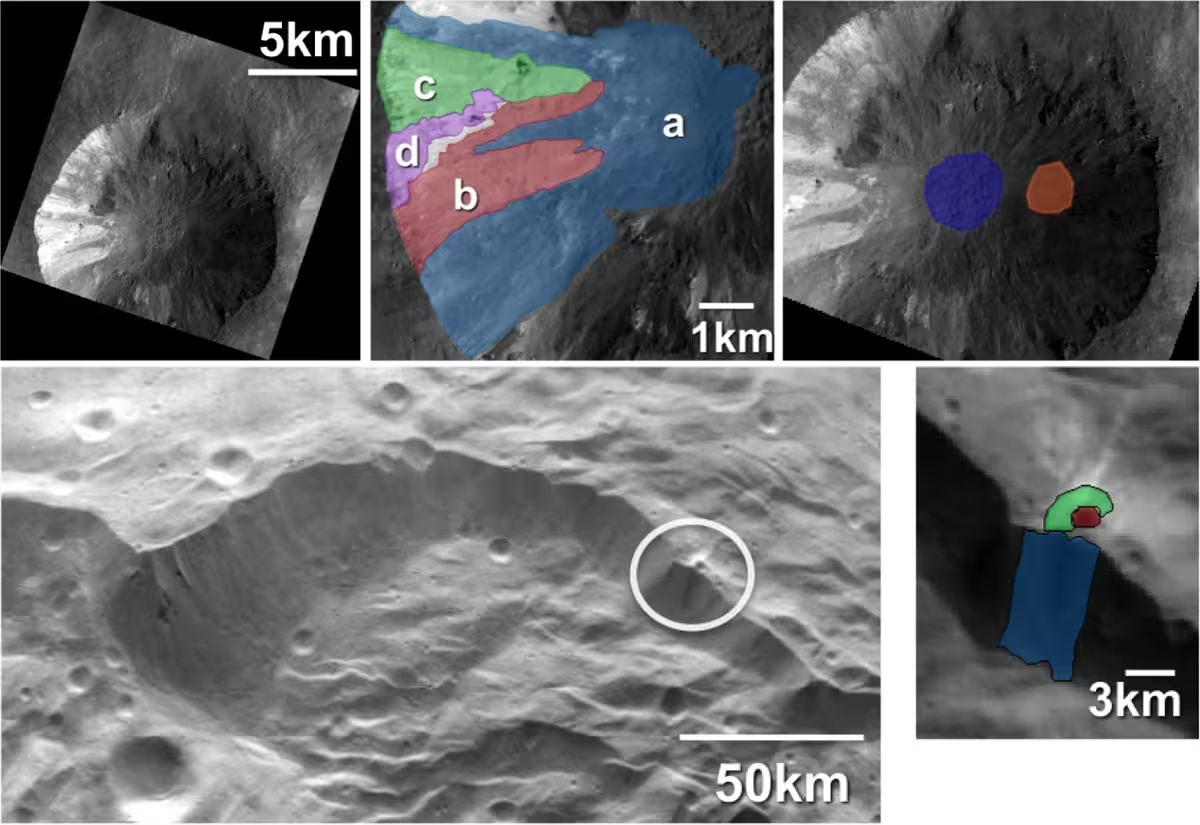
The asteroid’s exterior is constantly reshaped by meteoroid strikes, slope failures and the gradual migration of regolith along crater walls and scarps. The team focused on two illustrative settings: debris flows within Cornelia crater and a newly formed ejecta layer adjacent to the Matronalia Rupes scarp. Both features stand out in Dawn imagery because they reflect significantly more sunlight than the surrounding material. Because reflectance can be affected by particle size, surface roughness, viewing geometry and exposure time, the scientists set out to isolate true surface youth from optical artifacts.
Bayesian Hapke Analysis Extracts Physical Parameters
To translate raw brightness into meaningful surface characteristics, the investigators employed the Hapke photometric model, a standard tool for describing light scattering on particulate media. By embedding the model in a Bayesian framework, they generated probability distributions for key variables such as single‑scattering albedo, macroscopic roughness and grain phase function, rather than single point estimates. This statistical treatment makes uncertainties explicit and allows a robust comparison across different illumination conditions.
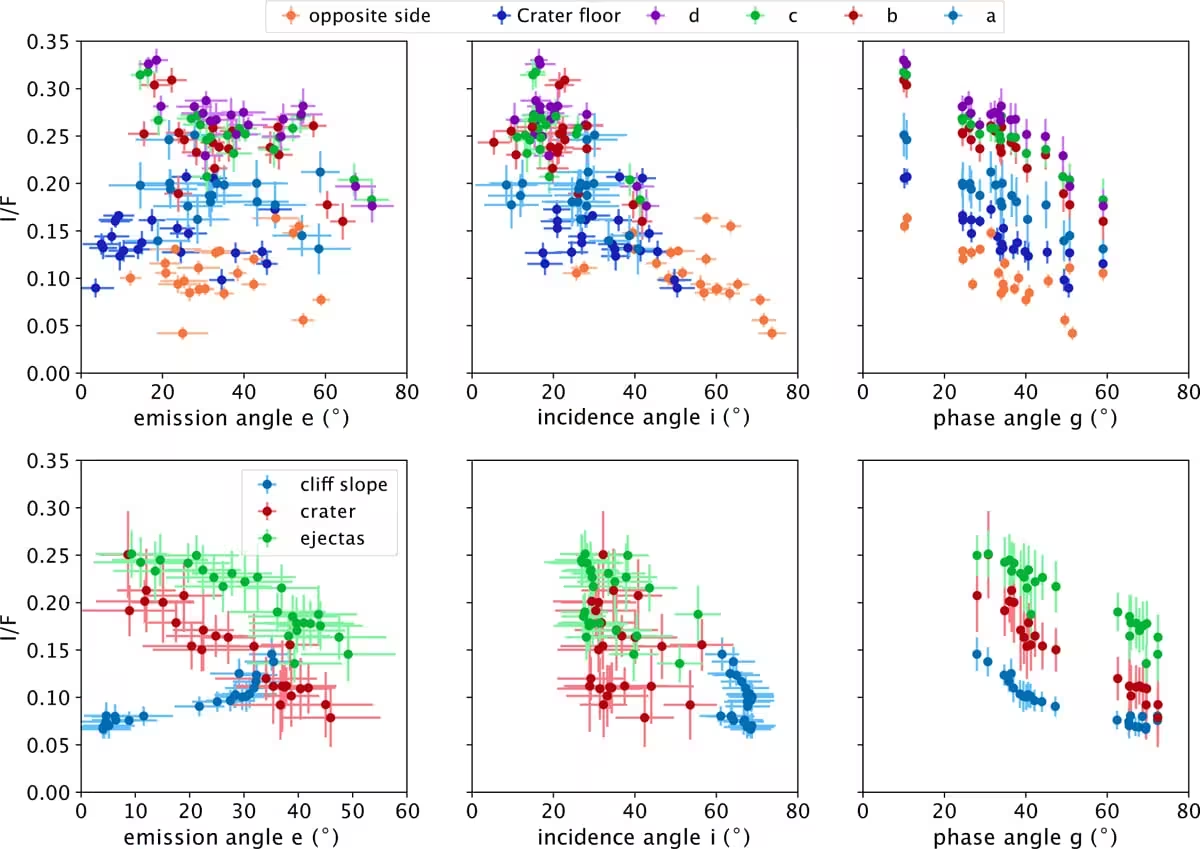
The paper, accessible via Astronomy & Astrophysics, shows that the most reflective zones maintain higher scattering efficiencies even after correcting for viewing geometry and the opposition surge. The consistency supports a direct link between brightness and recent surface disturbance.
Bright Deposits Mark Recent Geological Activity
Comparisons between the Cornelia crater avalanches and the Matronalia Rupes ejecta blanket reveal a uniform pattern: newly mobilized material is consistently more reflective than the older surrounding regolith. In the crater, avalanche flows outshine both the floor and the opposite wall, while the scarp’s fresh ejecta stands out against the subdued background of older deposits.
These brightness differences persist across a range of modeling scenarios, indicating they are not artifacts of the analysis. The authors interpret the data as evidence that mechanical processes—such as landslides and impact excavation—expose or generate surfaces with finer grains or less space‑weathered material, both of which boost reflectance. Over longer periods, micrometeorite bombardment and solar wind darken and homogenize the regolith, erasing the bright signatures.
Extending the Method to Other Airless Bodies
The findings have implications beyond Vesta. Bodies lacking atmospheres, including the Moon, small asteroids and many planetary satellites, preserve their surface histories largely through impact and regolith dynamics. By adding a temporal dimension to photometric measurements, researchers can rank terrains by relative freshness, offering a new comparative tool for estimating regolith turnover rates and surface evolution.
Even without precise absolute ages, the ability to map “young” versus “old” areas based on reflected light helps refine models of how small worlds respond to continuous bombardment. In this sense, brightness becomes a proxy for recent geological processes, turning visual data into a readable chronology of surface change.
Light as a Record of Surface Renewal
By linking optical properties to physical mechanisms, the study provides a pathway for tracking surface renewal where direct sampling is impossible. The combination of spacecraft imaging, photometric modeling and probabilistic inference establishes a template for future investigations of asteroid surfaces and other airless environments.
As missions continue to probe these primitive objects, the approach could pinpoint regions of recent activity, deepening our understanding of how such bodies evolve under the relentless influence of space weathering and impacts. In a realm shaped by vacuum and silence, even modest shifts in reflected light now carry the weight of geological insight.
This article has been fact checked for accuracy, with information verified against reputable sources. Learn more about us and our editorial process.
Last reviewed on .
Article history
- Latest version
Reference(s)
- Nguyen, D.. “Bayesian inversion of the Hapke model on (4) Vesta’s avalanches and ejecta: Photometric constraints on regolith evolution.”, vol. 710, June 1, 2026, pp. A276, doi: 10.1051/0004-6361/202557890. <https://www.aanda.org/articles/aa/full_html/2026/06/aa57890-25/aa57890-25.html>.
Cite this page:
- Posted by Farah Siddiqui