Hidden Mantle Wind Fuels Yellowstone’s Supervolcano, Challenging Classic Plume Model
Study overturns classic view of Yellowstone, suggesting its supervolcano is powered by a wide, horizontal mantle flow rather than a deep rising plume.
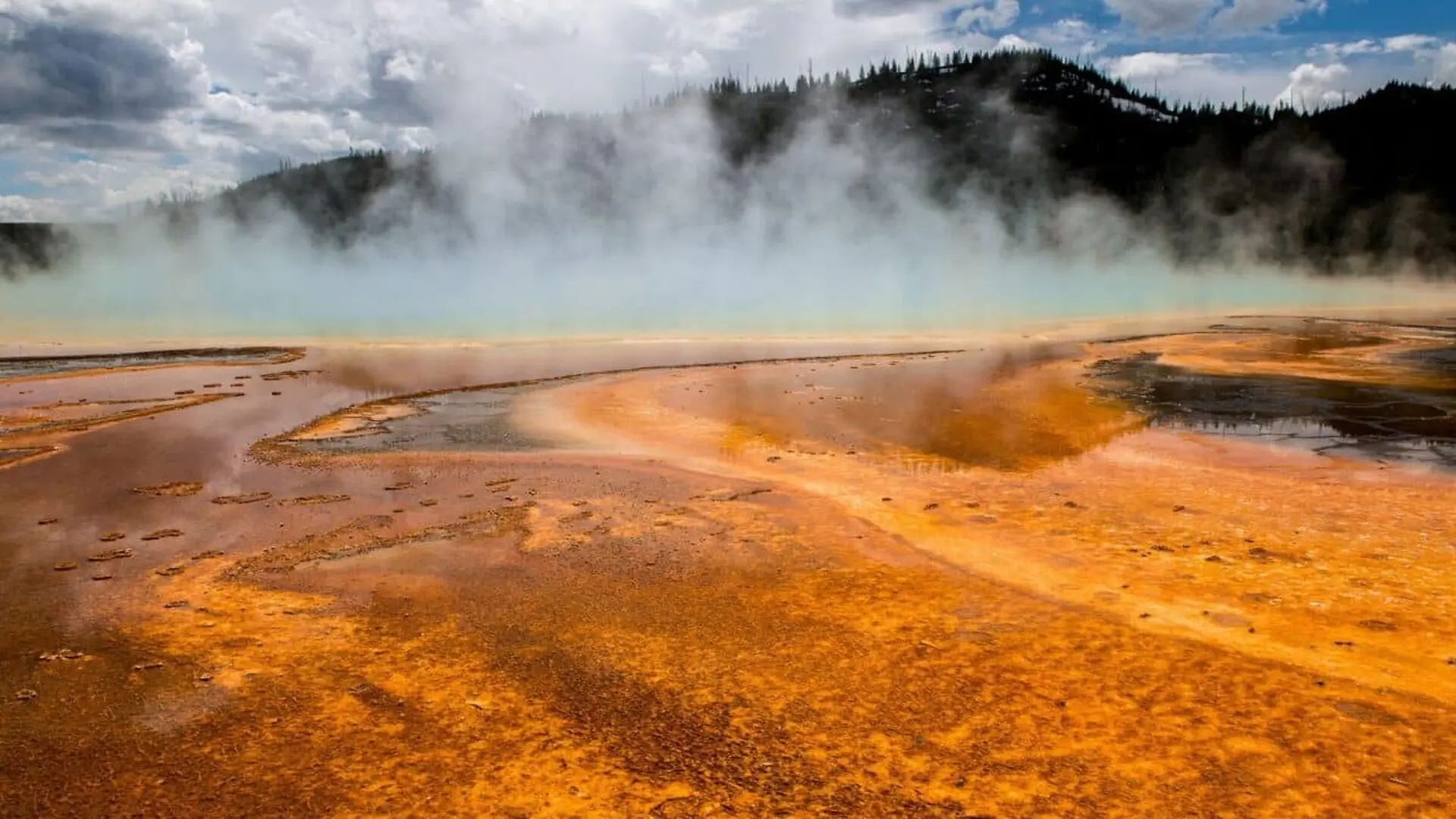
Supervolcanoes can remodel whole continents, releasing more than 1,000 km³ of magma, rock and ash in a single eruption—events powerful enough to shift climate patterns and reshape ecosystems. For decades, scientists have wrestled with how such colossal systems persist for millions of years.
A research group from the Institute of Geology and Geophysics of the Chinese Academy of Sciences (IGGCAS) now offers a fresh perspective on the Yellowstone supervolcano. Their work, appearing in Science, relies on a high‑resolution three‑dimensional simulation of western North America that captures the interaction between the lithosphere and the underlying mantle.
Revisiting Yellowstone’s Deep Structure
Traditional models portrayed supervolcanoes as sitting above massive, long‑lived magma chambers, with pressure slowly building until the surrounding rock could no longer contain it, precipitating a catastrophic eruption.
The IGGCAS team challenges that view, proposing instead that the magma resides in extensive “magma mush” zones—broad, partially molten regions that span the entire lithospheric thickness. These mushes are thicker and less mobile than liquid magma, prompting a new question: how can such sluggish material drive eruptions of extraordinary magnitude?
According to the new model, the magma feeding Yellowstone is drawn from the upper asthenosphere, a hot, slowly flowing layer just beneath the rigid lithosphere, rather than from a deep mantle plume anchored near the core‑mantle boundary, a hypothesis that has dominated volcanic theory for years.
This distinction matters because a deep plume would be a narrow, rising column of anomalously hot rock. The simulation instead reveals a fundamentally different, broader feature that supplies melt to the volcanic system.
Continental‑Scale Mantle Flow
The authors describe a “mantle wind”—an east‑ward‑directed current of hot rock that transports asthenospheric material toward Yellowstone from the west. The study links this flow to the long‑term subduction of the Farallon Plate, remnants of which remain buried beneath central and eastern North America (source).
As the buoyant rock rides this eastward stream, it encounters the thick lithospheric root that underlies Yellowstone’s eastern flank. The resulting downward pressure stretches the material, triggering decompression melting—rock melts because the pressure drops, not because it becomes hotter.
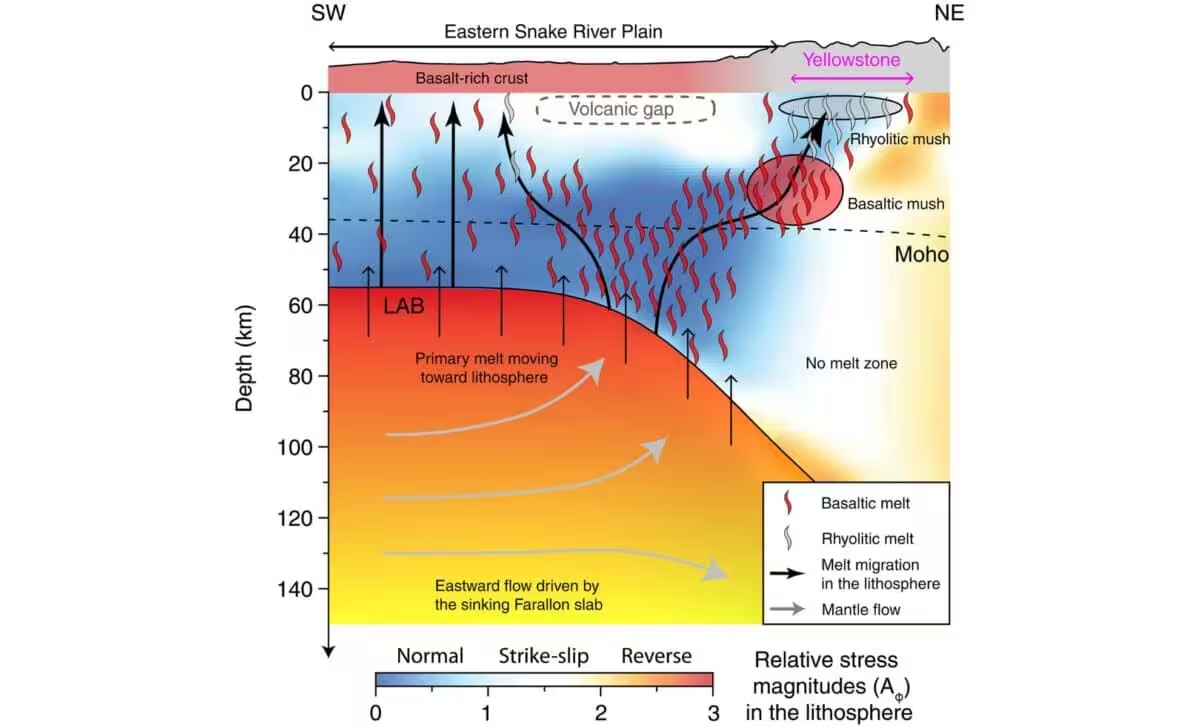
Beyond melt production, the mantle wind sculpts a subterranean conduit that channels the magma upward. The eastward flow pressing against the thick lithosphere, combined with the opposing buoyancy of lighter lithosphere to the west, effectively carves a southwest‑dipping channel beneath Yellowstone. This pathway aligns closely with independent geophysical surveys that have mapped similar structures in the region.
Historical records reinforce the model’s relevance: over the past 2.1 million years the Yellowstone caldera has experienced two super‑eruptions, and seismic imaging of its interior has revealed a deep, southwest‑tilting magma mush system that matches the simulation’s predictions.
The IGGCAS researchers contend that their framework offers the most comprehensive explanation to date for how large‑scale magmatic systems evolve beneath supervolcanoes, linking deep‑mantle melt generation with the crustal reservoirs that store and eventually release the material. Whether comparable mantle‑wind mechanisms operate beneath other global supervolcanoes remains an open question, but the new model provides a robust tool for future investigations.
This article has been fact checked for accuracy, with information verified against reputable sources. Learn more about us and our editorial process.
Last reviewed on .
Article history
- Latest version
Reference(s)
- Cao, Zebin., et al. “Tectonic origin of Yellowstone’s translithospheric magma plumbing system.” Science, vol. 392, no. 6794, April 9, 2026 American Association for the Advancement of Science (AAAS), doi: 10.1126/science.ady2027. <https://www.science.org/doi/10.1126/science.ady2027>.
Cite this page:
- Posted by Farah Siddiqui