Ancient Ultra-Faint Dwarf Galaxy With Only 46 Stars Found Near Andromeda
Astronomers spot a faint structure near Andromeda in wide-field surveys, initially dismissed as noise but deeper analysis hints it may be a real feature.
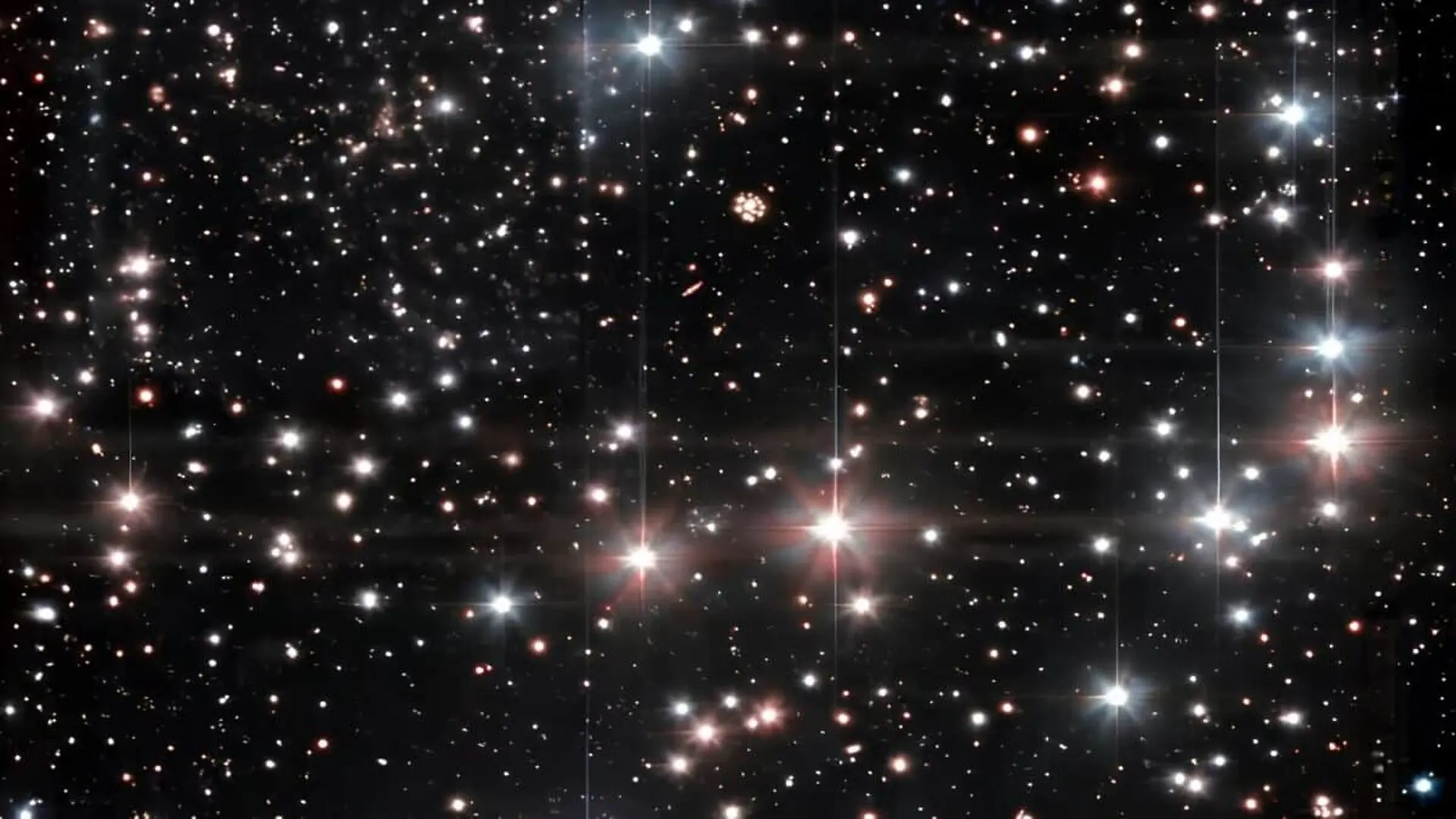
Astronomers have announced the detection of a new, extremely faint companion to the Andromeda galaxy, designated Andromeda XXXVI. Only about 46 individual stars have been linked to the system, and age estimates place it roughly 12.5 billion years old, making it one of the oldest known structures orbiting M31.
Ultra‑faint dwarf galaxies such as this one are prized by researchers because they have experienced minimal chemical enrichment since the early universe. Their pristine stellar populations offer a rare window into the conditions that prevailed shortly after the Big Bang and help map the dark‑matter scaffolding that underlies galaxy formation.
Initial Identification in Pan‑Andromeda Survey Data
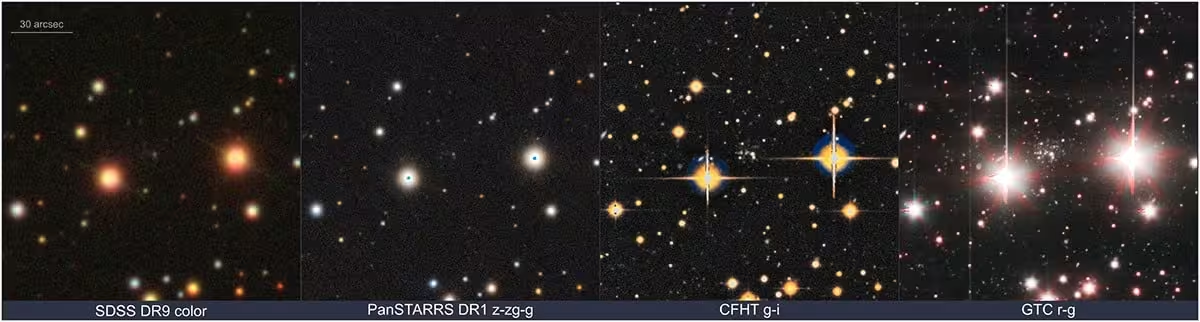
The candidate emerged from deep imaging obtained by the Pan‑Andromeda Archaeological Survey (PAndAS), a program carried out with the Canada‑France‑Hawaii Telescope. While reviewing the survey mosaics, amateur astrophotographer Giuseppe Donatiello noticed a subtle, low‑surface‑brightness glow that hinted at a resolved stellar component.
Because such faint features can masquerade as random stellar overdensities or imaging artifacts, the team flagged the object for further scrutiny. Their assessment, detailed in a study published in Astronomy & Astrophysics, emphasizes that visual inspection remains a crucial step when candidates hover near detection limits.
Deeper Observations Confirm Ultra‑Faint Nature
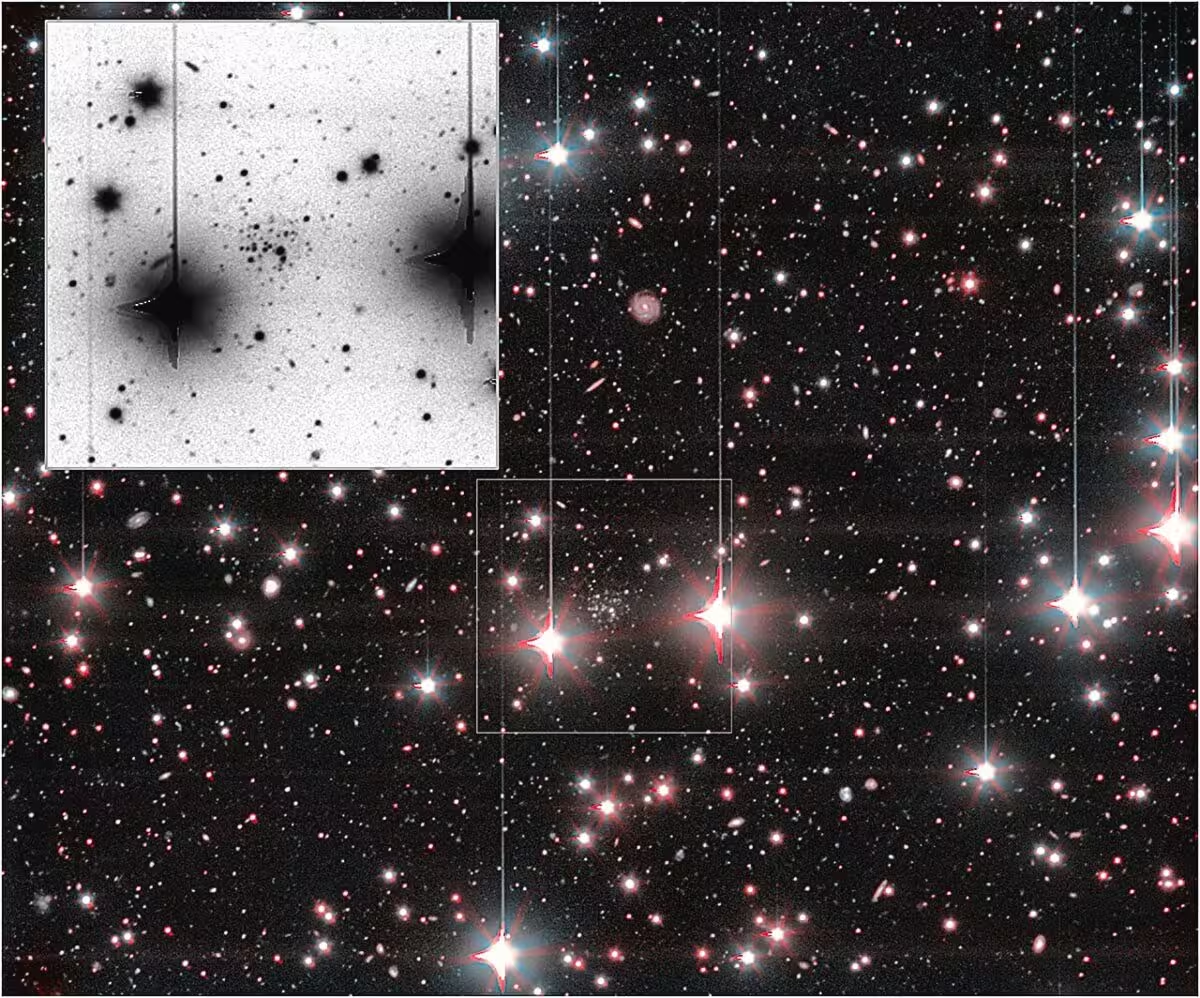
Follow‑up imaging was obtained with the Gran Telescopio Canarias using the OSIRIS+ instrument. The higher‑resolution data resolved individual stars within the diffuse glow, confirming that the object is a bound dwarf galaxy rather than a background fluctuation.
The analysis revealed that only about 46 stars belong to Andromeda XXXVI, underscoring its status as one of the faintest systems detectable with current ground‑based facilities. Even with these deeper observations, key properties such as precise distance, internal structure and metallicity remain loosely constrained. The authors suggest that space‑based platforms like the Hubble Space Telescope will be needed to refine the measurements.
Implications for Andromeda’s Satellite Population
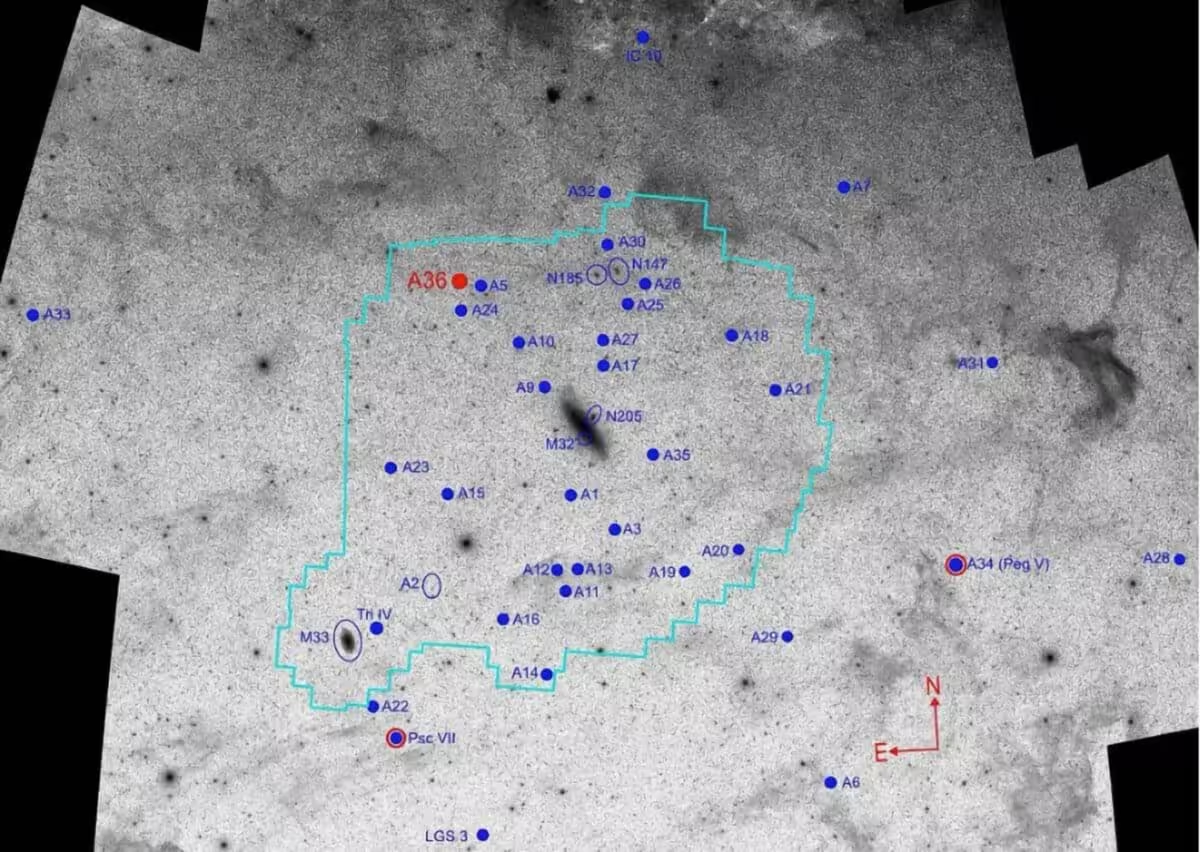
The discovery brings the tally of known dwarf companions around M31 to roughly 40, with about 15 classified as ultra‑faint. Lead author Isabel Santos‑Santos of the Leibniz Institute for Astrophysics Potsdam (AIP) notes that the standard ΛCDM cosmology predicts hundreds of such low‑mass satellites, many of which remain undetected because of their weak luminosity.
“Within the framework of the standard cosmological model, the so-called Lambda Cold Dark Matter model (ΛCDM), we expect galaxies like Andromeda to be surrounded by hundreds of such small companions—yet many of them have remained hidden until now due to their low luminosity,” she explained.
Santos‑Santos emphasizes that each newly confirmed ultra‑faint dwarf refines our picture of how small galaxies assemble and how dark matter clusters on the smallest scales. The authors anticipate that further deep surveys will continue to uncover a hidden population of faint satellites orbiting Andromeda.
This article has been fact checked for accuracy, with information verified against reputable sources. Learn more about us and our editorial process.
Last reviewed on .
Article history
- Latest version
Reference(s)
- “PandAS.” <https://www.cfht.hawaii.edu/Science/PandAS/>.
- Sakowska, Joanna. “Andromeda XXXVI: Discovery of a new ultra-faint dwarf galaxy towards M31.”, vol. 710, June 1, 2026, pp. A342, doi: 10.1051/0004-6361/202660151. <https://www.aanda.org/articles/aa/full_html/2026/06/aa60151-26/aa60151-26.html>.
- <https://www.gtc.iac.es/>.
- “Osiris | ISIS Neutron and Muon Source.”, January 7, 2024 ISIS Neutron and Muon Source <https://www.isis.stfc.ac.uk/instruments/osiris/>.
- “Isabel Santos-Santos | Astrophysics Cosmology.” Home <https://santossantosisabel.wixsite.com/home>.
Cite this page:
- Posted by Farah Siddiqui