Radiation Pressure Could Send Giant Space Mirrors Drifting, Hinting at Alien Tech
Study finds giant space mirrors meant to alter alien climates drift off course as sunlight gradually pushes them, making control far tougher than thought.
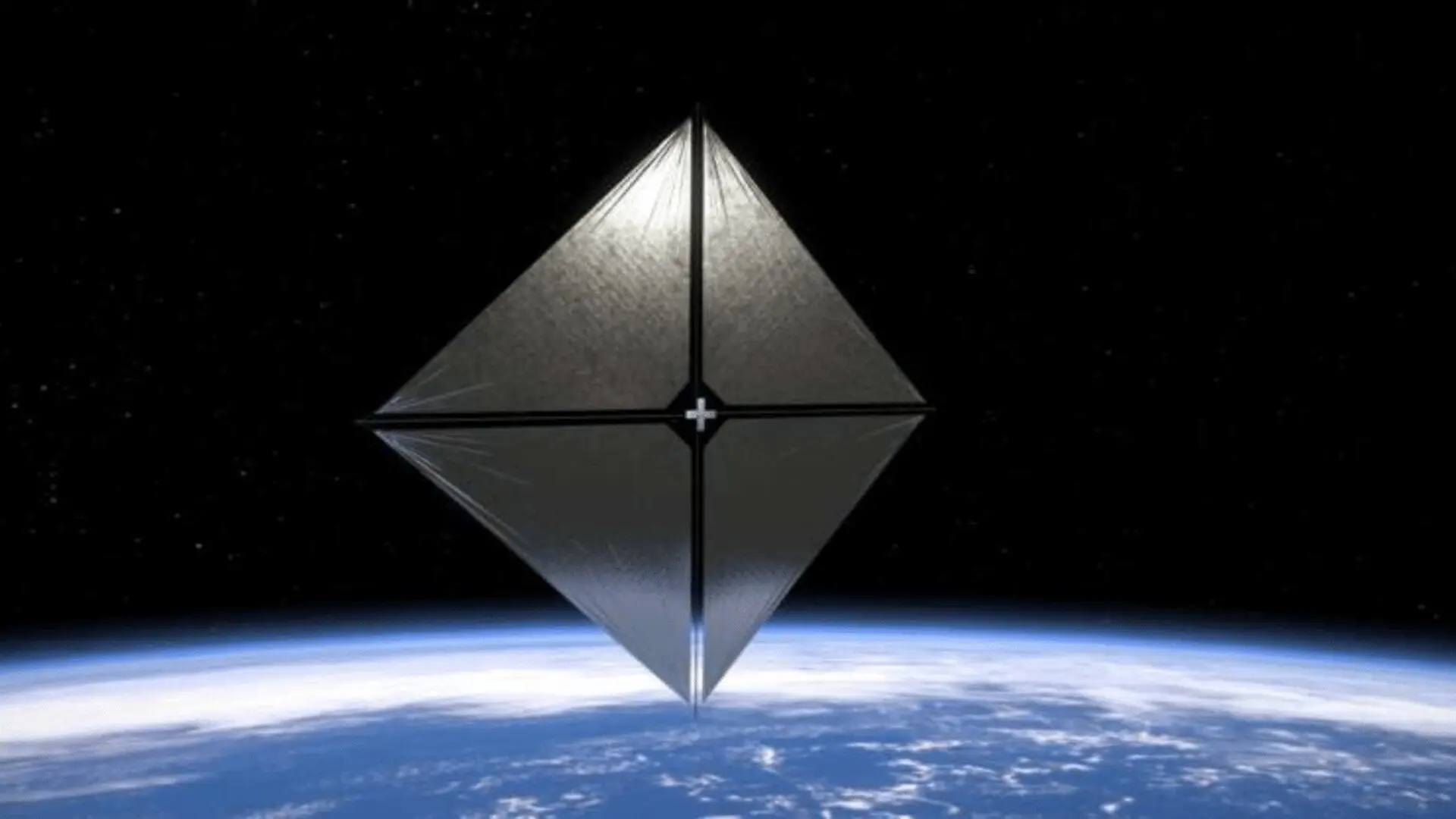
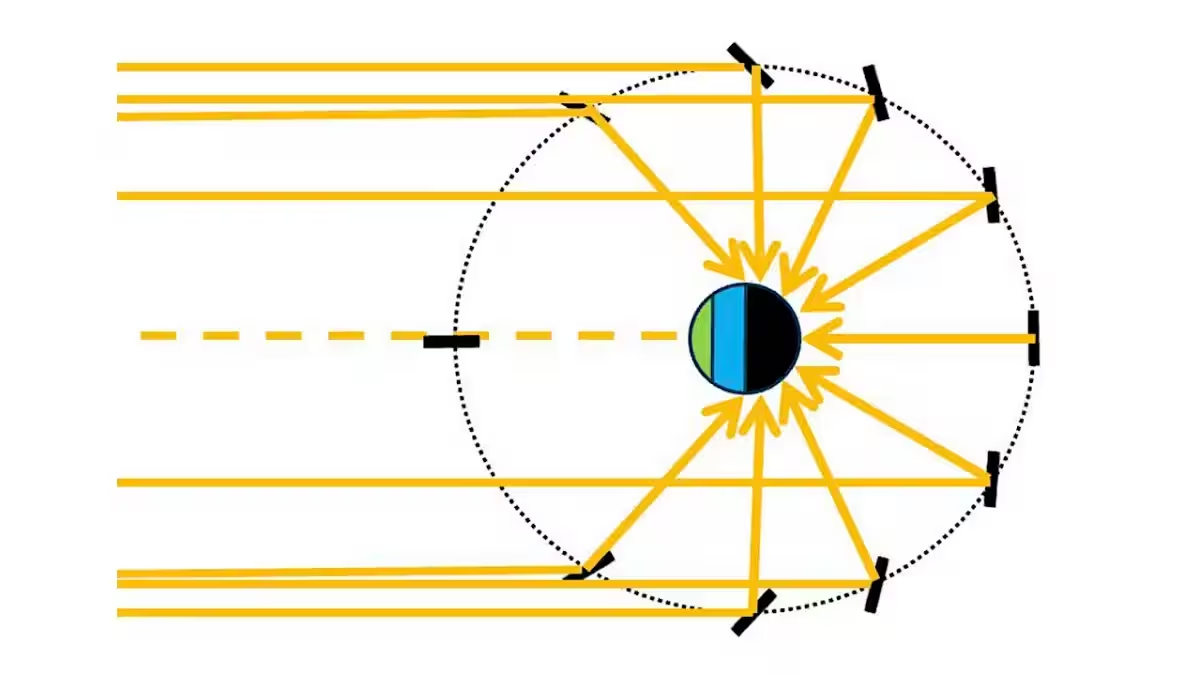
For many years researchers have examined the possibility of using gigantic reflective panels placed in orbit to steer stellar radiation toward specific regions of a planet, thereby moderating climate extremes. The premise is straightforward: a vast mirror captures starlight and redirects it where heat is scarce, offering a tool for planetary‑scale climate engineering. However, a recent analysis posted on arXiv points out that the physics of light carries more than just energy—it also imparts momentum, a factor that can dramatically alter the long‑term behavior of such installations.
How Mirrors Might Rebalance Worlds Around Dim Stars
Proposals for massive orbital reflectors often target planets orbiting low‑luminosity red dwarfs, where one side of the world is locked in perpetual daylight while the opposite hemisphere remains in darkness. By positioning a mirror in a suitable orbit, designers hope to flood the night side with additional photons, softening temperature contrasts and expanding habitable zones. The concept has been highlighted in articles such as Daily Galaxy’s overview of 4,000 space mirrors, which describes the theoretical benefits of redistributing starlight across tidally locked surfaces.
Yet, as Universe Today notes, the interaction between photons and a lightweight, expansive surface is akin to the principle behind solar sails: each photon transfers a tiny amount of momentum. While the force per photon is minuscule, the cumulative effect across a mirror spanning kilometers can become significant, especially over astronomical timescales.
Photon Momentum Drives Orbital Drift
The arXiv paper (arXiv:2606.10140) demonstrates that radiation pressure can act as a persistent, direction‑specific push on orbital mirrors. Mirrors with low mass and large surface area are especially susceptible, as the continuous bombardment of photons can gradually nudge them away from their intended trajectories. The study argues that this influence may dominate other perturbations in long‑duration missions.
Modeling of various orbital configurations revealed a stark contrast between prograde and retrograde paths. Mirrors co‑rotating with their host planet (prograde) tend to experience faster destabilization, whereas those placed in opposite‑direction orbits (retrograde) show comparatively slower drift, likely due to the differing vector sum of photon and orbital momentum. Nonetheless, no orbit eliminates the need for active station‑keeping, implying that any civilization deploying such structures would have to allocate resources for continual adjustments.
Simulation Campaign Highlights Design Challenges
Researchers employed N‑body simulation software to explore a suite of star‑planet‑mirror systems, varying stellar class, orbital distance, and mirror orientation. In each scenario a 1‑kilometer‑wide reflector with minimal mass was placed around an Earth‑sized planet situated within the habitable zone. The simulations tracked orbital stability under realistic radiation and gravitational forces.
A clear trend emerged: mirrors orbiting red dwarf stars displayed relatively better persistence than those around hotter, more massive suns. The reduced photon flux and tighter planetary gravity wells in red dwarf systems help counteract radiation‑driven drift. Conversely, planets around Sun‑like stars faced stronger radiation pressure, making long‑term equilibrium harder to maintain. Even with favorable conditions, the models showed that passive mirrors would eventually deviate without external control mechanisms.
Detectability of Artificial Mirrors in Exoplanet Observations
The dynamical behavior outlined in the study also informs the search for extraterrestrial technology. If an advanced society were to install reflective platforms to modify a planet’s climate, the resulting structures would likely exhibit non‑static orbital signatures. Astronomers could therefore look for time‑varying light curves, anomalous reflective patterns, or periodic adjustments as indirect evidence of engineered megastructures, rather than expecting a perfectly fixed ring of mirrors.
Future observatories might prioritize monitoring for such variability, interpreting drift or corrective maneuvers as potential technosignatures. In this framework, the very instability predicted by the simulations becomes a diagnostic tool, helping distinguish purposeful constructs from natural debris or dust clouds.
Fundamental Limits on Planet‑Scale Engineering
The overarching conclusion is that even the most sophisticated construction cannot escape the cumulative influence of radiation pressure, gravitational interactions, and orbital resonances. While a mirror could theoretically deliver the desired climatic effect, maintaining its alignment would demand a sustained infrastructure for propulsion or attitude control. The simulations underscore that the difficulty lies not only in fabrication but in the ongoing management of orbital dynamics.
Consequently, any civilization seeking to employ orbital reflectors as a climate‑control tool must develop robust strategies for continuous orbital correction. Absent such capabilities, the mirrors would gradually lose efficacy, turning from purposeful devices into drifting artifacts orbiting their host world.
This article has been fact checked for accuracy, with information verified against reputable sources. Learn more about us and our editorial process.
Last reviewed on .
Article history
- Latest version
Reference(s)
- Tomaswick, Andy. “Testing the Orbital Mechanics of Giant Mirrors.”, June 29, 2026 Universe Today <https://www.universetoday.com/articles/testing-the-orbital-mechanics-of-giant-mirrors>.
- Korpela, Shauna. “Exploring the Orbital Stability of Large, Lightweight Mirrors around Exoplanets.” arXiv.org <https://arxiv.org/abs/2606.10140>.
Cite this page:
- Posted by Farah Siddiqui