Apollo 10 Still Holds Human Speed Record After 57 Years: Near 40,000 km/h Reentry
Apollo 10’s near‑Moon landing return hit 40,000 km/h, a re‑entry speed record untouched for 57 years.

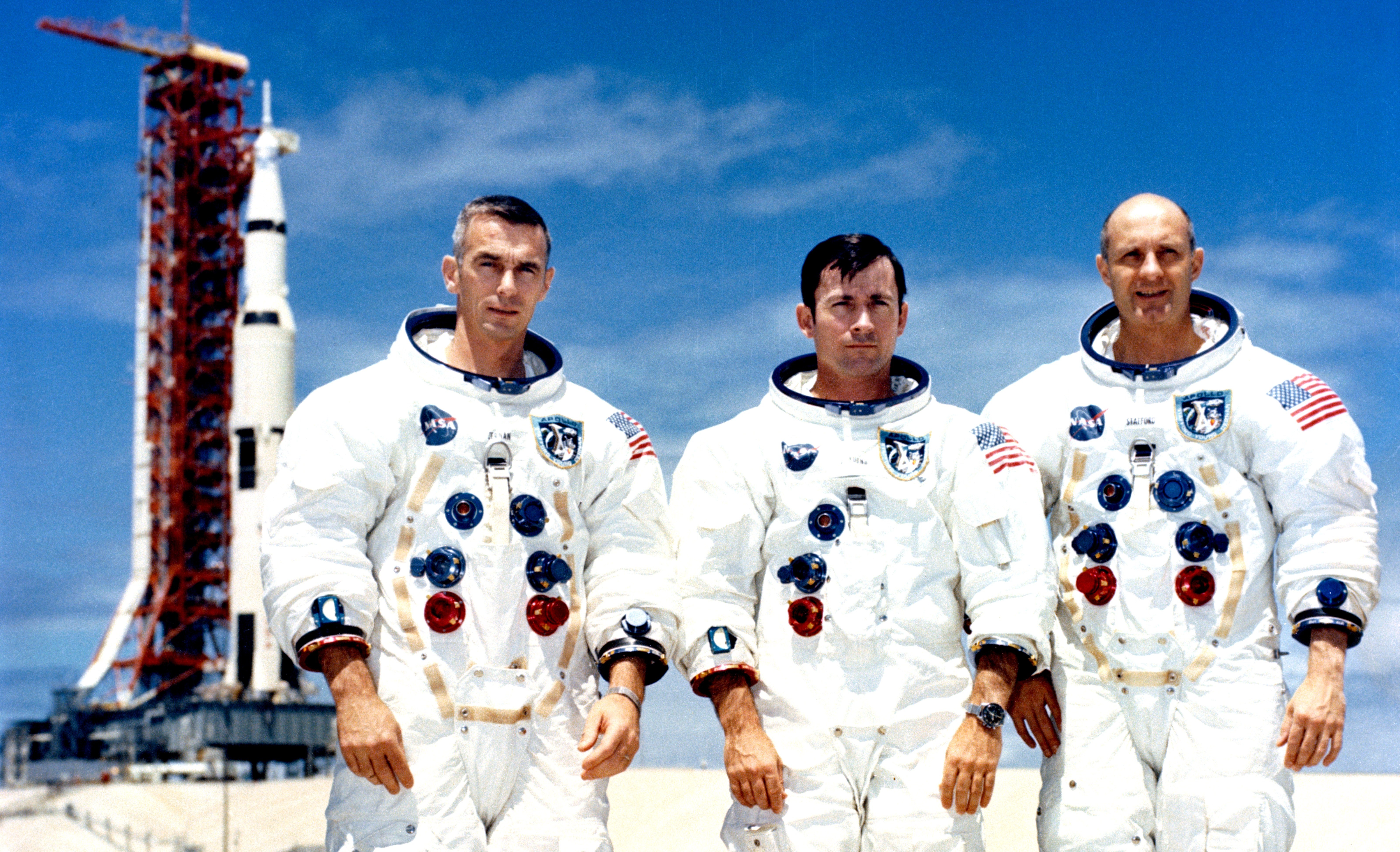
When the Apollo 10 command module sliced through Earth’s atmosphere on 26 May 1969, it did so at a blistering 36 397 feet per second – roughly 39 938 kilometres per hour. That moment, recorded for Thomas Stafford, John Young and Eugene Cernan, remains the fastest speed ever achieved by a human‑occupied vehicle, a record still listed by Guinness World Records after more than five decades.
The crew never “felt” that velocity. In the vacuum of space, motion is sensed only by instruments and procedural checklists. Engineers later derived the speed from telemetry data and ground‑based radar after the mission’s completion, rather than from any real‑time gauge.
Apollo 10: The Dress Rehearsal That Set the Stage for the First Moon Landing
Launched from Kennedy Space Center on 18 May 1969, Apollo 10 was the fourth crewed flight in NASA’s Apollo series and a full‑scale test of the hardware and procedures required for a lunar landing – minus the actual touchdown. Military officers Stafford and Cernan piloted the lunar descent phase, while Young orbited the Moon alone.
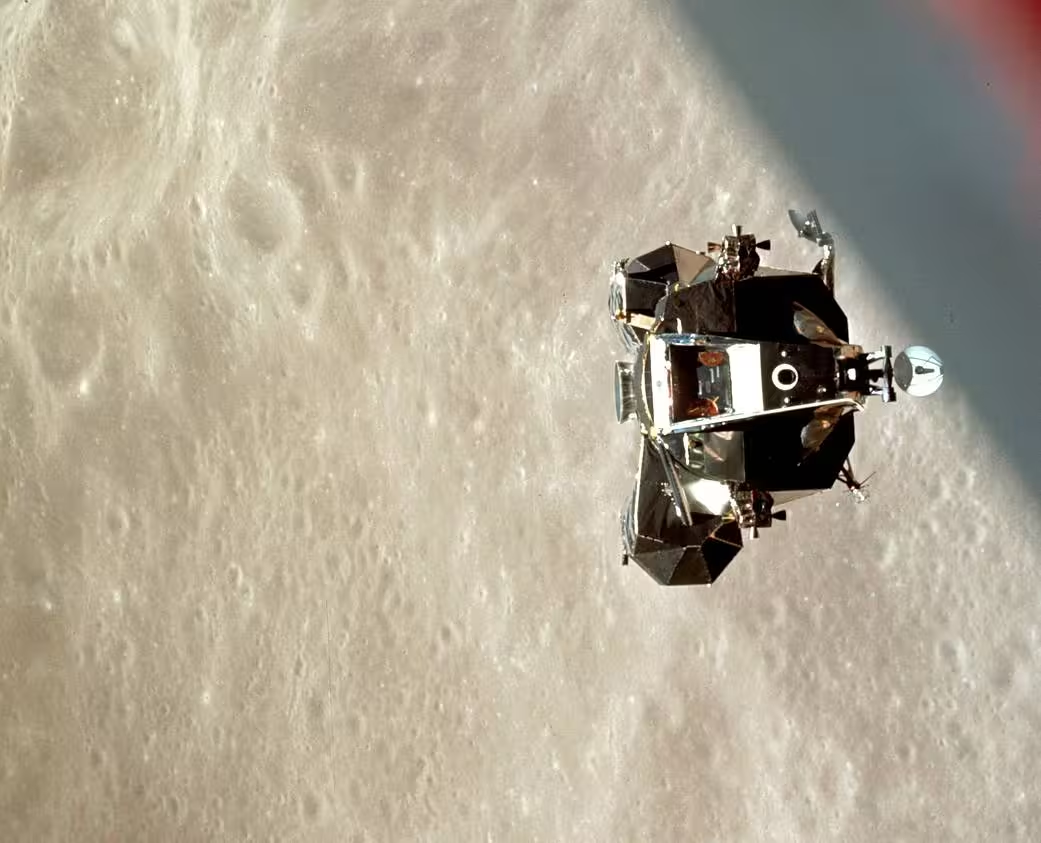
On 22 May, the pair entered the lunar module they christened Snoopy, after the beloved comic strip character, and detached from the command module dubbed Charlie Brown. After a 27‑second burn of the descent engine, they hovered 47 400 feet (about 14.4 km) above the Moon’s surface, the closest any crewed craft had approached without landing.
From that altitude the duo surveyed the Sea of Tranquility – the eventual Apollo 11 landing site – snapping photographs and testing guidance systems for a future powered descent. A brief, unexpected tumble caused by a mis‑set switch forced them to fire the ascent engine and re‑dock with Young in lunar orbit, as documented in NASA’s mission history.
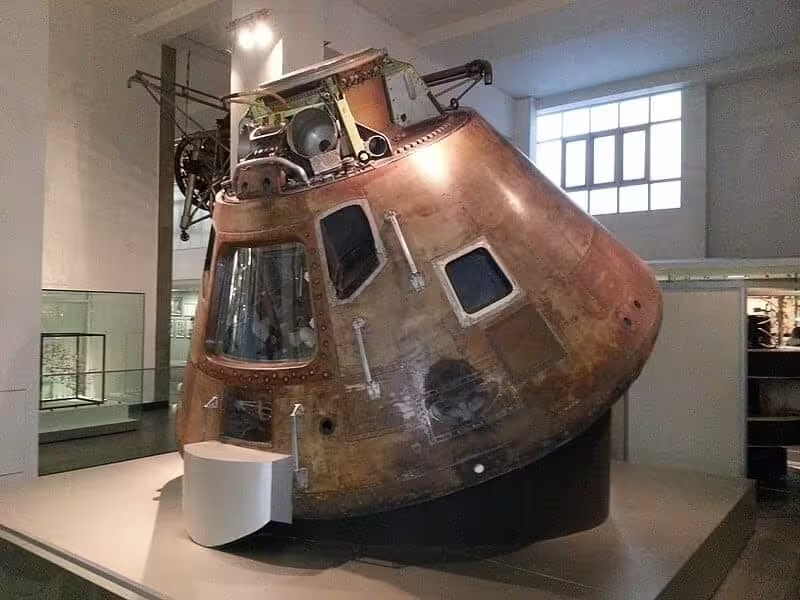
After jettisoning the lunar module, the spacecraft rode the Moon’s gravity back toward Earth, accelerating as it fell through the combined Earth‑Moon gravitational field. Cernan later recalled the re‑entry view as a “ball of white and violet flame.” The crew splashed down in the Pacific on 26 May and were recovered by the USS Princeton.
Crunching the Numbers: How Fast Did Apollo 10 Really Go?
Guinness cites the peak velocity of 36 397 ft s⁻¹ (11 093.8 m s⁻¹) at an altitude of 121.9 km during the trans‑Earth leg, translating to 39 937.7 km h⁻¹. NASA’s own archives list a slightly lower figure – 24 791 mph, or about 39 897 km h⁻¹ – a discrepancy that stems only from rounding and conversion methods.
Both the spacecraft’s onboard instruments and ground‑based radar confirmed the speed at the atmospheric‑entry interface, the standard benchmark for such records. Detailed telemetry and imagery from the mission, including the iconic Earthrise photos, are preserved in NASA’s image archive.
Why This Speed Has Stood Unchallenged for Over Half a Century
The record derives from the physics of a lunar return trajectory: a spacecraft falling from the Moon’s distance gains enough gravitational energy to hit Earth at roughly 40 000 km h⁻¹. All subsequent Apollo returns followed similar paths, achieving comparable velocities.
Since Apollo 17 in 1972, no crewed mission has ventured beyond low Earth orbit. The International Space Station circles the planet at about 27 600 km h⁻¹, a speed far below what a lunar return demands. While NASA’s uncrewed Parker Solar Probe surpassed 692 000 km h⁻¹ relative to the Sun in 2024, that record applies only to unmanned probes and does not affect the human‑speed benchmark.
Future Artemis Flights May Rival the Apollo 10 Velocity
NASA’s Artemis program, built around returning humans to the Moon, employs the Orion capsule – a vehicle engineered for the same high‑speed re‑entry that Apollo 10 demonstrated. During the uncrewed Artemis I mission in 2022, Orion re‑entered at about 39 400 km h⁻¹, tantalizingly close to the 1969 benchmark.
Planned crewed Artemis missions, such as Artemis III slated for no earlier than 2026, aim to land near the lunar south pole and will follow re‑entry trajectories that could match or modestly exceed Apollo 10’s speed, depending on mission specifics.
All three Apollo 10 astronauts have since passed away – Cernan in 2017, Young in 2018, and Stafford in 2024 at the age of 93 – leaving a legacy that includes Gemini flights, the historic Apollo‑Soyuz docking, and the record‑setting return that still defines human spaceflight speed.
This article has been fact checked for accuracy, with information verified against reputable sources. Learn more about us and our editorial process.
Last reviewed on .
Article history
- Latest version
Reference(s)
- “Fastest speed achieved by humans.” Guinness World Records <https://www.guinnessworldrecords.com/world-records/66125-fastest-speed-achieved-by-humans>.
- “S69 34329b 0.” <https://www.nasa.gov/wp-content/uploads/2015/02/s69-34329b_0.jpg>.
- NASA, “Apollo 10 was Moon Landing Rehearsal, EFT-1 Preps for Trips Beyond - NASA.”, June 3, 2014 NASA <https://www.nasa.gov/missions/artemis/orion/apollo-10-was-moon-landing-rehearsal-eft-1-preps-for-trips-beyond/>.
- “NASA Image and Video Library.” NASA Image and Video Library <https://images.nasa.gov/details/art001m1203451716>.
- “Apollo 10 Lunar Module Ascends - NASA.” NASA <https://www.nasa.gov/image-article/apollo-10-lunar-module-ascends/>.
Cite this page:
- Posted by Farah Siddiqui