Scientists Plan An 80,000 Year Interstellar Mission Using Existing Tech
A nonprofit plans to launch humanity’s first interstellar mission to Alpha Centauri by 2029, using solar power and electric thrust for the 80,000-year trek.
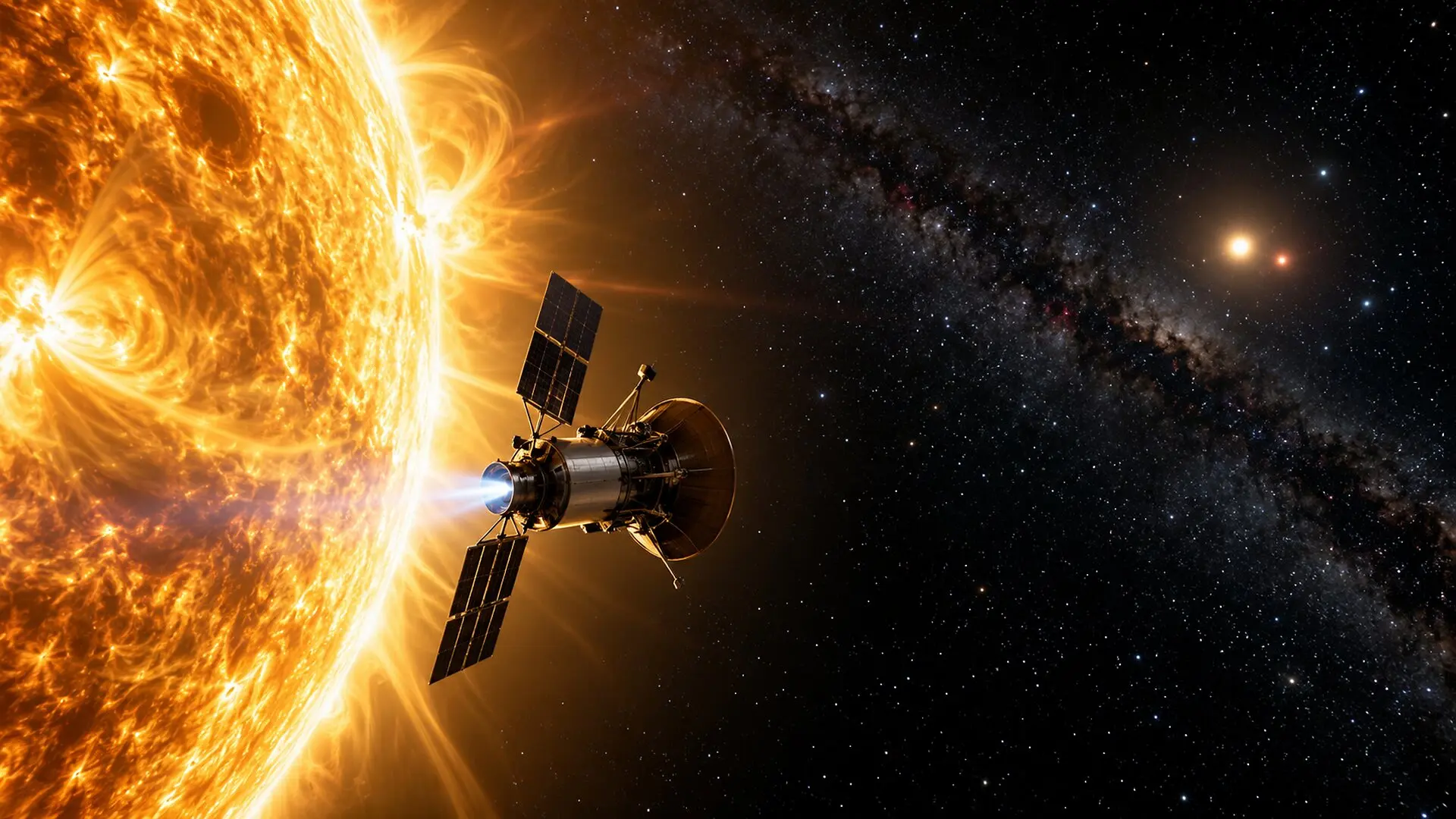
Reaching another star system usually evokes visions of high-speed light sails or futuristic fusion engines capable of crossing the interstellar void in a human lifetime. However, a nonprofit organization is proposing a more grounded, albeit patient, approach: sending a spacecraft toward Alpha Centauri using conventional propulsion technology and the cold, unyielding physics of a multi-millennial journey.
The Fermi Explorer Mission announced plans on September 1 to launch a small probe toward our nearest stellar neighbor by the end of 2029. Rather than attempting to break the laws of physics with speculative hardware, the mission relies on an AI-optimized trajectory designed to stretch the capabilities of existing solar-electric engines.
Mapping a path across the centuries
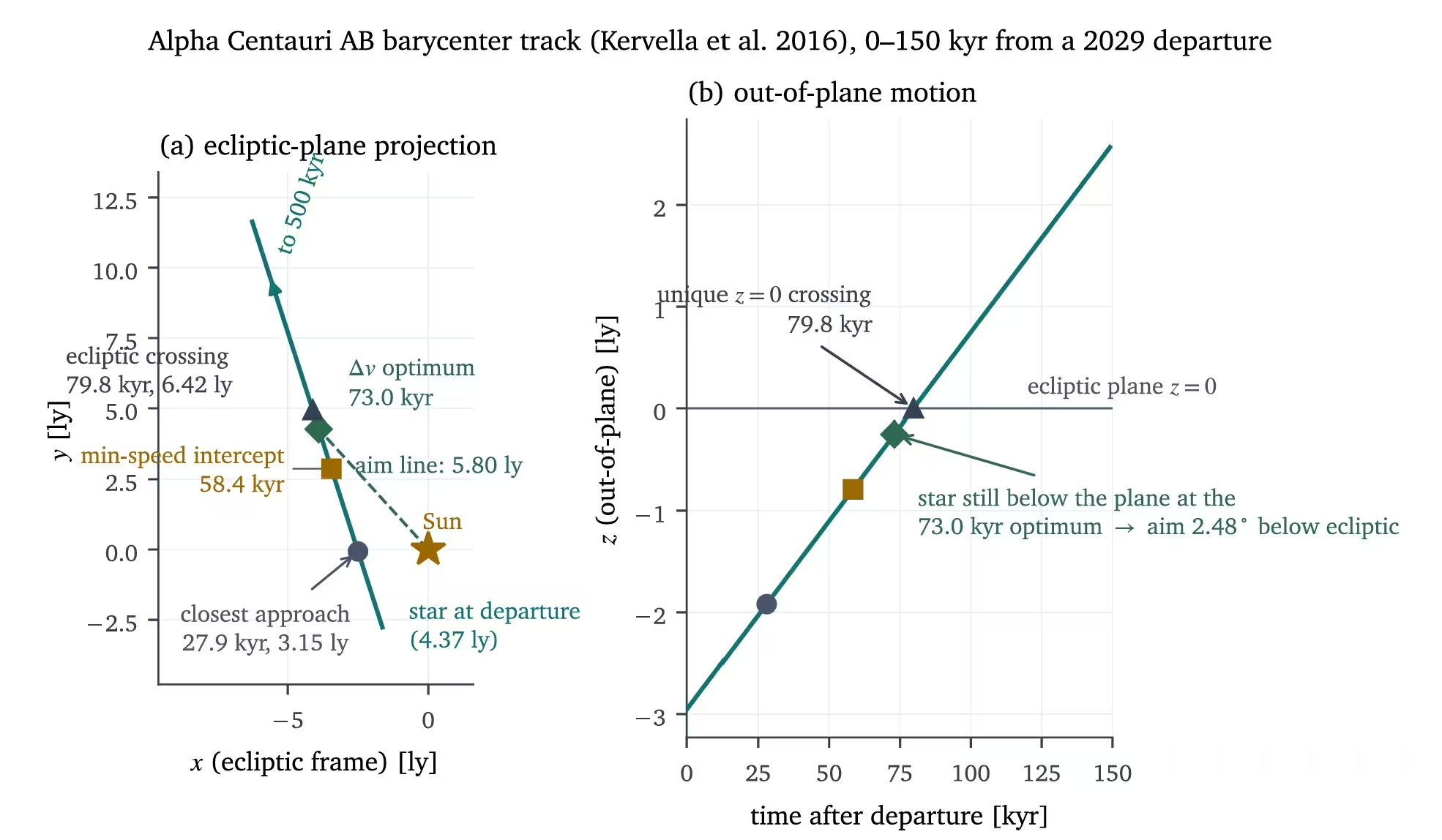
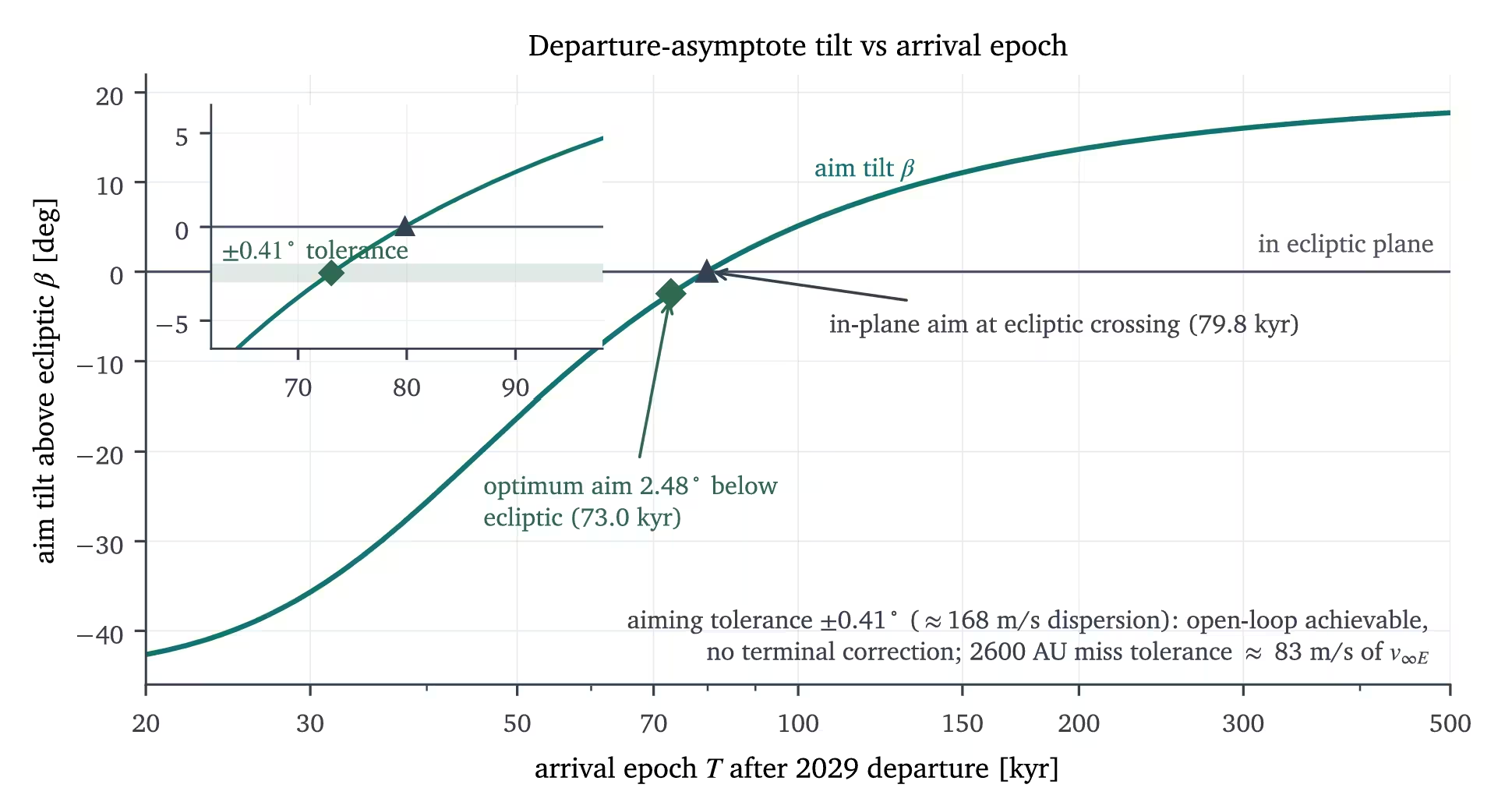
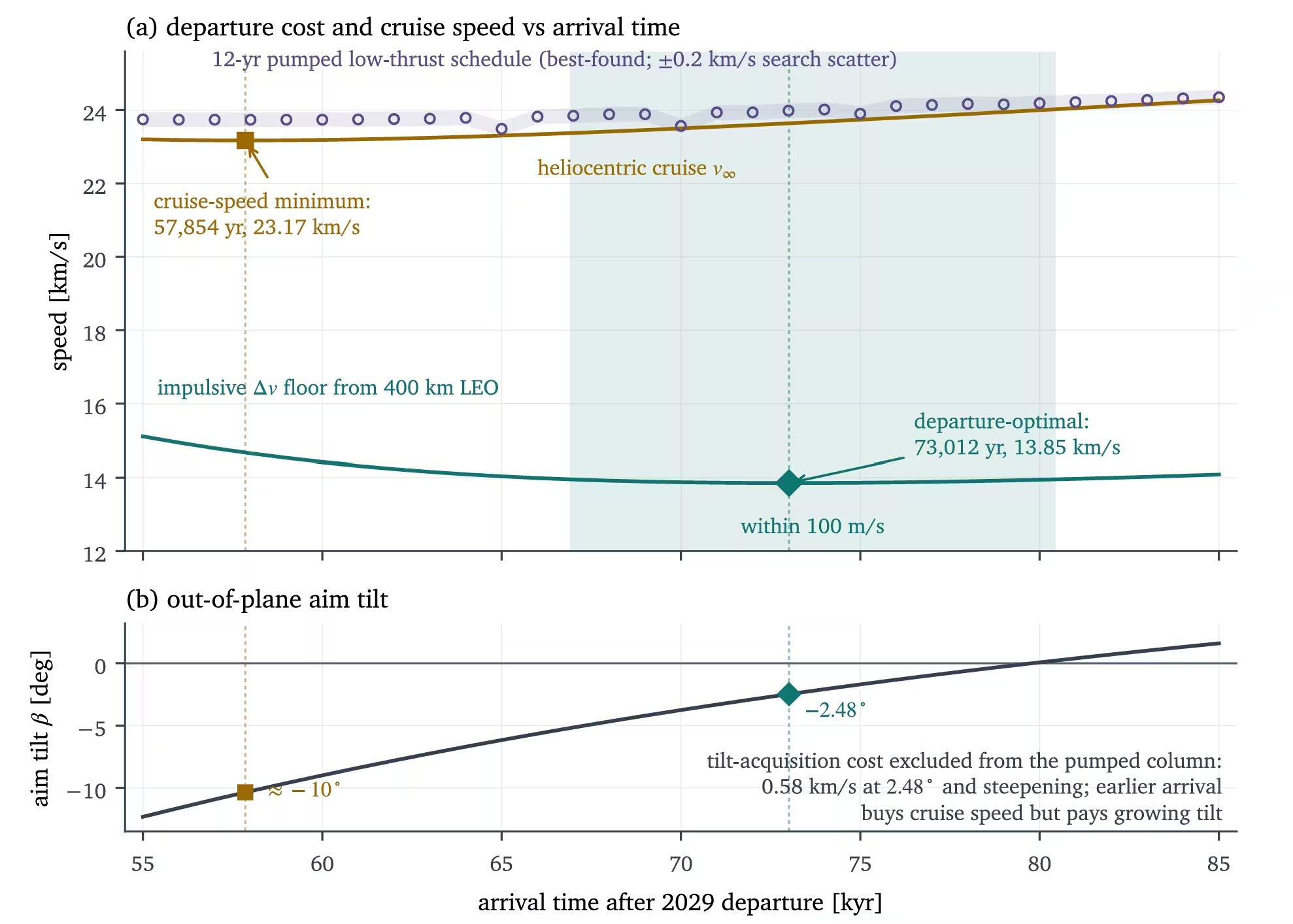
The flight plan, developed by the research laboratory Physical Superintelligence (PSI), leverages the relative motion of the stars. Because Alpha Centauri is not static, the probe must be aimed not at where the system is today, but where it will be in approximately 73,000 to 80,000 years. The study suggests that by launching into a specific heliocentric trajectory, the craft could reach the outer reaches of the Alpha Centauri system—roughly 2,600 astronomical units from its barycenter—after an immense, unpowered coast.
To overcome the limitations of solar-electric propulsion, which typically loses effectiveness as a spacecraft drifts away from the Sun, researchers utilized a technique called multi-revolution perihelion pumping. By repeatedly diving toward the Sun, the spacecraft can maximize solar input near its closest approach, using the intense energy to perform high-velocity maneuvers that would be impossible in deep space. This strategy, as detailed in the July technical report, would allow the probe to reach the necessary exit velocity for its long-duration cruise.
Engineering under extreme constraints
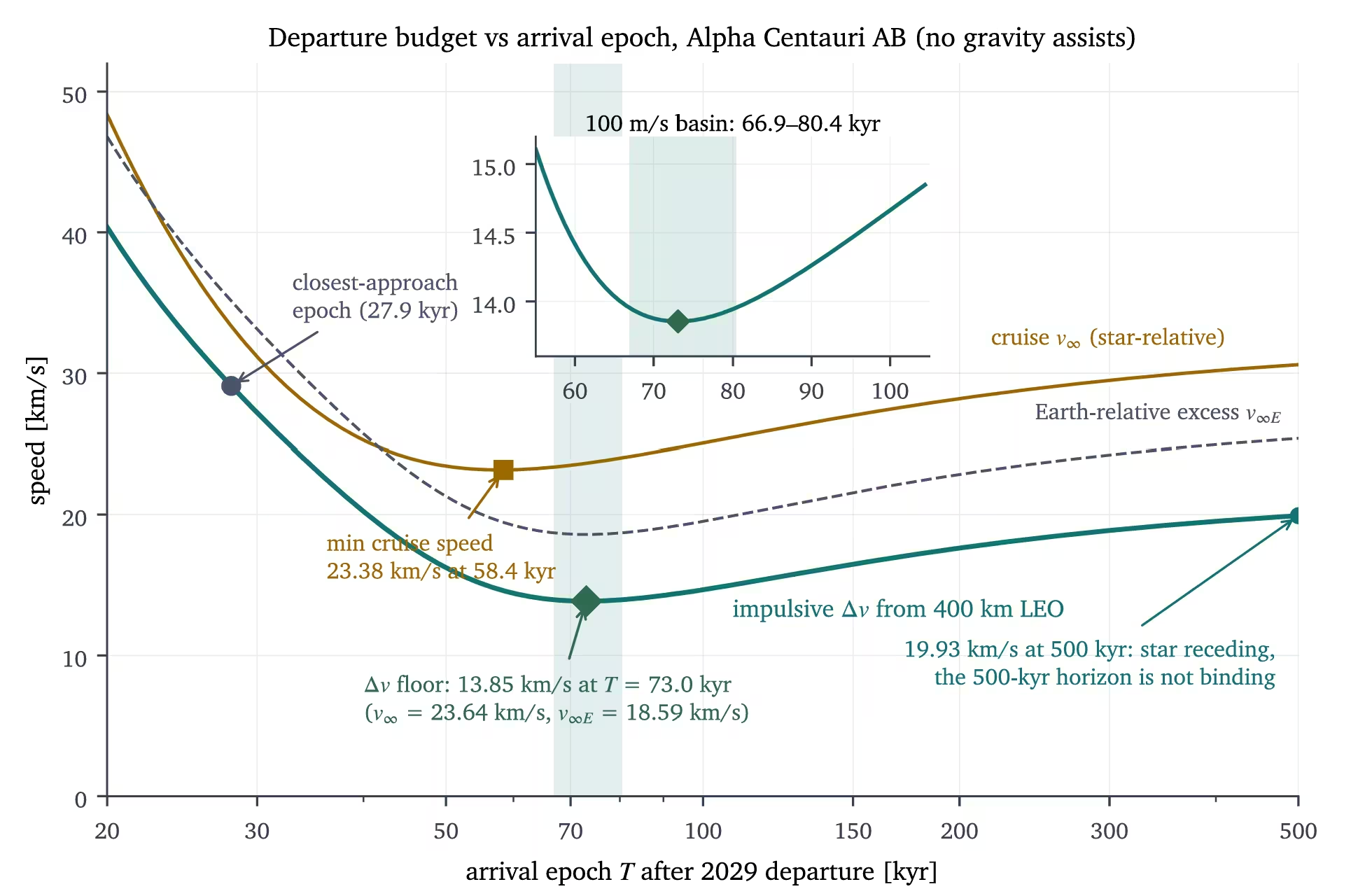
The mission remains a significant engineering challenge, particularly regarding mass and launch logistics. Initial designs for a 100-kilogram craft struggled to meet necessary fuel and velocity requirements when launched from low Earth orbit. However, PSI found that starting the journey from a geostationary transfer orbit significantly improves the odds, lowering the required escape energy. The proposed vessel would carry at least one kilogram of payload, including messages from Earth and scientific instruments designed to archive humanity’s presence for a future that will likely be unrecognizable to the present day.
A different vision for deep space
This initiative represents a philosophical departure from projects like Breakthrough Starshot, which aims to reach nearby stars in mere decades using high-energy laser arrays. While Starshot pushes the boundaries of theoretical physics and engineering, the Fermi Explorer Mission accepts the reality of deep time. It does not aim to arrive first, but rather to begin the process, acknowledging that faster, more capable technologies developed in the coming centuries will almost certainly overtake the probe before it reaches its destination.
Despite the clarity of the mission’s mathematical models, the 2029 launch window remains ambitious. The team notes that the proposal requires rigorous peer review and further testing of propulsion and thermal systems. Financial requirements are estimated between $15 million and $16.6 million, creating a narrow window for successful execution.
Ultimately, the mission serves as a bridge between the present and the future. By placing a vessel on a confirmed path toward another star, humanity moves from a species that simply dreams of the stars to one that has committed to the journey.
Further exploration
For those looking to understand the technical foundations of such an interstellar endeavor, the following resources provide additional context on astrometry, propulsion, and the history of deep-space exploration:
- Close stellar conjunctions of α Centauri A and B until 2050: A detailed look at the motion of the Alpha Centauri system. (Astronomy & Astrophysics, 2016)
- Launch of Breakthrough Starshot: Documentation regarding the laser-driven approach to interstellar flight. (Breakthrough Initiatives, 2016)
- Solar Electric Propulsion: Overview of NASA’s work on efficient long-duration engine systems. (NASA, 2025)
- Voyager 1: Current status updates on humanity’s farthest-reaching explorer. (NASA, 2026)
- Voyager Program Frequently Asked Questions: A guide to the speeds and trajectories of existing interstellar probes. (NASA, 2026)
This article has been fact checked for accuracy, with information verified against reputable sources. Learn more about us and our editorial process.
Last reviewed on .
Article history
- Latest version
Reference(s)
- “Introducing Physical Superintelligence: The World's Most Advanced Physics Lab, Staffed by Virtual Physicists to Discover New Laws of the Universe.”, September 1, 2026 Cision PR Newswire <https://www.prnewswire.com/news-releases/introducing-physical-superintelligence-the-worlds-most-advanced-physics-lab-staffed-by-virtual-physicists-to-discover-new-laws-of-the-universe-302865561.html?utm_source=chatgpt.com>.
- “Breakthrough Initiatives.” <https://breakthroughinitiatives.org/about?utm_source=chatgpt.com>.
- <https://www.aanda.org/articles/aa/pdf/2016/10/aa29201-16.pdf>.
- “Breakthrough Initiatives.” <https://breakthroughinitiatives.org/events/>.
- “Solar Electric Propulsion - NASA.”, May 8, 2023 NASA <https://www.nasa.gov/space-technology-mission-directorate/tdm/solar-electric-propulsion/>.
- Cermak, Alicia. “Voyager 1.”, December 7, 2017 NASA <https://science.nasa.gov/mission/voyager/voyager-1/>.
- Carney, Stephen. “Frequently Asked Questions - NASA Science.”, March 12, 2024 NASA <https://science.nasa.gov/mission/voyager/frequently-asked-questions/>.
Cite this page:
- Posted by Aisha Ahmed