The Moon’s Far Side Could Finally Reveal The Universe Before The First Stars Were Born
New lunar radio missions on the Moon’s far side could reveal the universe’s mysterious cosmic dark ages, long before the first stars and galaxies formed.
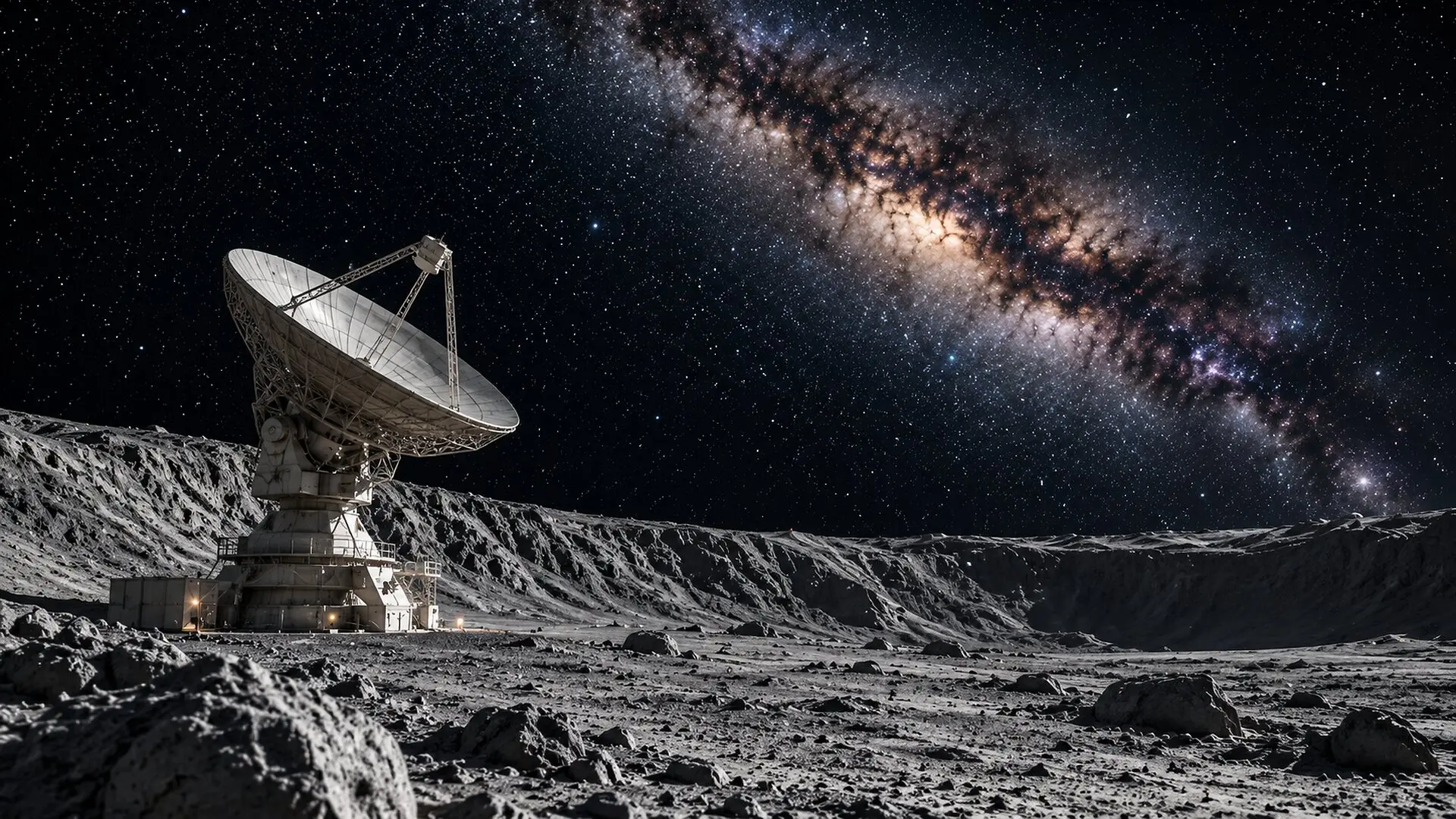
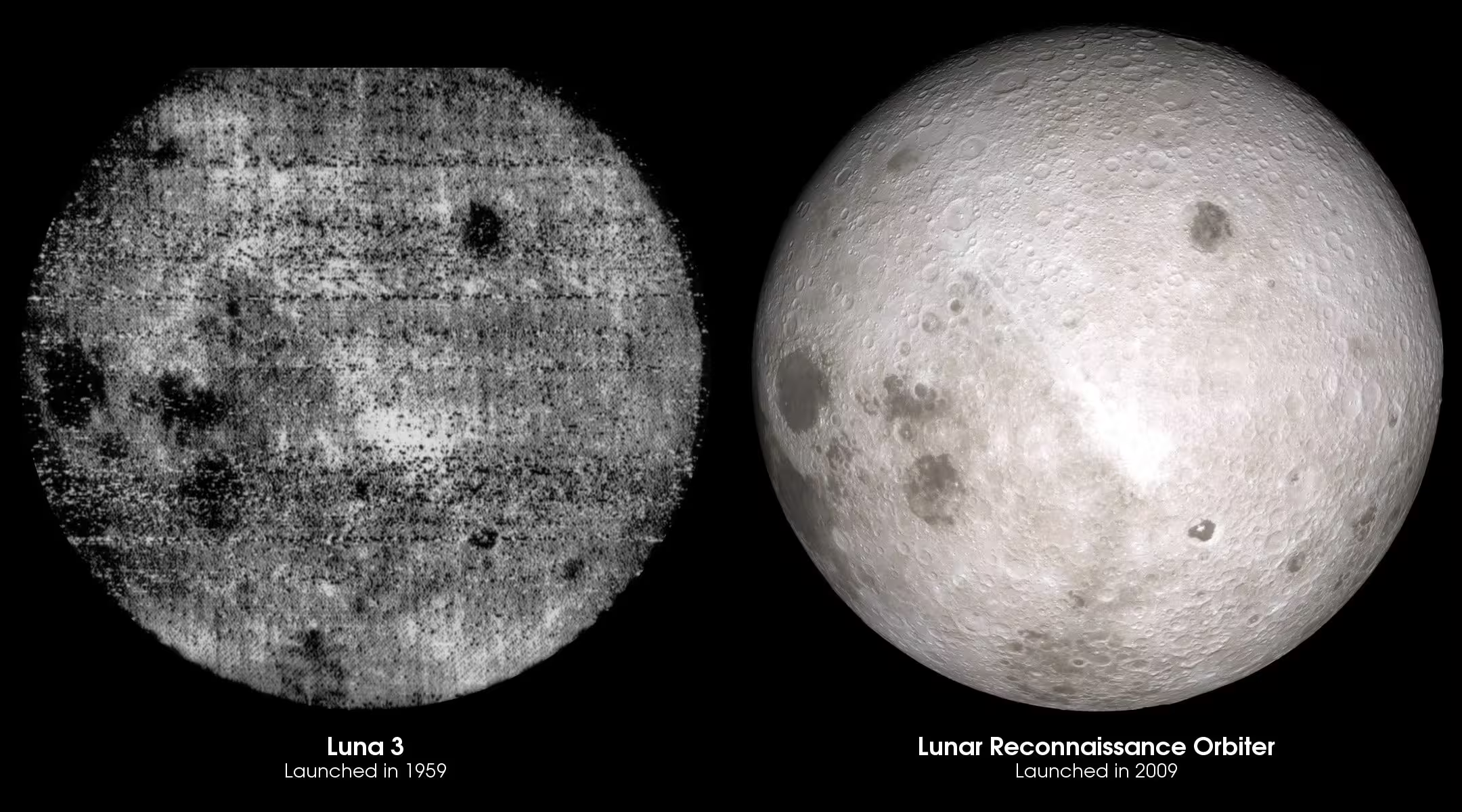
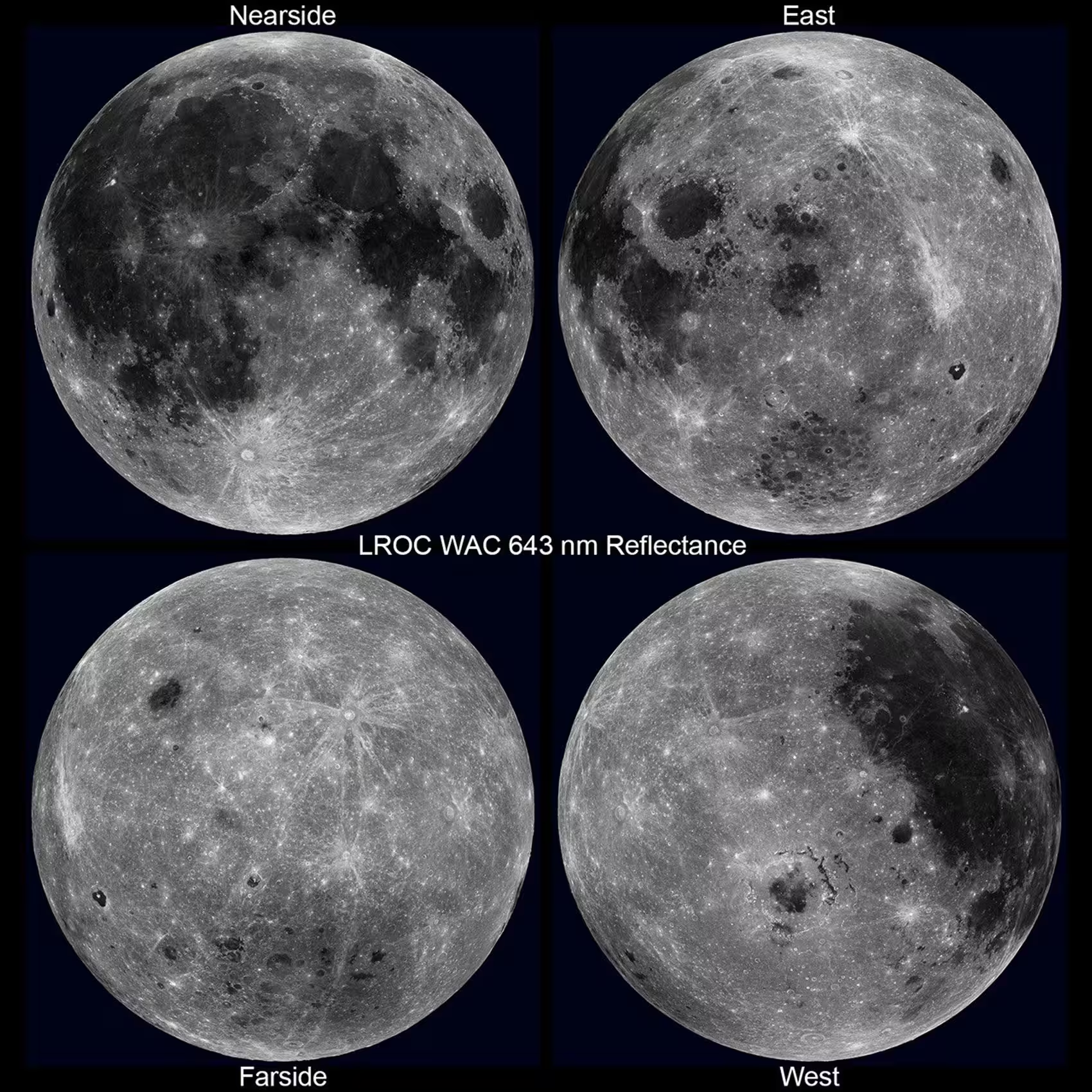
The far side of the Moon, a rugged expanse defined by ancient impact basins and jagged peaks, represents the ultimate frontier for low-frequency radio astronomy. Shielded by the lunar body itself, this region is widely considered the only location in our solar system where sensitive instruments can escape the constant radio barrage originating from Earth. Astronomers are now targeting this unique environment to unlock the secrets of the universe’s so-called dark ages, the mysterious epoch occurring before the ignition of the first stars.
Peering into the Cosmic Dark Ages
Approximately 380,000 years after the Big Bang, the universe entered a transformative state. Protons and electrons fused to form neutral hydrogen, filling the cosmos with a pervasive, albeit silent, gas. This period, preceding the birth of the first galaxies and luminous structures, remains one of the final frontiers in observational cosmology. Because neutral hydrogen emits radiation at a distinct 21-centimeter wavelength, researchers believe that capturing these signals could provide profound insights into the distribution of early matter, the nature of dark matter, and the fundamental properties of neutrinos.
The challenge lies in the sensitivity required. Earth’s ionosphere acts as a formidable barrier to low-frequency radio waves, rendering frequencies below 45 megahertz almost impossible to observe from the ground. Furthermore, the relentless hum of human telecommunications creates a wall of interference that obscures these faint, primordial whispers. By placing telescopes on the lunar far side, scientists can bypass these obstacles entirely, leveraging the Moon as a natural shield against the noise of human civilization.
Testing the Concept
While the prospect of a far-side observatory was once confined to theoretical discussions, recent missions have begun to turn the concept into a tangible reality. In February 2024, NASA’s ROLSES-1 instrument—part of the Odysseus lander mission—conducted preliminary observations near the lunar south pole. Although the lander was positioned on the Earth-facing side, the data provided a clear proof-of-concept for lunar-based radio detection. The mission successfully captured terrestrial shortwave transmissions and the faint background noise of the Milky Way, further confirming that Earth’s radio footprint is a significant hurdle to overcome.
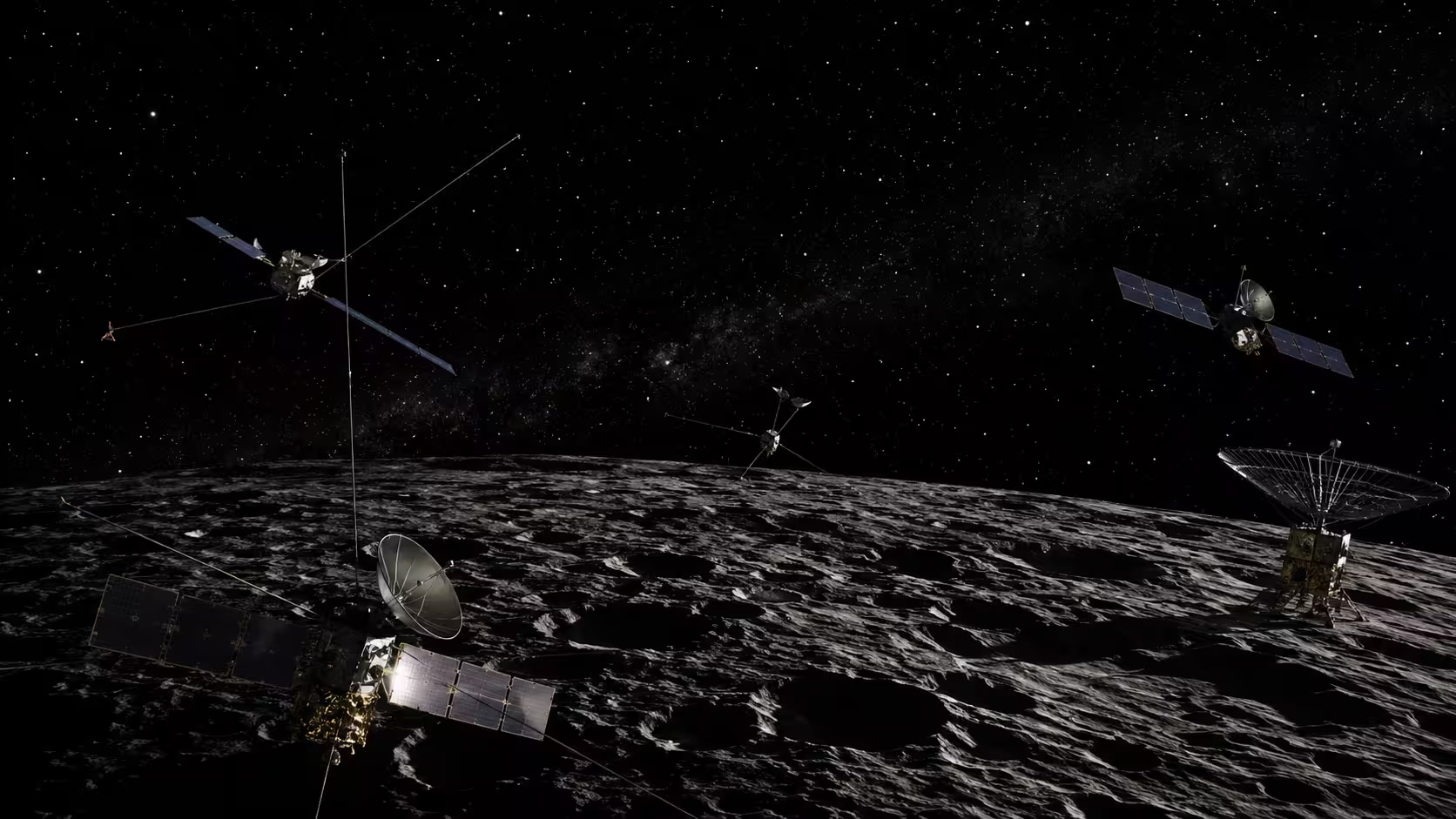
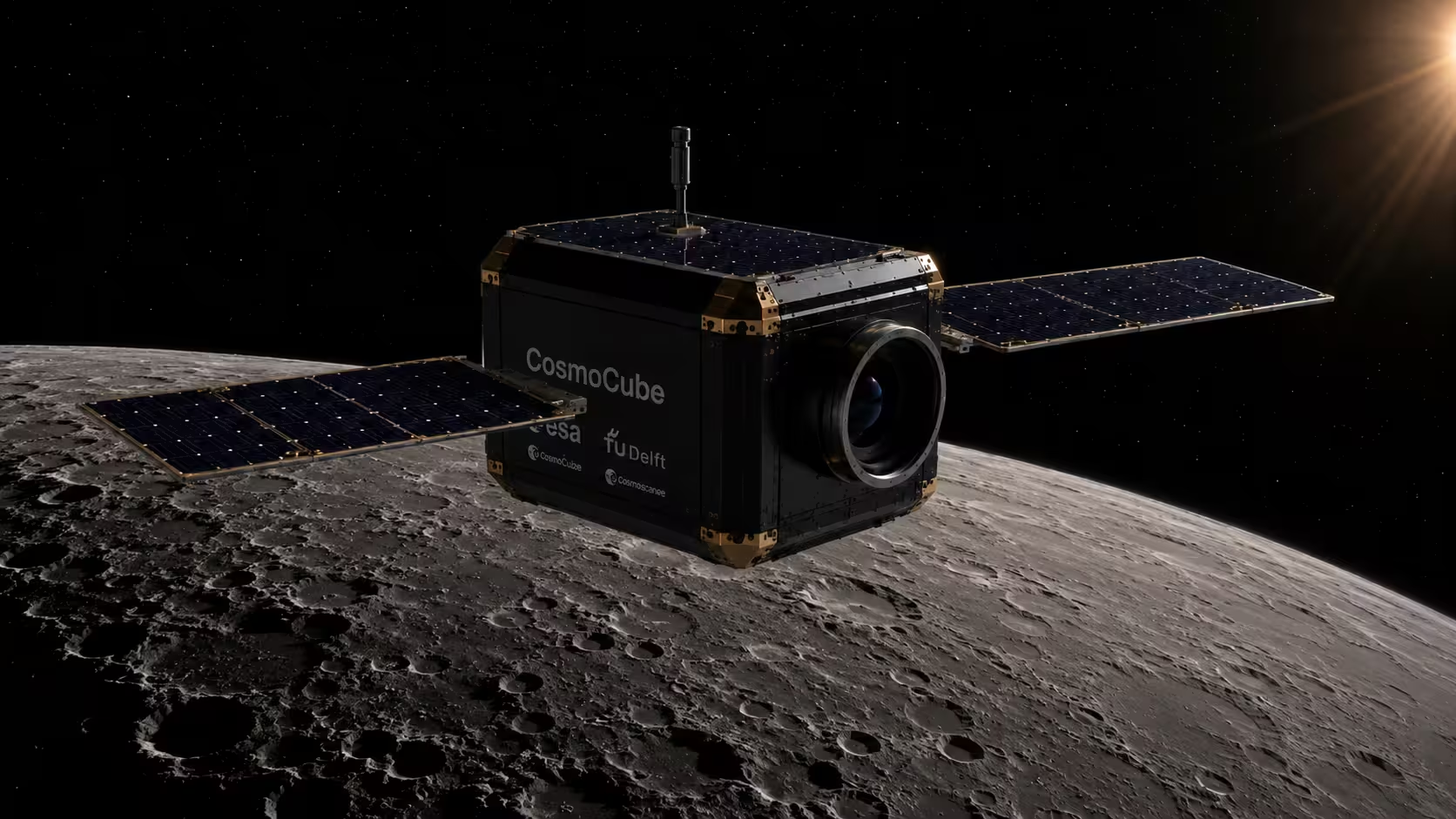
The next major milestone is the Lunar Surface Electromagnetics Experiment-Night (LuSEE-Night). Unlike its predecessor, this mission is specifically engineered to function on the radio-quiet far side. Currently slated for launch on Firefly Aerospace’s Blue Ghost Mission 2, the experiment is designed to operate through the harsh lunar night, potentially providing two years of high-fidelity data. Beyond surface-based experiments, new proposals like CosmoCube suggest that orbiting platforms could also capture these elusive signals without the need for large-scale infrastructure on the lunar surface.
A Race Against Contamination
As the international space community accelerates its plans for lunar exploration, a new paradox has emerged. The very spacecraft, navigation systems, and base-camp electronics required to establish a presence on the Moon threaten to permanently contaminate one of the universe’s most precious “quiet zones.” International regulatory bodies are already discussing the necessity of shielding this area, as unintended electromagnetic noise from future lunar activities could wash out the delicate 21-centimeter signals researchers are so eager to detect.
Ambitious projects like the proposed FarView array aim to scale up these efforts by deploying 100,000 dipole antennas across 200 square kilometers, potentially utilizing local lunar materials to construct the infrastructure. Whether through orbiting scouts or vast surface arrays, the consensus among cosmologists is clear: the far side of the Moon remains the most promising window into the infancy of our universe, provided we can preserve its silence.
Additional Scientific Context
- Prospects for precision cosmology with the 21 cm signal from the dark ages: A deep dive into the cosmological parameters detectable through hydrogen-line mapping. (Nature Astronomy, 2023)
- Design and Characterization of the Engineering Model of the Spectrometer Onboard LuSEE-Night: Technical insights into the engineering hurdles of lunar radio instrumentation. (Radio Science, 2024)
- Cosmology from the Moon in a radio-quiet environment: An analysis from the International Telecommunication Union regarding the protection of the lunar far side. (ITU, 2026)
This article has been fact checked for accuracy, with information verified against reputable sources. Learn more about us and our editorial process.
Last reviewed on .
Article history
- Latest version
Reference(s)
- Hibbard, Joshua. “Results from NASA's First Radio Telescope on the Moon: Terrestrial Technosignatures and the Low-Frequency Galactic Background Observed by ROLSES-1 Onboard the Odysseus Lander.” arXiv.org <https://arxiv.org/abs/2503.09842>.
- <https://www.sciencedirect.com/science/article/pii/S0273117724003405>.
- Mondal, Rajesh. “Prospects for precision cosmology with the 21 cm signal from the dark ages - Nature Astronomy.”, vol. 7, no. 9, pp. 1025-1030. Nature, doi: 10.1038/s41550-023-02057-y. <https://www.nature.com/articles/s41550-023-02057-y>.
- Tamura, Emi., et al. “Design and Characterization of the Engineering Model of the Spectrometer Onboard LuSEE‐Night.” Radio Science, vol. 59, no. 5, May 25, 2024 American Geophysical Union (AGU), doi: 10.1029/2023RS007925. <https://agupubs.onlinelibrary.wiley.com/doi/full/10.1029/2023RS007925>.
- Vanoli, Christine. “Cosmology from the Moon in a radio-quiet environment.”, August 24, 2026 ITU/UN tech agency <https://www.itu.int/hub/2026/08/cosmology-from-the-moon-in-a-radio-quiet-environment/>.
Cite this page:
- Posted by Aisha Ahmed