July Planet Watch: Venus Soars, Jupiter Sets, Mars & Saturn Rise at Dawn, Mercury Sneaks In
July’s shifting night sky reveals multiple planets visible at dawn and dusk, offering a stunning celestial display for stargazers.
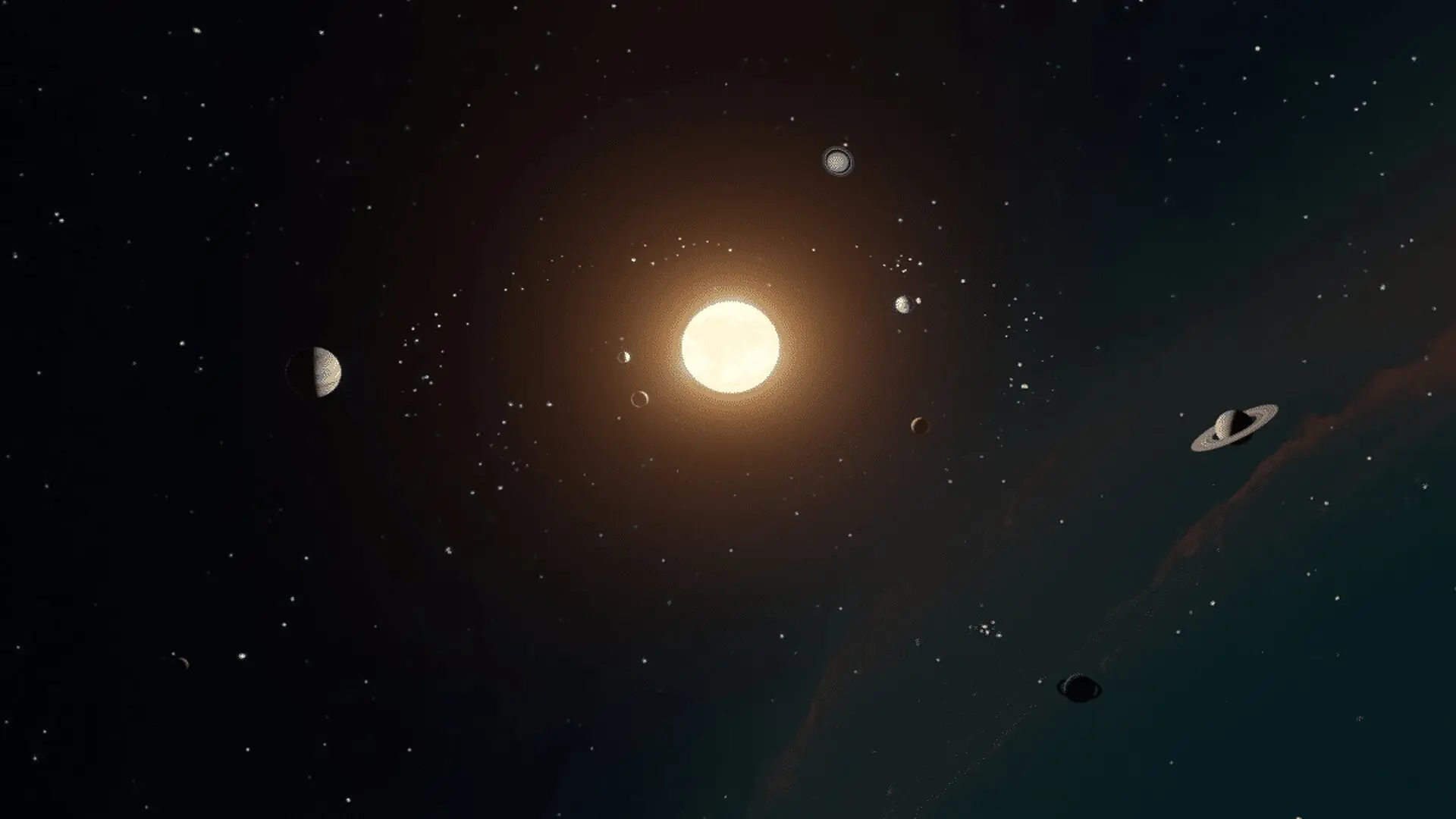
During July, the night and early‑morning sky will showcase a rotating cast of planets—including Venus, Jupiter, Mars, Saturn and Mercury—offering numerous opportunities for both seasoned astronomers and casual observers. EarthSky’s latest viewing guide outlines how each planet’s position shifts over the month, reshaping the celestial panorama above the horizon.
Visibility hinges on the planets’ angles relative to the Sun and our planet, meaning some appear after dusk while others emerge before sunrise. Enthusiasts can consult sky‑chart apps or online simulators such as Stellarium to pinpoint optimal viewing windows from their specific location.
Rather than forming a single line‑up, the planets trace individual arcs along the ecliptic—the apparent path the Sun follows across the sky—producing a dynamic, ever‑changing scene for those who track their motion night after night.
Evening Spotlight: Venus Rises as Jupiter Sets
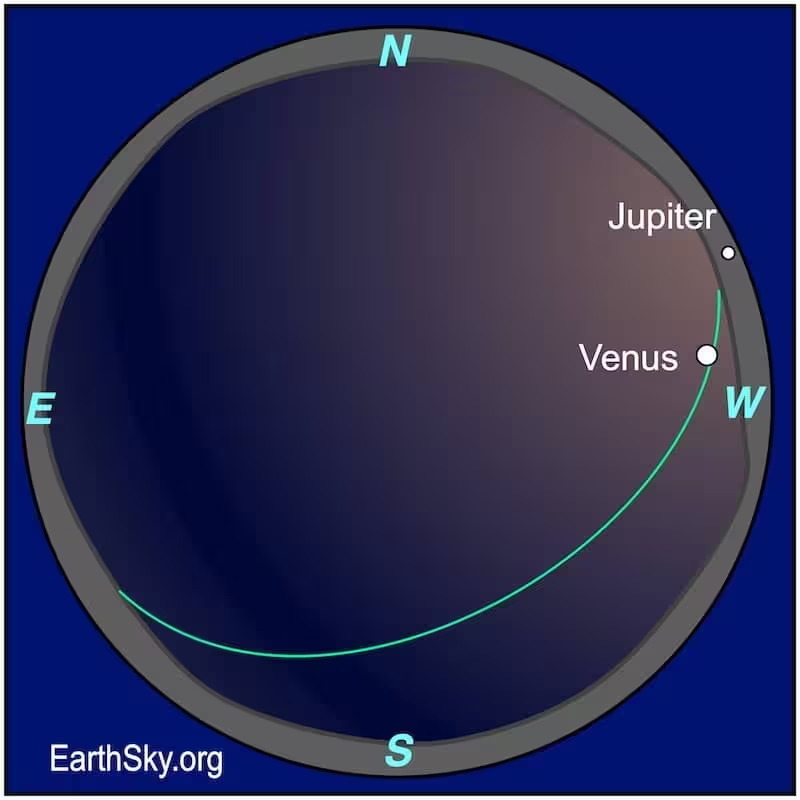
Venus dominates the western sky after sunset, climbing higher each evening as it nears its greatest elongation, an event slated for mid‑August (August 14‑15 2026). Its brilliance makes it unmistakable, appearing as a steady point of light rather than a flickering star.
In contrast, Jupiter is slipping lower toward the sunset horizon throughout July. The gas giant will slip behind the Sun from our viewpoint on July 29, only to reappear in the pre‑dawn sky when the months turn to September.
Morning Highlights: Mars and Saturn Appear
Early‑morning observers will first spot Mars low in the eastern twilight, nestled between the Pleiades star cluster and the bright orange star Aldebaran. Its characteristic red tint makes it easy to separate from neighboring stars as it climbs higher before sunrise.
Saturn follows a similar pre‑dawn trajectory, hanging farther south in the sky. Although more distant than Mars, its reflective rings lend a noticeable sparkle, rewarding those who bring a telescope or even strong binoculars.
Brief Glimpse of Mercury Before Dawn
Mercury makes a fleeting appearance in the last two mornings of July, lingering low in the eastern sky just before sunrise. The planet reaches its greatest elongation on August 2, providing a slightly wider window for spotting this elusive inner world.
Because Mercury stays close to the horizon, a clear, unobstructed view away from city lights is essential. Timing the observation carefully can make the difference between missing the planet entirely and catching its faint glow.
Lunar Milestones and Meteor Shower Highlights
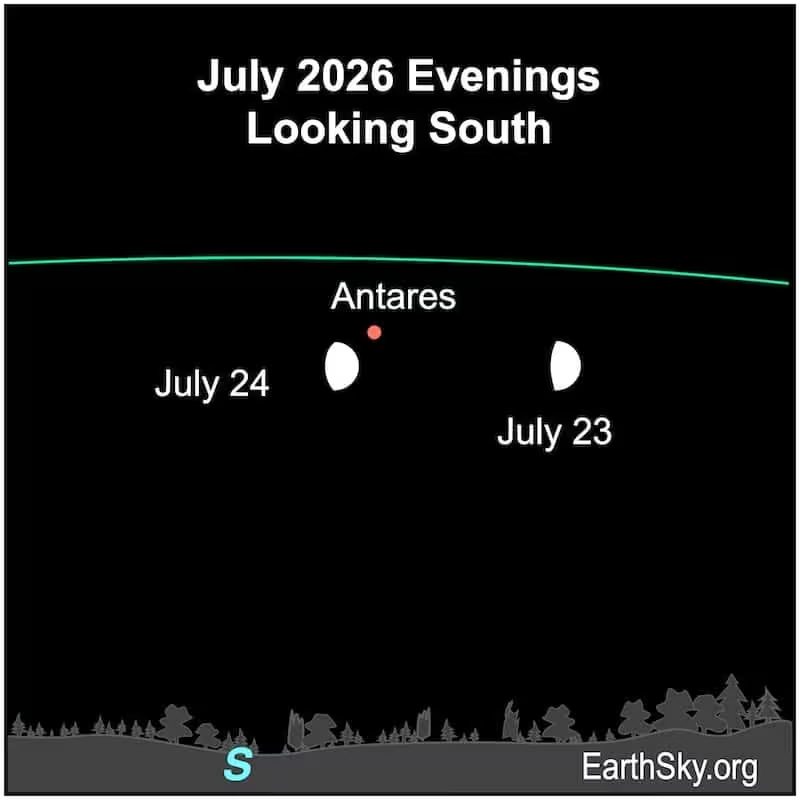
The Moon will pass near several prominent stars this month, including Spica in Virgo and the red supergiant Antares in Scorpius. A first‑quarter Moon on July 21, 2026, will showcase striking shadows across its craters, offering an excellent target for lunar enthusiasts.
Late July also brings the Delta Aquariid meteor shower, which peaks during moon‑free pre‑dawn hours. Observers who catch the shower under a dark sky can expect a modest display of meteors streaking across the heavens.
All of these events are accessible without specialized equipment, though binoculars or a modest telescope can enhance the experience, revealing finer details on planetary disks and lunar terrain.
This article has been fact checked for accuracy, with information verified against reputable sources. Learn more about us and our editorial process.
Last reviewed on .
Article history
- Latest version
Cite this page:
- Posted by Aisha Ahmed