Giant Planets May Detect Dark Matter via Subtle Ultraviolet Airglow
New study sets tighter limits on dark matter interactions by analyzing ultraviolet emissions from giant planet atmospheres.
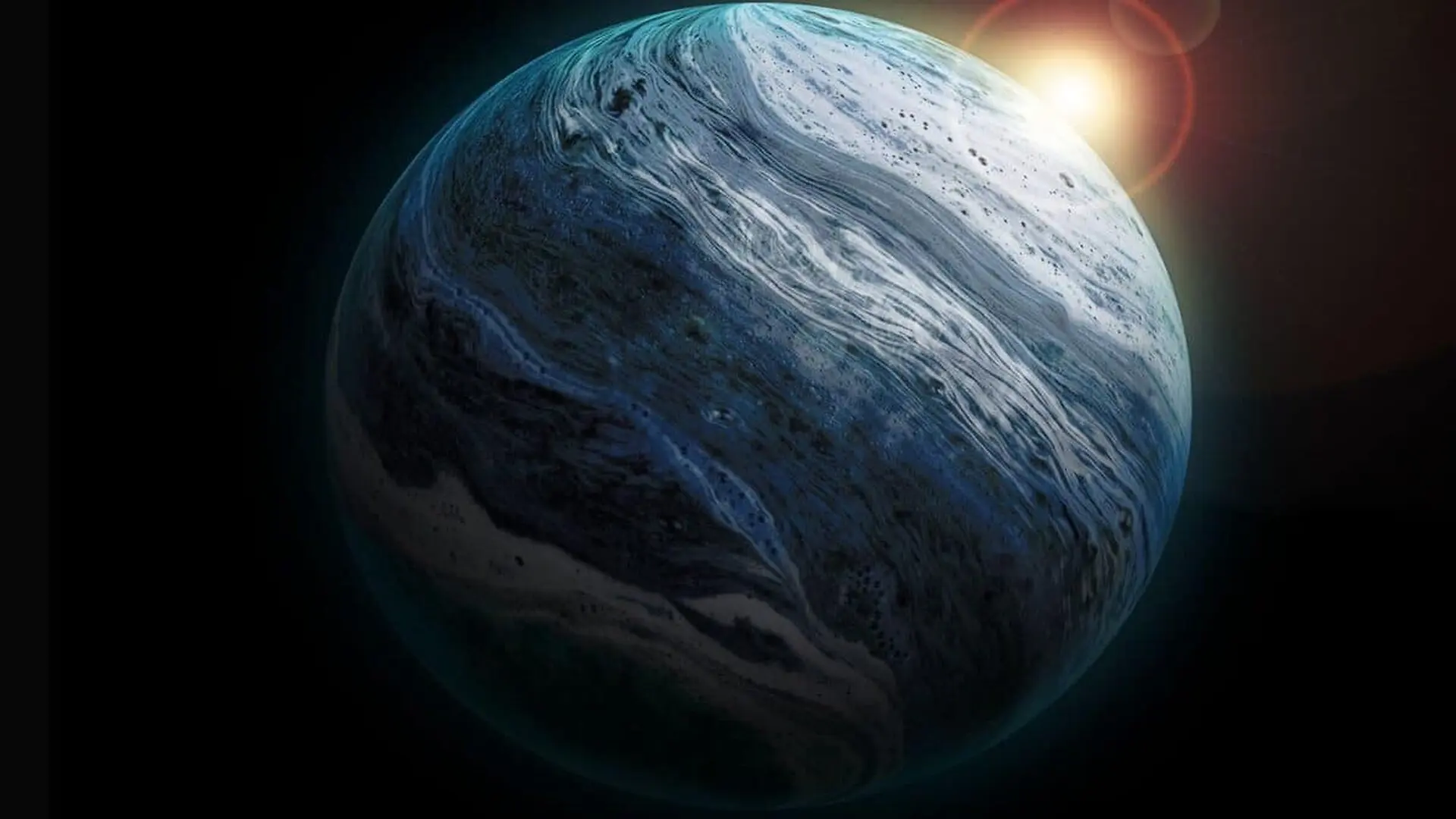
A recent study shows that the massive worlds of our solar system could serve as natural laboratories for hunting the elusive particles that make up dark matter, using faint ultraviolet emissions from their atmospheres as a potential indicator. Published in Physical Review Letters, the work places some of the tightest constraints to date on how dark matter might interact with ordinary matter and proposes that planets such as Jupiter and Saturn act like giant particle detectors.
Turning Giant Planets into Cosmic Particle Sensors
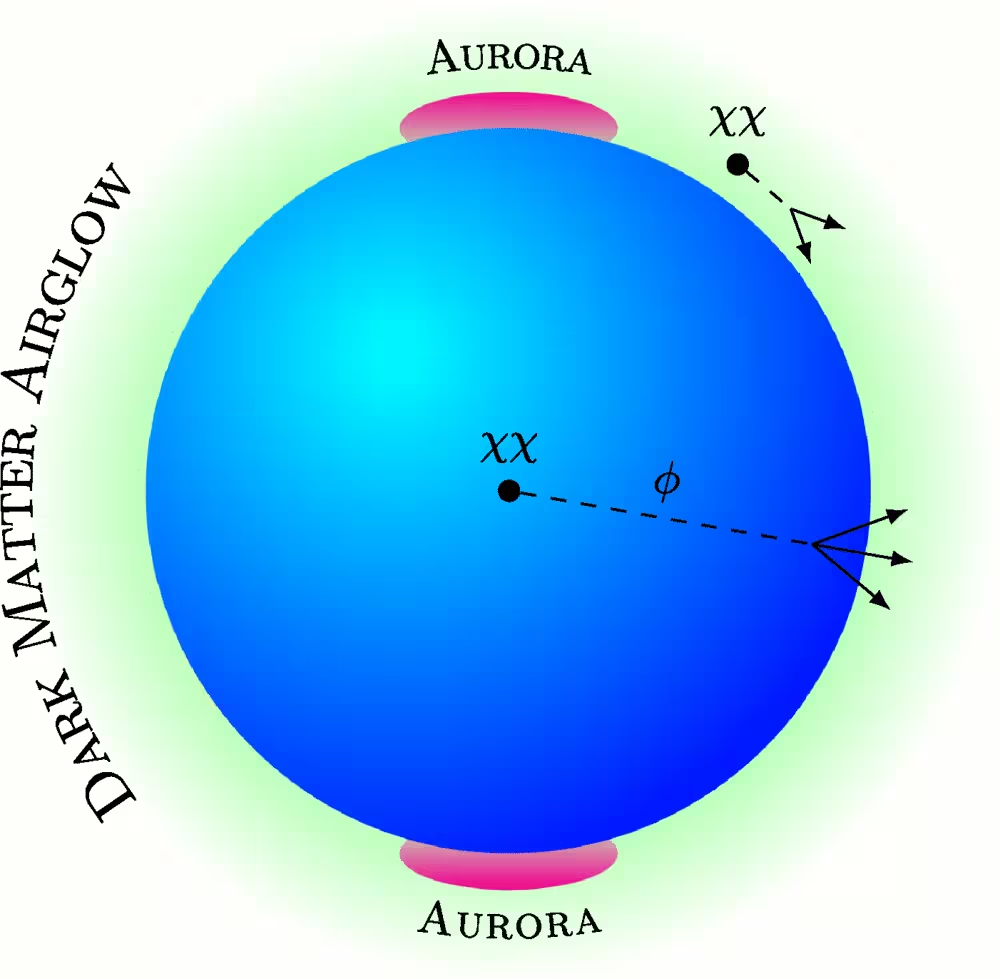
A team led by Carlos Blanco of Princeton University investigated whether the immense gravitational wells of the outer planets could capture dark‑matter particles drifting through the Milky Way. Once trapped, these particles may annihilate, releasing energy that excites hydrogen molecules in the surrounding atmosphere and produces a faint glow in the ultraviolet range.
“The natural next question was whether there’s a signature that works on every giant planet at once,” Blanco says. “Ultraviolet airglow, a phenomenon that humans have wondered about since Aristotle, turned out to be the answer.”
The proposed mechanism differs from earlier work by Blanco and Rebecca Leane at the SLAC National Accelerator Laboratory, which focused on infrared signatures linked to the ion‑derived molecule H₃⁺. Ultraviolet airglow, by contrast, would be a planet‑wide marker that could be searched for across all gas giants.
Detecting the Subtle UV Signature
When dark‑matter annihilation yields energetic electrons, those particles can excite molecular hydrogen, causing it to emit ultraviolet photons. The researchers set out to determine whether any excess brightness beyond the naturally occurring glow could be attributed to such particle interactions.
“Alongside ionizing photons, ionizing electrons can also cause molecular hydrogen to glow in the ultraviolet, a signature we can search for in every giant planet at once,” Blanco explains.
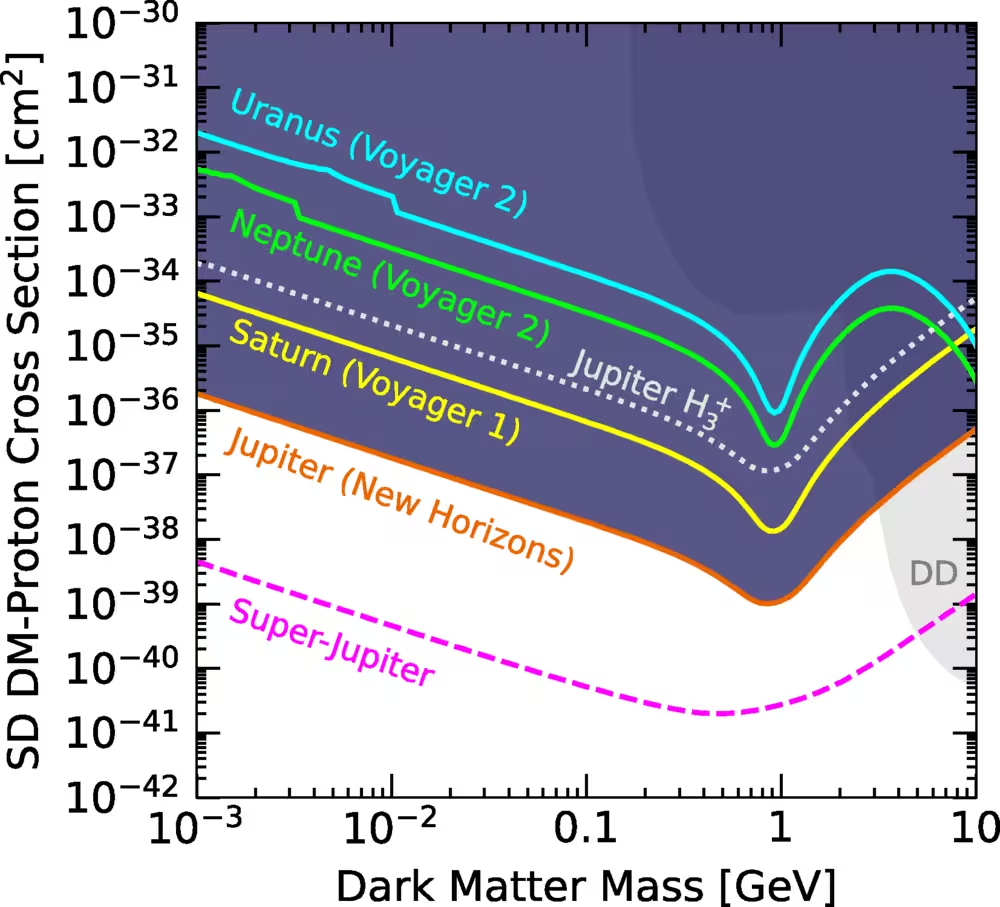
To isolate this potential signal, the team turned to archival data from the Voyager 1, Voyager 2 and New Horizons flybys of Jupiter, Saturn, Uranus and Neptune. By comparing theoretical emission models with the observed ultraviolet spectra, they derived upper limits on the strength of dark‑matter–matter interactions, establishing some of the most stringent constraints for this detection strategy.
Why Planetary Atmospheres Complement Earth‑Based Searches
Underground detectors on Earth are designed to capture rare particle collisions, yet certain dark‑matter candidates lose too much energy traversing rock to reach such instruments. In contrast, the vast hydrogen envelopes and deep gravitational potentials of gas giants provide a distinct environment where these particles could accumulate and reveal themselves.
“The sensitivity peaks for dark matter near the mass of the proton, which transfers energy most efficiently to the hydrogen these planets are made of,” Blanco explains. “Because the four giant planets differ in size, temperature and composition, each one probes different dark matter masses and models.”
Jupiter’s massive, hot atmosphere may capture a different spectrum of particles than the colder, less massive ice giants Uranus and Neptune, allowing scientists to test a broader range of theoretical scenarios. The study also highlights uncertainties about how long captured particles remain bound within a planet and how internal temperature influences the eventual ultraviolet output.
Upcoming Missions Could Sharpen the Test
The European Space Agency’s JUICE spacecraft, slated to orbit Jupiter in 2031, carries an ultraviolet spectrometer capable of mapping the planet’s glow with unprecedented precision. A dedicated mission to Uranus would also provide fresh data, updating the limited observations from the 1986 Voyager 2 encounter.
Beyond our own system, massive exoplanets—especially those comparable to or larger than Jupiter—might serve as even more sensitive detectors. Future ultraviolet telescopes could search for the characteristic glow on such worlds, turning distant gas giants into remote laboratories for dark‑matter physics.
“Future ultraviolet telescopes could search for this glow in massive exoplanets, where a nearby Super‑Jupiter would be an exceptionally sensitive dark matter detector.”
While no definitive dark‑matter signature has emerged from the ultraviolet measurements yet, the newly established limits demonstrate that planetary atmospheres can complement terrestrial experiments in the global quest to unravel the invisible scaffolding of the cosmos.
For further details, see the original paper in Physical Review Letters and related coverage at Daily Galaxy.
This article has been fact checked for accuracy, with information verified against reputable sources. Learn more about us and our editorial process.
Last reviewed on .
Article history
- Latest version
Reference(s)
- Blanco, Carlos., et al. “Search for Dark Matter Induced Airglow in Planetary Atmospheres.” Physical Review Letters, vol. 136, no. 25, June 25, 2026 American Physical Society (APS), doi: 10.1103/g53c-cvnh. <https://journals.aps.org/prl/abstract/10.1103/g53c-cvnh>.
Cite this page:
- Posted by Aisha Ahmed