Earth Is Spinning Faster and Experts Are Planning to Remove a Second From Our Clocks
Global timekeepers may abolish the leap second by 2027, allowing atomic clocks to drift further from Earth’s rotation in a major shift for global timekeeping.
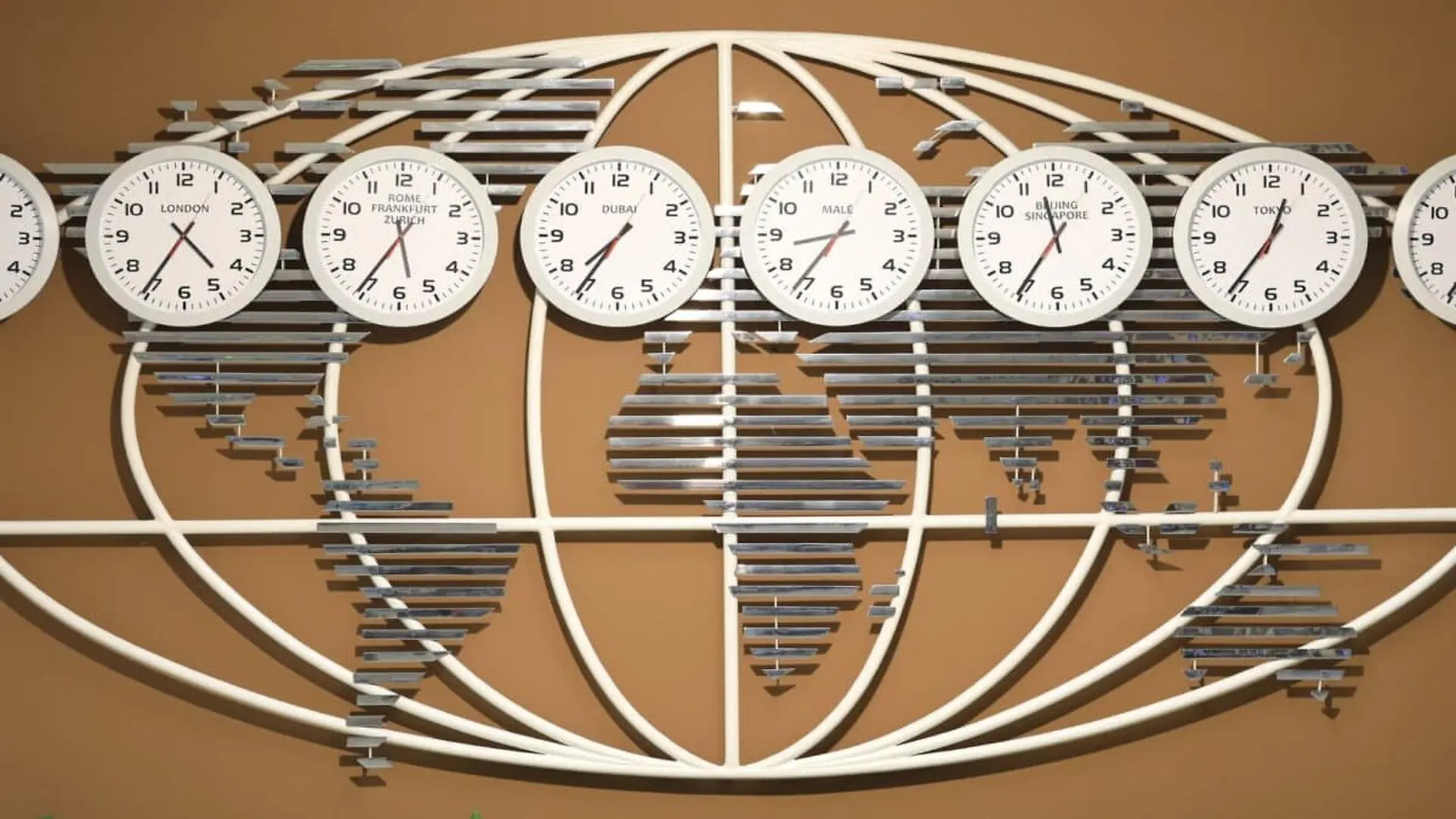
Global timekeeping authorities are preparing for a potential shift in how we synchronize our clocks, prompted by the unpredictable nature of our planet’s rotation. For years, the integration of leap seconds has served as a bridge between high-precision atomic clocks and the somewhat erratic speed at which Earth spins. However, as the planet shows signs of accelerating, experts are warning that we may soon face the unprecedented challenge of removing a second from the day—a move that carries significant risks for the delicate digital infrastructure powering modern society.
The Risks of a Negative Leap Second
Coordinated Universal Time (UTC) acts as the world’s clock, but it must be periodically adjusted to stay in sync with UT1, the time scale dictated by the Earth’s physical rotation. The National Institute of Standards and Technology (NIST) notes that these adjustments keep the two scales within a second of each other. Since 1972, humanity has added 27 positive leap seconds, with the most recent occurring in 2016. Currently, atomic time is approximately 37 seconds ahead of UTC.
While the Earth’s rotation is typically slowed by lunar tidal friction over long timeframes, shorter-term environmental factors—including melting ice, atmospheric dynamics, and shifts within the planet’s liquid core—can cause the planet to spin faster. Since 2015, this rotational acceleration has been pronounced enough that researchers, as highlighted in Nature, estimate a 30% likelihood that a negative leap second will be necessary by 2035. Unlike adding a second, skipping one has never been tested at a global scale, and many critical computer systems are not equipped to handle such a discontinuity.
This technical vulnerability is why major tech firms have historically avoided standard leap-second insertions. Google, for instance, has long utilized a “smearing” process, where the added time is distributed across the day rather than forced in at once. Georgette Macdonald, director-general of the Metrology Research Centre, has voiced concerns about these interventions, characterizing them as awkward breaks in a system designed for continuous measurement.
A Pivot Toward the Leap Hour
To resolve these technical headaches, international bodies are looking to move away from frequent, small corrections. The General Conference on Weights and Measures (CGPM) previously targeted 2035 as the cutoff for leap seconds, but a new proposal seeks to accelerate this transition, potentially ending the practice by May 20, 2027—World Metrology Day.
If passed, this resolution would essentially stop the clock on leap-second adjustments, allowing the gap between atomic time and Earth’s rotation to grow significantly wider. Instead of maintaining a one-second threshold, timekeepers would allow the variance to reach as much as one hour before performing a correction. According to Macdonald, this shift is much more manageable because an hour-long adjustment mirrors the familiar, accepted practice of daylight-saving time, and such a large discrepancy would take centuries or millennia to manifest.

While some navigation systems like GPS have operated independently of leap seconds for years, others—including Russia’s GLONASS—have relied on them. Former NIST official Elizabeth Donley confirms that global efforts are already underway to ensure these systems can function without the constant synchronization requirement. Although astronomers have traditionally relied on solar time to align telescopes, they have largely indicated that existing computational methods are sufficient to bridge the gap.
The fate of the leap second will be decided at the 28th meeting of the CGPM in Versailles, held from October 13 to 15, 2026. If the member states vote in favor of the proposal, the reliance on these minute, disruptive adjustments will officially become a relic of the past.
This article has been fact checked for accuracy, with information verified against reputable sources. Learn more about us and our editorial process.
Last reviewed on .
Article history
- Latest version
Reference(s)
- “Leap second and UT1-UTC information.”, August 6, 2009 NIST <https://www.nist.gov/pml/time-and-frequency-division/time-realization/leap-seconds>.
- “The leap second is dead. Long live the leap hour?.”, August 31, 2026 <https://www.nature.com/articles/d41586-026-02669-0>.
- “Biography: Georgette Macdonald - National Research Council Canada.” <https://nrc.canada.ca/en/corporate/corporate-overview/biography-georgette-macdonald>.
- “Elizabeth Donley.”, July 30, 2019 NIST <https://www.nist.gov/people/elizabeth-donley>.
Cite this page:
- Posted by Aisha Ahmed