Astronomers Just Discovered the Most Powerful Radio Galaxy Ever Found in the Early Universe
Astronomers have finally detected a powerful, long-hidden galactic signal that slipped past traditional search methods. Could more be hiding in the dark?
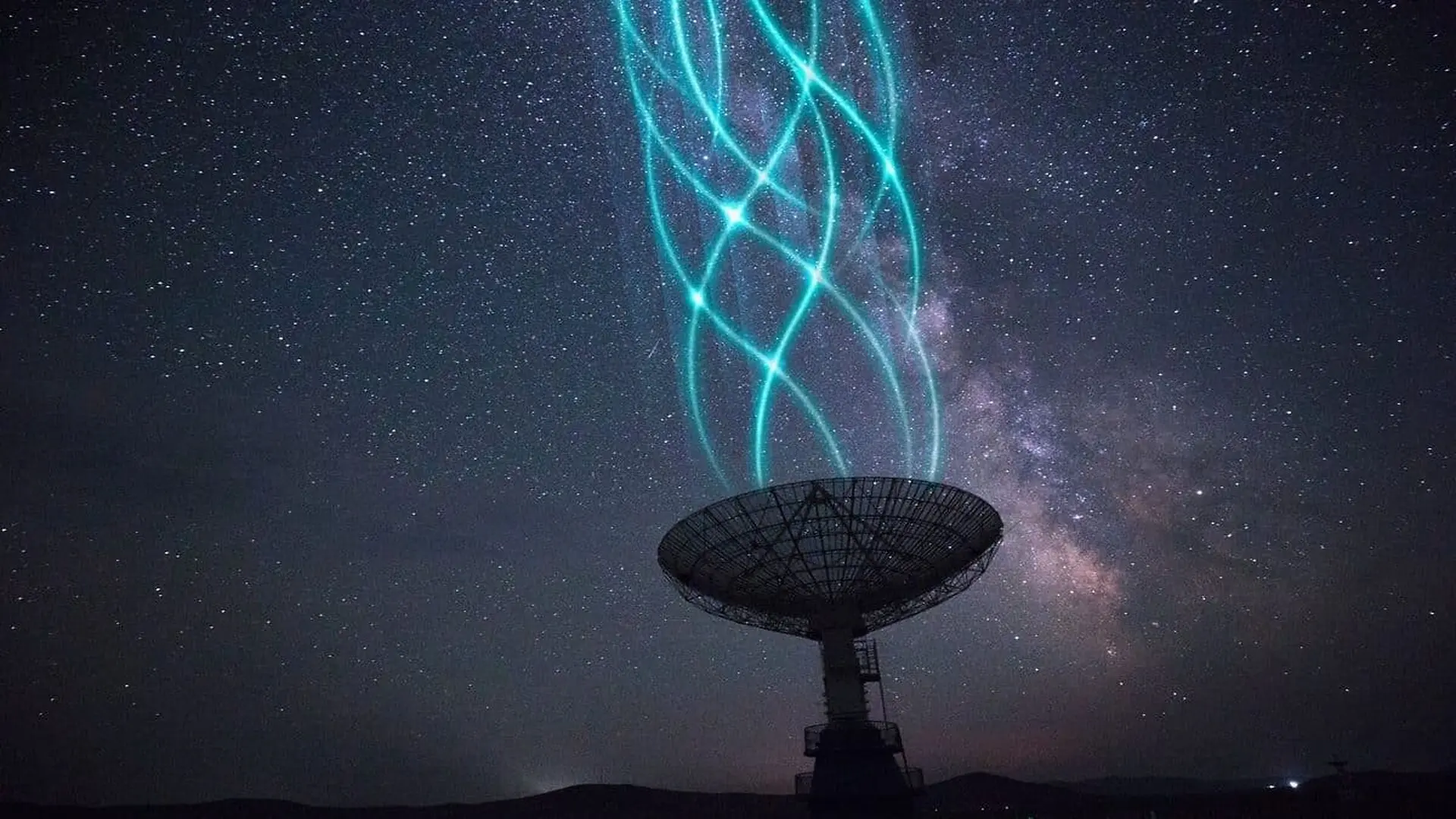
Astronomers have identified a colossal radio galaxy that appears to shatter existing records for sheer energetic output. Designated TXS 2354+015, the object hails from the early epoch of the cosmos, dating back to when the universe was less than 1.2 billion years old, or approximately 12.5 billion years in our past.
A research team spearheaded by Barbara Balmaverde of the INAF Astrophysical Observatory of Turin detailed the discovery in a paper uploaded to the arXiv preprint server on September 23, 2026. By confirming a redshift of 4.946, the team established that this is the second-most-distant radio galaxy ever documented.
Radio galaxies are essential laboratories for studying the primordial universe. Their defining feature is a supermassive black hole at the center that consumes nearby matter, driving titanic plasma jets that erupt into space, emitting intense radio signals. These outflows have the capacity to heat surrounding gas and significantly influence the evolution of star formation within the host galaxy.
Detecting the Hidden Giants of the Early Universe
Locating such distant entities is notoriously difficult, as their central engines are often shrouded behind dense veils of dust and gas that mask them from standard optical instruments. While radio waves can punch through these obscurations, pinpointing the specific galaxy responsible for the emission remains a persistent hurdle for astrophysicists.
According to a 2024 study referenced by the research team, as many as 90 percent of radio-loud active galactic nuclei existing beyond a redshift of 3.5 may remain invisible to traditional ultraviolet and optical surveys. To circumvent this, the team moved away from the conventional strategy of hunting for galaxies with ultra-steep radio spectra. Instead, they synthesized optical data from the Hyper Suprime-Cam survey conducted by the Subaru telescope with radio observations sourced from the 150 MHz TGSS survey and the 3 GHz VLASS catalog.

The researchers specifically looked for the Lyman break—a sharp drop in light intensity caused by the absorption of ultraviolet radiation by neutral hydrogen—to isolate objects at extreme distances. In the redshift range of 4.5 to 5.3, TXS 2354+015 emerged as a primary candidate, showing a distinct Lyman-alpha emission line that confirmed its extreme distance.
An Unmatched Powerhouse
Beyond its distance, the galaxy’s energy profile is staggering. Analysis of its intrinsic radio luminosity at 500 MHz indicates that TXS 2354+015 surpasses all previously known high-redshift radio galaxies, including the record-holder cited in a landmark 2008 census. The team concluded in their report that the object appears to be the most powerful radio galaxy identified to date.
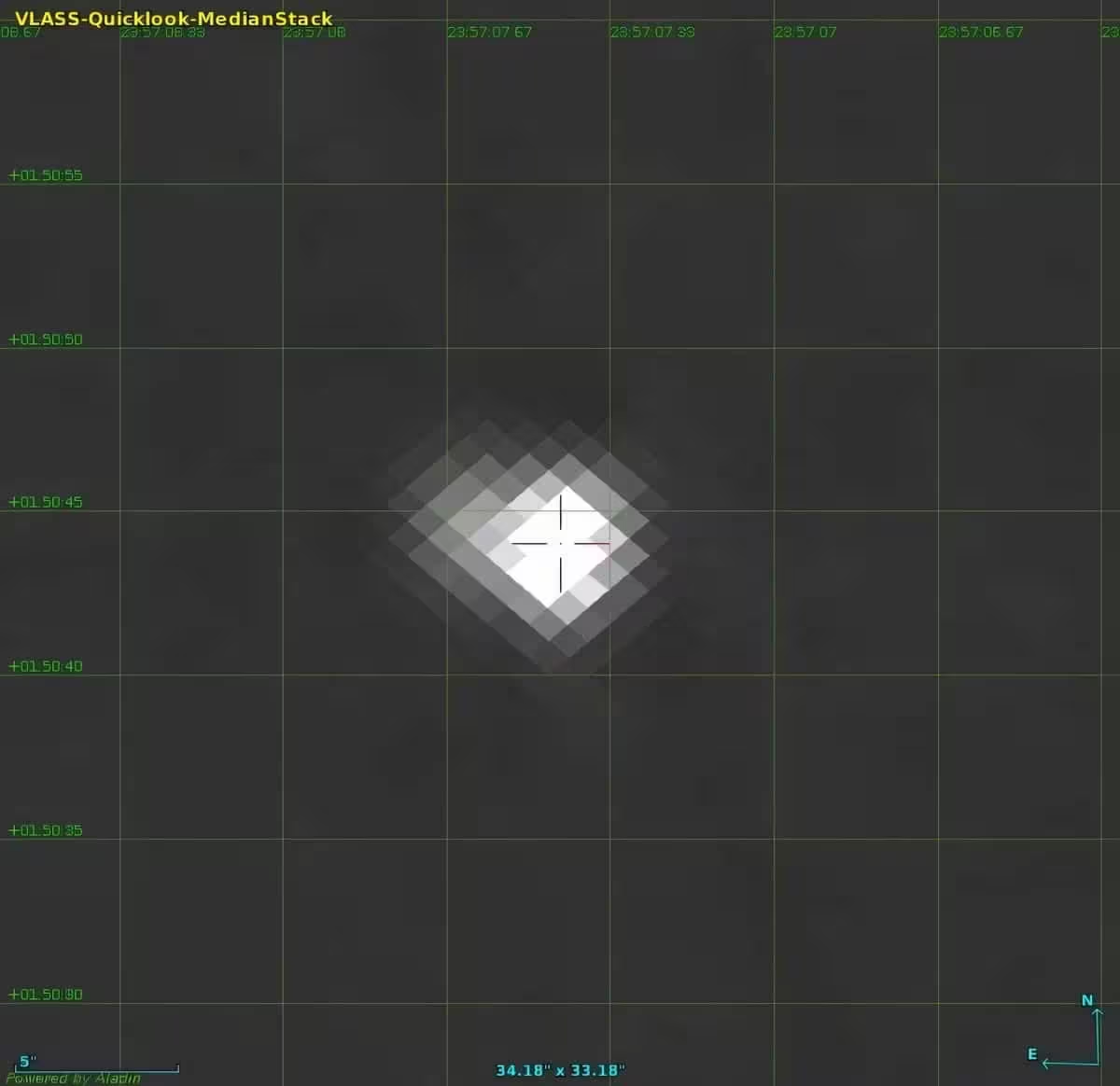
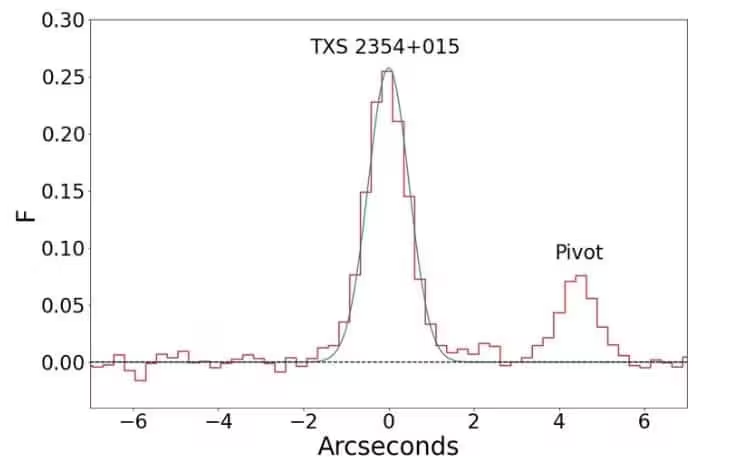
To ensure the findings were robust, the investigators verified that the radio emission and the optical signal originated from the same galactic host, effectively ruling out the possibility of a chance alignment of two separate objects. This confirms TXS 2354+015 as a premier subject for studying black hole activity during the nascent stages of the universe.
Implications for Future Galactic Surveys
Current estimates suggest the host galaxy may harbor approximately 2 trillion solar masses, though the team cautioned that this measurement carries significant uncertainties, particularly regarding the age of its stellar population. Perhaps more importantly, the discovery of TXS 2354+015 proves that the traditional reliance on steep-spectrum radio signatures may be causing astronomers to overlook a vast portion of the early universe’s population. By demonstrating that such a powerful galaxy would have been missed by standard selection criteria, the team has highlighted a critical blind spot in current cosmic surveys.
This article has been fact checked for accuracy, with information verified against reputable sources. Learn more about us and our editorial process.
Last reviewed on .
Article history
- Latest version
Reference(s)
- Balmaverde, B.. “The quest for high-redshift radio galaxies II. Discovery of the most powerful known radio galaxy at z=4.946.” arXiv.org <https://arxiv.org/abs/2609.28632>.
- <https://www.sciencedirect.com/topics/physics-and-astronomy/lyman-break-galaxies>.
Cite this page:
- Posted by Aisha Ahmed