Scientists Discover Bizarre Pac-Man Enzyme That Eats Plastic and Disables Antibiotics
German researchers have discovered a bacterial enzyme that breaks down biodegradable plastics and antibiotics, uncovering a link to antibiotic resistance.
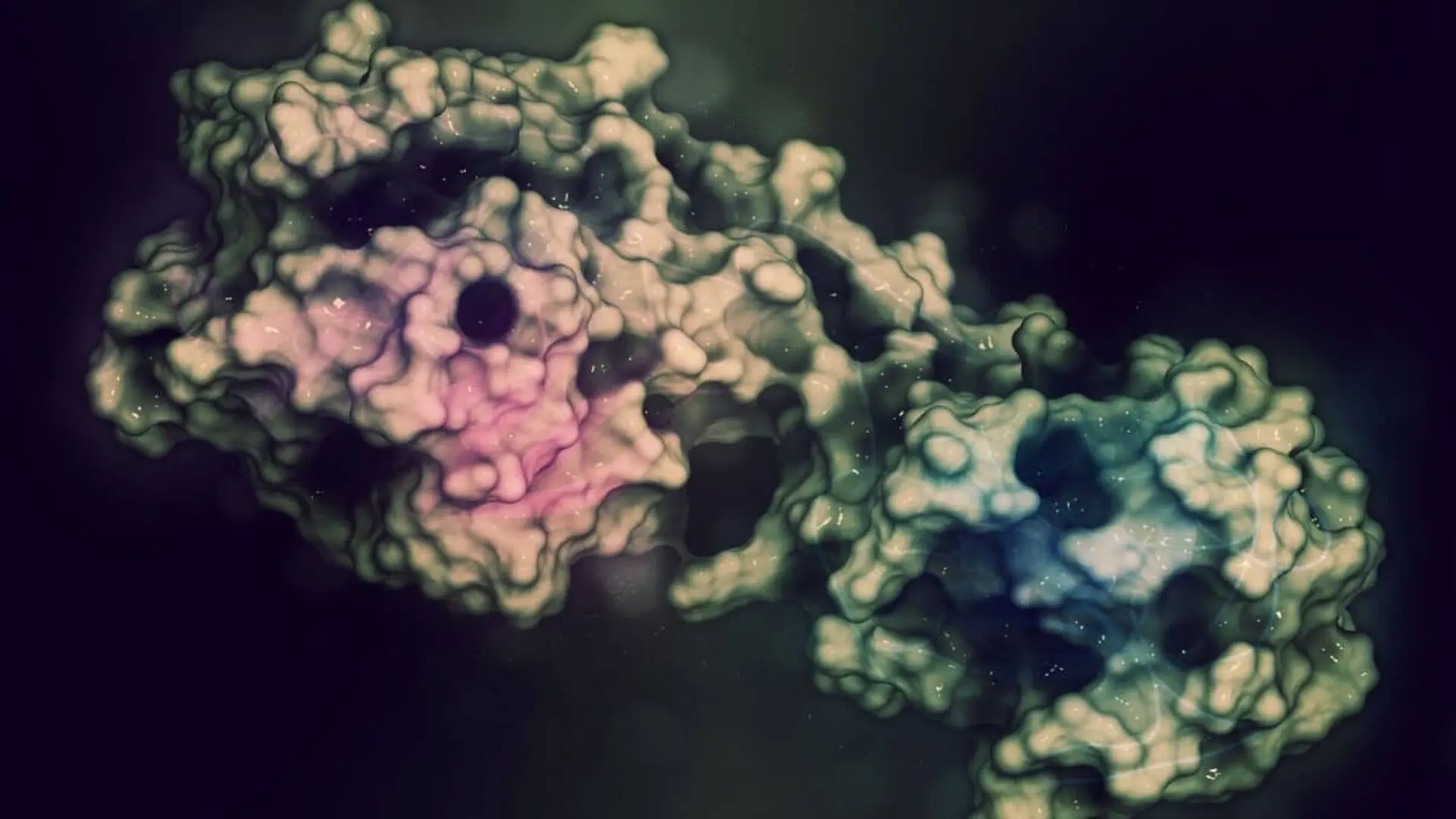
Researchers at the University of Konstanz have identified a remarkable bacterial enzyme capable of devouring synthetic polyesters, a discovery that offers new insights into how soil microorganisms adapt to human-made materials. The enzyme, dubbed “Pac-Man” for its uniquely wide binding site, appears to facilitate the breakdown of complex bioplastics while simultaneously acting as an agent against certain antibiotics, according to findings published September 2, 2026, in The ISME Journal.
Soil Microbes and the Lifecycle of Bioplastics
The investigation focused on long-chain aliphatic polyesters (LCAPs), a category of biodegradable polymers engineered by a team led by chemist Stefan Mecking. To observe how these materials interact with natural ecosystems, researchers Harry Lerner and David Schleheck buried thin films of the plastic in forest soil within the university’s botanical garden. Over the course of a year, they monitored how native microbial communities interacted with the buried materials, comparing the results against conventional high-density polyethylene (HDPE).
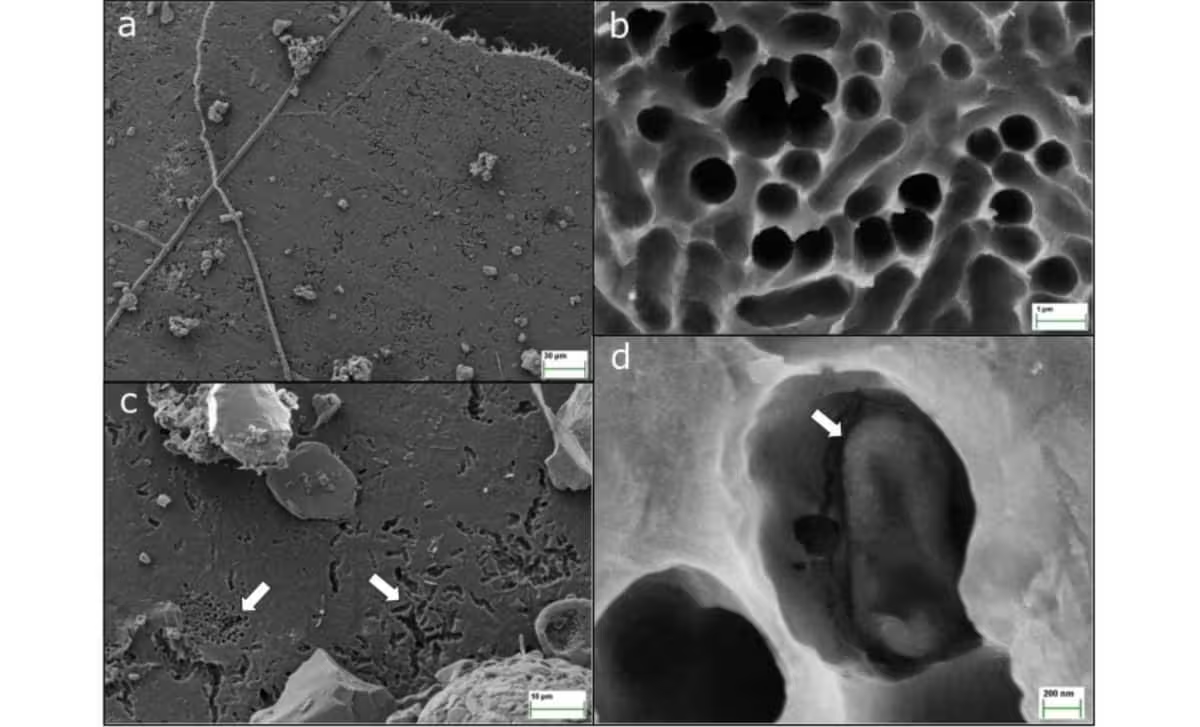
While the non-biodegradable HDPE remained largely intact, the LCAP formulations showed significant degradation. Laboratory analysis of carbon dioxide release confirmed that specific LCAP types—namely PE-18,18 and PE-2,18—were highly susceptible to microbial processing, with nearly 60% of their carbon converted into carbon dioxide within 250 days. Electron microscopy of the recovered films revealed tiny pits and cavities consistent with the size of bacterial cells, suggesting that the organisms were grazing directly on the plastic surfaces.
The “Pac-Man” Enzyme: A Dual-Purpose Tool
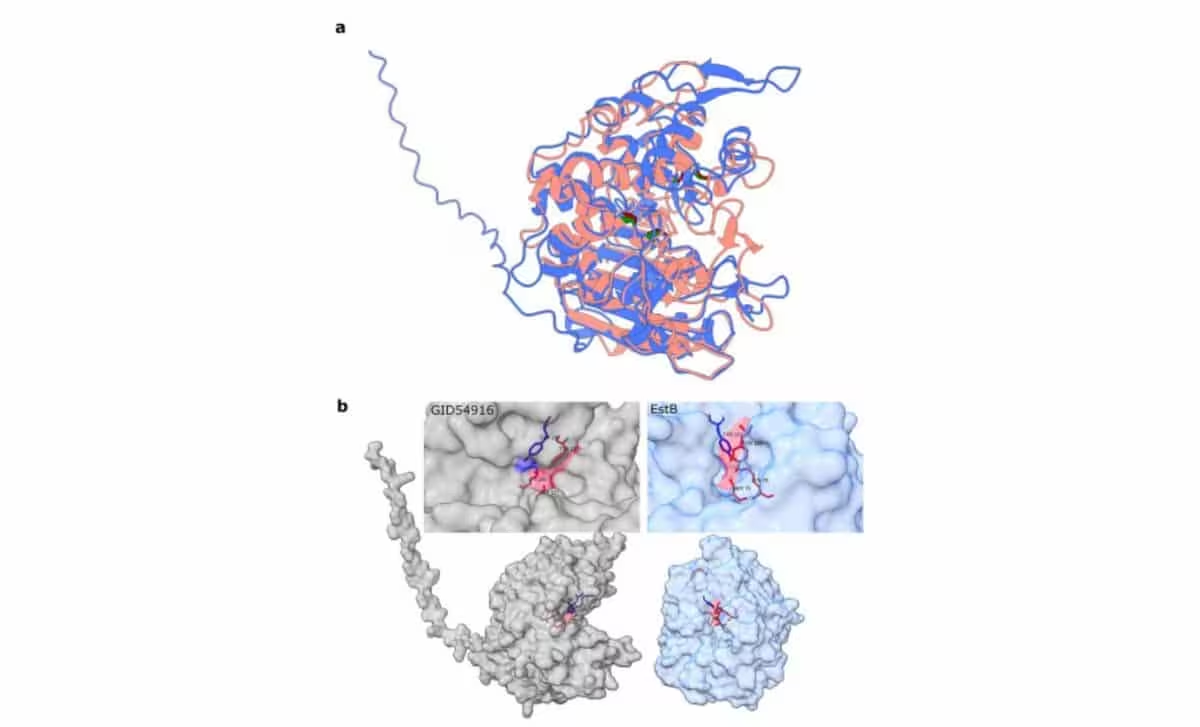
By sequencing the DNA of the soil microbes, the team pinpointed a highly active gene encoding an enzyme they named long-chain polyester hydrolase 1 (LCPH1). Using AlphaFold3 to model its structure, the researchers discovered why the protein is so efficient: it possesses an unusually broad, exposed binding groove. This “Pac-Man” configuration allows it to capture and hydrolyze bulky polymer chains that would typically be inaccessible to more specialized enzymes.
Perhaps more surprising was the discovery that LCPH1 does not limit its activity to plastics. Because its chemical mechanism targets bonds susceptible to hydrolysis, the enzyme also successfully degraded beta-lactam antibiotics, including penicillin G and ampicillin. In controlled tests, E. coli treated with the enzyme-degraded antibiotic showed a clear loss of resistance-suppressing capability.
This article has been fact checked for accuracy, with information verified against reputable sources. Learn more about us and our editorial process.
Last reviewed on .
Article history
- Latest version
Reference(s)
- Lerner, Harry., et al. “Bacterial family-VIII esterase displays dual activities: hydrolysis of polyester bioplastics and β-lactam antibiotics.” The ISME Journal, vol. 20, no. 1, September 2, 2026 Oxford University Press (OUP), doi: 10.1093/ismejo/wrag203. <https://doi.org/10.1093/ismejo/wrag203>.
Cite this page:
- Posted by Elizabeth Taylor