Archaeologists Discover Over 1,000 Ancient Roman Dice Near Mysterious Red Painted Building
Was it a gambling den, a workshop, or something even more mysterious? We explore the conflicting theories surrounding this enigmatic historical site.
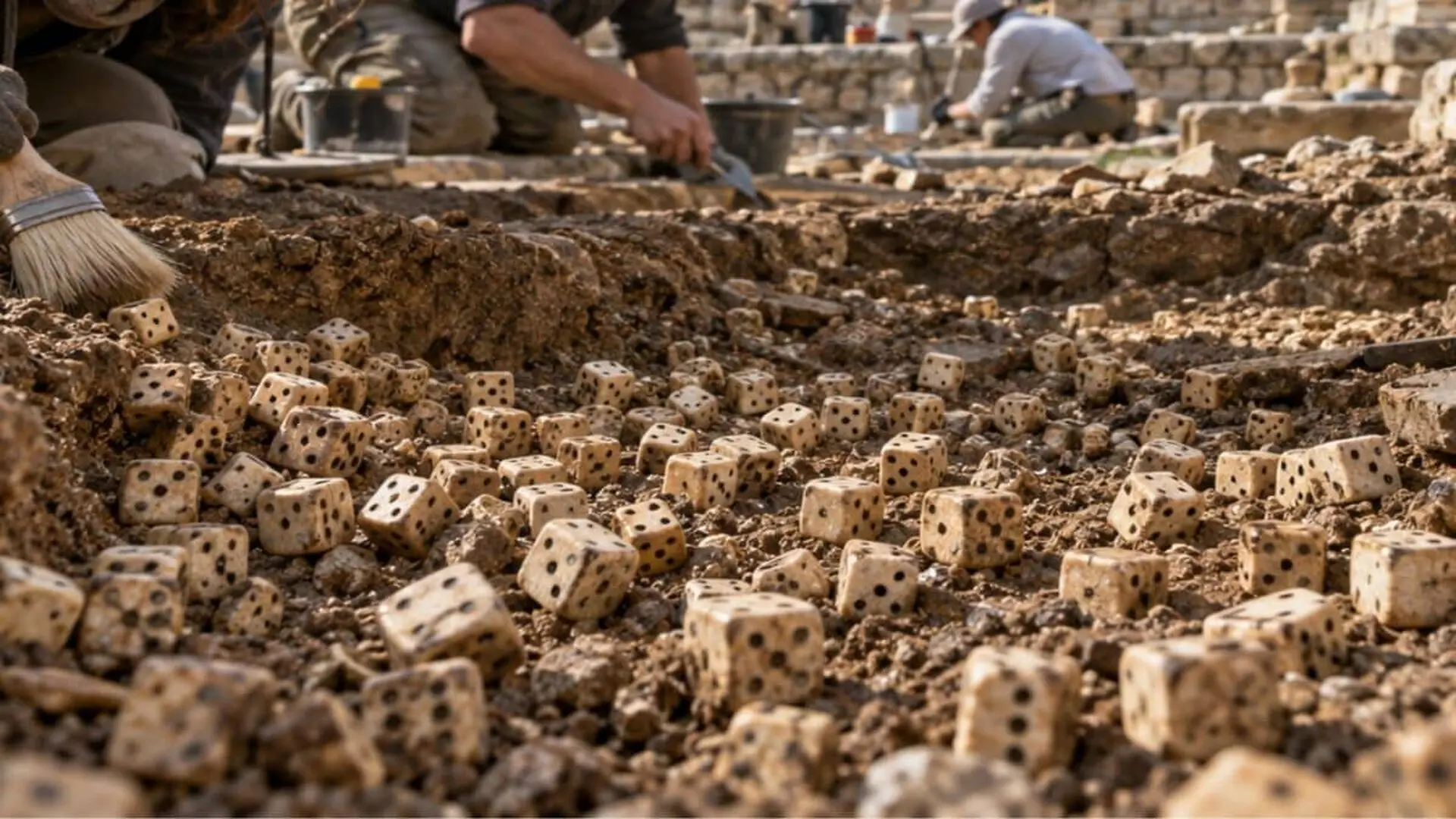
Archaeologists excavating a site in the village of Grand, located in the Vosges department of northeastern France, have uncovered an unprecedented hoard of more than 1,000 ancient bone dice. The discovery, which spans multiple excavation seasons, centers on a compact structure measuring just 4.5 by 3.8 meters. With its distinctive red-painted walls and eastern entrance, the building has left experts debating its original purpose, especially given that three of the dice were found embedded directly within its foundations.
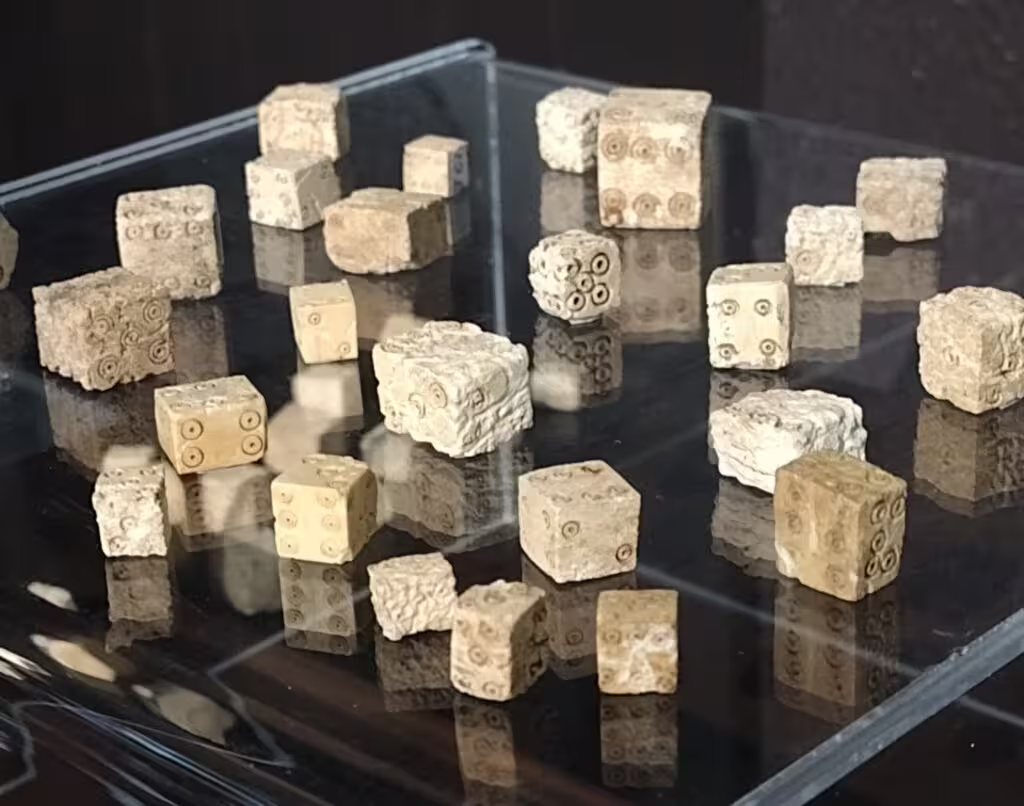
The collection, which stands as the largest cache of such gaming pieces ever recovered from antiquity, provides a rare look at the recreational and ritualistic habits of the Roman world. The dice are expertly crafted, featuring the classic “sevens” configuration where opposing sides sum to seven. Many of the bone cubes still bear traces of an ancient pigment mixture made from wax and charcoal, applied to the engraved circular spots to improve visibility.
Unlocking the Mystery of a Roman Enigma
The site, led by Thierry Dechezleprêtre, chief curator of the Gallo-Roman collections at the Musée d’Archéologie nationale, has yielded an array of mundane artifacts including hobnails, bronze coins, and sewing needles. However, the sheer density of dice concentrated in this small space is what has drawn significant attention from researchers. The team is currently considering three primary hypotheses for the structure: it may have functioned as a specialized workshop for carving game pieces, a dedicated sanctuary, or a gaming hall operating under divine protection.
Excavations are also investigating a nearby trench containing the remains of a wooden water pipe, suggesting a more complex utility for the surrounding area. The artifacts recovered are estimated to date between the 1st and 3rd centuries A.D. and are currently undergoing intensive study at the national museum to determine whether they were manufactured on-site or deposited later in the building’s history.
An Ancient Hub of Healing and Fortune
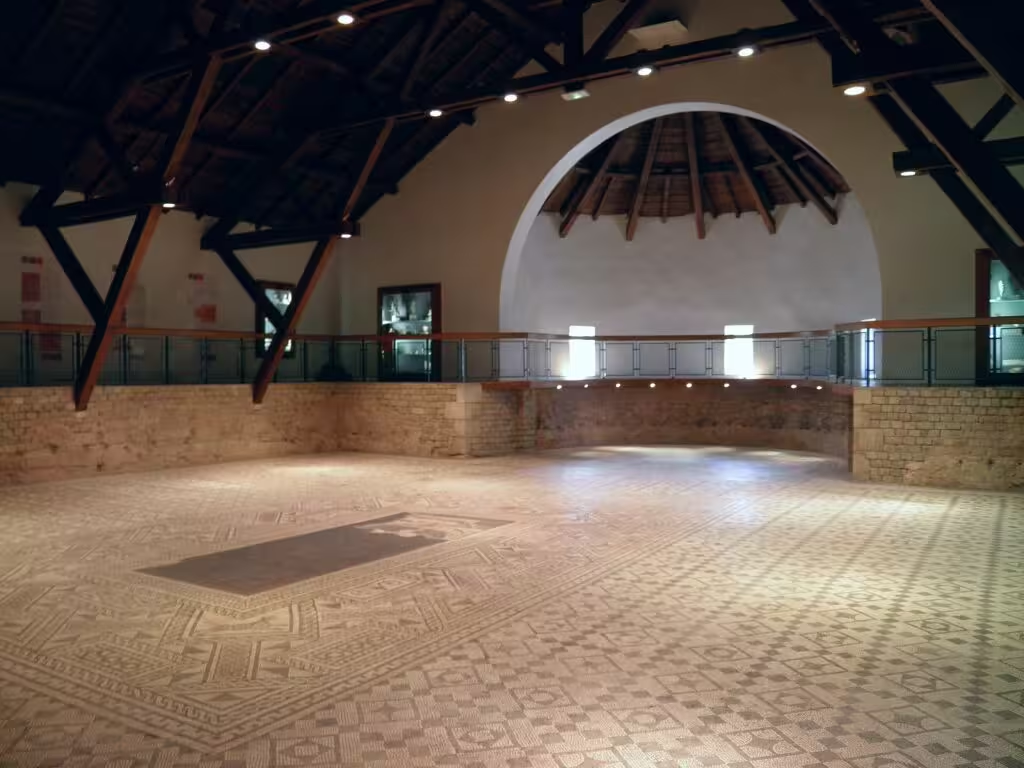
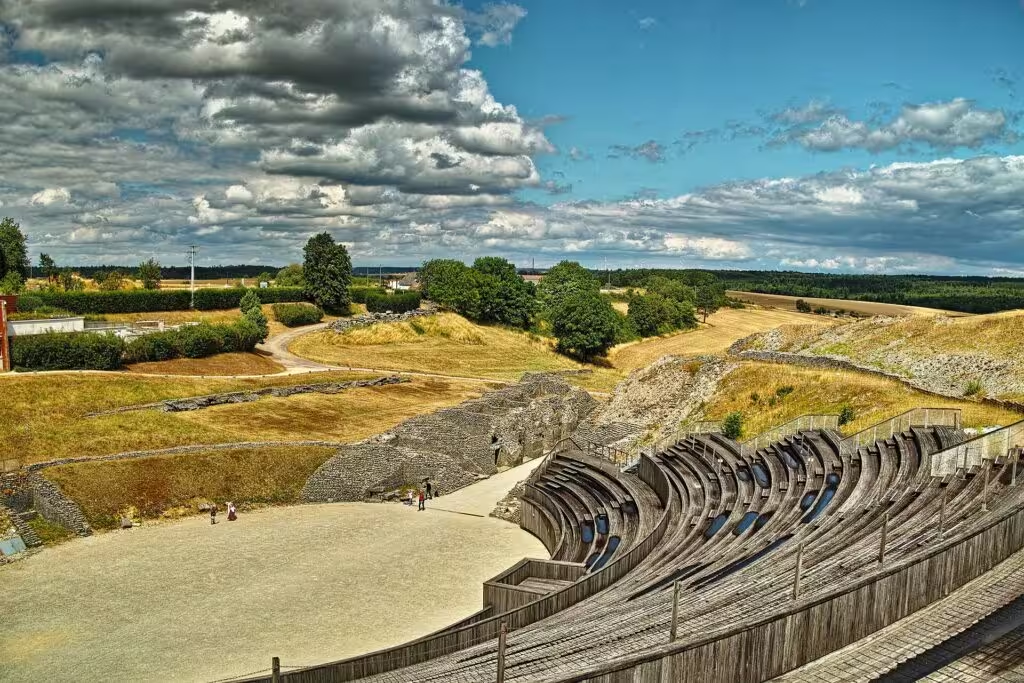
During the Roman era, the village of Grand was known as Andesina, a sprawling settlement home to approximately 15,000 to 20,000 residents. The town served as a significant regional center, featuring a massive amphitheater capable of seating 17,000 spectators and a basilica adorned with one of the largest Roman mosaics ever discovered. Its prestige was primarily tied to a sanctuary dedicated to Apollo Grannus, a deity associated with healing.
The prevalence of dice in the archaeological record underscores their importance in Roman life, serving both as tools for entertainment and as implements for divination. Despite strict Roman laws that prohibited gambling for money—save for exemptions during the festival of Saturnalia—the practice was widespread across all levels of society. Historical records confirm that several emperors, including Claudius, were known enthusiasts of dice games.
The site at Grand holds even greater historical weight due to its possible connection to Emperor Constantine. A Latin address from 310 A.D. recounts the Emperor’s visit to a temple of Apollo, which was lauded as a masterpiece of the era. Scholars, including the late Camille Jullian, have long hypothesized that the sanctuary at Grand was the very location of this imperial pilgrimage, adding an extra layer of intrigue to the ongoing excavation of this modest yet significant building.
This article has been fact checked for accuracy, with information verified against reputable sources. Learn more about us and our editorial process.
Last reviewed on .
Article history
- Latest version
Cite this page:
- Posted by Vikram Desai