NASA Is Sending a Lander to Investigate a Mysterious Hidden Cave on the Moon
NASA is deploying radar and seismic sensors to investigate a mysterious lunar pit that could house a massive cave, offering shelter for future astronauts.
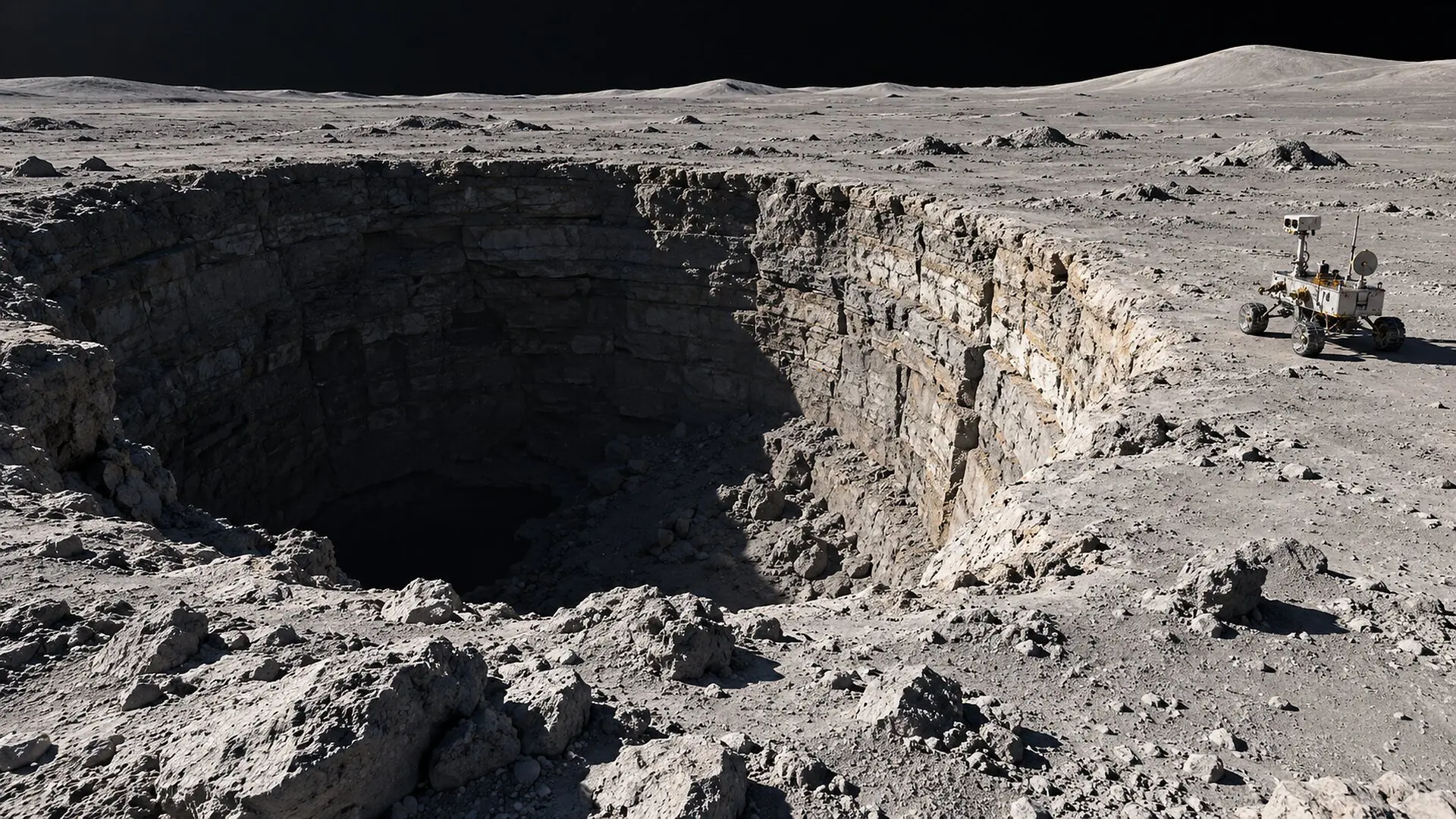
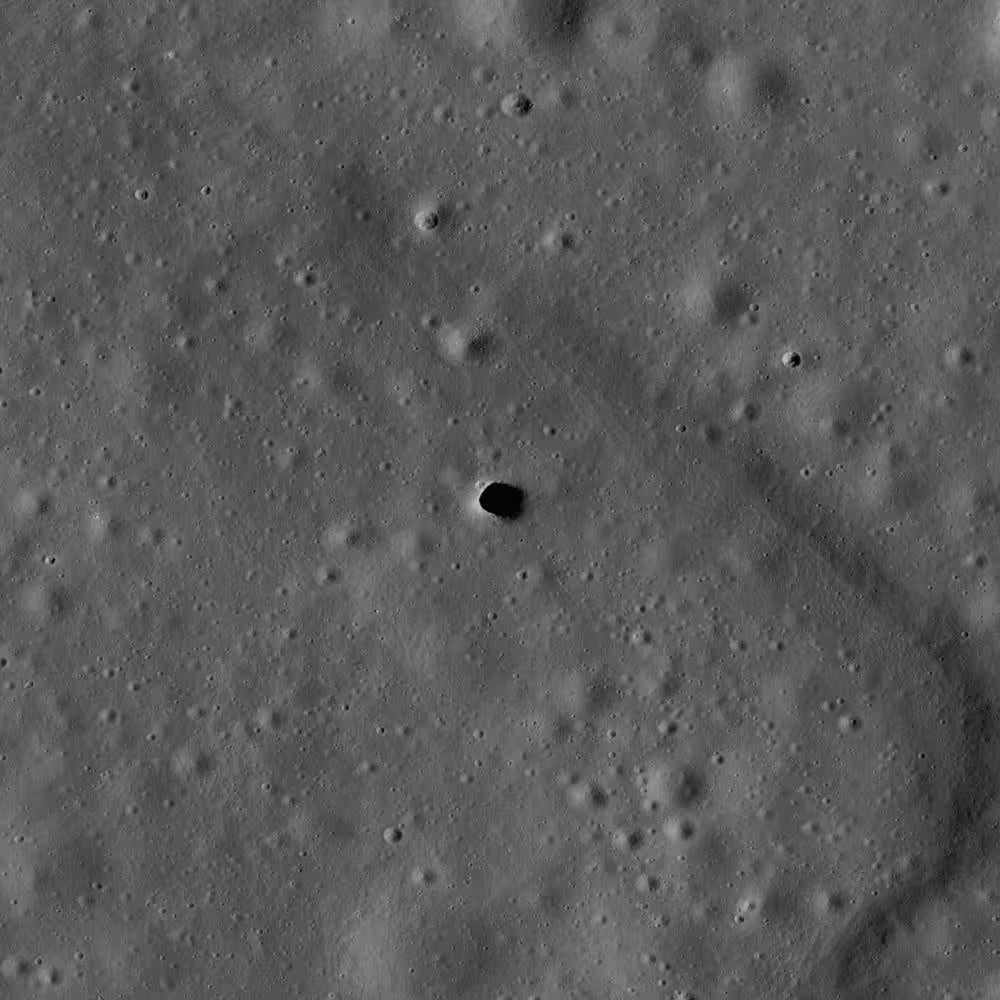
NASA is preparing to probe one of the Moon’s most compelling geological mysteries. The agency has officially selected a new scientific mission, dubbed GIMLI (Geophysical Instruments for Marius Lunar pit Investigation), to determine whether the gaping hole known as the Marius Hills Pit serves as a portal to an extensive underground lava tube.
Led by the Planetary Science Institute, the project aims to move beyond orbital observations by deploying a suite of specialized instruments directly to the lunar surface. By utilizing a combination of radar, gravity sensors, and seismic equipment, researchers hope to map the subsurface architecture of the site, which could provide the first definitive proof of a large-scale, accessible lunar cave.
From Orbital Speculation to Surface Reality
The mission is a key component of NASA’s Payloads and Research Investigations on the Surface of the Moon (PRISM) program. Nathaniel “Than” Putzig, a senior scientist at the Planetary Science Institute, will head the investigation. The equipment will be delivered to the lunar surface via the agency’s Commercial Lunar Payload Services (CLPS) initiative.
While previous missions—such as Japan’s SELENE (Kaguya) orbiter—detected radar echoes suggesting the presence of lava tubes in the Marius Hills region, orbital data has limitations. Current evidence provides only a tantalizing glimpse, and researchers cannot yet confirm the geometry or the true extent of the void. GIMLI aims to bridge this gap by conducting high-precision measurements from the ground, determining if the pit is a dead end or the entrance to a subterranean network.

Unlocking the Subsurface with Advanced Instrumentation
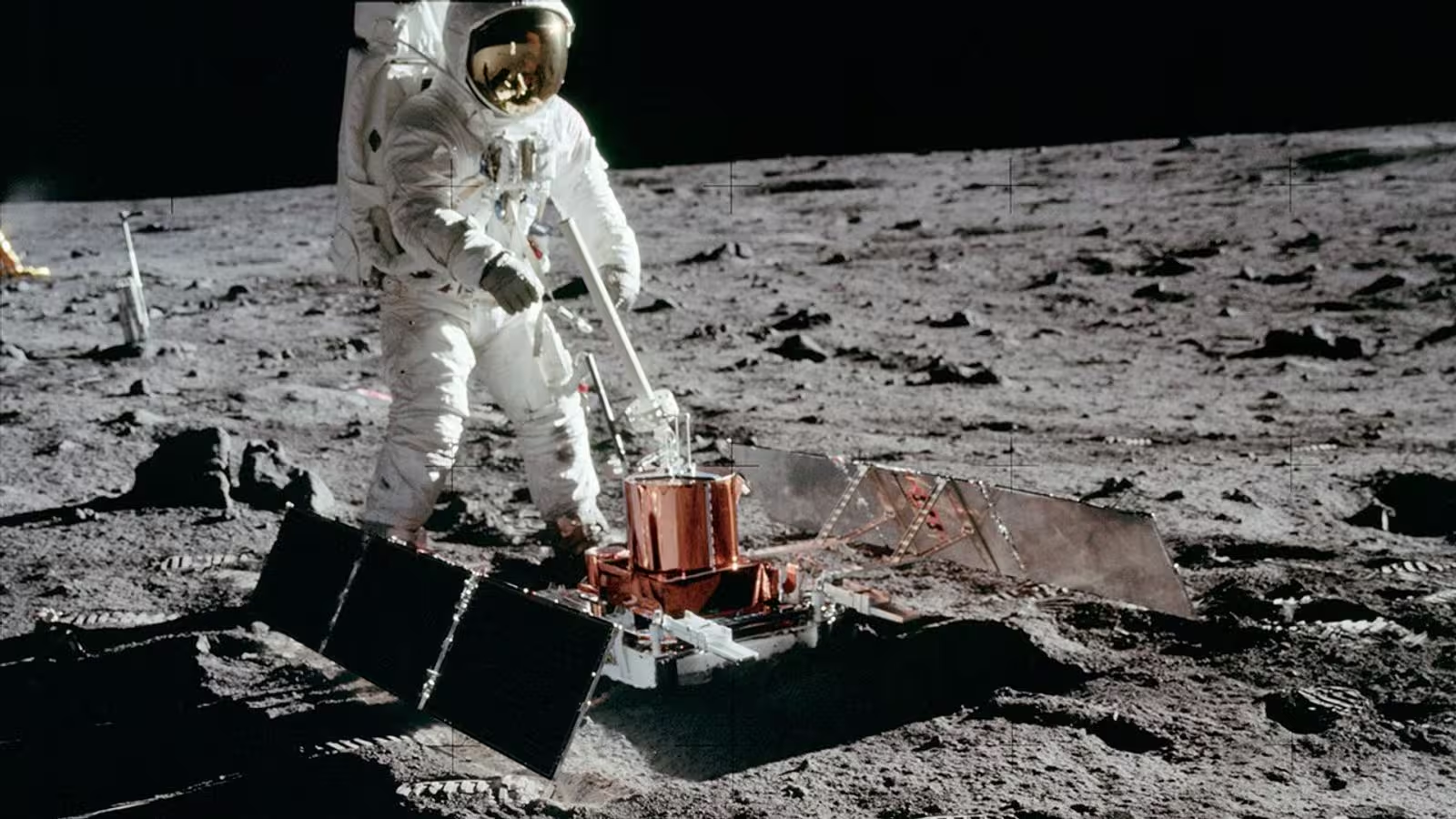
The GIMLI mission will employ a multi-layered approach to examine what lies beneath the lunar dust. Ground-penetrating radar will scan for structural voids, while gravity measurements will help determine the density and composition of the subsurface. Perhaps most significantly, the mission will utilize active-source seismology, a technique that has not been deployed on the Moon since the Apollo era.
"It’s long been a desire of mine to reintroduce intentional active-source seismic methods to planetary science, as it has essentially not been done since the Apollo astronauts conducted the first seismic surveys on the Moon," Putzig stated.
By creating controlled vibrations and monitoring how they propagate through the crust, scientists can build a high-resolution model of the lunar interior. The instruments for this complex task are being developed by Honeybee Robotics, with additional contributions from the Norwegian Space Agency and a coalition of academic partners.
A Potential Sanctuary for Future Explorers
The search for lunar caves is driven by more than just geological curiosity. The surface of the Moon is a harsh, unforgiving environment characterized by intense radiation, extreme temperature swings, and the constant threat of micrometeoroid impacts. A stable underground lava tube could offer a natural, ready-made shelter for future human habitats.
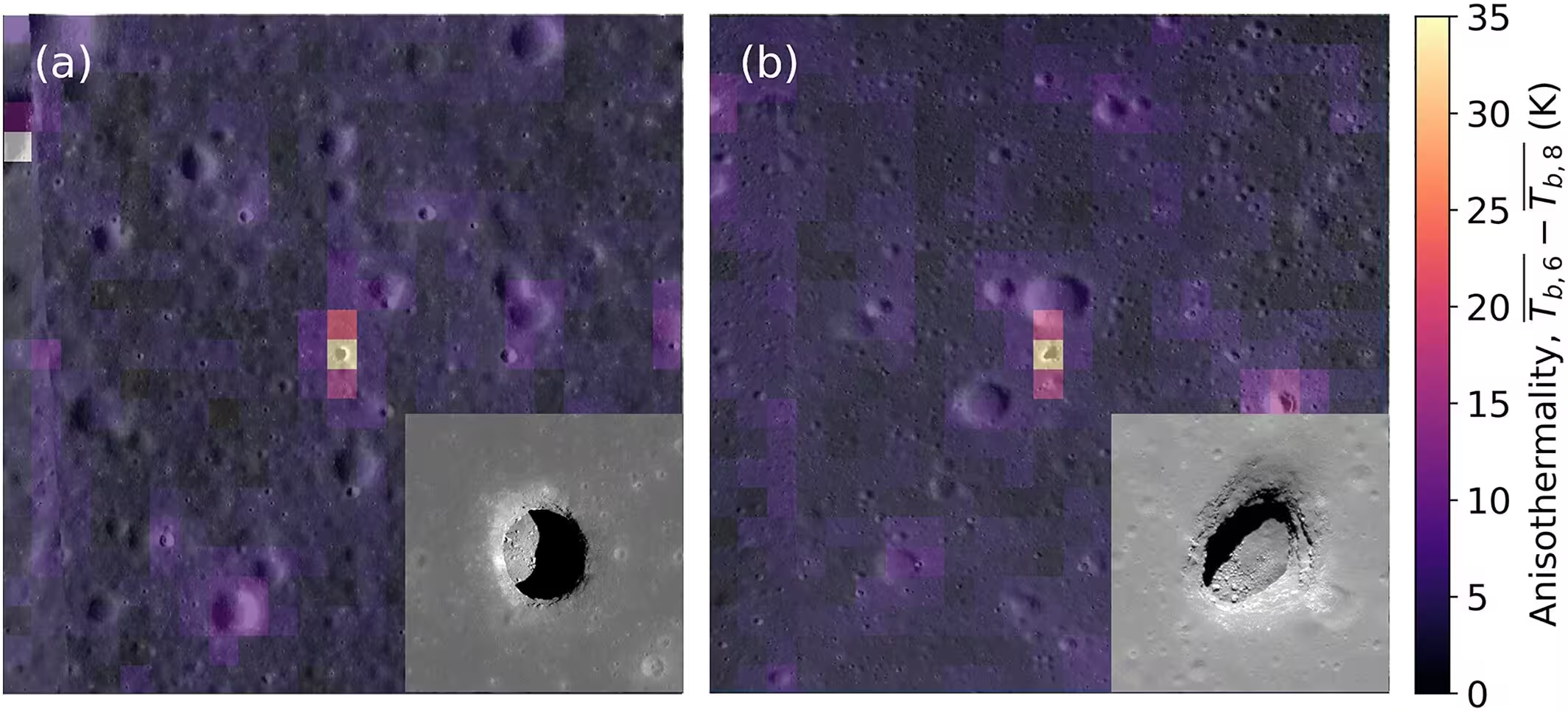
Research published in Geophysical Research Letters in 2022 suggests that the depths of lunar pits can maintain relatively stable temperatures, potentially hovering near 17 degrees Celsius. While GIMLI will focus on the scientific assessment of the Marius Hills site, its findings will be critical for long-term mission planning. Confirming the presence of a viable void would significantly influence how NASA designs infrastructure for a sustained human presence on the Moon.
Even if the mission fails to find a large-scale cave, the data gathered from the pit walls will provide unprecedented insight into the Moon’s volcanic history. By analyzing the layers of exposed regolith and ancient lava flows, scientists can reconstruct how volcanic activity shaped the lunar surface over billions of years.
Expanding the Lunar Exploration Toolkit
GIMLI is joined by two other newly selected PRISM investigations: the Lunar Environment Monitoring Station–South Pole (LEMS-SP), which will monitor seismic activity and atmospheric volatiles, and the Depth Imager with Spectral and Color Optics (DISCO), tasked with studying potential ice deposits. Together, these missions underscore NASA’s commitment to understanding the environmental and geological hazards inherent to the lunar surface as the agency prepares for the next era of human exploration.
Further Reading
This article has been fact checked for accuracy, with information verified against reputable sources. Learn more about us and our editorial process.
Last reviewed on .
Article history
- Latest version
Reference(s)
- Shelton, Alex. “Planetary Science Institute | Discovery & Public Education in Planetary Science.”, January 22, 2024 Planetary Science Institute <https://www.psi.edu/>.
Cite this page:
- Posted by Aisha Ahmed