Hidden Factors Drive Algal Shifts in the Ohio River
High-frequency sensor data from a managed river pool reveal that turbidity and water temperature dictate seasonal algal dynamics.
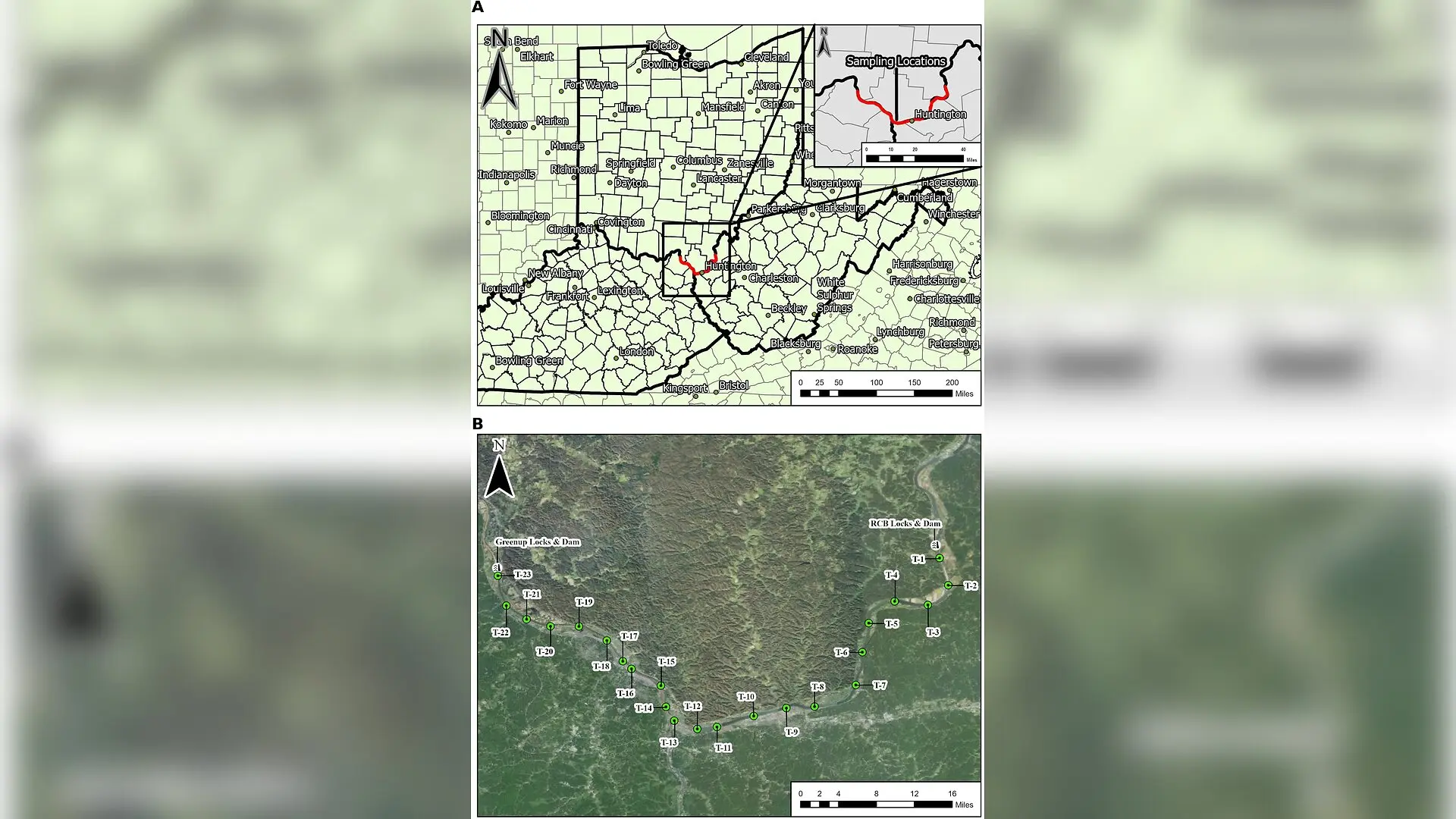
Algal growth in the managed waters of the Ohio River is tightly regulated by seasonal shifts in light penetration and turbidity rather than nutrient availability alone. Researchers tracking aquatic dynamics in the Greenup Pool discovered that high sediment loads heavily constrain phytoplankton development for most of the year, challenging long-held assumptions about productivity in large river ecosystems.
The study, published in PLoS One by Mindy Yeager-Armstead and colleagues, analyzed a continuous 44-month dataset from high-frequency sensors installed on lock structures. The team paired these continuous readings with detailed spatial transects across the 99.5-kilometer Greenup Pool, which is bracketed by the Robert C. Byrd Locks and Dam upstream and the Greenup Locks and Dam downstream.
How River Flow and Turbidity Shape Algal Communities
Large river systems are heavily altered by human infrastructure such as channelization, dredging, and navigation dams, which transform flowing lotic waters into a series of deeper, more sluggish pools. In the Greenup Pool, daily water flow averaged 87,969 cubic feet per second, while retention times averaged 3.5 days, though they ranged from less than 24 hours up to 23 days during low-flow periods.
Throughout most of the year, high turbidity created severe light limitation. Water transparency was low, with Secchi depths averaging just 0.47 meters. Turbidity levels exceeded 10 NTU seventy percent of the time, restricting light penetration to a mean one percent depth of roughly 3.18 meters.
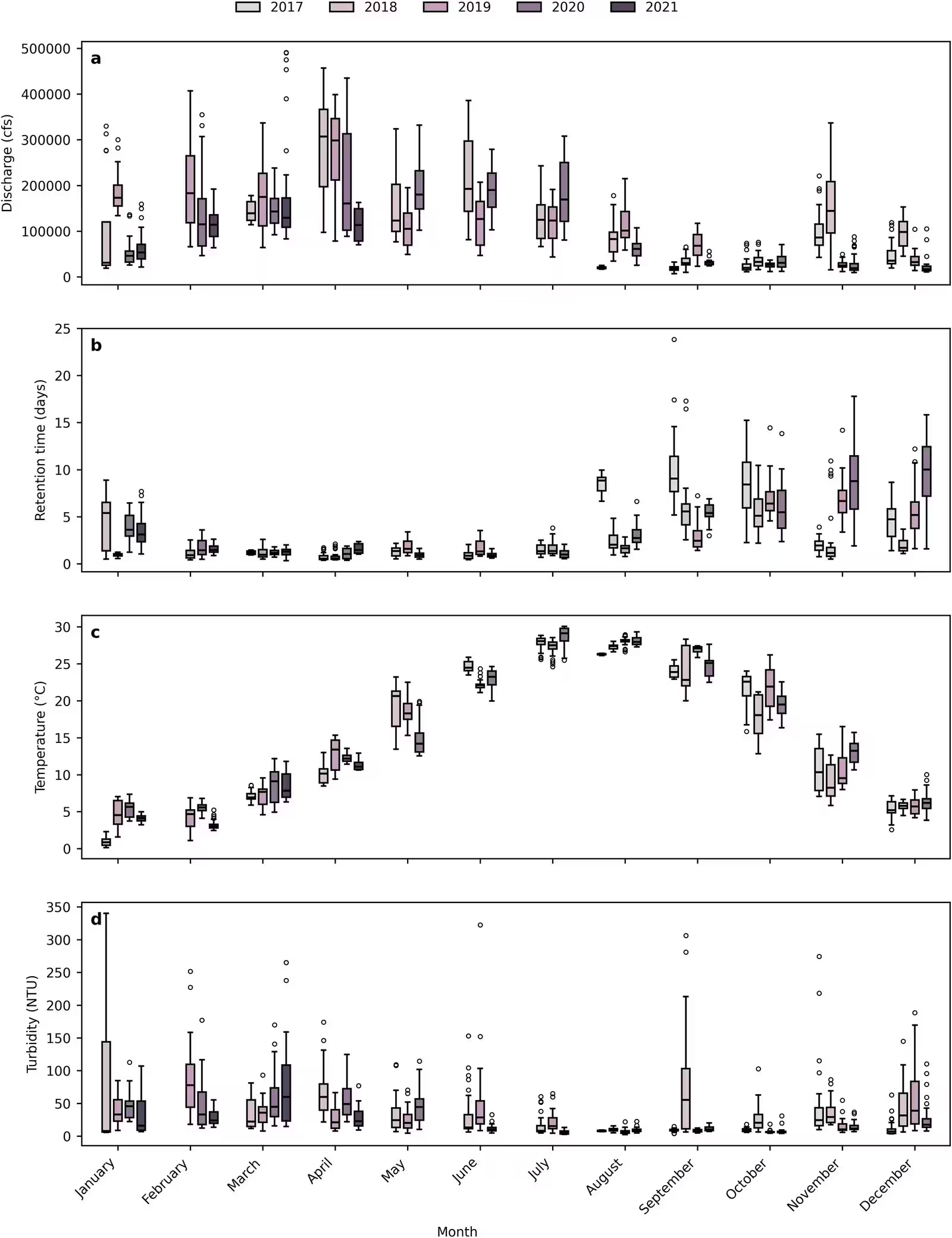
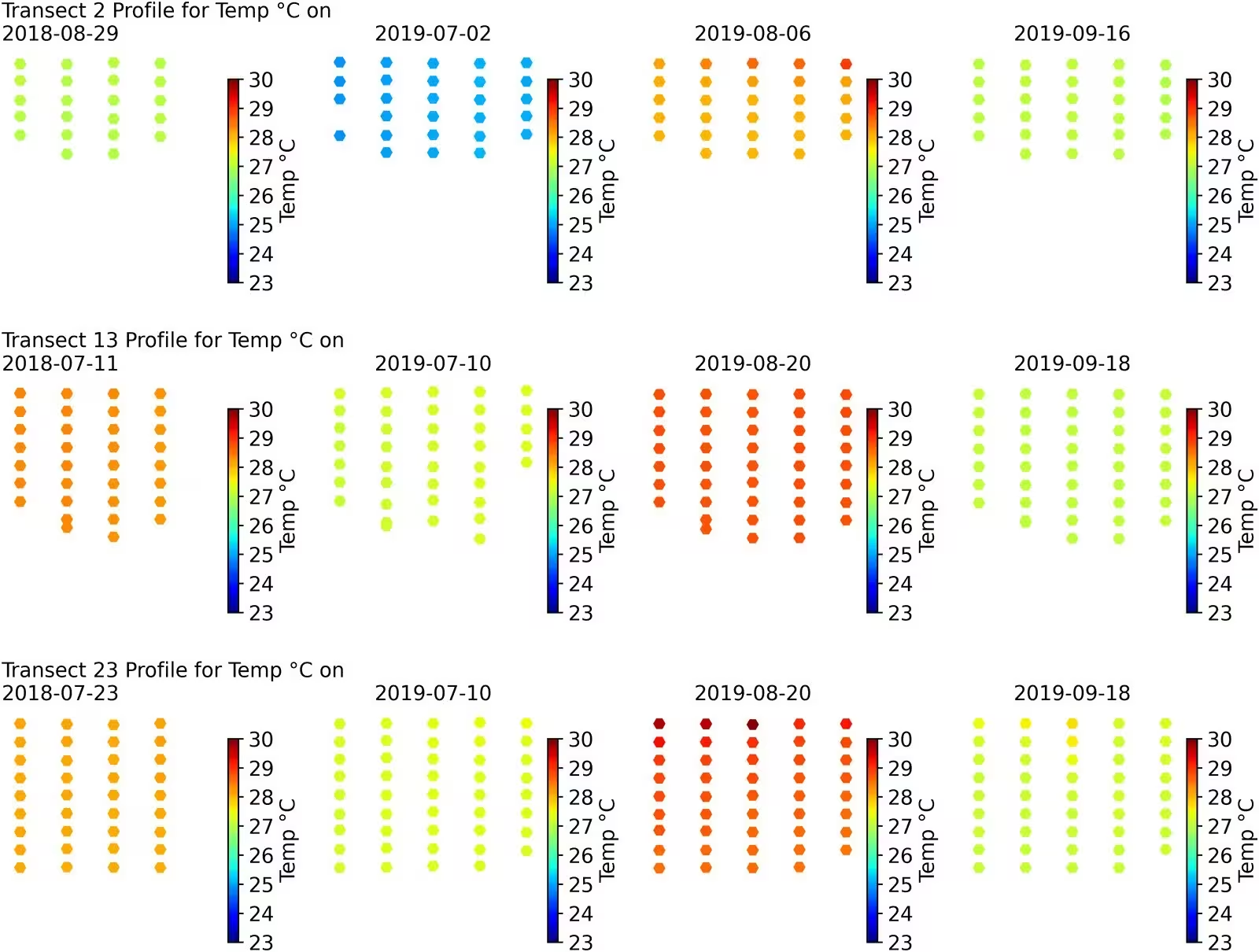
However, during late summer and early fall, reduced river discharge allowed suspended sediments to settle. This created localized clarity improvements and minimal thermal stratification near the downstream end of the pool, bringing conditions closer to those found in still-water lake systems and encouraging spikes in algal biomass.
Surprising Seasonal Peaks in Blue-Green Algae
To differentiate between green algae and cyanobacteria, which are also known as blue-green algae, the authors tracked chlorophyll-a and phycocyanin pigment concentrations. While warm summer months favored green algae and diatoms, cyanobacteria concentrations and their relative ratios actually peaked during the cooler winter and spring months.
This unexpected winter dominance points toward tributary inputs or cold-water adaptation strategies among certain cyanobacteria strains. The findings suggest that relying solely on chlorophyll measurements or warm-weather monitoring may miss early warning signs of harmful algal bloom development in managed river basins.
Nutrient Levels and Management Implications
Nutrient concentrations in the pool remained consistently high enough to support plant growth year-round. Nitrate averaged 0.71 milligrams per liter, while phosphorus readings stayed above typical growth limitation thresholds. Because nutrients were rarely in short supply, physical factors such as water velocity, temperature, and turbidity dominated seasonal community shifts.
The authors note that understanding these fine-scale physical and biological interactions is essential for improving predictive models. As river management strategies balance commercial navigation, flood control, and drinking water safety for millions of residents, incorporating targeted pigment monitoring will help agencies better anticipate ecological changes in regulated waterways.
The research was published in PloS one on January 1, 2026.
This article has been fact checked for accuracy, with information verified against reputable sources. Learn more about us and our editorial process.
Last reviewed on .
Article history
- Latest version
Reference(s)
- Yeager-Armstead, Mindy., et al. “Physical, chemical, and biological controls on algal dynamics in the Greenup Pool of the Ohio River.” PLOS One, vol. 21, no. 10, October 26, 2026, pp. e0360624 Public Library of Science (PLoS), doi: 10.1371/journal.pone.0360624. <https://doi.org/10.1371/journal.pone.0360624>.
Cite this page:
- Posted by Omar Mirza