Tropical Estuaries Reveal Surprising Pockets of Health Amid Urban Pollution
A large-scale analysis of bottom-dwelling animal communities in Brazilian estuaries shows that ecological health shifts dramatically over short distances.
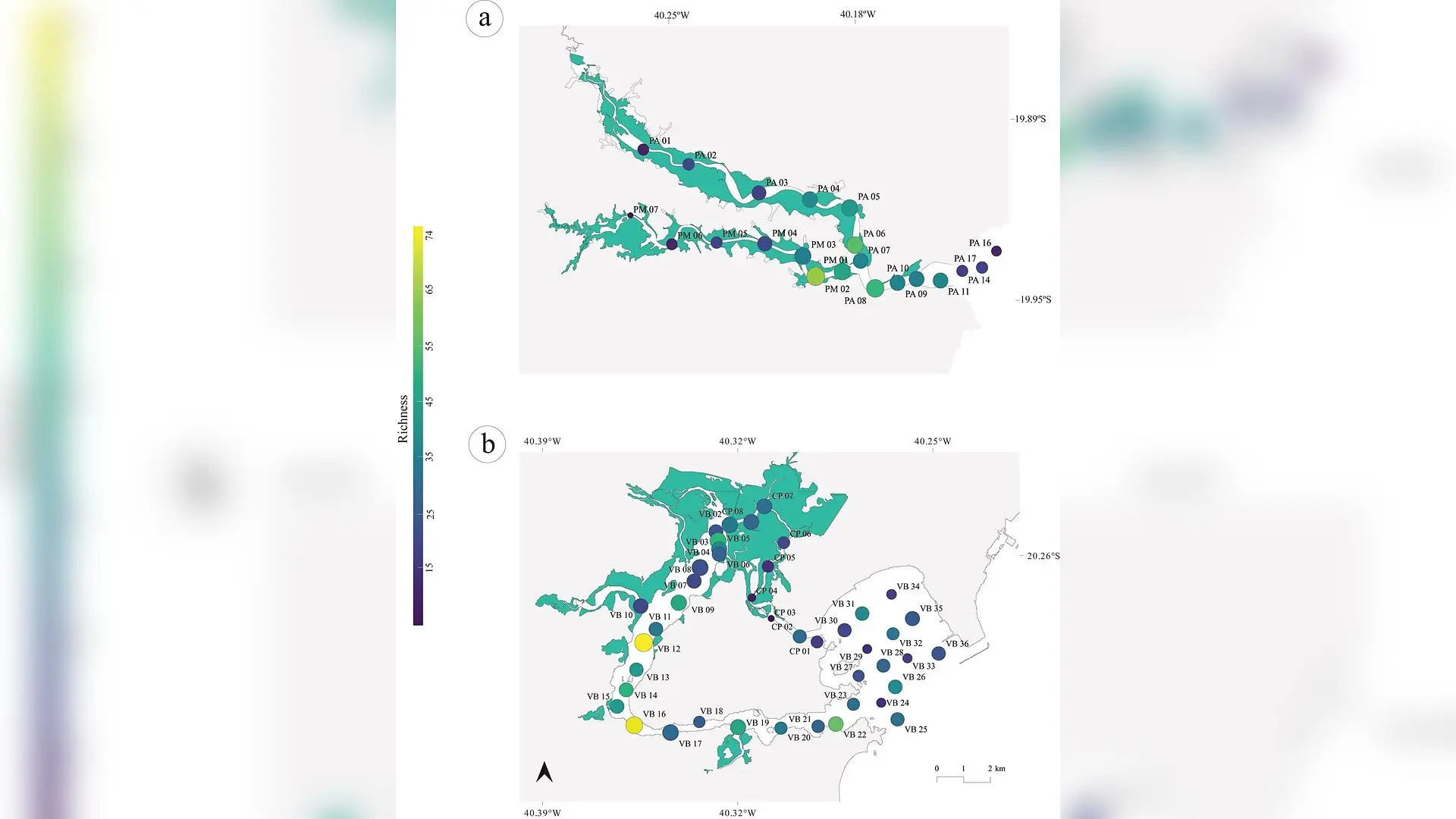
Soft-bottom animal communities living in tropical estuaries reveal surprising patterns of ecological health, showing that human pollution creates isolated pockets of heavy degradation rather than destroying entire waterways. Researchers examining 64 sampling stations across two tropical estuarine systems in southeastern Brazil found that ecological quality shifts dramatically over very short distances, forming a complex spatial mosaic of thriving habitats right next to heavily impacted zones.
The study, published in PeerJ by researchers Anderson Antonio Batista, Heliatrice Louise Hadlich, and Angelo F Bernardino, evaluated how well standardized marine biotic indices function in tropical environments. Traditionally developed for European and temperate waters, these tools translate bottom-dwelling animal communities into measurable disturbance scales. The team collected macroinfaunal organisms, which are small invertebrates living in sediment like worms, bivalves, and crustaceans, and analyzed their abundance, diversity, and community composition alongside sediment chemistry.
How Tiny Animals Reveal Hidden Pollution Hotspots
Estuaries rank among the most productive and economically valuable coastal ecosystems on Earth, filtering pollutants, supporting fisheries, and protecting shorelines. However, urban growth, industrial discharges, and sewage disposal put immense pressure on these environments. Monitoring estuarine health is notoriously difficult because natural gradients in salt levels and water flow overlap with localized human pressures.
To untangle these overlapping pressures, the investigators quantified 27,502 individual organisms representing 168 benthic taxa across Vitória Bay, a heavily urbanized metropolitan estuary, and the Piraquê-Açu and Piraquê-Mirim estuarine system, which features extensive mangrove forests and lower coastal development. They applied the AZTI Marine Biotic Index and the Multivariate AZTI Marine Biotic Index, which categorize species based on their sensitivity or tolerance to organic enrichment and pollution.
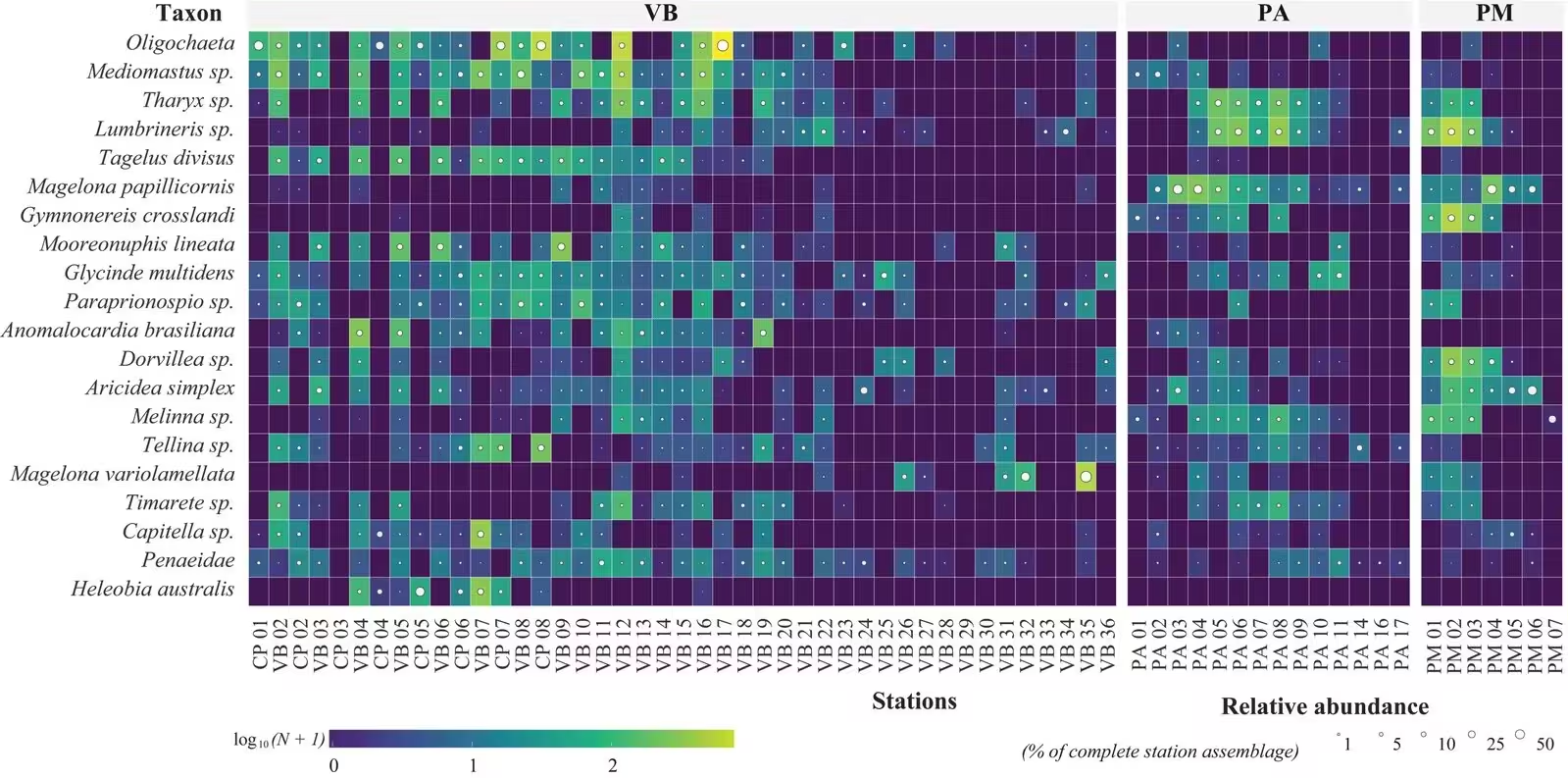
The results uncovered striking local variations. In Vitória Bay, total macrofaunal abundance ranged from 75 to 12,980 individuals per square meter. Station VB12 emerged as a biodiversity hotspot, recording 74 taxa and a high Shannon diversity index of 4.96. In contrast, secondary navigation channels like the Canal da Passagem showed severely reduced diversity, with communities dominated almost entirely by tolerant oligochaete worms and capitellid polychaetes, signaling intense local stress.
Natural Salinity Gradients Shape Community Survival
Statistical models revealed that community structures are heavily structured by a combination of natural environmental factors and human-driven chemical markers. In Vitória Bay, salinity had the largest statistical association with community variation, accounting for 15.3 percent of the fitted assemblage variance. Total sterols and biopolymeric carbon, which represent the labile fraction of organic matter available to consumers, also played significant roles in shaping where specific organisms could survive.
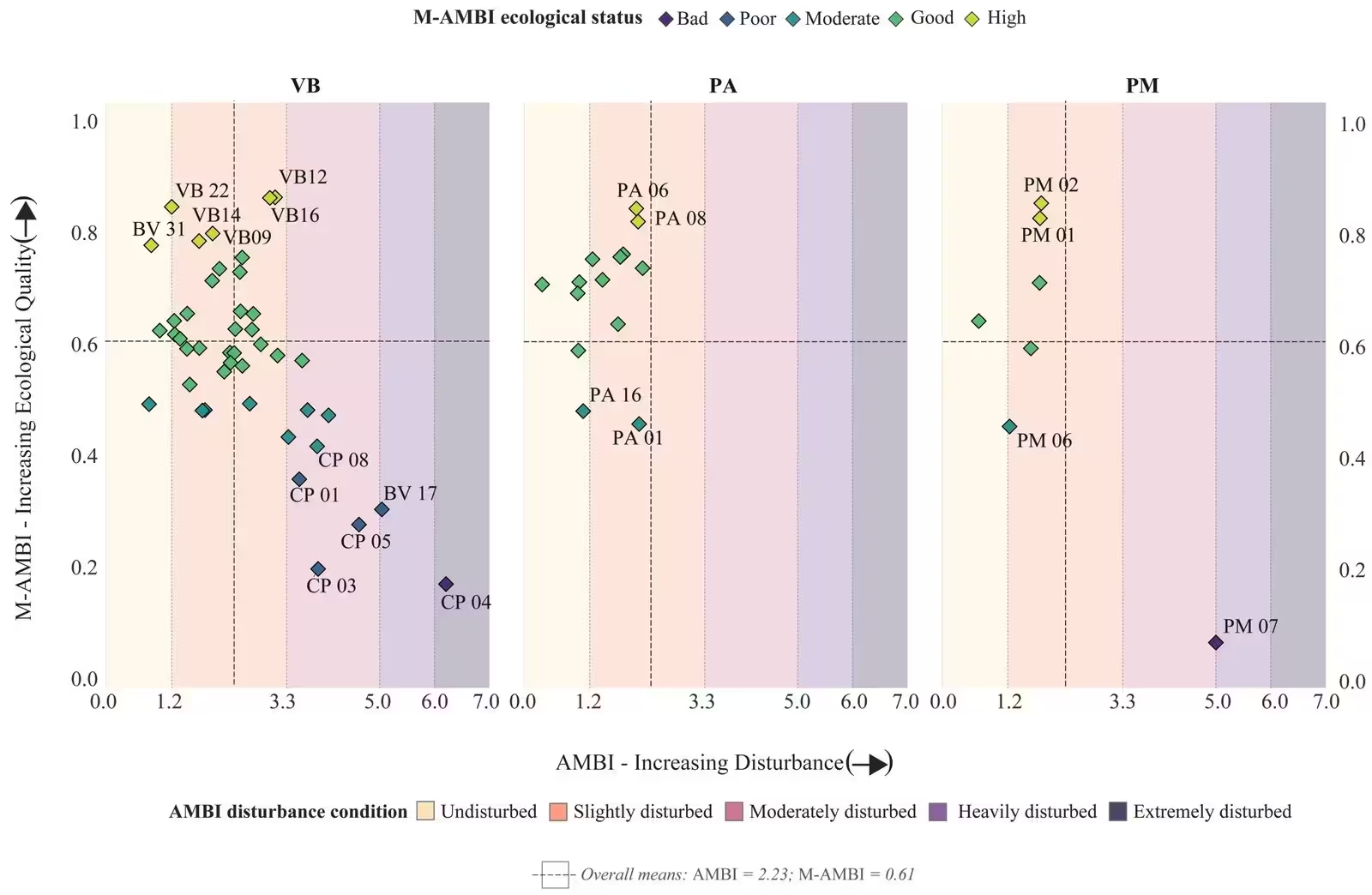
In the less-developed Piraquê-Açu and Piraquê-Mirim estuaries, benthic assemblages associated strongly with total nitrogen, biopolymeric carbon, total organic carbon, and salinity. While organic enrichment can initially boost food availability, persistent overloading increases microbial oxygen demand and favors tolerant opportunistic species over sensitive ones. Despite these clear biological responses, the authors noted that traditional biotic indices occasionally misdiagnosed naturally stressed, low-diversity transitional waters as degraded, highlighting the ongoing challenge of the estuarine quality paradox where natural habitat variability mimics pollution impacts.
What These Spatial Patterns Mean for Future Coastal Management
The discovery that high-quality ecological stations can exist right next to organically polluted sites carries major implications for environmental monitoring. Traditional monitoring strategies often average conditions across large sectors, which can mask local degradation or miss pristine pockets of high ecological value. The combined use of biotic indices and geochemical markers provides a clearer, more user-friendly diagnostic framework for resource managers working in tropical regions.
The authors emphasize that expanding regional taxonomic knowledge will further improve the accuracy of these indices outside temperate zones. By pinpointing exactly where pollution impacts occur and identifying vital refuges of high biodiversity, conservationists can design more effective management strategies to protect vulnerable mangrove forests, tidal flats, and salt marshes against ongoing urban expansion.
The research was published in PeerJ on January 1, 2026.
This article has been fact checked for accuracy, with information verified against reputable sources. Learn more about us and our editorial process.
Last reviewed on .
Article history
- Latest version
Reference(s)
- Batista, Anderson Antonio., et al. “Contrasting benthic ecological quality within tropical estuaries in Southeastern Brazil based on biotic indices.” PeerJ, vol. 14, October 22, 2026, pp. e21883 PeerJ, doi: 10.7717/peerj.21883. <https://doi.org/10.7717/peerj.21883>.
Cite this page:
- Posted by Omar Mirza