Moss Reveals Monsoon Winds Carry Coal Pollution Over the Himalayas to Tibetan Plateau
New study shows coal pollution from the Himalayas is carried by monsoon winds onto the Tibetan Plateau, revealing cross‑regional environmental threats.
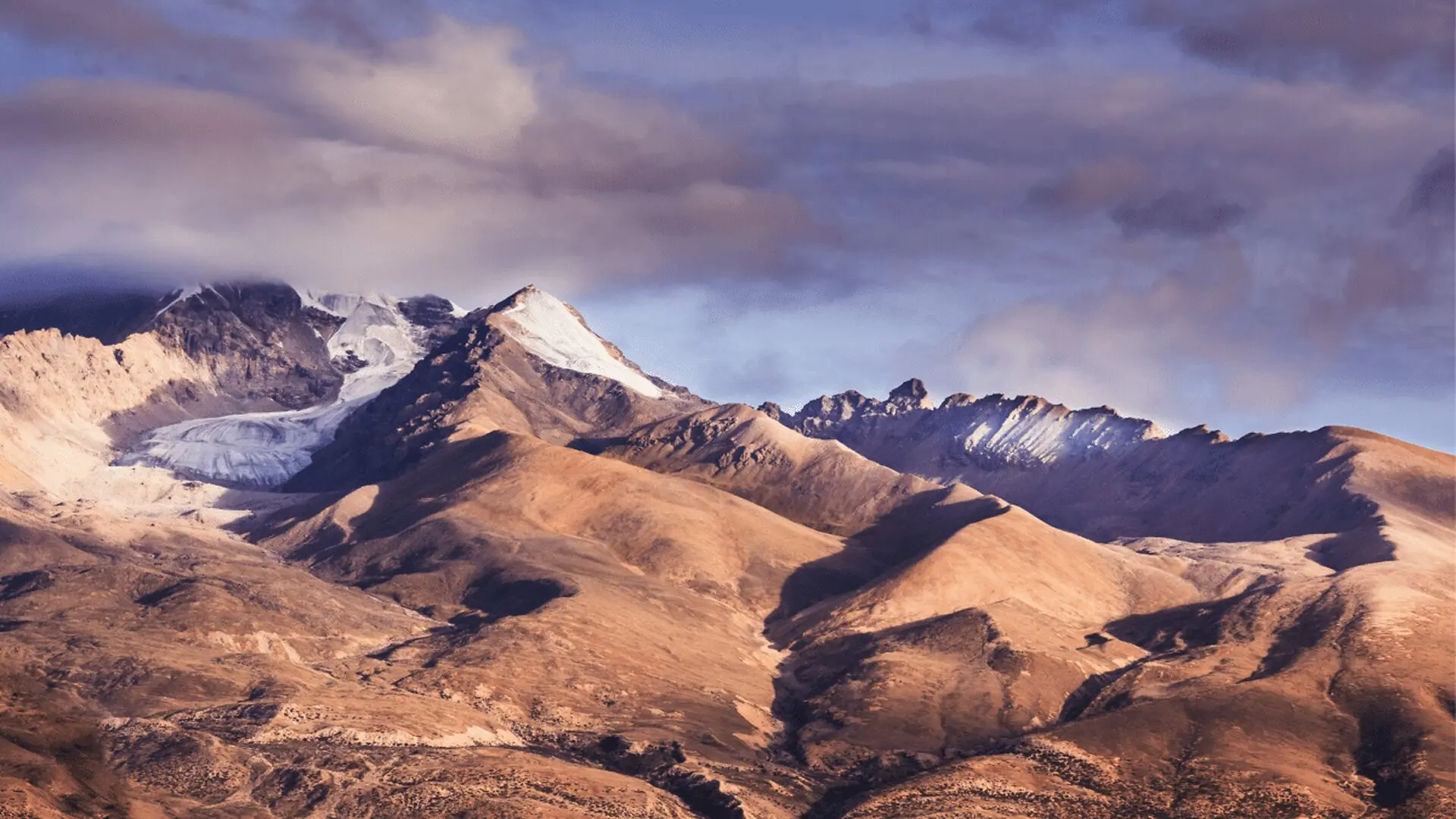
A recent study in Geophysical Research Letters provides the first direct proof that fine particles generated by coal burning can cross the Himalayas during the summer monsoon, reaching the remote Tibetan Plateau. The finding revises long‑standing views of the mountain range as an effective barrier against South Asian industrial pollution and raises fresh concerns about contaminant transport to one of the planet’s most vulnerable high‑altitude ecosystems.
Moss Serves as a Natural Archive of Airborne Contaminants
Instead of relying solely on airborne sampling, researchers turned to moss, a plant that absorbs water and nutrients straight from the atmosphere. Because moss captures microscopic particles over time, it functions as a long‑term recorder of atmospheric composition.
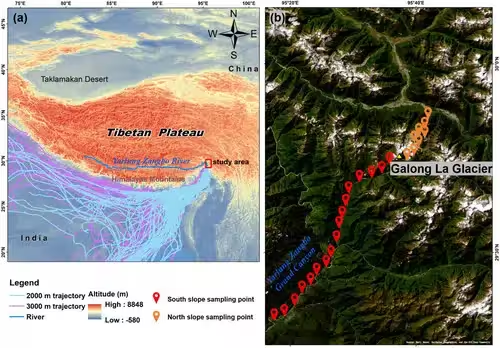
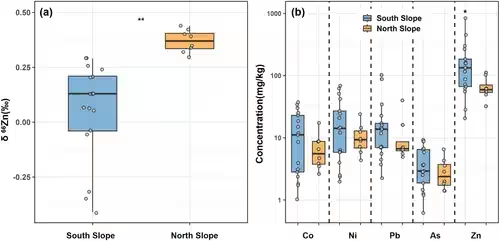
Samples were taken along a gradient from roughly 750 m to over 4,100 m within the Yarlung Tsangpo Grand Canyon, one of the deepest river valleys on Earth. Analyses focused on heavy metals such as lead, arsenic, zinc, nickel and cobalt, as well as on stable zinc isotopes, which act as chemical fingerprints distinguishing between coal combustion (heavier isotopes) and high‑temperature metal smelting (lighter isotopes). By combining metal concentrations with isotope data, the team traced how pollution sources shift with altitude.
Isotopic Signatures Pinpoint Coal as the Main High‑Altitude Pollutant
The investigation, published in Geophysical Research Letters, shows a clear transition in source contributions. On the southern slopes at lower elevations, mosses displayed high heavy‑metal loads and lighter zinc isotopes, indicating that metal smelting accounts for about 42 %–50 % of local pollution. As altitude rises, metal concentrations fall while zinc isotopes become progressively heavier, matching the signature of coal combustion, which contributes roughly 35 %–50 % of the detected pollutants. Above 3,500 m on the northern side, the heavy‑isotope pattern persists, with coal‑derived particles representing 43 %–54 % of the contamination, while smelting influence wanes.
Summer Monsoon Winds Funnel Particles Through the Canyon
The researchers identified the Indian summer monsoon as the primary conduit moving pollutants northward from densely populated South Asian regions toward the plateau. Seasonal winds are forced through the deep Yarlung Tsangpo canyon, creating a fast‑moving atmospheric channel that transports fine particles across terrain once thought to block most pollution.
Particle size determines how far contaminants travel. Coal‑derived emissions consist of ultra‑fine particles that stay aloft for long periods, allowing them to be lifted high, carried by monsoon currents, and eventually deposited via clouds, rain or fog. In contrast, metal‑smelting emissions attach to larger particles that settle more quickly and are often removed before crossing the mountain barrier. Local environmental factors also shape deposition patterns: dense forests on the southern slopes capture particles during rainfall, enriching mosses there, while the drier northern slopes receive less precipitation, causing mosses to reflect more direct atmospheric deposition.
Implications for the “Third Pole” and Regional Water Resources
The Tibetan Plateau, often dubbed the “Third Pole,” holds the world’s largest ice mass outside the Arctic and Antarctica and feeds rivers that supply fresh water to billions across Asia. Although the area remains comparatively pristine, the study shows that its isolation does not fully shield it from distant industrial emissions.
Heavy metals such as lead, arsenic and nickel can build up in soils, waterways, vegetation and wildlife over decades, potentially entering food webs and persisting long after deposition. While the current work does not assess ecological or health outcomes, it lays the groundwork for future research on how long‑range pollution might affect high‑altitude ecosystems that are especially vulnerable to environmental change.
Beyond ecological concerns, the findings supply valuable data for refining atmospheric transport models. A better grasp of how monsoon dynamics move pollutants across the Himalayas could improve predictions of contaminant deposition throughout Asia. As energy demand, industrial output and climate patterns evolve, identifying these pathways will be crucial for safeguarding some of Earth’s most remote and sensitive landscapes.
This article has been fact checked for accuracy, with information verified against reputable sources. Learn more about us and our editorial process.
Last reviewed on .
Article history
- Latest version
Reference(s)
- Jiao, Xiaoyu., et al. “Zinc Isotopes Reveal Cross‐Border Transport of Coal Combustion Pollutants Across the Himalayas During the Summer Monsoon.” Geophysical Research Letters, vol. 53, no. 12, June 24, 2026 American Geophysical Union (AGU), doi: 10.1029/2026GL122536. <https://agupubs.onlinelibrary.wiley.com/doi/10.1029/2026GL122536>.
Cite this page:
- Posted by Linda Wilson