Cincinnati’s Ghost Subway: Two Miles of Unused Tunnels Beneath the City
Cincinnati’s unfinished subway was completed but never saw a train—discover the bizarre reason behind its abandonment.
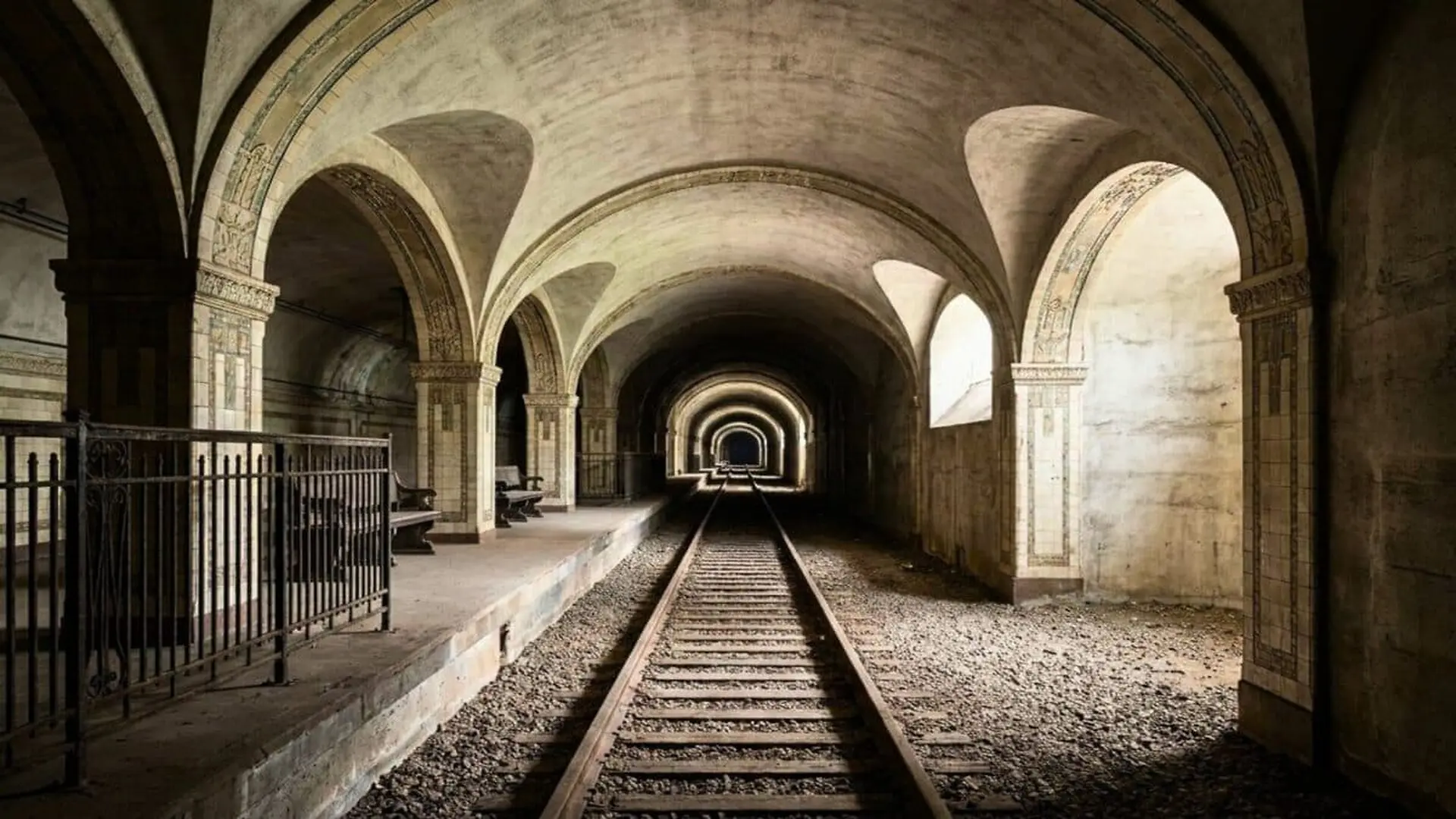
Hidden beneath Central Parkway in Cincinnati, Ohio, more than two miles of subway tunnels stretch quietly under one of the city’s most trafficked streets. No other municipality in the world is known to have built an underground rail network that was never put into service. The platforms, wooden track supports, and stations remain intact, as if poised for passengers that will never appear. No train has ever traversed these corridors.
The tale of the Cincinnati Subway reflects more than municipal mismanagement; it is a convergence of mistimed ambition, wartime price spikes, partisan rivalry, and the rapid ascendancy of the automobile. A city that once ranked among the nation’s largest poured millions into an underground system, only to abandon it before a single rail was installed. More than a century after construction began, some still entertain the possibility that the tunnels could someday serve a purpose.
From Canal Bed to Subway Blueprint
The project’s roots stretch back to the Miami and Erie Canal, a waterway that once ferried passengers and freight across Ohio. By 1880, railroads had eclipsed canal boats, leaving the channel a stagnant, malodorous ditch. City planners saw an opportunity: fill the canal trench and construct a subway beneath the newly formed street.
In March 1912, Cincinnati officials enlisted a Chicago transit consultant who proposed a 16‑mile loop for $12 million, later trimmed to $6 million. More than 80 % of voters approved a bond measure in 1916. Construction did not commence until January 1920, after World War I, by which time inflation had eroded the budget and forced the planned route to shrink from 16 to 11 miles.
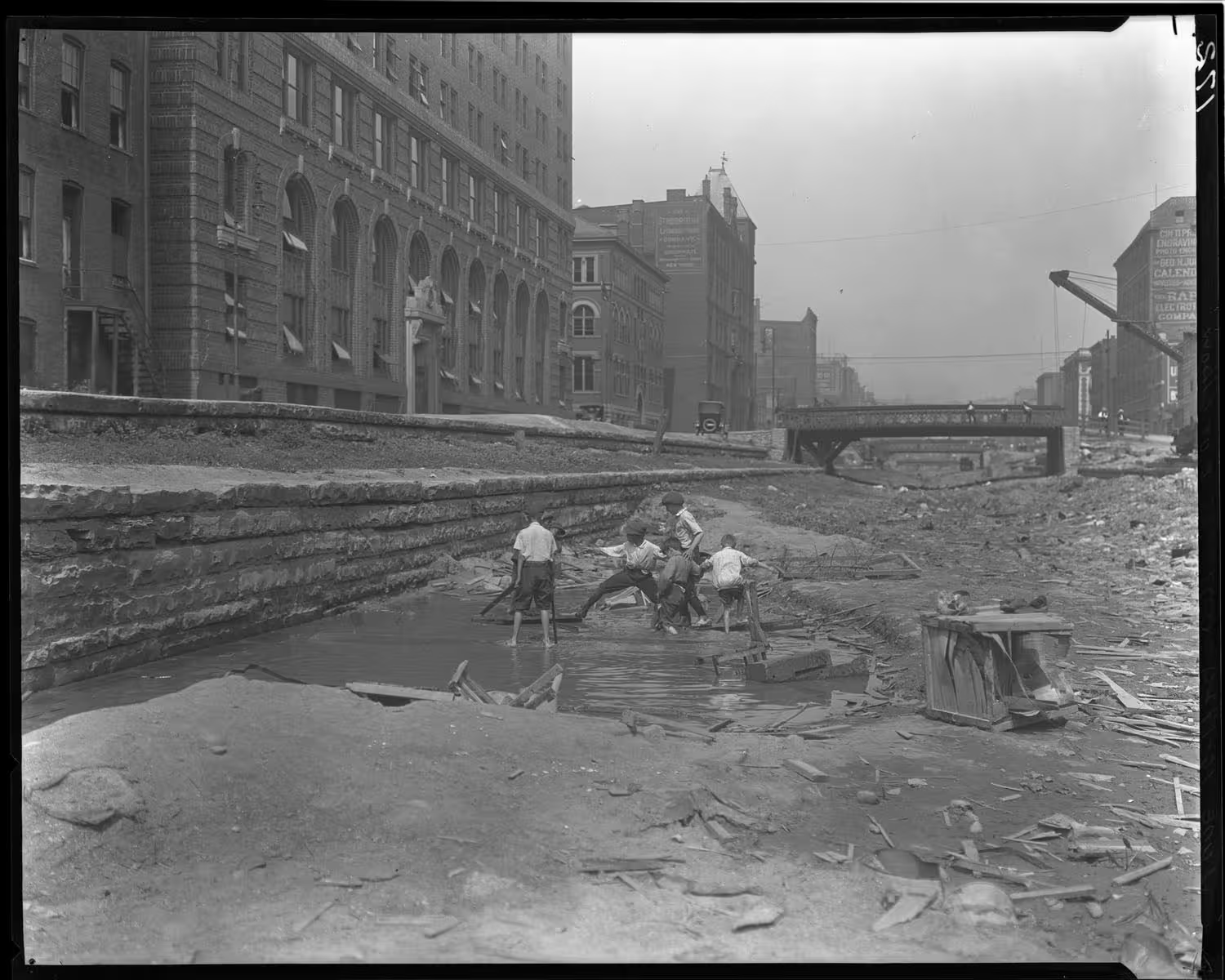
By 1923 the two‑mile underground segment was finished, and most of the surface infrastructure was near completion by 1927. Yet the city ran out of money to install tracks, procure rolling stock, or connect essential links. The physical system existed, but it could not carry a single rider.
Rising Costs, Shifting Politics, and the Car’s Triumph
The transit board later estimated that completing the network would require an additional $9‑10 million, roughly double the original projection. A mayor elected in 1926 refused to issue more bonds, dismissing the subway as a legacy project of his predecessors. The Rapid Transit Commission failed to attract a private partner for critical components, and public enthusiasm waned sharply compared with the fervor of a decade earlier.
Automobile ownership, scarce when the subway was first proposed in 1910, surged in the 1920s. Growing car use bolstered critics who derided the venture as “Cincinnati’s White Elephant.” As roads expanded and personal vehicles multiplied, the political case for a fixed underground rail line grew increasingly untenable.
The stock market crash of 1929 extinguished any remaining hope of financing the project, and the Rapid Transit Commission was dissolved. Central Parkway, constructed directly atop the tunnels, opened to traffic in October 1928, offering a surface route that many residents preferred. The road above became a daily reminder of what the subway never became.
A Century of Unfulfilled Proposals
The tunnels measure at least 13 feet wide and 15 feet 6 inches tall, with wooden stringers still bolted to the floor where rails were never installed. Engineers who have inspected the structure report it remains sound despite decades of neglect, and routine maintenance suggests it could stay usable for another hundred years.
Nearly every decade since construction halted saw a new proposal. In 1936 the city floated the idea of routing streetcars through the tunnels, but the vehicles were too long for the tight corners. The 1960s brought plans for a government fallout shelter, and in 1969 a local diocese attempted to hold a 500‑person candlelight ceremony underground—insurance proved unavailable. Later suggestions ranged from grain malting and nightclubs to a wine cellar and a filming location for a Batman movie, yet none advanced.
A 2002 regional light‑rail initiative called MetroMoves proposed integrating the existing tunnels into a new network. The plan required a half‑cent sales‑tax increase but was rejected by 68 % of voters. Ohio later classified the tunnel as a confined space, limiting its commercial utility. Today the void houses only a water main and a few fiber‑optic cables.
What Lies Beneath Central Parkway Today
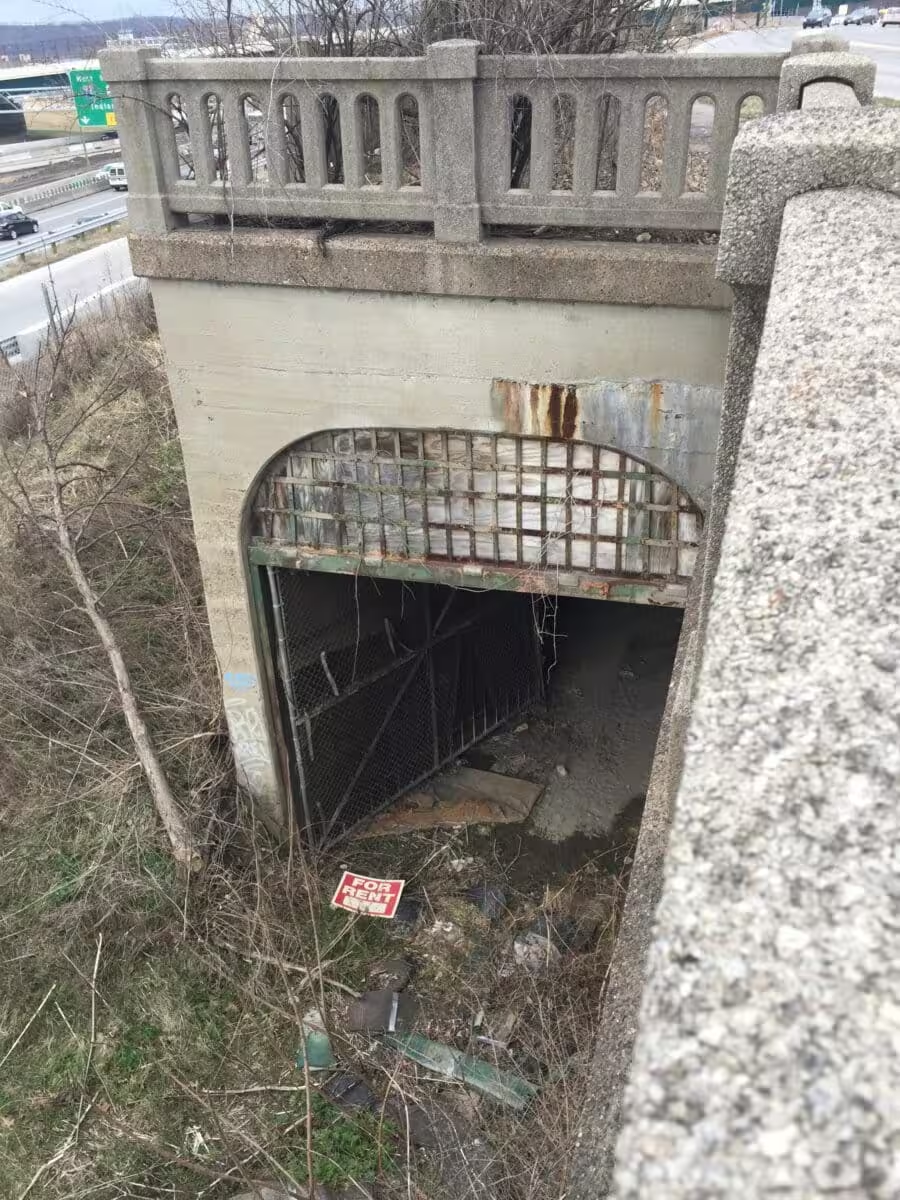
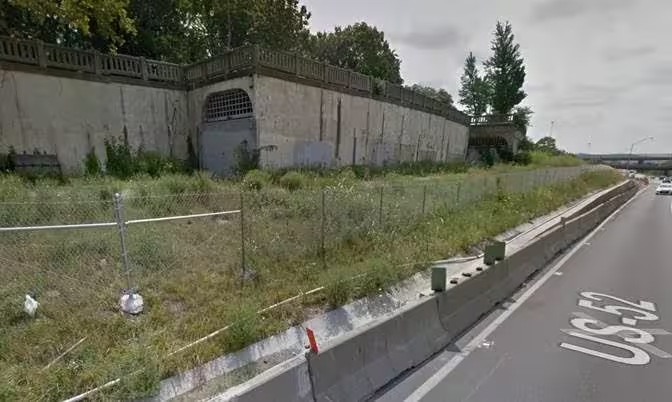
Three stations—Race Street, Liberty Street, and Brighton’s Corner—remain underground. Six stations were originally built across the system, but none ever saw passenger traffic. Above‑ground structures were demolished over the decades to make way for Interstate 75, erasing much of the original footprint.
Completely filling the tunnel would cost an estimated $19 million. Restoring it as a transit corridor would demand tens or hundreds of millions more, and the original loop would need a fresh design. The city recently issued a public request for ideas to repurpose the space; proposals have ranged from a bathhouse to a speakeasy, yet no plan has moved forward. Tours were halted after a 2015 risk assessment, and access is now limited to utility crews.
This article has been fact checked for accuracy, with information verified against reputable sources. Learn more about us and our editorial process.
Last reviewed on .
Article history
- Latest version
Reference(s)
- “The Cincinnati Subway.” <https://www.cincinnati-oh.gov/dote/about-transportation-engineering/historical-information/the-cincinnati-subway/?utm_source=chatgpt.com>.
Cite this page:
- Posted by Zara Tariq