Scientists Are Monitoring A Fresh Solar Eruption That Could Spark A Geomagnetic Storm This Week
A new burst of solar activity has researchers on alert. Experts explain what to expect when the solar storm arrives and why its exact impact remains unclear.
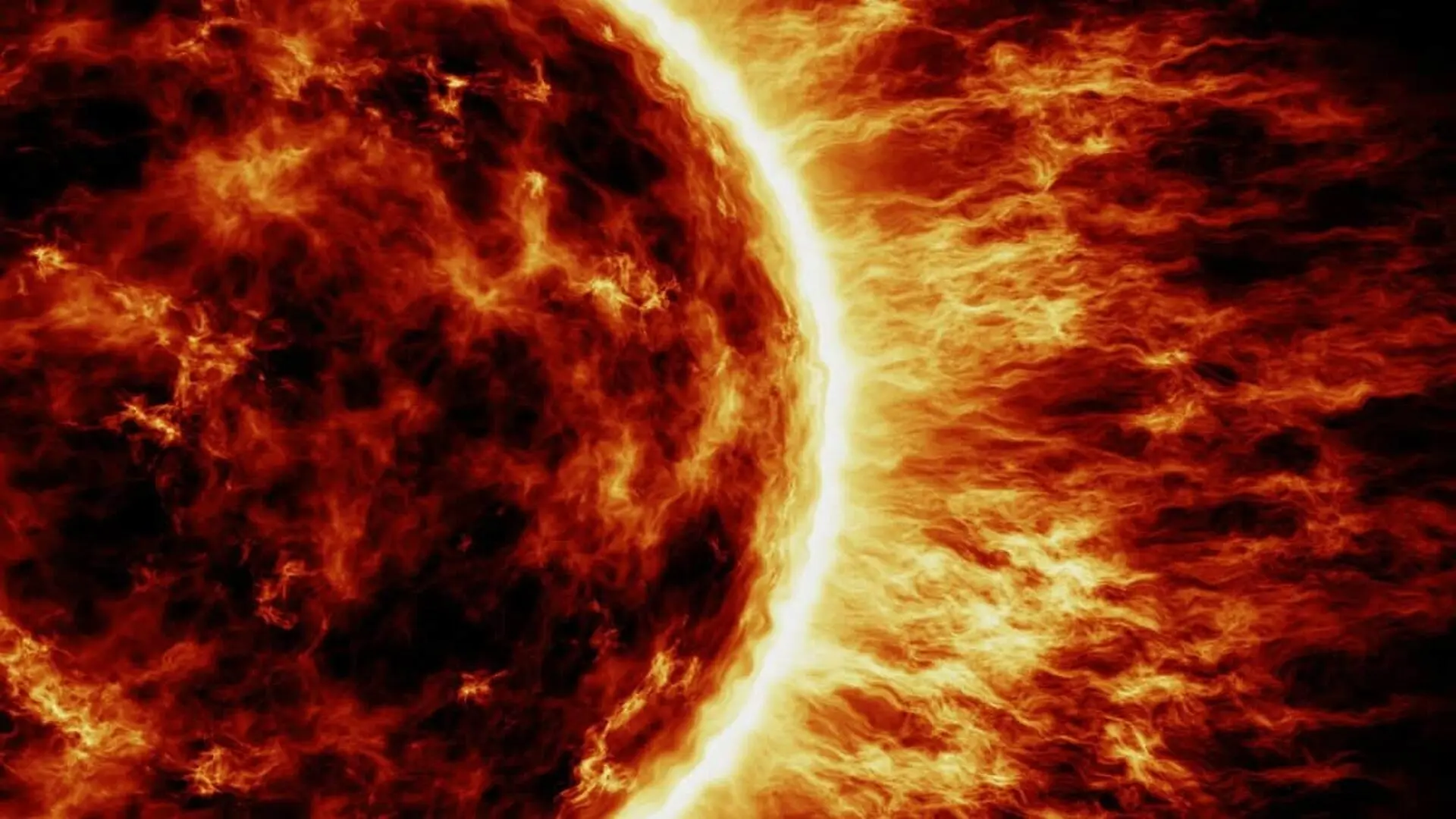
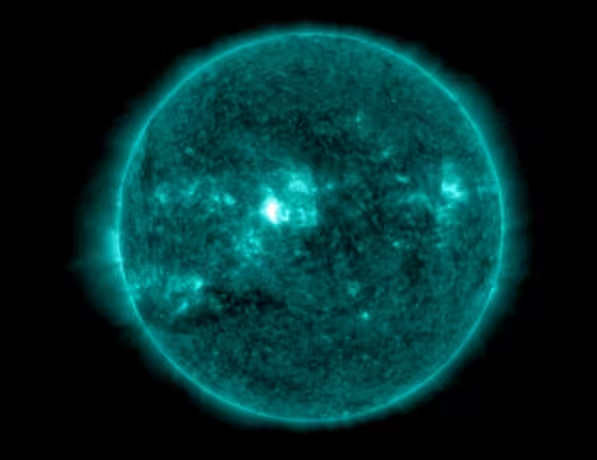
Solar activity spiked on October 6, 2026, when an M1.4-class solar flare erupted from a nascent sunspot region designated AR4549. The event, which occurred on the Earth-facing side of the Sun, appears to have triggered a coronal mass ejection (CME)—a massive burst of plasma and magnetic fields that scientists are now tracking to determine if it will strike our planet.
Initial observations from space-based instruments revealed significant coronal dimming around the source of the flare. This phenomenon is a hallmark of solar material being violently ejected from the Sun’s atmosphere, suggesting a potential geomagnetic impact in the coming days. However, experts remain cautious as they await further data to confirm the trajectory, velocity, and density of the expelled material.
Assessing the Potential for Geomagnetic Disturbance
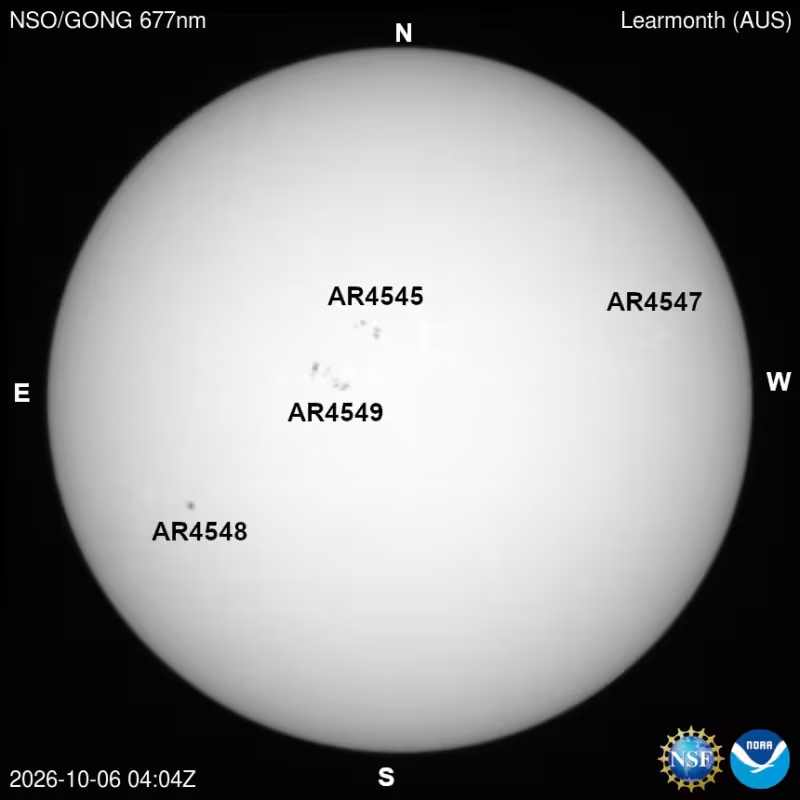
The placement of AR4549 near the center of the solar disk has heightened interest among space weather researchers. While the event is promising for those hoping to witness auroral displays, specialists warn that the outcome is far from certain. Space physicist Vincent Ledvina noted that while the initial imagery is noteworthy, it is premature to predict the magnitude of any resulting geomagnetic storm.
Should the CME possess a magnetic orientation favorable for interaction with Earth’s magnetosphere, it could trigger a geomagnetic storm, potentially pushing the northern lights toward lower latitudes. Currently, there is no definitive model confirming the arrival time or the intensity of such an event.
An M1.4 flare and likely Earth-directed CME have occurred moments ago, originating from the vicinity of AR 4549. This is a relatively new active region with a lot of instability and life, and we may see more CMEs and flares our way in the near future. pic.twitter.com/Q5ftGYHRh5
— Vincent Ledvina (@Vincent_Ledvina) October 6, 2026
Persistent Solar Activity
The region AR4549 remains volatile. Only hours after the initial M1.4 eruption, the same sunspot produced a more intense M1.9 flare. Alongside active region AR4545, the Sun is currently exhibiting elevated levels of activity that may result in further eruptions, keeping researchers on high alert throughout the week.
Beyond flare activity, space weather models are tracking coronal holes rotating into view. These features are expected to channel high-speed solar wind toward Earth, with another potential period of heightened geomagnetic activity anticipated around October 11. For now, the global scientific community continues to analyze coronagraph data to parse the implications of the latest solar eruption.
This article has been fact checked for accuracy, with information verified against reputable sources. Learn more about us and our editorial process.
Last reviewed on .
Article history
- Latest version
Reference(s)
- Society, The. “Vincent Ledvina.”, September 11, 2024 The Planetary Society <https://www.planetary.org/profiles/vincent-ledvina>.
- Dobrijevic, Daisy. “Powerful solar eruption is heading for Earth and could supercharge the northern lights over the US this week.”, October 6, 2026 Space <https://www.space.com/stargazing/auroras/powerful-solar-eruption-could-supercharge-the-northern-lights-this-week>.
- “https://twitter.com/Vincent_Ledvina/status/2107361720020930860/video/1.” <https://t.co/Q5ftGYHRh5>.
Cite this page:
- Posted by Zara Tariq