Scientists Are Baking Fake Scrolls to Unlock the Secrets of Ancient Herculaneum Texts
Artificial intelligence is finally unlocking ancient Herculaneum scrolls by identifying hidden ink patterns within the fire-damaged fragments.
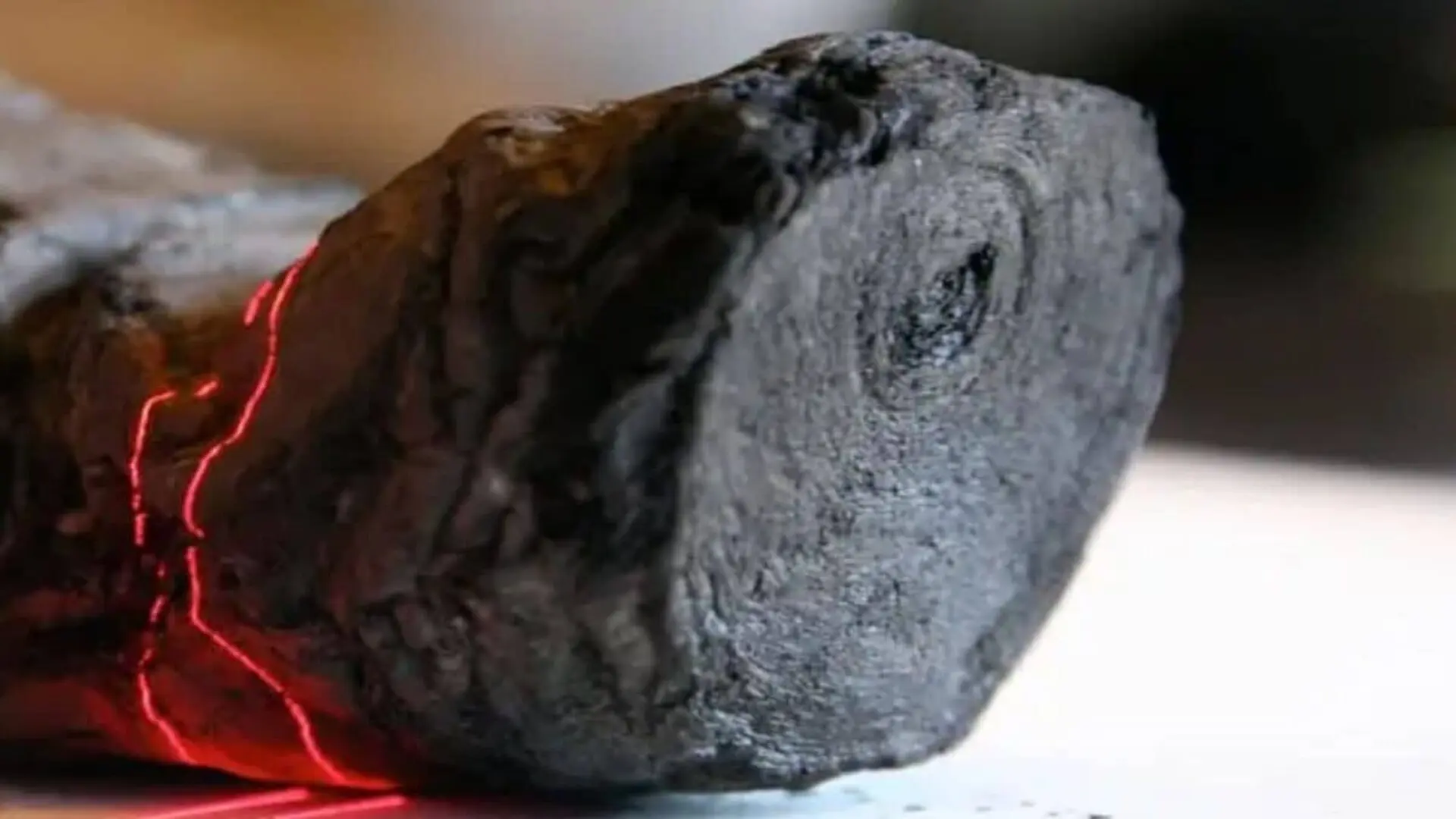
The catastrophic eruption of Mount Vesuvius in 79 AD famously interred the ancient city of Herculaneum, carbonizing its vast library of papyrus scrolls into fragile, blackened remnants. For centuries, these artifacts have challenged scholars, as the traditional ink—historically carbon-based—offers almost no contrast against the scorched, darkened surface of the scrolls, making them nearly impossible to decipher without causing irreparable damage.
A promising new approach, detailed in the journal PLOS ONE, suggests that the key to unlocking these ancient texts may lie in a metallic signature: lead. Researchers believe that by identifying the presence of lead within the ink, they can significantly enhance the resolution and visibility of the text during X-ray CT scanning.
Testing the Theory Through Controlled Destruction
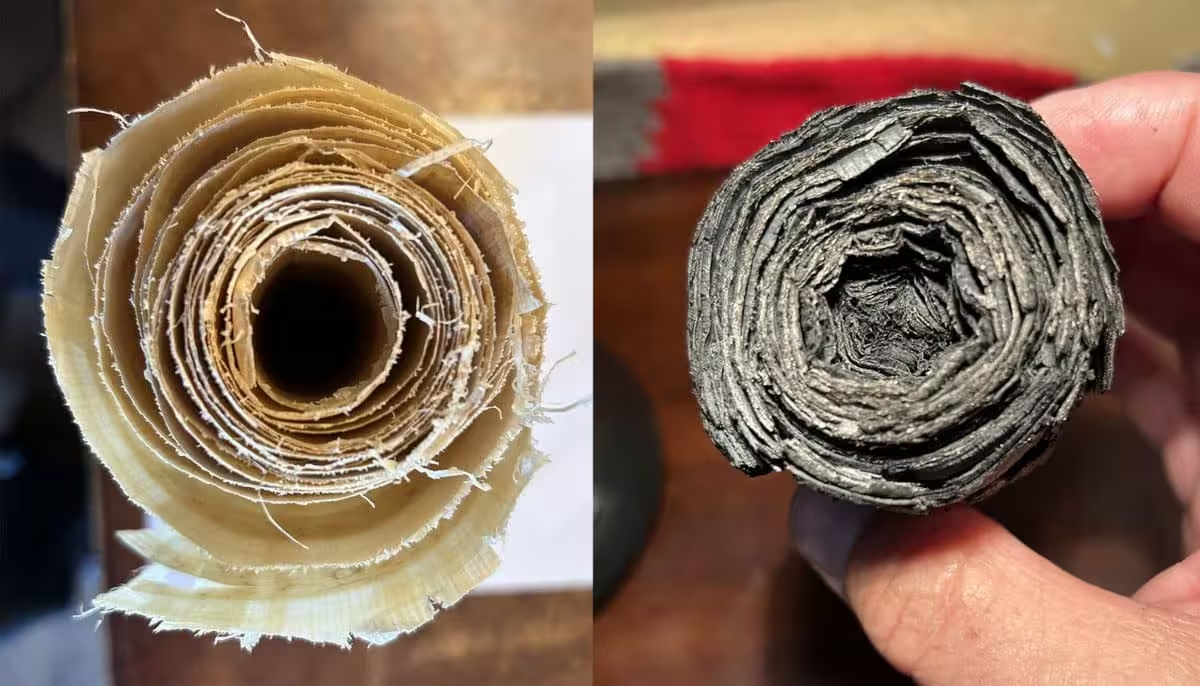
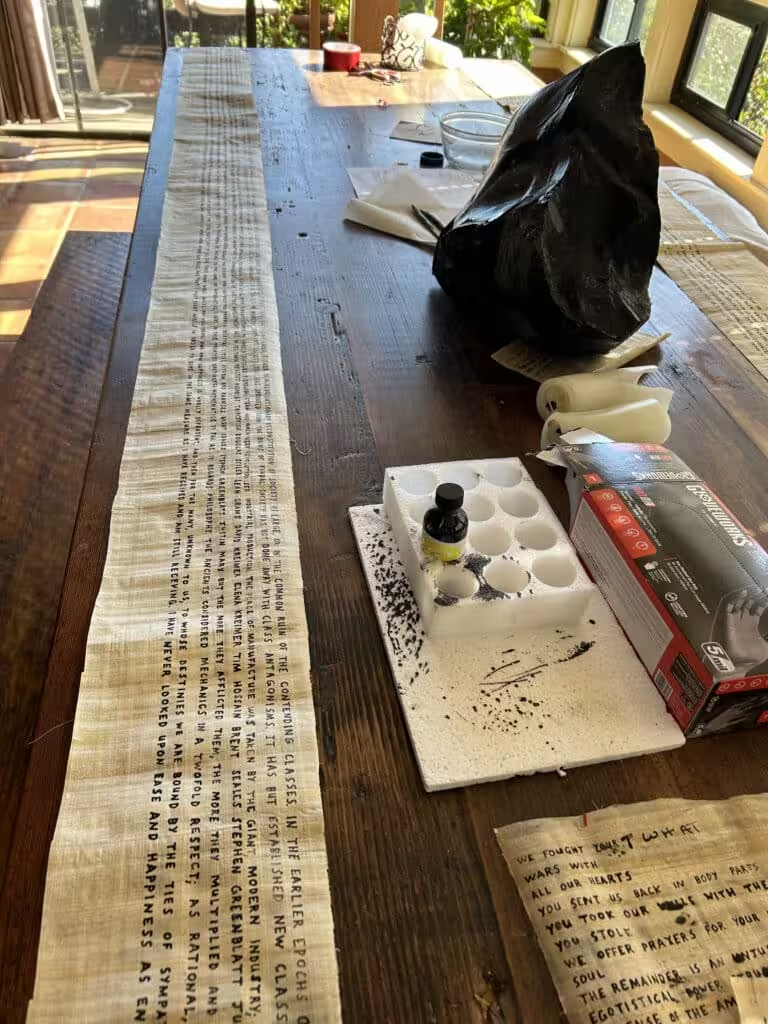
To validate this hypothesis without endangering irreplaceable antiquities, the research team, led by retired inventor and study co-author Douglas Seiler, constructed high-fidelity facsimiles. Using authentic Egyptian papyrus and traditional Japanese lampblack ink, the team commissioned students to transcribe texts using various lead-inclusive ink mixtures. These scrolls were then sealed in low-oxygen containers and subjected to intense furnace temperatures to replicate the specific conditions of carbonization experienced by the original Herculaneum collection.
Leah Packard-Grams, a papyrologist at the University of California, Berkeley, who collaborated on the study, emphasized the necessity of this experimental model. “If you hurt a model, it’s fine,” she noted in a university statement. “If you hurt a 2,300-year-old ancient artifact, you’ll have a bunch of archeologists ready to jump you.”
Precision Imaging and the Future of Papyrology
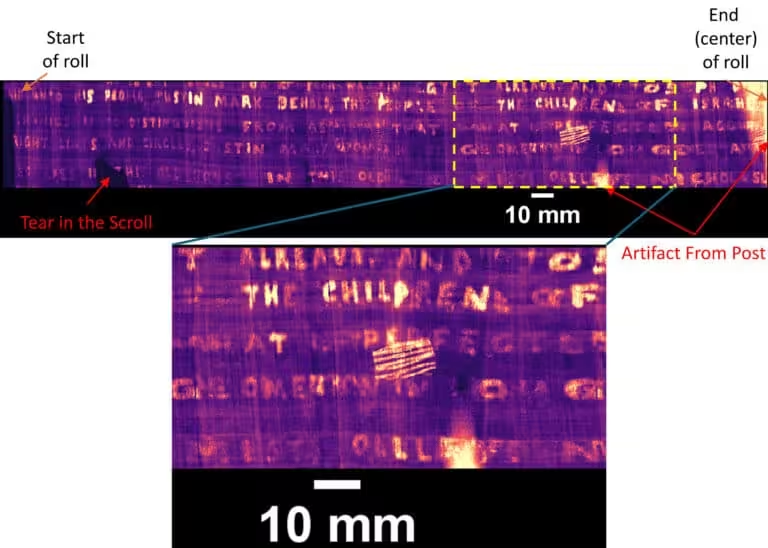
When the charred replicas underwent 3D X-ray CT scanning, the lead content reacted distinctively, absorbing X-rays and appearing as bright, high-contrast characters against the darker papyrus background. Advanced computational algorithms then successfully reconstructed and “virtually unrolled” the scrolls, allowing researchers to read the internal text, which ranged from religious excerpts to popular fiction. The team discovered that even trace amounts of lead were sufficient to make the ink detectable, a finding that could revolutionize how current AI-driven efforts interpret the damaged scrolls.
The research also demonstrated that portable X-ray fluorescence scanners—devices capable of identifying elemental compositions—could easily pinpoint lead concentrations in charred materials. This secondary confirmation method offers a non-invasive way to survey the library’s contents before full-scale digital reconstruction.
“We’re relatively certain that if they start searching for lead, or they let us search for lead, it will help this whole process. This is the Holy Grail,” Seiler stated.
While previous analyses have detected lead in select Herculaneum scroll fragments, a comprehensive, systemic examination of the entire collection has yet to be undertaken. If lead usage proves to be consistent across these ancient documents, it may provide the crucial signal-to-noise ratio needed to finally read the full contents of the world’s only intact ancient library.
This article has been fact checked for accuracy, with information verified against reputable sources. Learn more about us and our editorial process.
Last reviewed on .
Article history
- Latest version
Reference(s)
- Seiler, Douglas. “A model carbonized papyrus scroll opens a novel path to identifying readable scrolls of the Herculaneum Library.”, vol. 21, no. 9, pp. e0353485, doi: 10.1371/journal.pone.0353485. <https://journals.plos.org/plosone/article?id=10.1371/journal.pone.0353485>.
- “ORCID.” <https://orcid.org/0000-0002-8767-0773>.
- “Leah Packard-Grams | Ancient History & Mediterranean Archaeology.” <https://ahma.berkeley.edu/people/leah-packard-grams>.
- Sanders, Robert. “To read 2,000-year-old burned scrolls, scientists burn their own.”, September 16, 2026 Berkeley News <https://news.berkeley.edu/2026/09/16/to-read-2000-year-old-burned-scrolls-scientists-burn-their-own/>.
Cite this page:
- Posted by Zara Tariq