Scientists Confirm The Inca Used Knotted Cords To Create A Functional Data System
New research suggests the ancient Inca used complex knotted strings known as khipus to store and process data, functioning like a pre-modern computer.
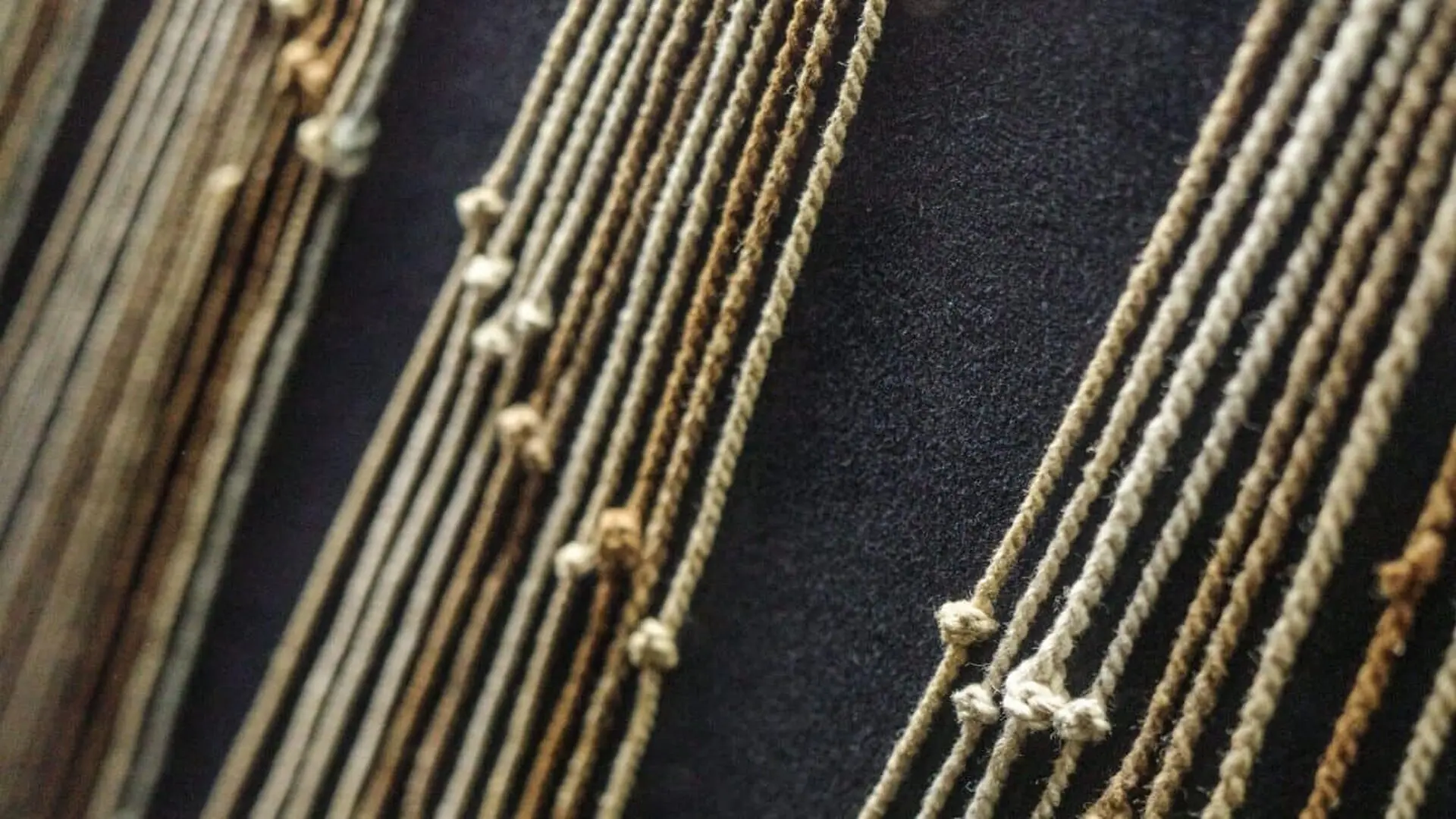
Centuries before the advent of silicon-based computing, the Inca Empire developed a sophisticated information technology utilizing nothing more than knotted cotton and camelid fiber. Known as the quipu, this physical device—long recognized by historians as a method for census tracking and tax administration—has now been formally re-evaluated as a highly efficient, functional data structure that mirrors the hierarchical logic of modern software.
A study recently published in the journal Computer and Information Science details how researchers from the First Nations University of Canada successfully translated the mechanics of these ancient devices into working code. By converting the logic of the knots into software, the team developed demonstration applications capable of performing spreadsheet operations, managing file systems, and storing image data.
Data Architecture Through Physical Knots
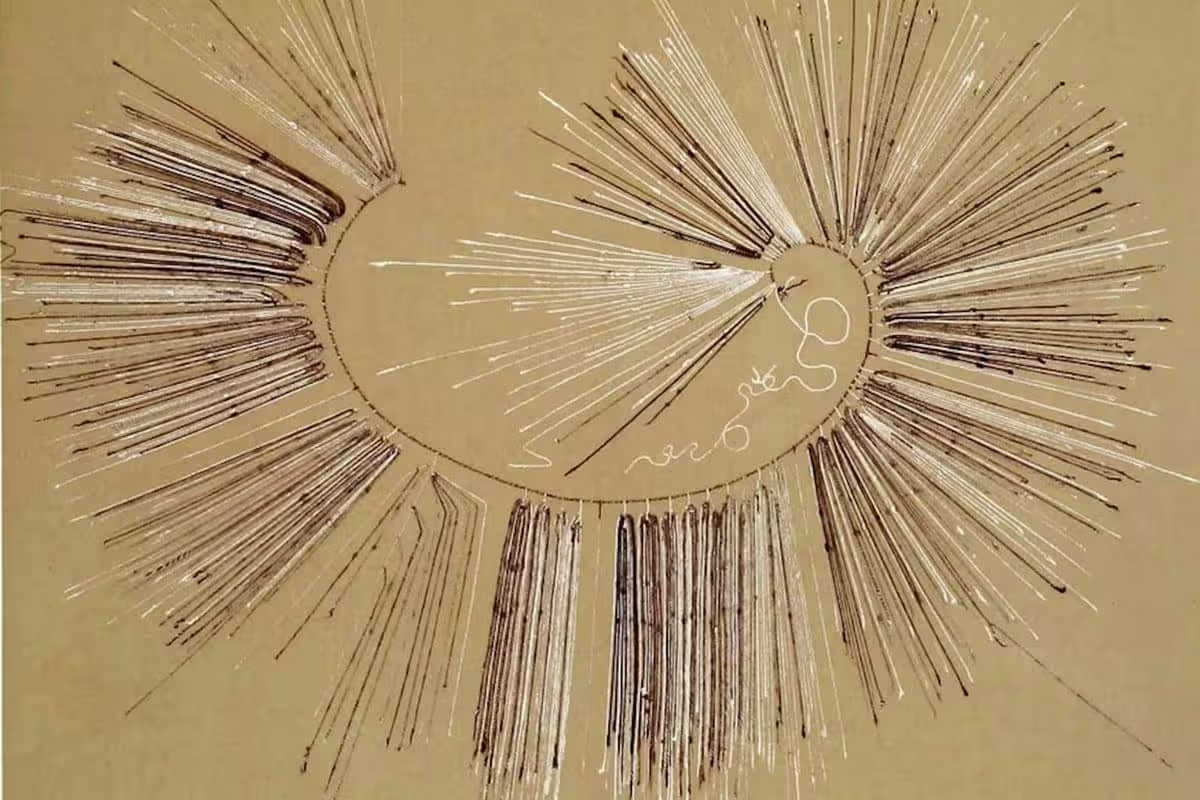
The research, led by computer scientist Richard Dosselmann alongside colleagues Edward Doolittle and Vatika Tayal, focused on the underlying organizational rules of the quipu. The team identified a clear, tree-like architecture: a primary cord acts as a trunk, with pendant cords branching off in a manner remarkably similar to folders nested within a modern computer directory.
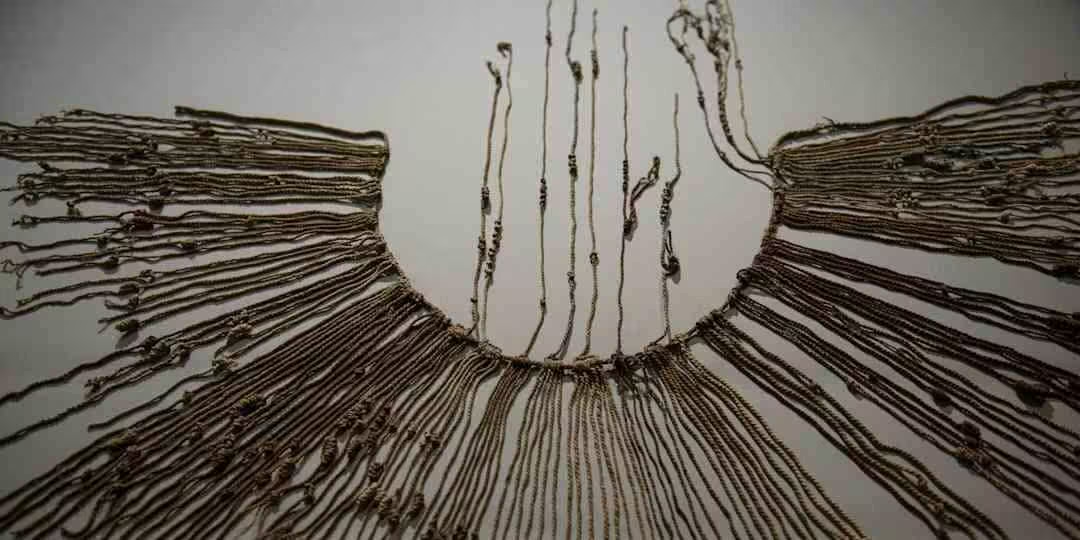
Beyond simple storage, the quipu incorporated advanced computational features. For instance, specific “top cords” functioned as automatic tallying nodes, providing running totals for the data nested below without requiring manual recalculation. Furthermore, the system employed a semi-ordered logic; while individual knots followed strict place-value conventions, the cords themselves could be reordered, allowing administrators to insert new data entries seamlessly without the need to restructure the entire physical record.
From Fiber to Software Code
To validate the viability of this ancient logic, the team authored software using C++ and Python, effectively digitizing the properties of the knots. This required programming specific parameters: color was mapped to RGBA values, while the direction of a knot served as a boolean (true-or-false) marker. They also introduced a proprietary file format, the .qpu, which utilizes pipe-delimited rows to preserve the visual and hierarchical structure of the original artifacts—a feature that flat file formats like .csv cannot replicate.
Computational Efficiency and Embedded Security
Performance testing revealed that the quipu-based structure competes effectively with modern arrays and linked lists in terms of insertion speed. When handling hierarchical data, the system’s performance approaches that of balanced trees and hash tables, scaling linearly as the dataset grows.
“A quipu has the ability to simulate many of the existing data structures,” Dosselmann stated. “It also boasts features not usually found elsewhere. The concept of an internal sum, along with cord colour and knot direction, is perhaps unique to the quipu.”
Perhaps most intriguingly, the design appears to incorporate a primitive form of encryption. Because the hierarchy relies on the arrangement of cords and knots, the data can be rendered unreadable to unauthorized users simply by reordering the components at any level of the structure. The researchers suggest that this reordering technique acts as a built-in security mechanism, providing a layer of protection that is integrated directly into the fabric of the data structure itself.
While the researchers acknowledge that storage requirements for their digital simulation can increase under certain conditions, they emphasize that hardware-level optimizations can mitigate these costs. Ultimately, the findings highlight that the quipu was perfectly optimized for the layered, complex information—such as demographic data and resource management—that defined the administrative backbone of the Inca Empire.
This article has been fact checked for accuracy, with information verified against reputable sources. Learn more about us and our editorial process.
Last reviewed on .
Article history
- Latest version
Reference(s)
- Dosselmann, Richard. “Quipu Data Structure.”, vol. 19, no. 1, March 13, 2026, pp. p47, doi: 10.5539/cis.v19n1p47. <https://ccsenet.org/journal/index.php/cis/article/view/0/52950>.
- “Richard Dosselmann.” University of Regina <https://www.uregina.ca/science/computer-science/directory/dosselmann-richard.html>.
- <https://indigenousmathematicians.org/edward-doolittle/>.
Cite this page:
- Posted by Zara Tariq