Digital Imaging Reveals Ancient Egyptian Queen Was Actually A King
A mysterious 80-year-old historical puzzle may finally be solved as new digital imaging techniques reveal hidden symbols on a faded ancient artifact.
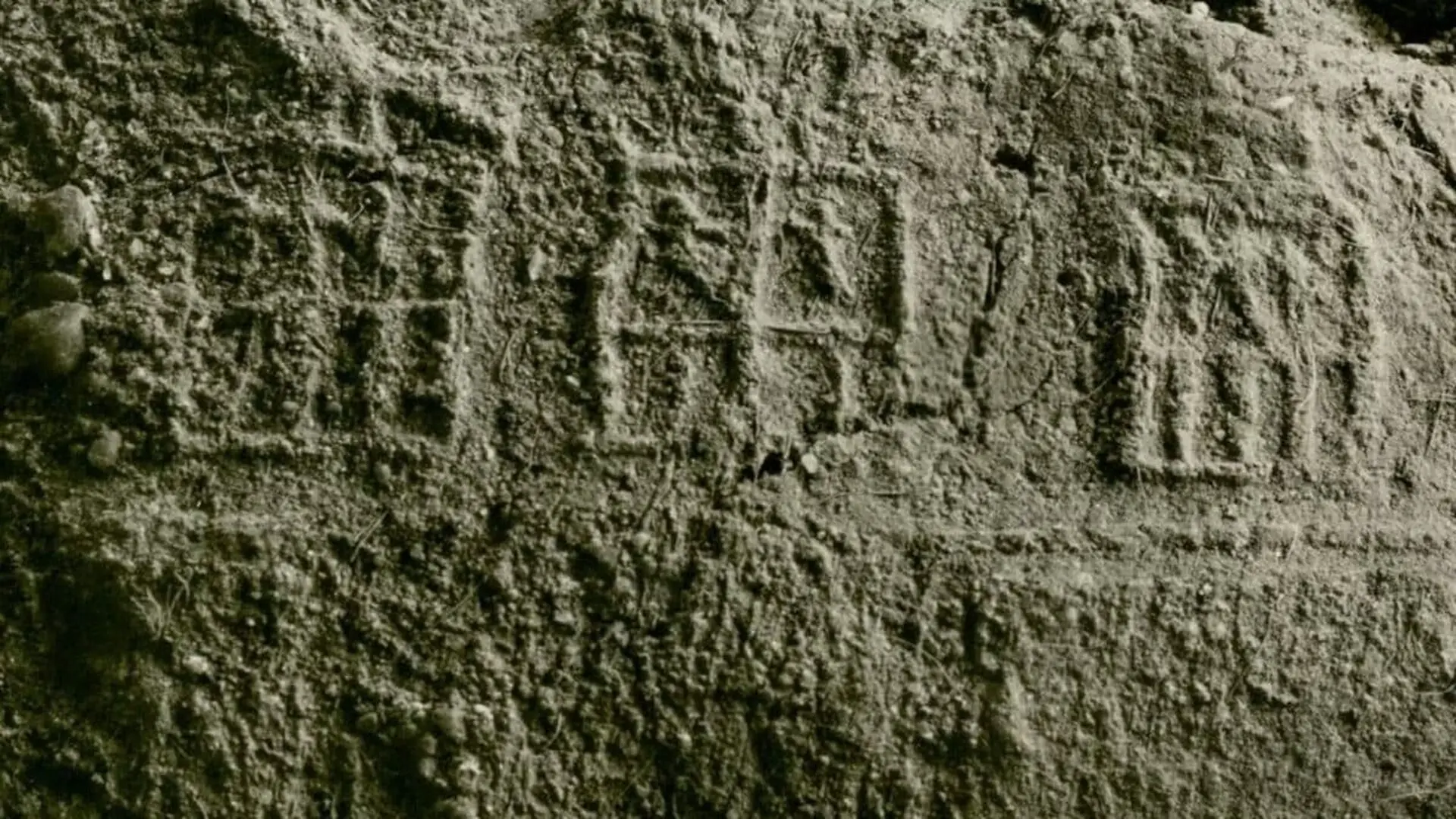
For more than five millennia, the true extent of Meretneith’s authority has remained a subject of intense academic debate. New digital imaging technology applied to a long-overlooked historical artifact suggests that this First Dynasty royal was not merely a regent or a placeholder for a male successor, but a sovereign monarch in her own right—a status historically attributed almost exclusively to men in ancient Egypt.
Meretneith, likely the daughter of the dynasty’s third king, Djer, lived during the formative years when Egypt was first unified under a singular crown. While her massive, treasure-laden tomb complex has long signaled her significant influence, historians have struggled to determine if she acted as an interim caretaker or a legitimate ruler. The answer, it appears, was preserved in a single, low-quality black-and-white photograph that had languished in the archives of the Egypt Exploration Society in London for decades.
Deciphering a Faded Royal Record
The evidence at the center of the dispute consists of 13 mud stoppers, which were used to seal storage jars, discovered in a Saqqara tomb during the 1940s by Egyptologist Walter B. Emery. Although the physical artifacts and the original glass-plate negatives were lost, Emery’s photograph captured an inscription featuring a sequence of four serekhs—royal emblems representing the palace facade, a deity, and the ruler’s name. Emery argued that the central two emblems designated Meretneith, placing her on symbolic parity with the king, though the poor state of the image left many of his peers skeptical.
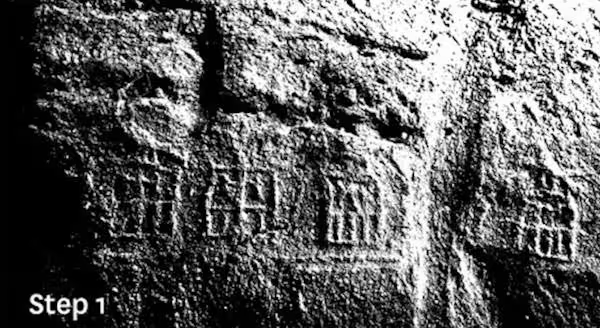
High-Resolution Digital Reconstruction
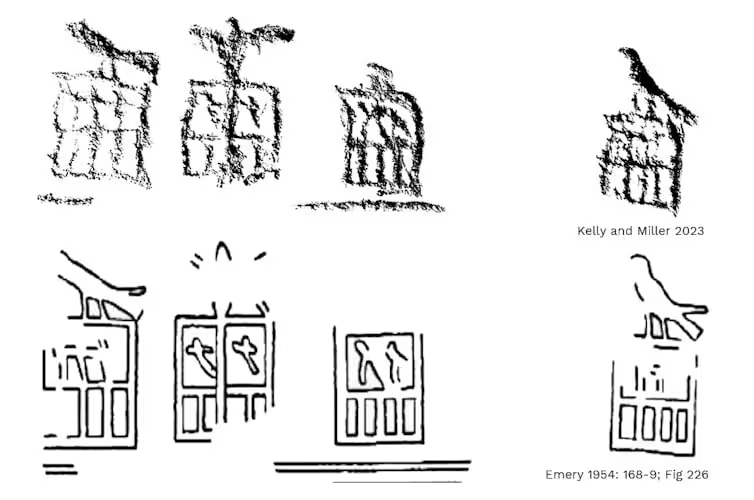
To resolve the ambiguity, researchers collaborated with a digital technician at Macquarie University to refine the historic image. By isolating the hieroglyphs and converting them into high-contrast vector graphics, the team produced a digital tracing that provided unprecedented clarity. The findings, published in Prague Egyptological Studies, confirm that the central symbols match the primary marks associated with Meretneith’s name, validating her inclusion within the royal serekh.
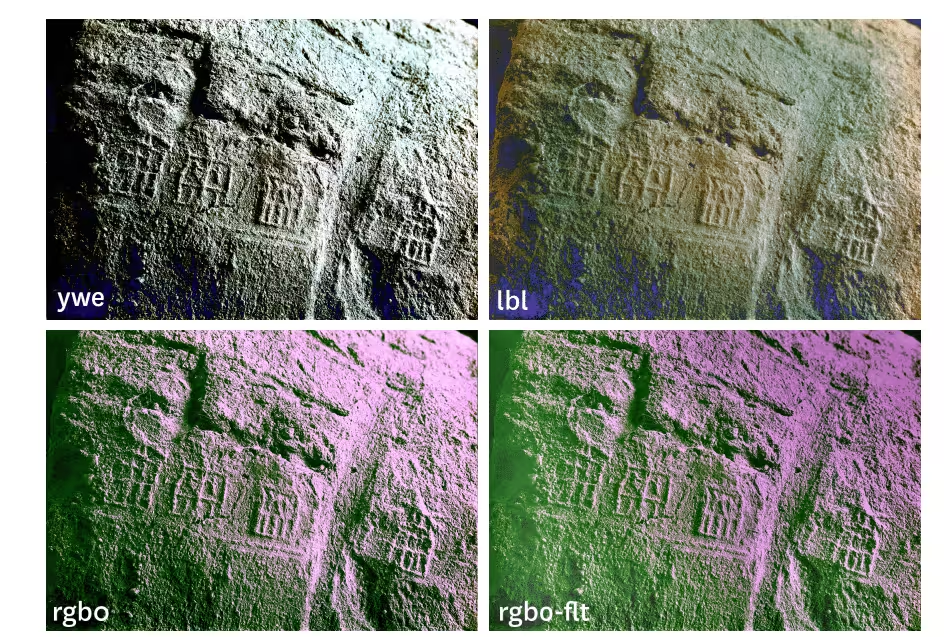
Mapping a Complex Political Career
This identification fits into a broader body of evidence suggesting Meretneith maintained a significant, multi-decade role in the Egyptian administration. The researchers propose that her career evolved through several phases: starting as a co-regent alongside Djer, eventually transitioning into the role of a powerful queen mother and independent sovereign. Her influence extended across the state apparatus, including the management of the treasury and the oversight of key officials.
The study suggests that her unique position within the royal family allowed her to exercise a level of political flexibility that was likely unavailable to her male counterparts, cementing her legacy as one of the most consequential figures of the early dynastic period.
This article has been fact checked for accuracy, with information verified against reputable sources. Learn more about us and our editorial process.
Last reviewed on .
Article history
- Latest version
Reference(s)
- projects, Contributors. “British egyptologist (1903–1971).”, September 8, 2006 Wikimedia Foundation, Inc. <https://en.wikipedia.org/wiki/Walter_Bryan_Emery>.
- <https://pes.ff.cuni.cz/-content/uploads/sites/13/2026/09/PES_XXXVI_2026_web.pdf>.
Cite this page:
- Posted by Zara Tariq