Detectorist Stops Digging After 15 Coins Leads To Massive Hidden Roman Fortune
An amateur detectorist’s discovery of 15 silver coins led to a massive archaeological excavation, revealing one of the country’s most significant hoards.
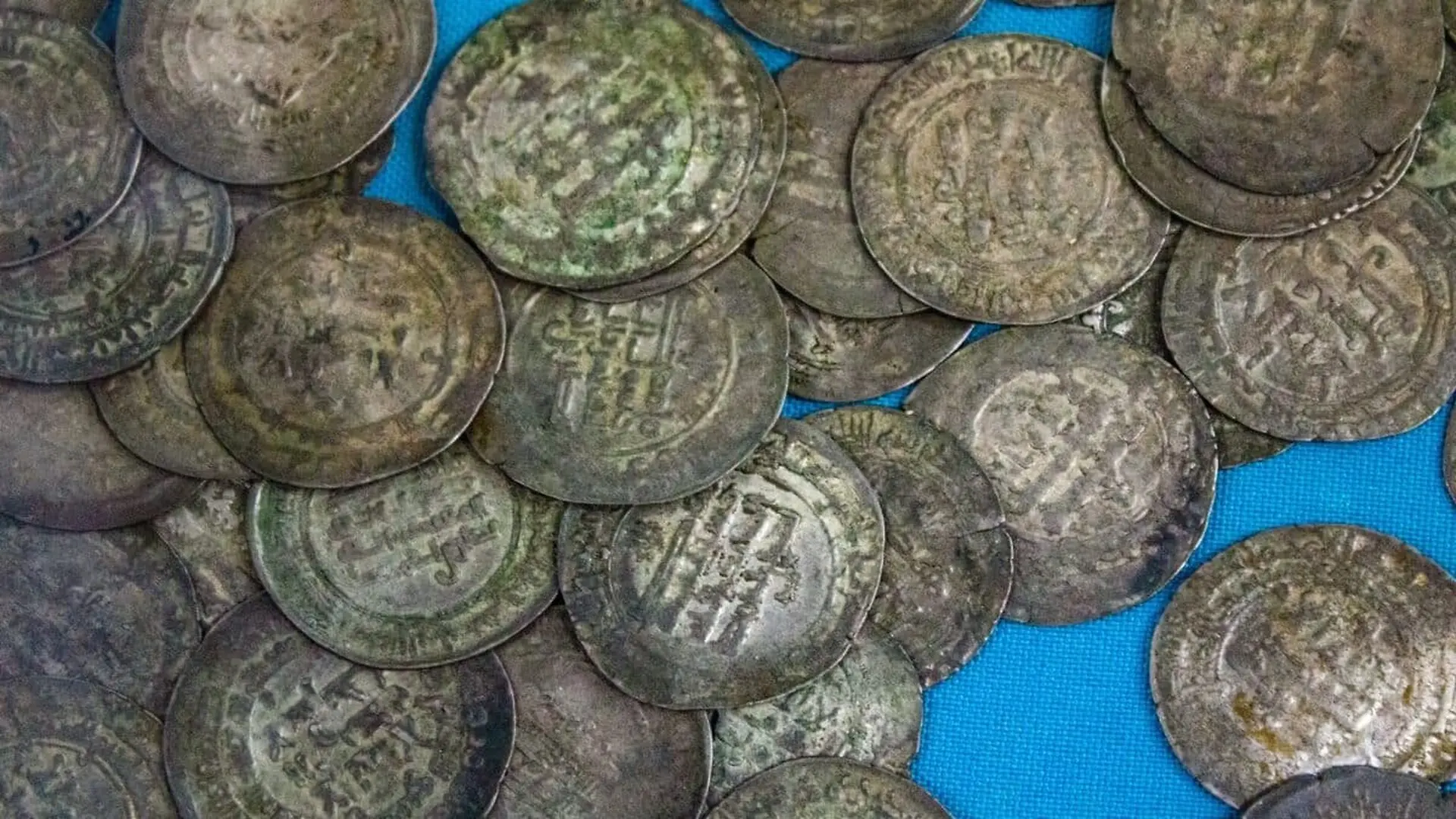
A routine outing by an amateur detectorist in Wesseling, Germany, has yielded a monumental archaeological discovery. While scanning the ground, Oliver Riedl encountered a persistent signal that led him to unearth an initial cluster of 15 silver coins. Recognizing the potential significance of the find, he immediately ceased digging and alerted local authorities, a decision that ensured the preservation of a massive, undisturbed archaeological deposit.
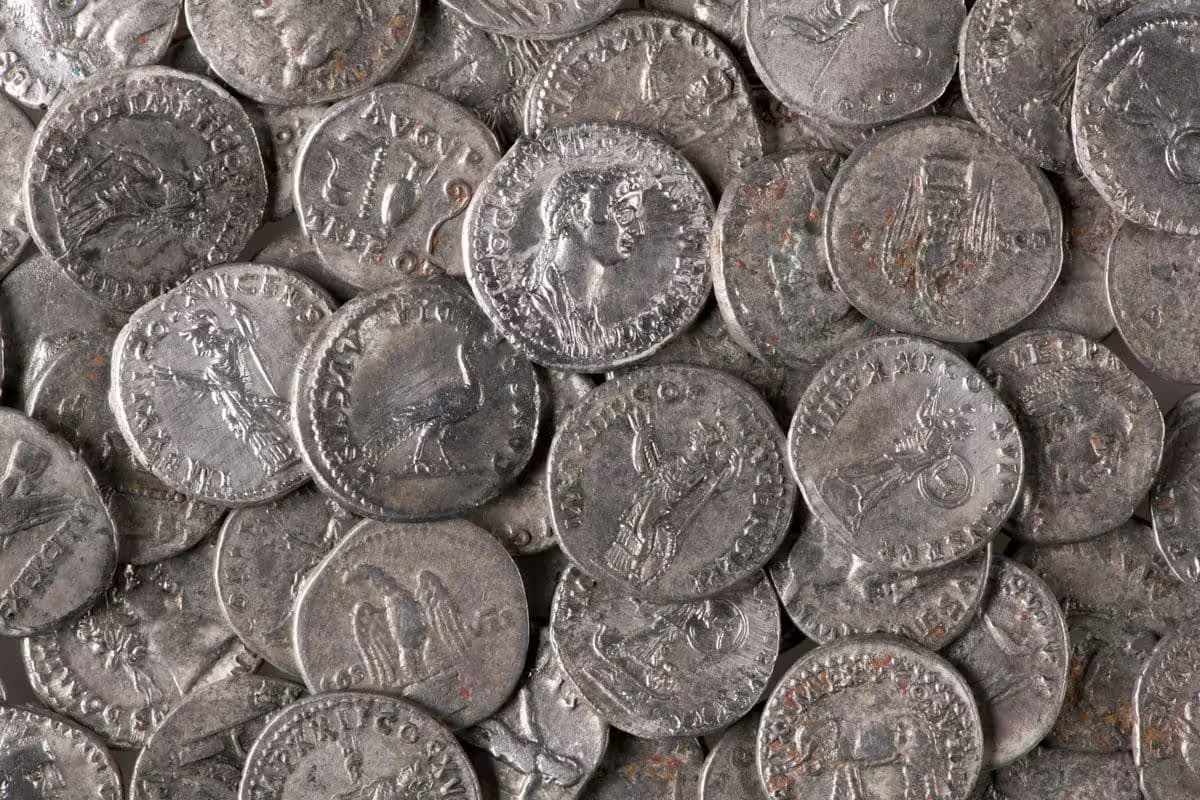
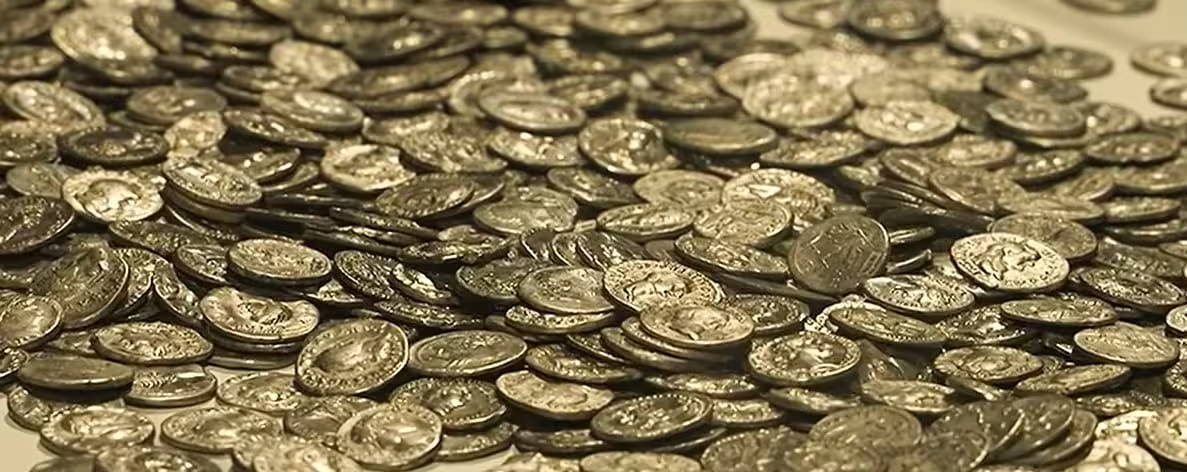
Professional excavators from the LVR Office for the Preservation of Archaeological Monuments eventually recovered a staggering cache of 934 Roman denarii. The find, which weighs approximately 6.8 pounds, now stands as the largest hoard from the era of Emperor Hadrian ever documented in Germany.
An Intact Snapshot of Roman Currency
To keep the hoard intact, the archaeological team removed the entire block of earth containing the coins, transporting it to a specialized workshop for non-invasive analysis. X-ray imaging revealed remnants of a ceramic vessel and straw packing, which researchers believe served as the original container for the silver stash. According to researcher Rahel Otte, the structural evidence suggests the coins were carefully stored within this straw-lined pot before being hidden.
The collection spans a significant period of Roman history. While the oldest piece dates back to 148 B.C.E., the bulk of the currency was minted between 69 and 96 C.E. The most recent coins—dating to approximately 124 or 125 C.E.—provide a clear timeline for the deposit, which likely occurred during the second quarter of the second century C.E.
Erich Classen, director of the LVR-State Service for Archaeological Heritage, emphasized the rarity of the discovery. “This makes it the largest coin hoard from this period in Germany and the fifth-largest worldwide,” Classen noted.
The Mystery of the Abandoned Wealth
While the coins offer a clear view of Roman economic life in the region, their origin and abandonment remain subjects of intense speculation. Experts estimate that the hoard represents a significant sum for the era. Based on historical data regarding military compensation, a standard legionary earned roughly 300 denarii annually, though half of that was typically deducted for essential living expenses and equipment. Accumulating this specific hoard would have required an ordinary soldier to set aside their total disposable income for roughly six years.
Despite the economic context, archaeologists remain cautious about linking the hoard to military personnel. The most plausible theory, according to Classen, is that the cache was buried for safekeeping during a period of uncertainty, as modern banking institutions were non-existent. The fact that the hoard remained in the ground suggests that the owner likely died or faced an unforeseen catastrophe before they could recover their assets.
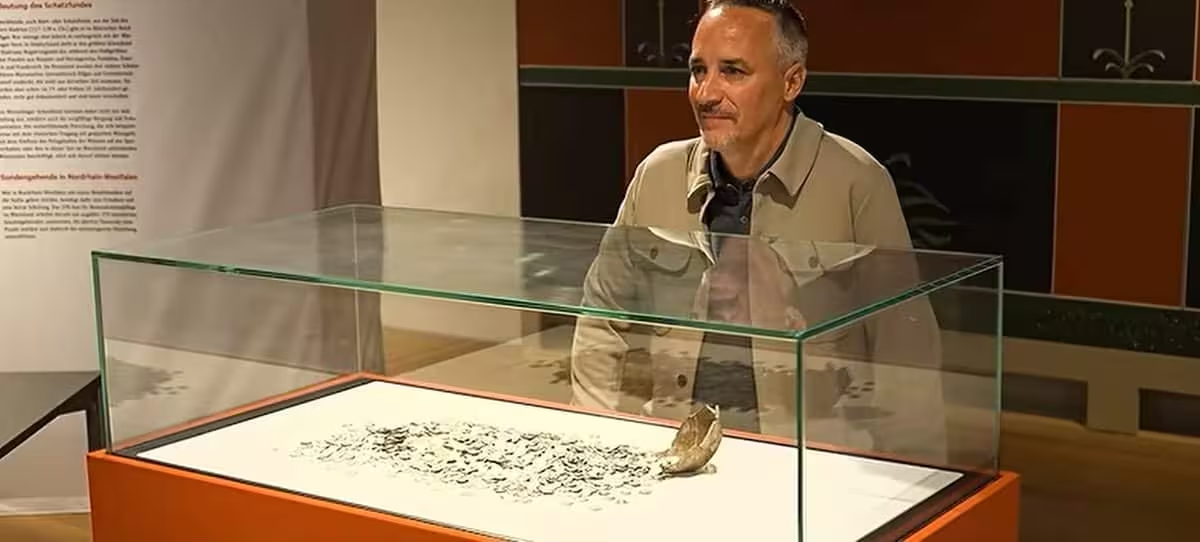
This discovery follows another recent archaeological event in Singen, Germany, where construction crews preparing for a new fire station uncovered 11 rare Celtic quinarii alongside Roman denarii dating between 164 and 169 C.E. These consecutive finds highlight the rich, often hidden historical landscape of the region, which was under Roman administration from approximately 38 B.C.E. until 456 C.E. The Wesseling hoard is now on public display at the LVR-LandesMuseum Bonn.
This article has been fact checked for accuracy, with information verified against reputable sources. Learn more about us and our editorial process.
Last reviewed on .
Article history
- Latest version
Reference(s)
- “Sensationeller römischer Münzschatz | LVR-Bodendenkmalpflege.” <https://www.lvr.de/bodendenkmalpflege/zentrale-infos/presse/sensationeller-roemischer-muenzschatz.html>.
- <https://bodendenkmalpflege-lvr.academia.edu/RahelOtte>.
- “ORCID.” <https://orcid.org/0000-0003-0860-7205>.
Cite this page:
- Posted by Zara Tariq