Why Japan Switched to High Tech Bidets and Why the World Is Finally Following Suit
Discover how a new, sustainable approach to cleaning is transforming everyday habits and helping to protect the environment for a greener future.
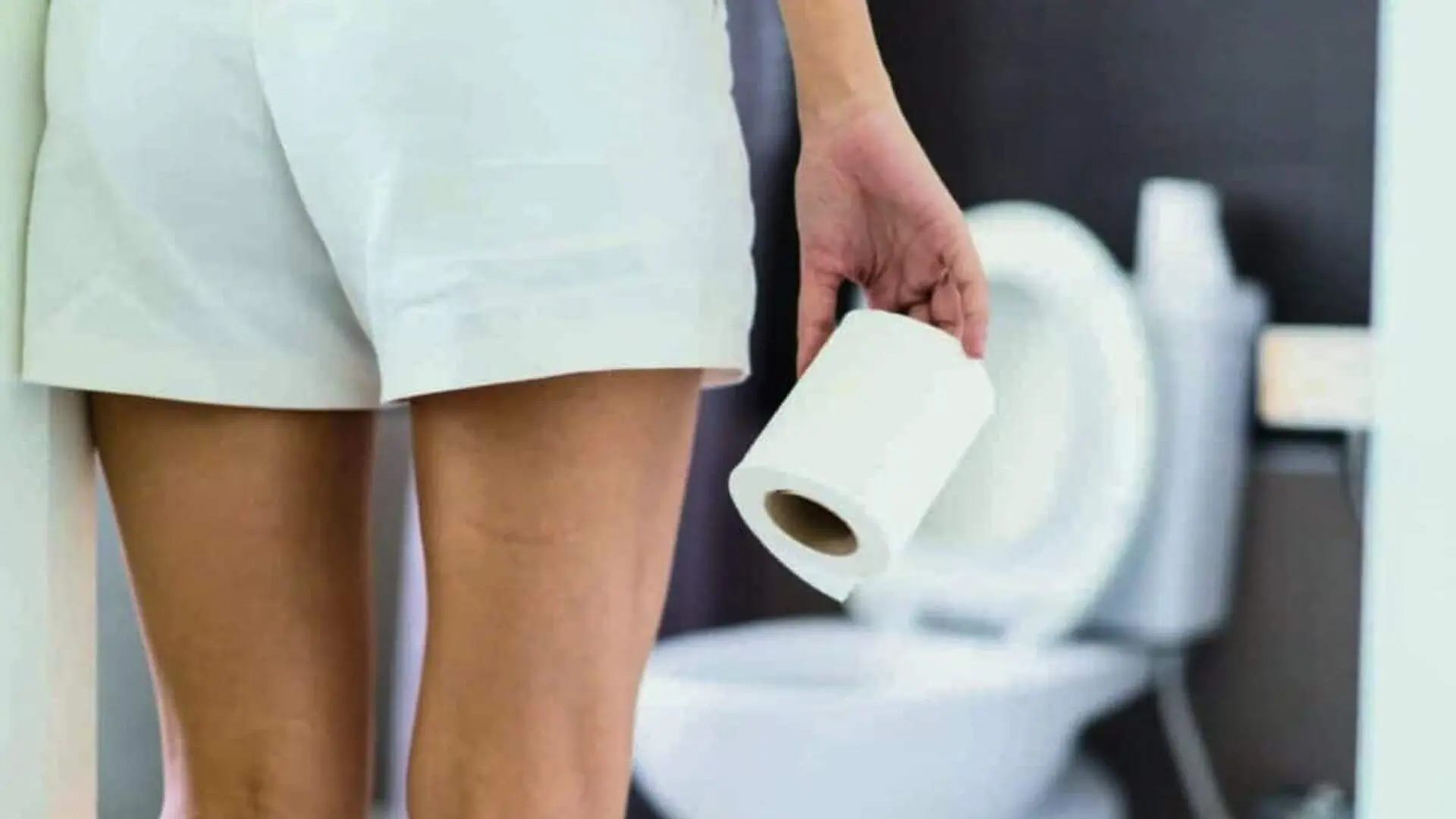
In more than 80 percent of multi-person households across Japan, the humble bathroom fixture has undergone a high-tech transformation. Modern toilets in the country are frequently equipped with an integrated wand that extends to provide a warm water rinse, followed by a gentle stream of heated air, all while the seat maintains a comfortable, preset temperature. This system, widely recognized by the TOTO brand name Washlet, has evolved from a niche luxury into a ubiquitous standard found in airports, office buildings, and transit hubs alike.
The global adoption of this technology represents a significant shift in hygiene and environmental habits. By relying on a precise, low-volume water spray—which typically uses only about one-eighth of a gallon per cycle—users can dramatically reduce their reliance on paper products. This shift carries substantial ecological weight; according to data cited by Scientific American, the production of a single roll of toilet paper requires approximately 37 gallons of water, over a kilowatt-hour of electricity, and roughly 1.5 pounds of wood pulp. As reported by the Natural Resources Defense Council (NRDC), the demand for tissue products remains a major driver of industrial logging in Canada’s boreal forests, a region where the United States is a primary consumer of pulp exports.
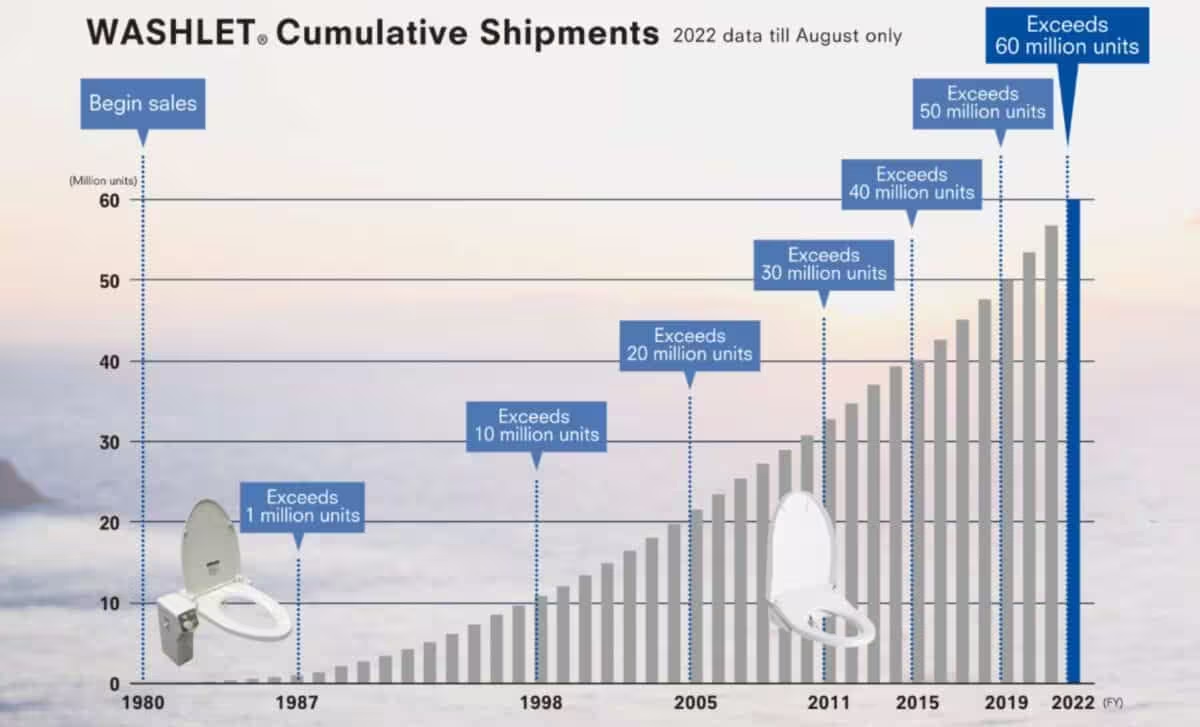
The Evolution of a Bathroom Icon
The journey toward widespread adoption was gradual. TOTO first experimented with imported American technology in the 1960s, but early models suffered from inconsistent spray patterns and fluctuating water temperatures. In June 1980, the company introduced its own refined version, marketed with the memorable and provocative campaign, “Your bottom wants to be washed too.” Despite its later success, the innovation was initially met with skepticism; when the Japanese government began tracking ownership in 1992, only 14.2 percent of homes utilized the technology.
The turning point arrived through decades of iterative engineering. TOTO researchers famously conducted internal testing with over 300 employees to determine the optimal configuration for user comfort. Their efforts resulted in what the company identifies as the “Golden Angle,” a specific spray trajectory of 43 degrees, paired with a water temperature of 38°C and a seat temperature of 36°C. By 2012, the Japan Society of Mechanical Engineers officially recognized the Washlet as a landmark of mechanical heritage.
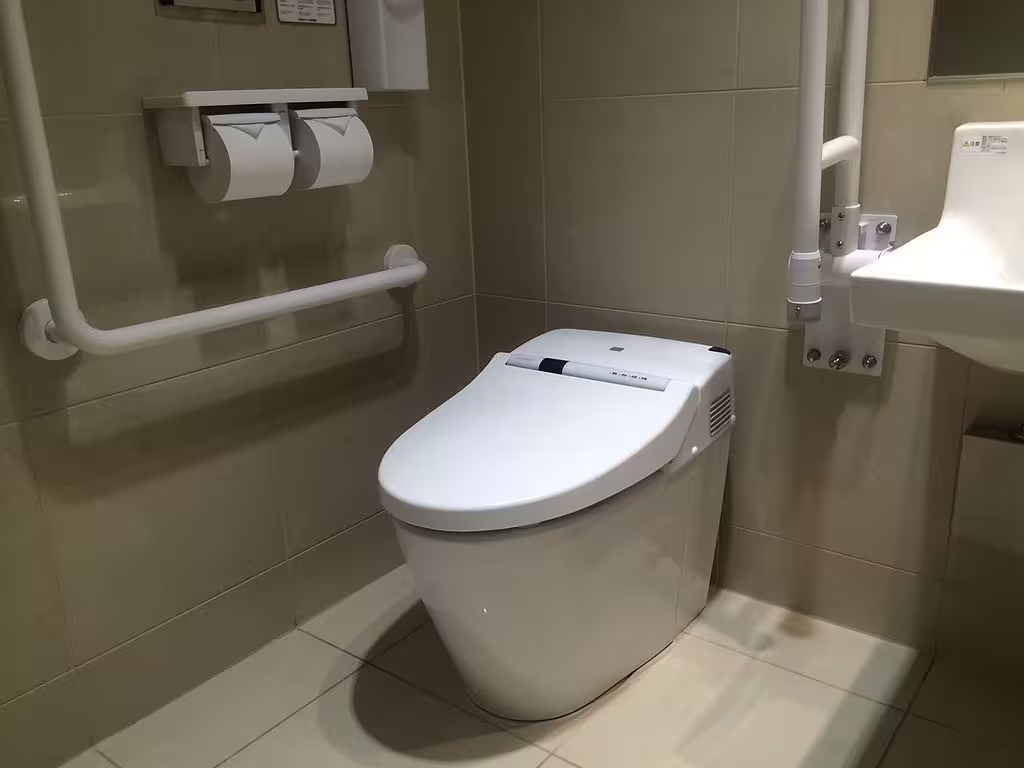
Changing Consumption Patterns
While the Washlet has become a staple of Japanese daily life, it has not replaced toilet paper entirely. Instead, it has altered usage habits. A 2025 survey by the Japan Sanitary Equipment Industry Association of 4,700 users found that those who utilize the spray feature reduce their toilet paper consumption by nearly 40 percent, averaging 2.1 wipes compared to 3.4 for those who do not. The cultural impact is profound, with over 83 percent of surveyed residents expressing pride in the technology as a part of their national identity.
The disparity in global consumption remains stark. The United States, which represents roughly 4 percent of the global population, consumes more than 20 percent of the world’s tissue products. The NRDC estimates that the average American uses 141 rolls annually, compared to 91 in Japan. As awareness regarding the environmental footprint of tissue production grows, the barrier to entry for these systems continues to lower. Modern consumers can choose from basic, non-electric attachments priced under $100 or full-featured electronic systems that offer customizable pressure and temperature settings, signaling a potential shift in international bathroom habits.
This article has been fact checked for accuracy, with information verified against reputable sources. Learn more about us and our editorial process.
Last reviewed on .
Article history
- Latest version
Reference(s)
- “E 200623 WASHLET40th.” <https://www.toto.com/en/press/pdf/E-200623_WASHLET40th.pdf>.
- “Fresh and Clean: Creating a New Toilet Culture | March 2019| Highlighting Japan.” <https://www.gov-online.go.jp/eng/publicity/book/hlj/html/201903/201903_12_en.html>.
Cite this page:
- Posted by Zara Tariq