Massive Ancient Monument Unearthed in Pakistan After 160 Years of Mystery
Archaeologists in Pakistan have uncovered a mysterious, massive structure near an ancient Greek-style temple, leaving experts puzzled over its true purpose.
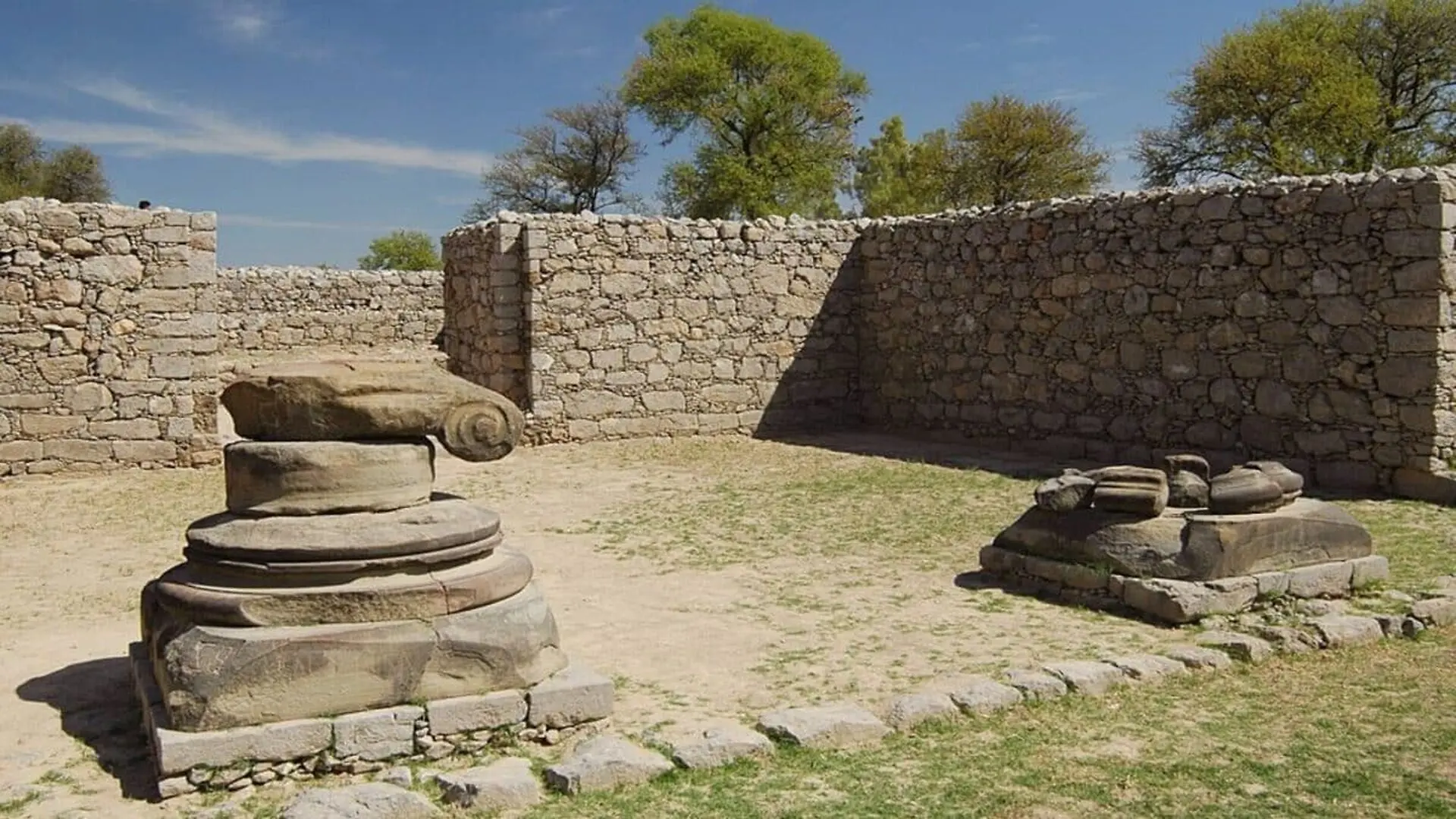
Archaeologists working in the historic region of Taxila, Pakistan, have unearthed a massive, previously uninvestigated structure that challenges existing assumptions about the ancient urban landscape. The site, dubbed Jandial D, spans nearly 100 meters in length and over 50 meters in width, covering a footprint of approximately 5,000 square meters—a scale that dwarfs the neighboring, well-documented Jandial temple.
The discovery is the result of a collaboration between the Italian Archaeological Mission of Ca’ Foscari University of Venice and local Pakistani authorities. Situated just outside the fortified city of Sirkap, the site sits at the heart of a region renowned for its long history of cultural synthesis, where Greek, Persian, and South Asian influences converged over centuries.
A Century-Old Mystery Reopened
While the existence of the site was first noted by British archaeologist Alexander Cunningham in 1864, it remained untouched by systematic excavation for more than 160 years. Modern research finally began in mid-August 2026 under the umbrella of the Khyber PATH project, an initiative dedicated to the preservation and study of heritage sites across Pakistan. Initial digging has revealed substantial walls, some of which stand at least a meter high.
The sheer size of Jandial D is striking. At roughly 5,000 square meters, it is more than triple the size of the nearby Jandial temple, which measures approximately 45 by 30 meters. Despite its prominence, the structure’s purpose and age remain elusive. Luca Maria Olivieri, the project director and a professor of archaeology, noted that the find forces a reassessment of how ancient planners organized spaces beyond city walls, though he cautioned that the building’s functional and chronological history remains to be determined.
Architectural Context and Urban Preservation
The relationship between Jandial D and the famous Jandial temple, which displays clear Greek influence including Ionic columns, is a primary focus for researchers. Excavated in the early 20th century by John Marshall, the temple is thought by some to have served as a temple linked to Zoroastrian rituals, though this is still debated. Experts emphasize that the proximity of the new structure to the temple does not necessarily imply a common timeline or shared purpose.
Taxila itself serves as a melting pot of history, featuring layers of occupation spanning the Persian, Mauryan, Indo-Greek, and Kushan empires. Since its designation as a UNESCO World Heritage Site in 1980, the area has remained a critical focal point for understanding the ancient Gandhara region.
For over a century, the Greek-style temple at Jandial was the big monument of this corner of Taxila.
— Ancient Content (@HistContent) October 13, 2026
It was facing something three times its size.
Across the ancient road, Italian and Pakistani archaeologists have exposed Jandial D, a building almost 100 meters long and over 50… pic.twitter.com/ae7ASCOsAh
The discovery also underscores the urgent need for archaeological oversight in the face of modern urban development. The Khyber PATH initiative aims to balance this growth by integrating rigorous documentation and conservation efforts, not only at Taxila but also at other significant sites like the ancient settlement of Barikot and the fortifications at Sirsukh. For the researchers at Jandial D, the immediate priority is to peel back the layers of earth to determine whether this monumental building was a civic hub, a religious center, or something entirely unique to the crossroads of the ancient world.
This article has been fact checked for accuracy, with information verified against reputable sources. Learn more about us and our editorial process.
Last reviewed on .
Article history
- Latest version
Reference(s)
- “Pakistan, Ca’ Foscari porta alla luce un monumento antico di dimensioni eccezionali.”, October 13, 2026 <https://www.unive.it/web/it/15165/articolo/8848?utm_source=chatgpt.com>.
- “Pakistan, Ca’ Foscari porta alla luce un monumento antico di dimensioni eccezionali.”, October 13, 2026 <https://www.unive.it/web/it/15165/articolo/8848>.
- “Ca' Foscari University of Venice: people.” <https://www.unive.it/web/en/19197/people/lucamaria.olivieri?cHash=8b290d6eb4b210ca9033b0532f3329b7096927159bc34c8eea2657d5bb5cb26b>.
- “https://twitter.com/HistContent/status/2110151691731411117/photo/1.” <https://t.co/ae7ASCOsAh>.
Cite this page:
- Posted by Zara Tariq