Wild Grass Genetics Reveal How Underground Stems Form, But Epigenetic Silencing Limits Perennial Crop Yields
Multi-omics analysis of wild rice sheds light on the complex genetic and hormonal networks controlling subterranean plant growth.

Researchers analyzed wild grass genetics to understand how underground stems known as rhizomes drive perennial growth and clonal expansion. These insights could help scientists design climate-resilient perennial crops that require less tilling while maintaining high grain yields.
How Underground Stems Diverge From Aerial Shoots
Grasses rely on vegetative propagation through underground stems to colonize wide areas and form interconnected clonal networks. In the wild rice species Oryza longistaminata, axillary buds either grow vertically into green tillers or bend horizontally to form specialized subterranean structures. Kanako Bessho-Uehara and Motoyuki Ashikari published in Communications Biology that these underground buds develop a spherical shape protected by rigid scale leaves that facilitate soil penetration.
This subterranean growth program resembles skotomorphogenesis, which is development driven by darkness. Once a rhizome tip reaches the soil surface, light exposure triggers an aerial shoot transition that shifts the tissue into a photomorphogenic pathway. Genetic regulators such as BLADE-ON-PETIOLE genes suppress leaf blade development to maintain the tough, sheath-dominated structure required for underground movement.
Hormones and Environmental Signals Shape Growth
Plant hormones coordinate the delicate balance between vegetative expansion and sexual reproduction across multiple developmental stages. A transient increase in gibberellin levels accompanies early bud enlargement, while abscisic acid accumulation helps maintain dormancy in mature subterranean buds. Cytokinins and strigolactones work in opposition to regulate branching by controlling bud suppressor genes.
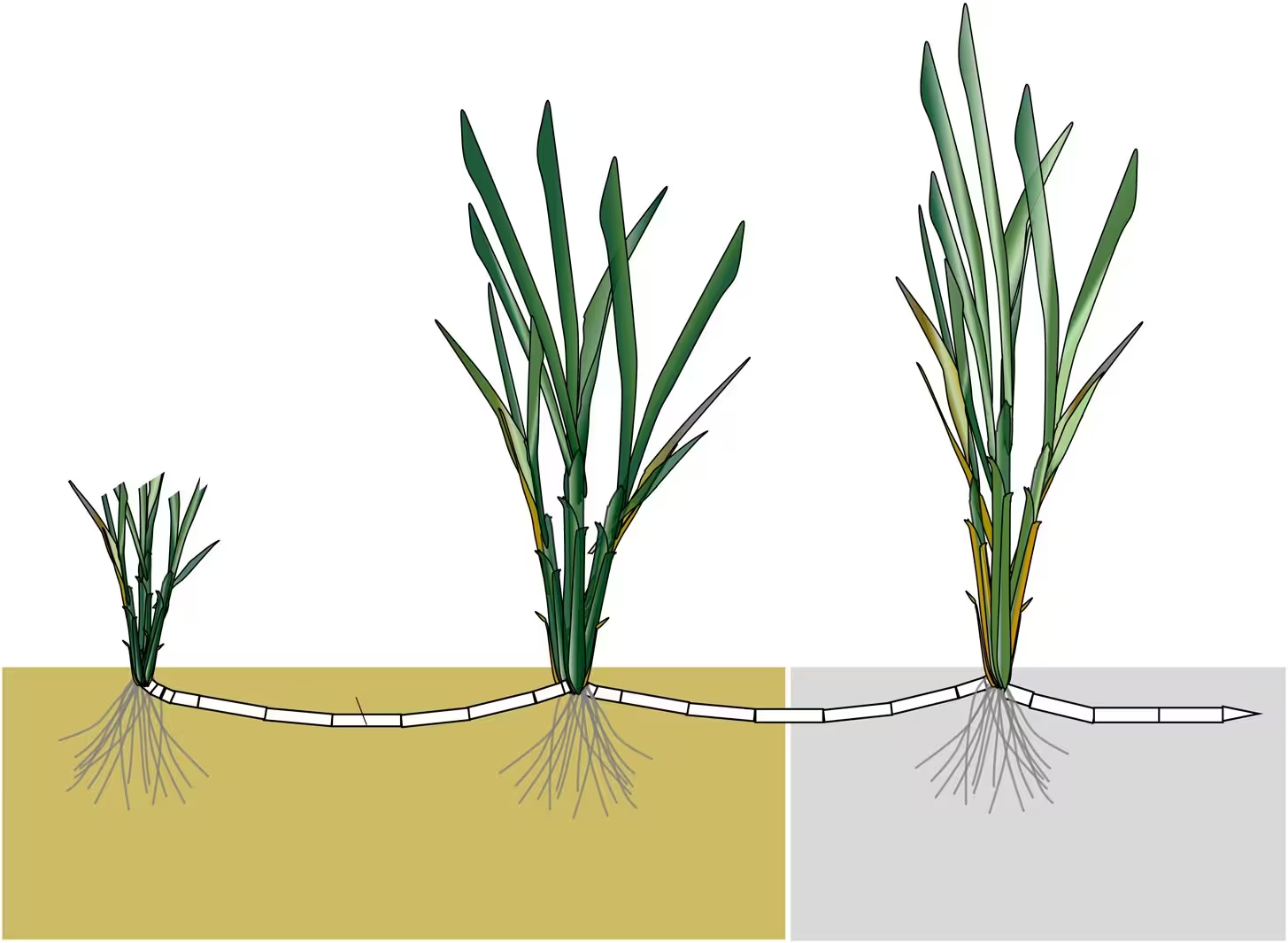
Environmental factors like light, temperature, and moisture directly influence these hormonal and metabolic pathways to guide adaptive foraging. Elevated temperatures promote underground elongation, whereas cold conditions accelerate the transition to aerial shoots as an escape strategy. In nitrogen-deficient soils, mobile signal peptides coordinate nutrient translocation between connected ramets to enhance the fitness of the entire plant network.
Unraveling Complex Genetic Architectures and Omics
Early quantitative trait loci mapping in various grass crosses identified major genomic regions linked to rhizome presence, yet the underlying causal genes remained elusive. Recent high-throughput sequencing and multi-omics analyses reveal a highly polygenic architecture involving at least 10 loci that function in a combinatorial manner. Comparative transcriptomics shows that carbohydrate metabolism genes are heavily enriched in rhizomes, turning them into strong sinks for energy and carbon.
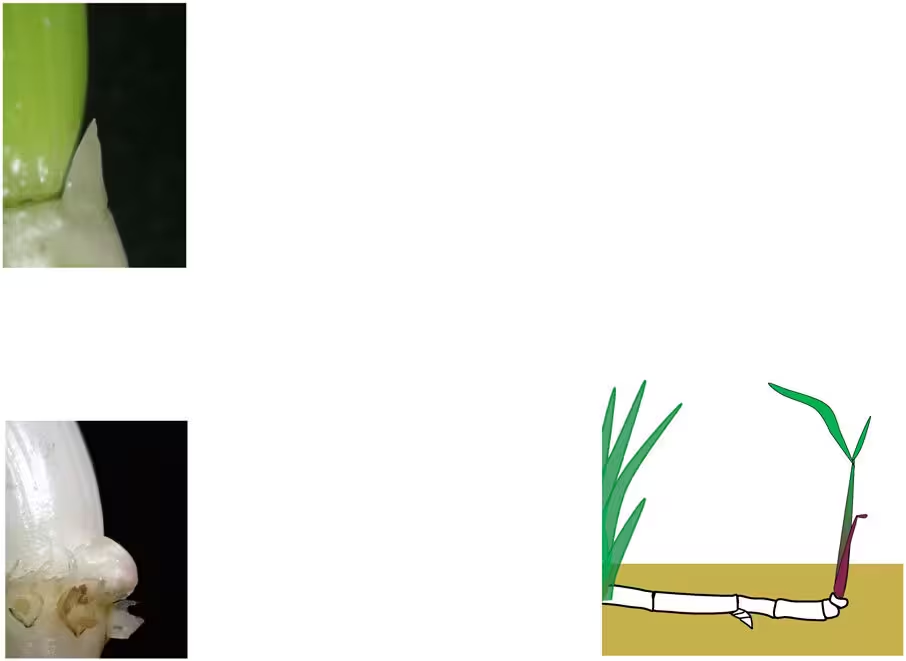
At the microscopic level, spatial transcriptomics highlights specialized meristem initiation cells that drive organ divergence through localized cellular reprogramming. Furthermore, microRNAs act as key post-transcriptional switches that modulate downstream transcription factors. Together, these omics layers demonstrate how environmental and metabolic cues are translated into structural changes.
Breeding Perennial Crops for Sustainable Agriculture
Harnessing perennial traits offers immense agricultural benefits, including reduced soil erosion and improved water-use efficiency compared to annual crops. Interspecific hybridization has already produced perennial rice lines that match annual yields while cutting labor requirements and input costs. However, continuous reproductive investment can cause a progressive decline in rhizome regrowth rates over time.
The team suggests this temporal limitation stems from cumulative epigenetic modifications that eventually silence renewal modules under intensive farming pressures. De novo domestication via targeted genome editing offers a promising alternative to bypass these hurdles. Combining multi-omics data with precise gene editing may soon allow researchers to balance vegetative persistence with stable grain productivity.
The research was published in Communications biology on November 26, 2026.
This article has been fact checked for accuracy, with information verified against reputable sources. Learn more about us and our editorial process.
Last reviewed on .
Article history
- Latest version
Reference(s)
- Bessho-Uehara, Kanako., et al. “Integrating multilayered regulatory networks in grass rhizome development.” Communications Biology, vol. 9, no. 1, November 26, 2026 Springer Science and Business Media LLC, doi: 10.1038/s42003-026-11278-6. <https://doi.org/10.1038/s42003-026-11278-6>.
Cite this page:
- Posted by Elizabeth Taylor