Lost Megalodon Vertebra Reappears After 30 Years, Confirming Record Size And Stomach Contents
A 30‑year‑lost fossil, vanished during a museum move, has been rediscovered, sparking fresh research and revealing an unexpected companion find.
A key fossil of the giant shark Otodus megalodon has resurfaced after vanishing for more than three decades during a museum relocation. The newly found vertebra confirms the dimensions that have underpinned recent size estimates for the extinct predator.
The specimen originated from a clay quarry near Gram in Denmark, collected in the late 1970s and later catalogued at the Geological Museum of Copenhagen. Prior to a 1989 move, curators photographed and measured the vertebrae, but the physical fossils were misplaced and thought lost. Those archival records, however, continued to shape scientific discussions on megalodon size.
Among the collection, one vertebra stood out. With a diameter of 23 centimetres, it remains the largest shark vertebra ever documented and, according to the authors, the biggest fish vertebra known to science. Those dimensions have been integral to calculations of the shark’s maximum length.
Impact of a Long‑Missing Specimen
For years researchers could only rely on photographs and notes, unable to examine the actual bone. The recent recovery proves those early measurements were reliable.
“The rediscovery of the vertebrae was a true delight because they empirically confirm the maximum vertebral diameter of 23 cm reported in the literature,” saidKenshu Shimada of DePaul University. He added that the specimen “represents the largest shark vertebrae known to date but also the largest fish vertebrae ever recorded to our knowledge.”
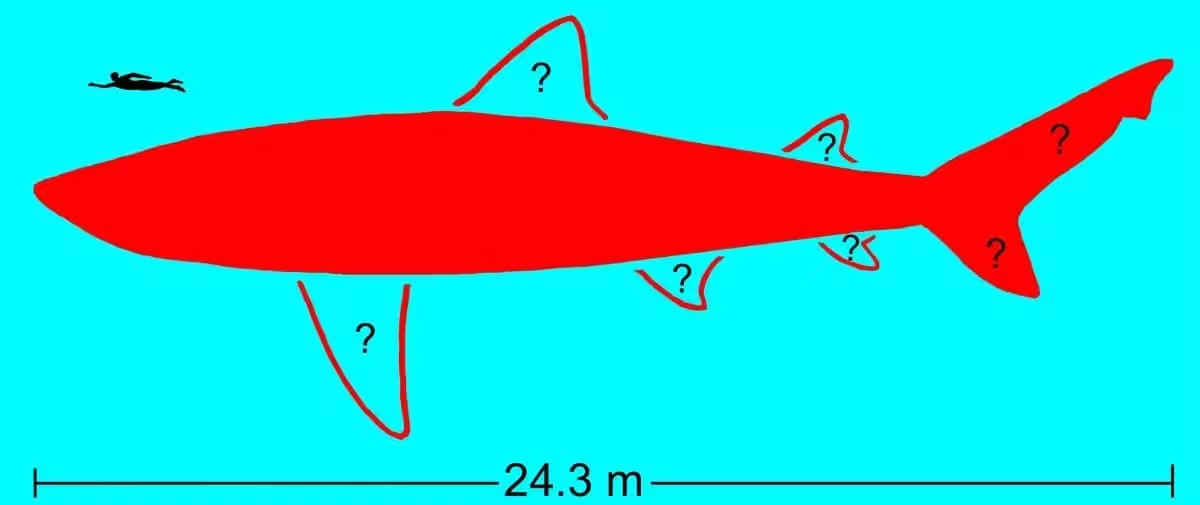
The findings were published in Palaeontologia Electronica, where the authors note that the recovered bone supports the measurements used in a 2025 analysis that projected a maximum total length of 24.3 metres for megalodon individuals bearing vertebrae of this size.
Why Pinning Down Megalodon Dimensions Is Tricky
Estimating the true scale of the ancient shark has always been fraught with uncertainty. Unlike whales or many dinosaurs, sharks are built largely of cartilage, which seldom fossilises.
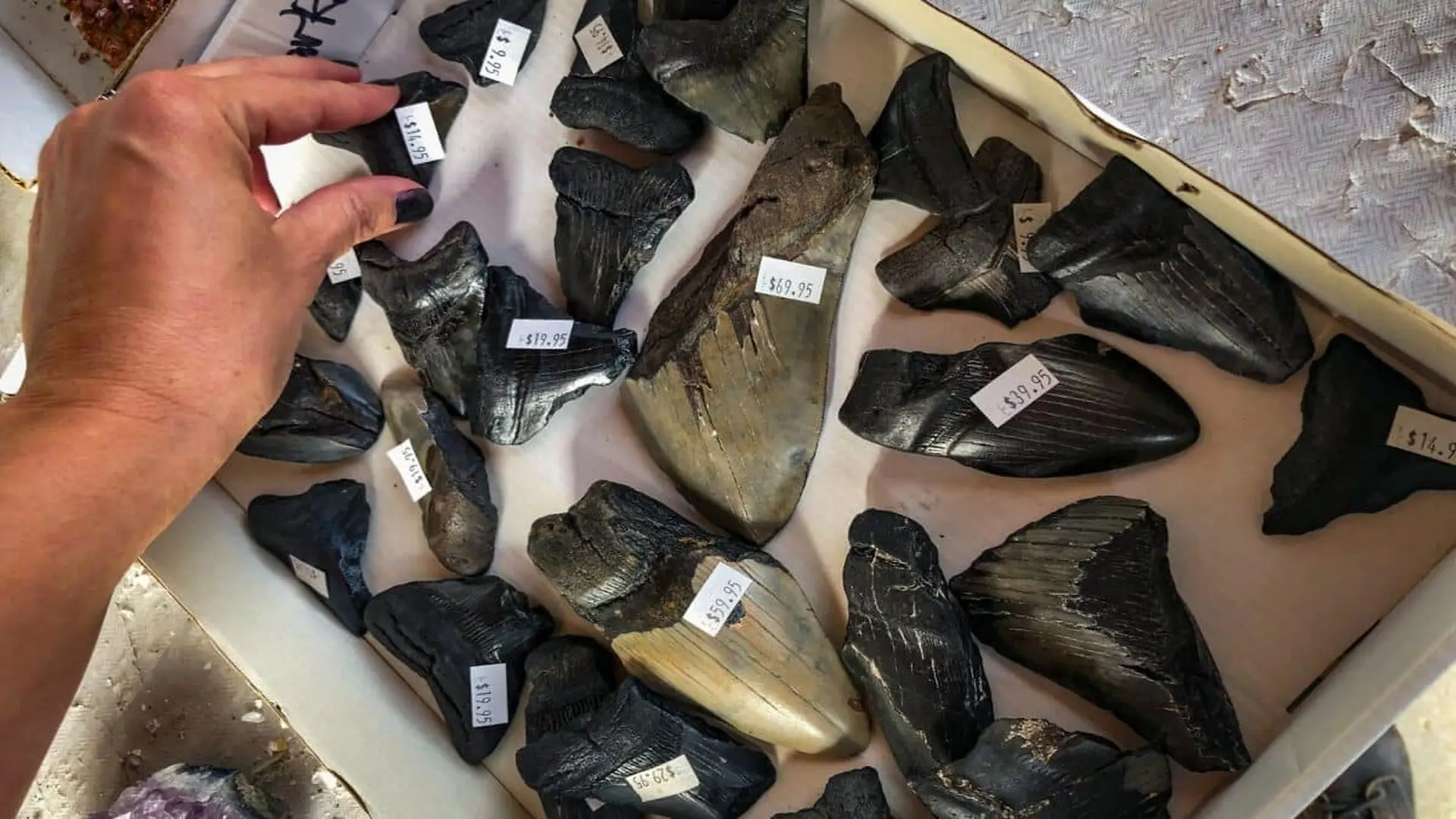
Consequently, most megalodon remains consist of isolated teeth, while the few giant jaws displayed in museums are reconstructions derived from limited material. Researchers therefore extrapolate body size by comparing the fossil teeth to those of living shark species.
Early estimates placed the maximum length between 14 and 18 metres. A 2021 study raised that ceiling to roughly 20 metres, and a 2022 paper using three‑dimensional modeling revised a Belgian specimen’s length from 9.2 metres to 15.9 metres.
In 2024, Shimada and colleagues argued that the shark’s body was likely more streamlined than previously assumed. Their analysis of spinal architecture suggested a design favouring sustained, long‑distance swimming rather than rapid ambush predation.
“Although some additional assumptions have gone into the estimated length, the rediscovery of the vertebrae from Denmark eliminates any doubts about the maximum vertebral diameter of 23 centimeters that has been critical for the 24.3‑meter length estimate,” Mette Elstrup, a paleontologist at the Museum of Southern Jutland, said in a release.
The authors caution that all size figures remain provisional, as a complete megalodon skeleton has never been recovered.
Beyond Size: What the Vertebra Reveals
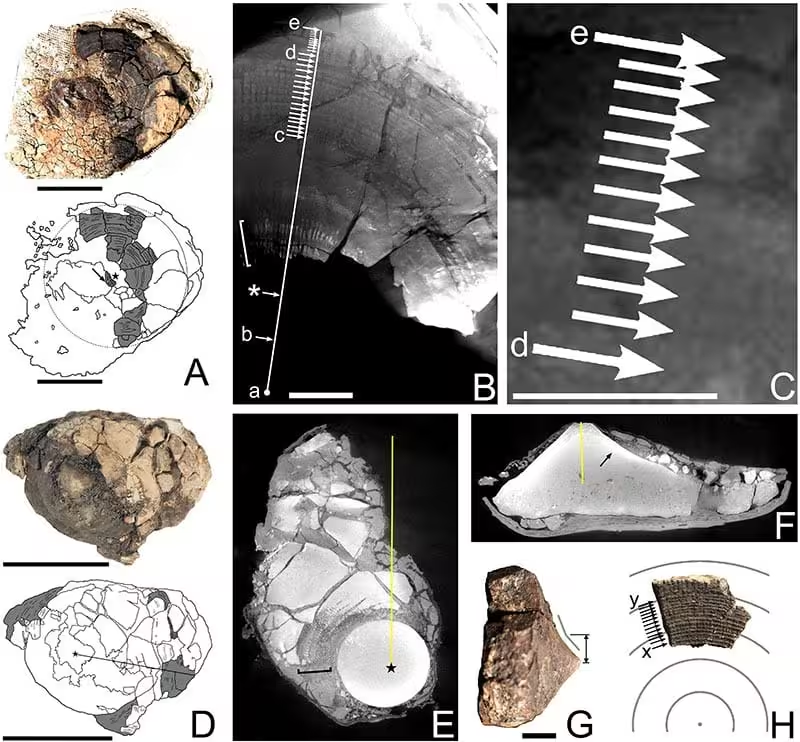
X‑ray analysis of the recovered vertebra uncovered growth bands within the cartilage, indicating the shark was about 64 years old at death and could have lived up to roughly 96 years, potentially achieving even greater dimensions.
The surrounding matrix also yielded unexpected fossils. Researchers identified fragmentary gill arches and minute scales belonging to a basking shark, preserved alongside the megalodon bone.
“I was surprised to discover many scales of a fossil basking shark under a microscope. This led my research team to interpret the basking shark remains to represent megalodon’s stomach content,” Shimada said.
This article has been fact checked for accuracy, with information verified against reputable sources. Learn more about us and our editorial process.
Last reviewed on .
Article history
- Latest version
Reference(s)
- “Kenshu Shimada.” <https://www.depaul.edu/faculty/kenshu-shimada>.
- Shimada, Kenshu. “Otodus megalodon vertebrae from Denmark.”, vol. 29, no. 2, June 28, 2026, pp. 1-25. Palaeontologia Electronica, doi: https://doi.org/10.26879/1674. <https://palaeo-electronica.org/content/2026/5872-otodus-megalodon-vertebrae-from-denmark>.
- “1140.” <https://palaeo-electronica.org/content/pdfs/1140.pdf>.
- <https://www.researchgate.net/profile/Mette-Elstrup>.
- <https://www.eurekalert.org/news-releases/1133142>.
Cite this page:
- Posted by Zara Tariq