French Archaeologist Deciphers Linear Elamite, 4,500-Year-Old Iranian Script
Scientists decode mysterious geometric writing system of diamonds, curves and broken lines first found in 1903, revealing its secrets.
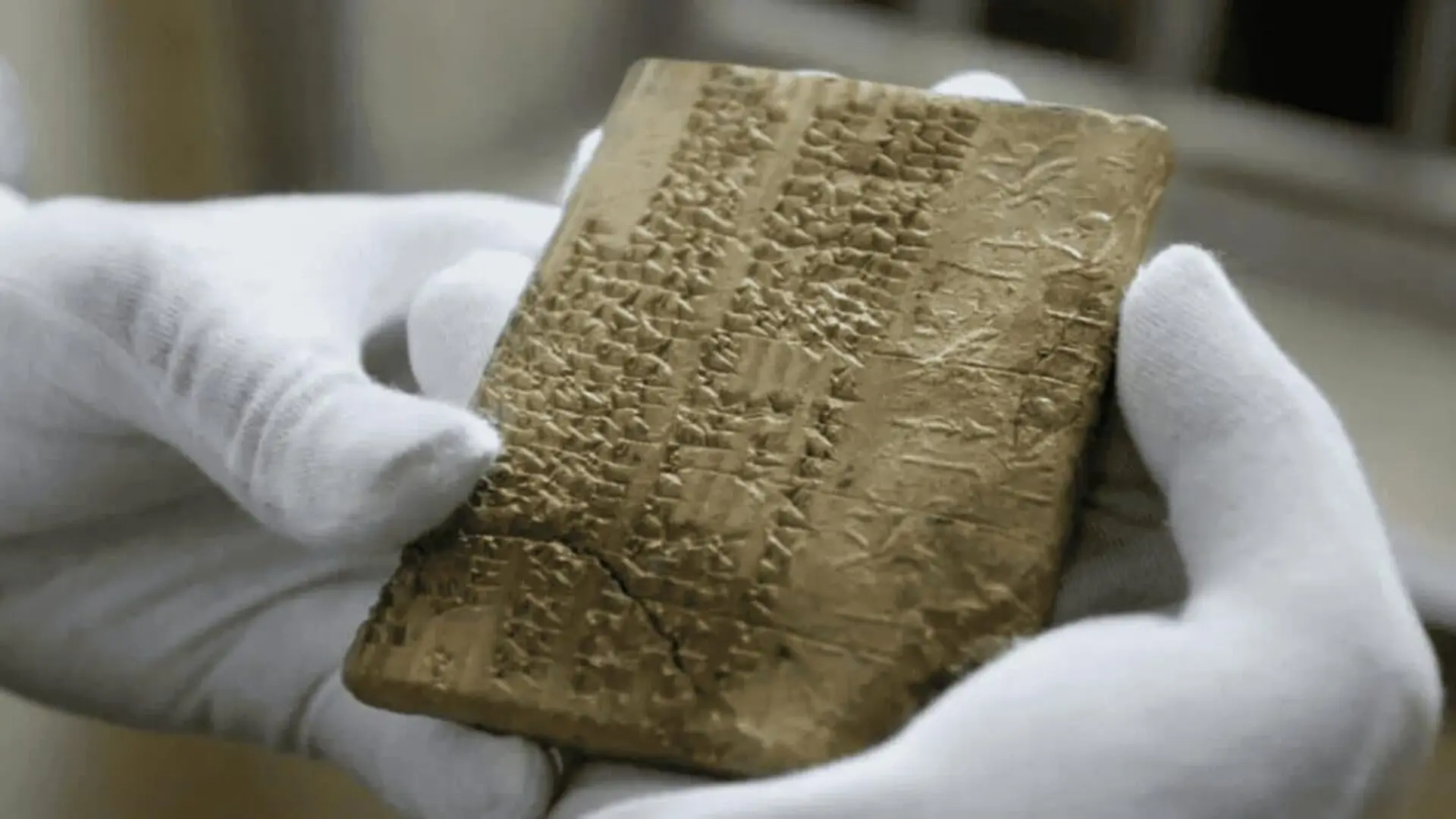
After more than a century of dead ends, a French scholar has finally cracked the Linear Elamite script, opening a new window onto a language that vanished a millennium ago.
The script, first spotted on artifacts unearthed at Susa in 1903, is composed of geometric symbols—diamonds, curves and broken lines—that resisted interpretation for 120 years. Although the Elamite language itself was identified from Mesopotamian cuneiform tablets in the nineteenth century, Linear Elamite represented a completely separate visual system for recording the same tongue.
“Writing is a graphic, visual phenomenon, produced by the hand. Language is a vocal phenomenon, produced by the vocal cords,” explains François Desset, emphasizing the methodological shift from language to script.
Silver Vessels Reveal a Royal Signature
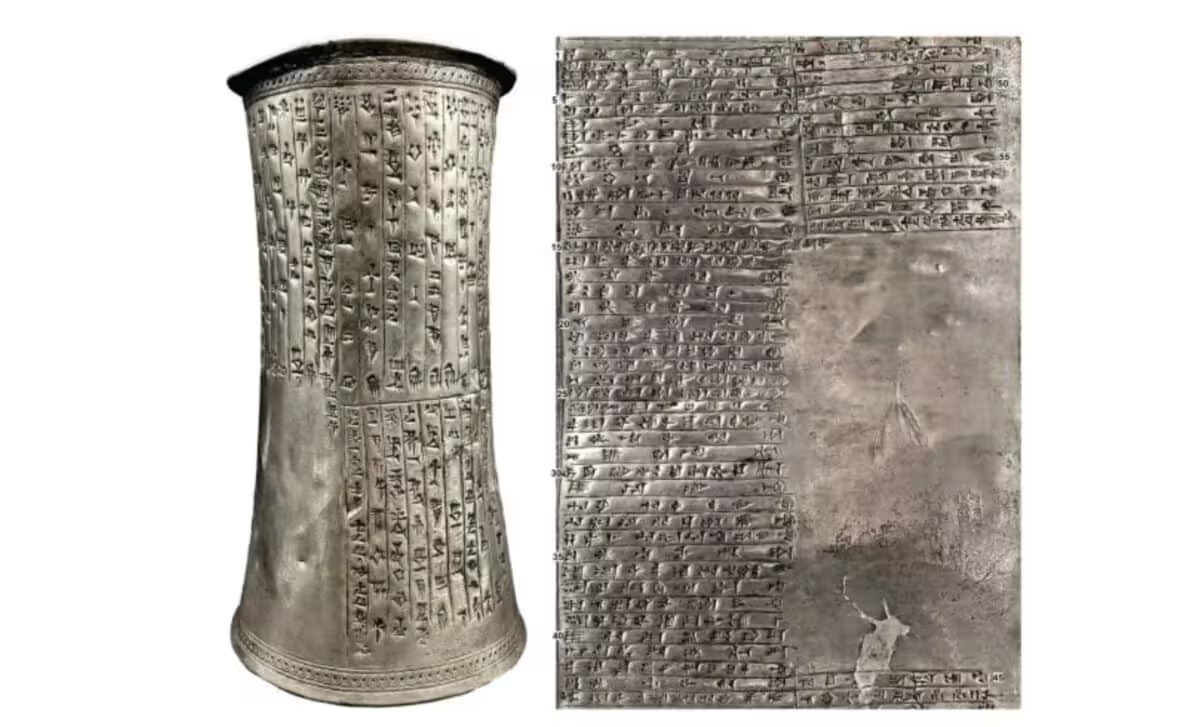
The breakthrough emerged from a set of about ten silver vessels in London’s Mahboubian Collection, classified as “Kunanki vessels” because similar items bear legible cuneiform dates between 2050 and 1800 BCE. Linear Elamite texts run continuously, without spaces or punctuation, a fact noted by Science et Vie.
By comparing several inscriptions, Desset identified a recurring pattern that sits between an introductory sign and what appears to be a royal title. He reasoned that “between an introductory sign and what must correspond to ‘prince’ or ‘king,’ one can expect the name of a ruler.”
One four‑sign sequence attracted particular attention: its opening sign matched the previously catalogued “shi” character, while the final two signs repeated. Cross‑checking known Iranian dynasties pointed to a single match—Shilhaha. Desset likened the process to the game “Guess Who?” and later added other names such as King Eparti II and the deity Napiresha, echoing Champollion’s use of royal names to unlock Egyptian hieroglyphs.
Reading the Script Is Not the Same as Understanding the Language
Desset estimates that he can now recognize 96–97 percent of Linear Elamite symbols. Yet the ability to read the glyphs does not automatically solve every linguistic puzzle.
Elamite is a language isolate with no proven relatives, and it fell out of use around 1000 CE. “A language isolate and a dead language mean that I can read the texts, but I do not necessarily understand everything I read,” Desset cautions.
Consequently, the remaining work concerns translation rather than decipherment, a challenge that also applies to Elamite texts written in cuneiform.
Next Goal: Unlocking the Proto‑Elamite System
Desset’s attention now turns to Proto‑Elamite, a script dating to roughly 3300‑3000 BCE and counted among the world’s earliest writing systems alongside the first Mesopotamian cuneiform signs and Egyptian hieroglyphs.
About 1,700 clay tablets from eight Iranian sites survive, mostly accounting records that list grain quantities for individuals rather than full sentences. Desset revives an older, long‑dismissed hypothesis: Proto‑Elamite and Linear Elamite are not separate scripts but successive stages of a single writing tradition, with the former representing the earlier form.
Both scripts are unique in that they originated in Iran, unlike cuneiform, Aramaic, Greek and Arabic alphabets, which arrived from elsewhere. Desset views this as a cultural milestone for modern Iran, comparable to the impact of hieroglyphic decipherment on Egypt. To encourage broader use, he collaborated with a typographer to create a Linear Elamite font slated for inclusion in Unicode, hoping that future generations might compose messages in a 4,500‑year‑old script.
This article has been fact checked for accuracy, with information verified against reputable sources. Learn more about us and our editorial process.
Last reviewed on .
Article history
- Latest version
Reference(s)
- Henry, Laurie. “Après 123 ans de mystère, une écriture iranienne vieille de 4 500 ans vient d'être déchiffrée par un archéologue français.”, July 5, 2026 Science et vie <https://www.science-et-vie.com/science-et-culture/apres-123-ans-de-mystere-une-ecriture-iranienne-vieille-de-4-500-ans-vient-detre-dechiffree-par-un-archeologue-francais-248349.html?utm_stop=stop>.
- “Making sure you're not a bot!.” <https://hal.science/hal-04408238v1>.
Cite this page:
- Posted by Zara Tariq