400 Gold Coins From 17th‑Century Dutch Ship Uncovered Off Devon After 30‑Year Hunt
Over 400 gold coins uncovered on England’s seabed spark a mystery about their origin and fate, intriguing archaeologists and treasure hunters alike.
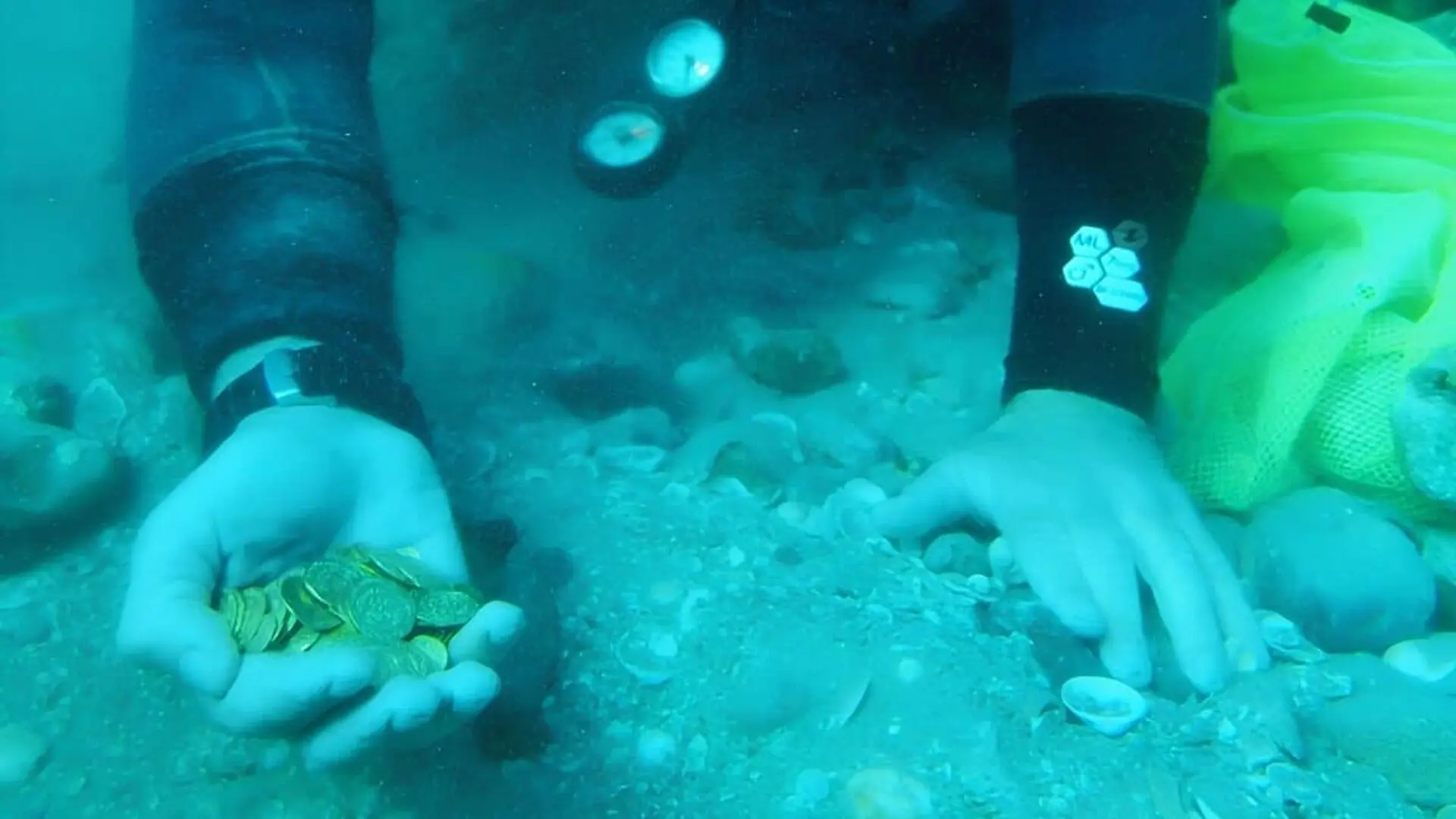
More than 400 gold coins recovered from a wreck off Devon’s shoreline have finally been matched to their original vessel. After three decades of underwater work and archival sleuthing, researchers now identify the sunken ship as the Dom van Keulen, a 17th‑century Dutch merchant craft that once ferried Moroccan gold to northern Europe.
The treasure trove first surfaced in 1995 when divers stumbled on a dense scatter of coins and objects roughly 60 feet beneath the sea. Determining the ship’s provenance required years of cross‑checking artefacts from the site with historic shipping records.
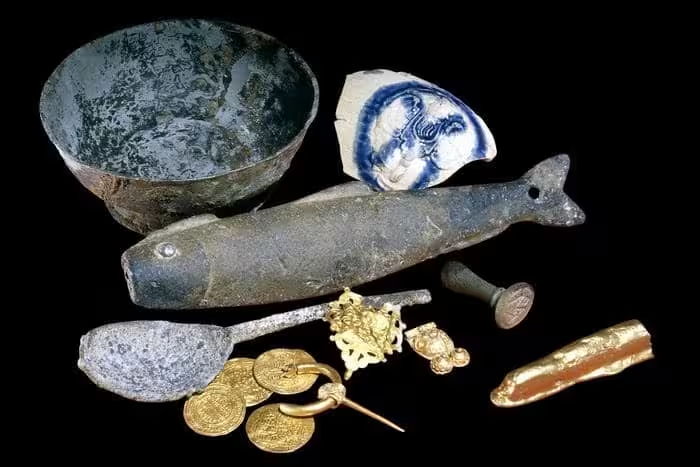
The coins, currently exhibited at the British Museum, were struck on Morocco’s Barbary Coast using West African gold. Alongside them, divers retrieved gold jewellery, a solid gold nugget, a fish‑shaped sounding weight, assorted pottery, resin‑coated pills, faba beans, a pair of cannons, anchors and assorted wooden fragments, rope and lead that once formed part of the hull. The wreck spreads over an area of about 100 feet on the seabed, yet none of these items alone revealed the ship’s name.
How a Simple Pewter Bowl Unlocked a Shipwreck Mystery
The decisive clue came from two modest items—a pewter bowl and a spoon—whose Dutch manufacture pointed investigators toward a specific trade route. At the same time, maritime historian Ian Friel uncovered period documents describing a merchant vessel whose cargo matched the recovered material.
Dave Parham, a maritime archaeology professor at Bournemouth University and editor of the forthcoming monograph on the case, explained that the Dom van Keulen carried a manifest that ultimately confirmed the wreck’s identity after years of speculation.
“Among its cargo were 150 bags of gum arabic, 64 bags of saltpetre, 320 goat skins, and 9,000 Barbary ducats, gold Moroccan coins,” he noted in a statement. “It is thought that most of the cargo was salvaged at the time, but more than 400 coins remained on the seabed until they were discovered by the South West Maritime Archaeology Group in 1995.”
Debate followed the initial find, but accumulating archaeological evidence increasingly favoured a Dutch origin for the wreck.
What the Treasure Reveals About 17th‑Century Trade Links
Pinpointing the wreck also situates it within the broader commercial network that connected Morocco with northern Europe in the 1600s. According to the British Museum’s new publication, Dutch traders exchanged manufactured goods for West African gold obtained via Moroccan ports. That gold was often melted into Dutch coinage, which became a dominant medium of exchange on maritime routes.
The scholars describe the recovered coins as a bullion hoard that sheds fresh light on the period’s numismatic landscape. The site also yielded 16th‑ and 17th‑century Moroccan jewellery, which the authors note as exceptionally rare survivals from that era.
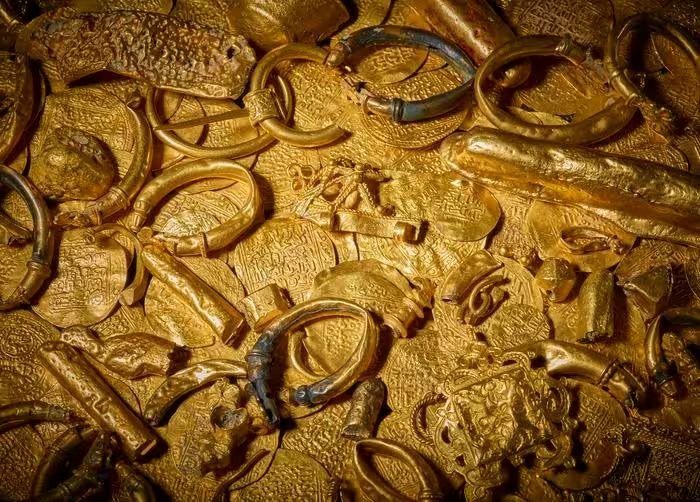
Parham added that the find offers tangible context for the wealth and architectural patronage of the Sa’dian Sharifs, while illustrating the maritime links that bound Morocco, the Low Countries and Britain.
Tracing the Lost Dutch Vessel After Three Decades
Even with the ship’s name now known, many details about the Dom van Keulen remain elusive. No contemporary portrait of the vessel survives, and scholars can only infer its dimensions from the footprint left on the seafloor.
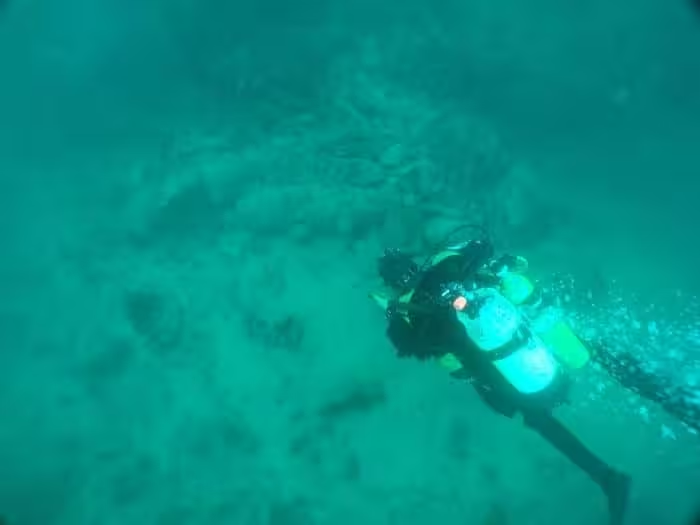
“The discovery of African gold from under the sea off the coast of Devon was an amazing discovery that raised so many questions about how it came to be there,” Hill said. “Answering those questions has taken a team of experts, working collaboratively. The story can now be told of how a Dutch ship carrying North African gold was wrecked off the English coast, making this a discovery of international importance. It reminds us how much there is still to be found under our seas.”
This article has been fact checked for accuracy, with information verified against reputable sources. Learn more about us and our editorial process.
Last reviewed on .
Article history
- Latest version
Reference(s)
- “Ian Friel, Writer and Historical Consultant - Dr Ian Friel MA, FSA, FRHistS.”, November 23, 2016 Ian Friel MA, FSA, PHD <http://www.ianfriel.co.uk/>.
- “Professor Dave Parham - Bournemouth University Staff Profile Pages.” <https://staffprofiles.bournemouth.ac.uk/display/dparham>.
- <https://www.eurekalert.org/news-releases/1132692>.
Cite this page:
- Posted by Zara Tariq