Scientists Successfully Tested Solar Panels 32 Feet Underwater In The South China Sea
Chinese researchers have successfully tested solar panels 32 feet underwater, paving the way for a sustainable new power source for deep-sea robotic missions.
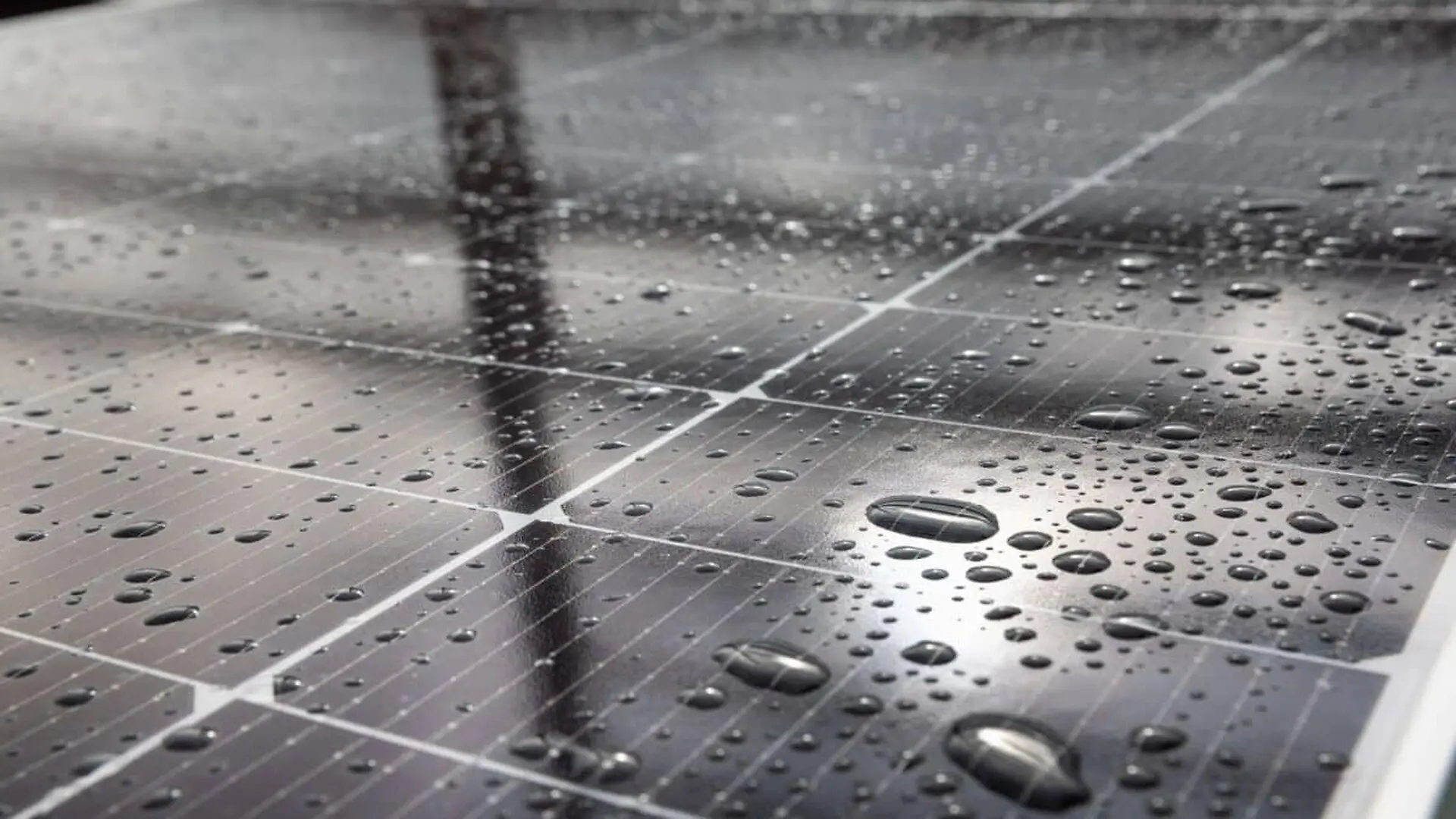
Harnessing energy from the sun beneath the ocean surface might seem counterintuitive, but a team of researchers in China has successfully demonstrated that underwater solar power is not only possible but increasingly efficient. By deploying specialized solar modules at a depth of 10 meters (approximately 32 feet) in the South China Sea, scientists have managed to charge lithium-ion batteries using light that has traveled through the water column.
Engineering Solar Cells for the Depths
The primary challenge for subsea photovoltaics is the changing nature of sunlight as it penetrates water. Seawater acts as a natural filter, rapidly absorbing infrared and red wavelengths, while allowing blue and green light to reach greater depths. Consequently, conventional solar panels designed for terrestrial use are poorly suited for the dim, color-shifted environment of the deep.
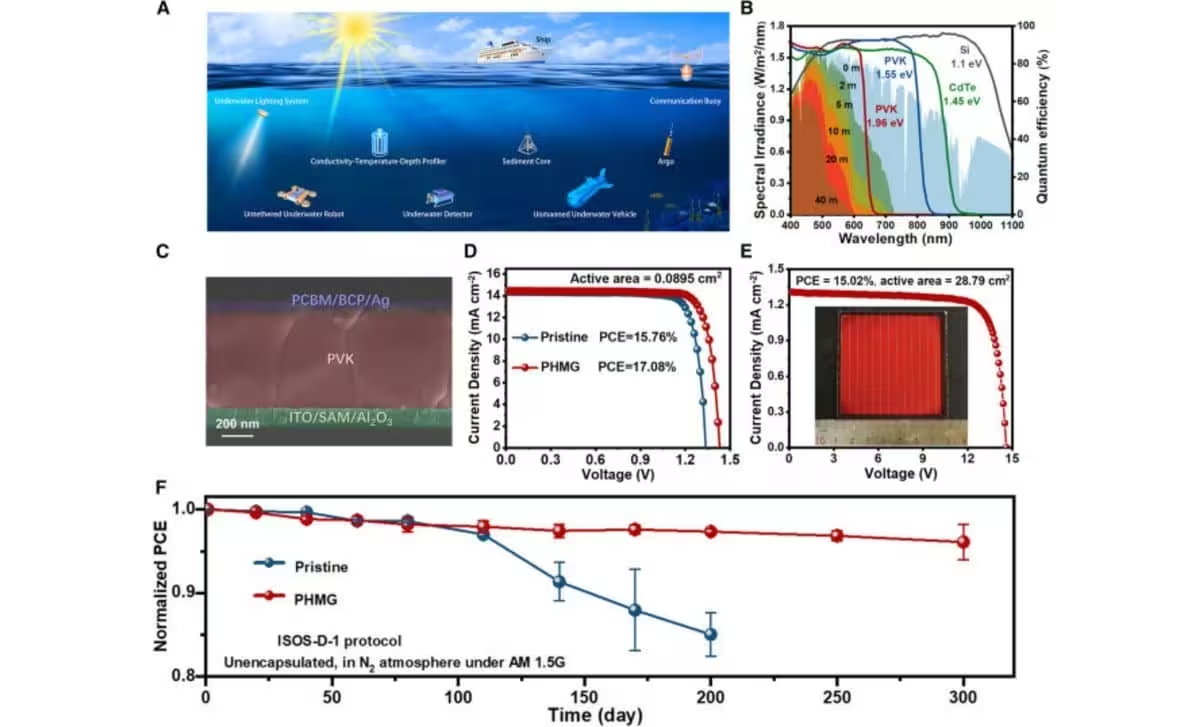
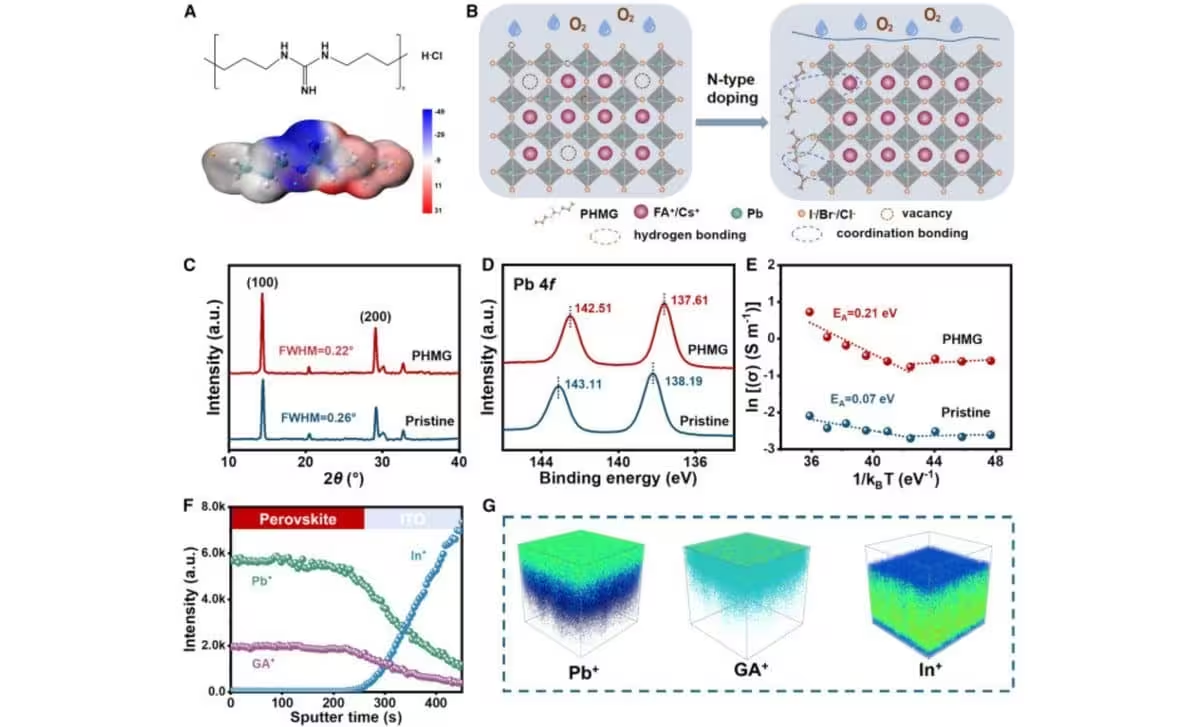
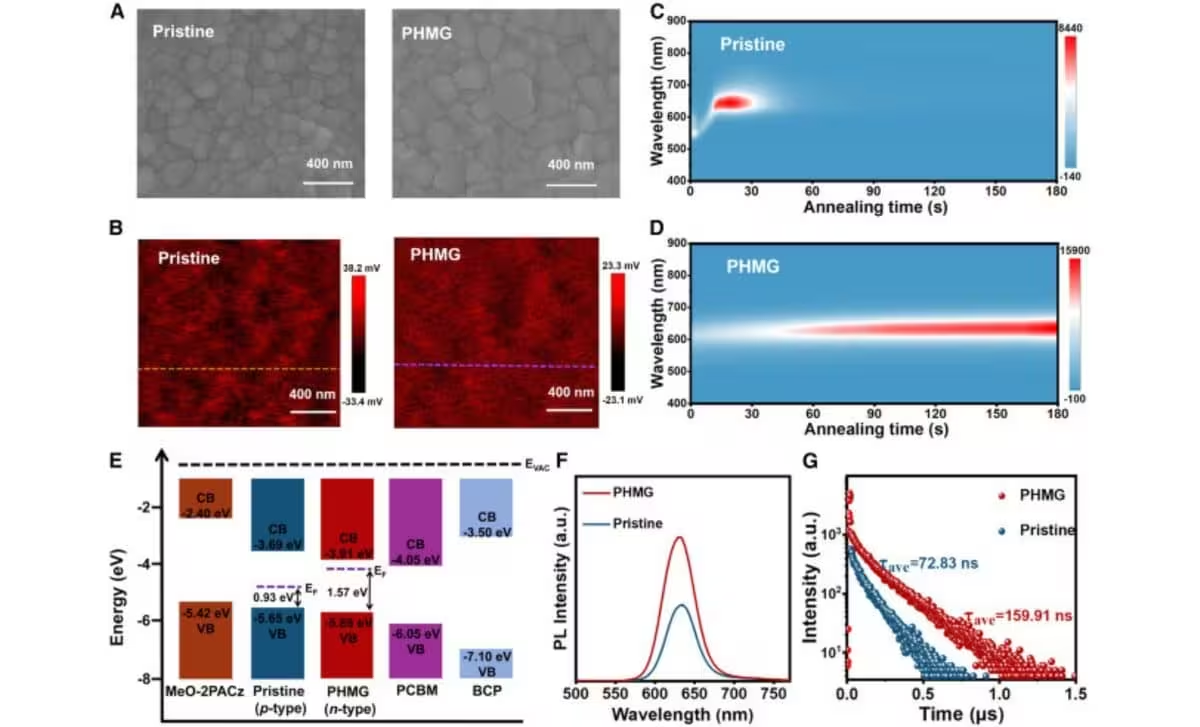
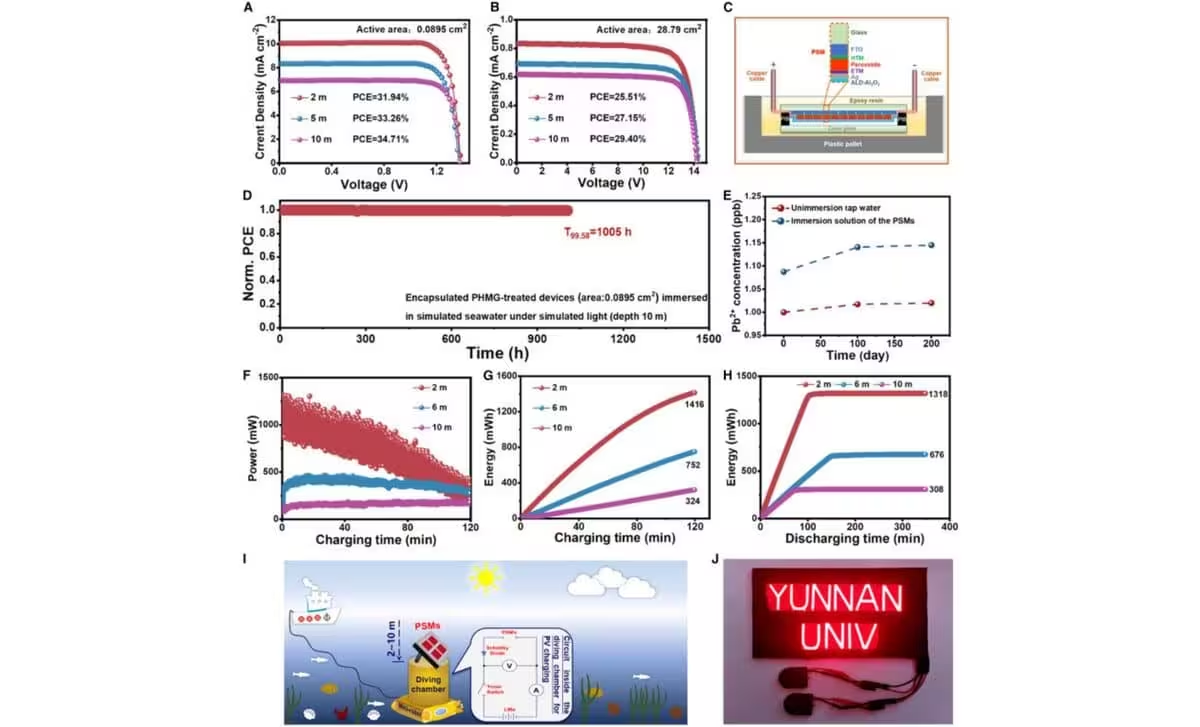
To address this, the research team developed perovskite solar cells specifically calibrated for the blue-green spectrum. By engineering the material with a band gap of roughly 1.96 electron volts and integrating a polymer known as PHMG, they improved the crystalline structure of the cells and minimized electrical defects. The resulting modules achieved a conversion efficiency of 34.71 percent under laboratory simulations mimicking 10-meter depths, significantly outperforming their 17.08 percent efficiency under standard atmospheric conditions.
Field Testing in the South China Sea
Moving beyond controlled environments, the researchers attached these modules to an underwater robot and submerged them off Weizhou Island. During a two-hour trial, the system successfully harvested 324 milliwatt-hours of energy, which was then used to power an LED display upon retrieval. Senior author Wen-Hua Zhang of Yunnan University highlights this as a vital step toward overcoming the energy limitations that currently constrain the endurance of autonomous subsea equipment.
This success builds on theoretical research published in Joule, which suggested that in clear waters, such technology could remain viable at depths of up to 50 meters. Previous efforts by other groups, including studies on organic solar cells in 2024, have established high-efficiency benchmarks at shallower depths, but the current project represents a significant shift toward practical, deep-water application.
Overcoming Harsh Marine Conditions
Looking forward, the team aims to push operational capabilities to depths between 20 and 30 meters. However, deploying electronics in the ocean introduces complex variables. Biofouling, where marine organisms accumulate on surfaces, can obstruct light, while saltwater corrosion poses a persistent threat to hardware integrity. Furthermore, light availability varies significantly based on water clarity and location, meaning a single, universal design may not suffice for all global maritime regions.
Future development will focus on scaling the modules, testing them over longer durations, and integrating them into the ocean monitoring infrastructure. By establishing standardized testing protocols, the researchers hope to create a foundation for robust, self-sustaining underwater technologies that reduce the need for frequent surface-side maintenance.
This article has been fact checked for accuracy, with information verified against reputable sources. Learn more about us and our editorial process.
Last reviewed on .
Article history
- Latest version
Reference(s)
- Ma, Simin., et al. “Submerged solar harvesting with wide-band-gap perovskites for autonomous underwater energy systems.” Joule, September 1, 2026, pp. 102672 Elsevier BV, doi: 10.1016/j.joule.2026.102672. <https://www.sciencedirect.com/science/article/pii/S2542435126003569?via%3Dihub>.
Cite this page:
- Posted by Zara Tariq