Goethite Inclusion In Microscopic Diamond Points To Secret Deep-Earth Water Path
Rare Brazilian diamond reveals a hidden water pathway to Earth’s deep mantle, reshaping our view of deep‑Earth dynamics.
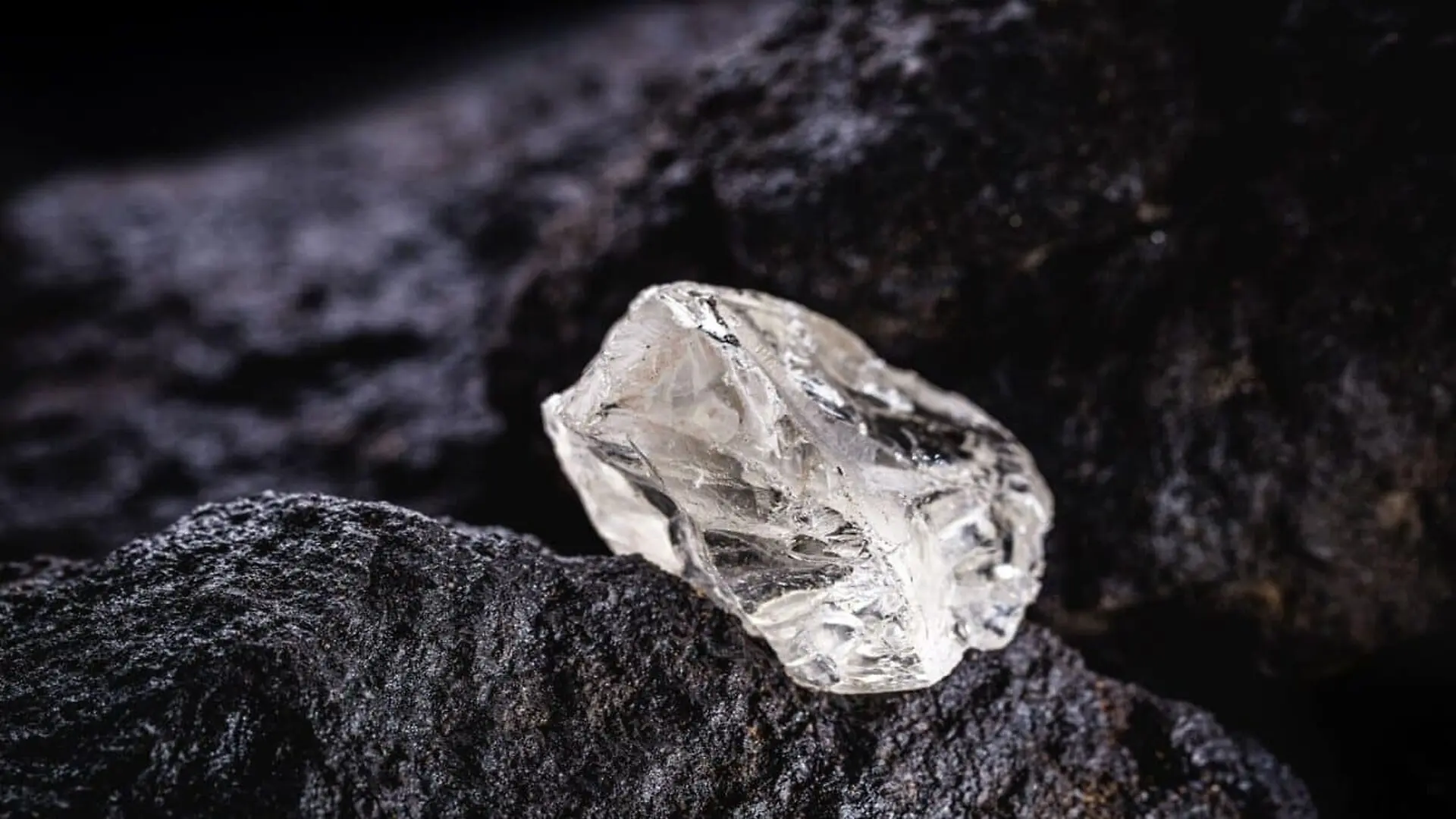
A tiny mineral inclusion locked inside an ultra‑deep diamond has provided fresh clues that water originating at the planet’s surface can be carried down into the lower mantle. The finding, reported in Scientific Reports, overturns earlier ideas about which minerals survive the extreme pressures of Earth’s deep interior and suggests a new pathway for deep‑Earth water transport.
Diamond from the Heart of Brazil Holds a Secret
The gemstone, a 3‑mm crystal recovered in 2018 from a gold‑miners’ cooperative near Juína, Mato Grosso, belongs to a class of “super‑deep” diamonds that crystallize more than 300 kilometers below the surface. Such diamonds can encapsulate surrounding minerals at the moment of formation, preserving a snapshot of ancient geologic conditions that are otherwise inaccessible.
Synchrotron Imaging Paints a 3‑D Picture of the Inclusion
Researchers from Brazil examined the diamond at the Sirius particle accelerator, a synchrotron facility jointly operated by the Brazilian Synchrotron Light Laboratory (LNLS) and the Brazilian Center for Research in Energy and Materials (CNPEM). Using X‑ray microtomography, they generated a three‑dimensional reconstruction that revealed a sealed pocket completely isolated from the external environment.
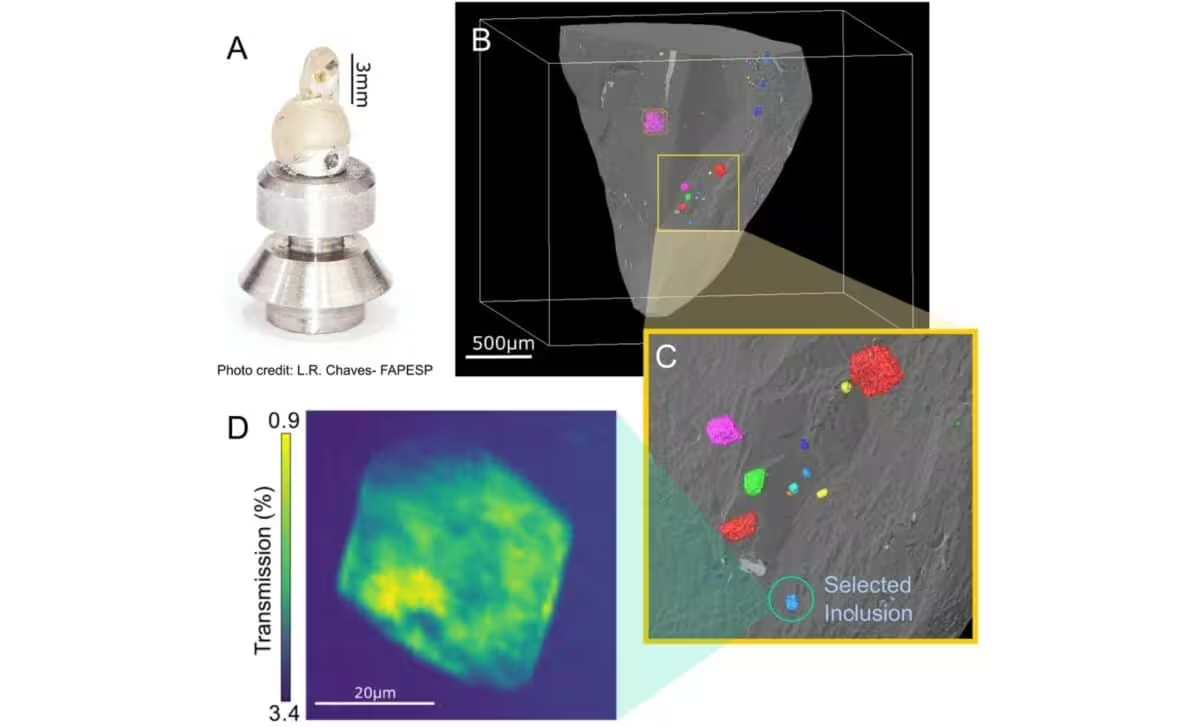
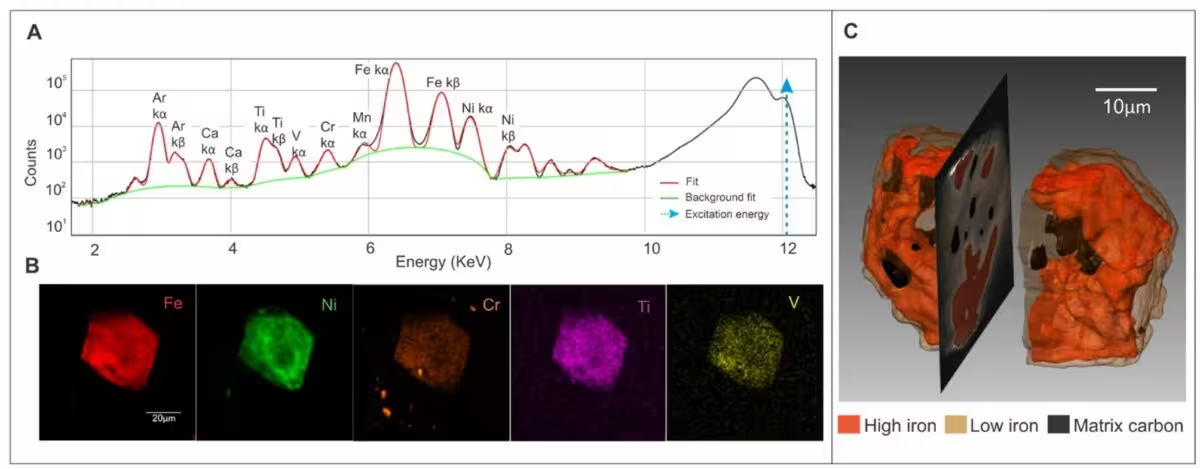
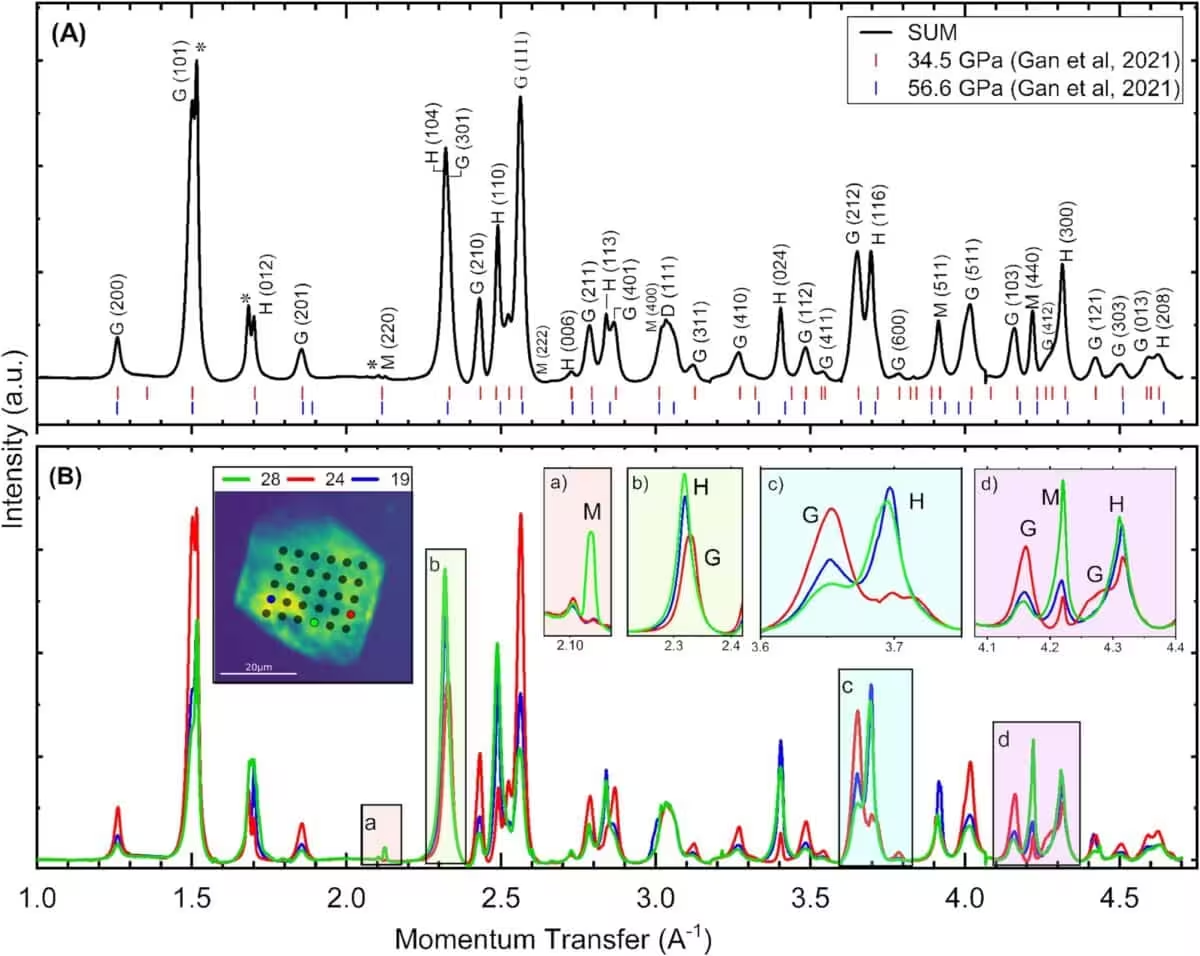
Chemical analysis of the sealed cavity identified goethite (FeOOH) together with hematite (Fe₂O₃) and magnetite (Fe₃O₄). While these iron oxides typically form in surface soils and marine sediments, goethite is notable for containing structural water, a property that could enable it to ferry water deep into the mantle.
Unexpected Mineral Blend Unveiled by X‑Ray Fluorescence
Laboratory experiments that simulate the high‑pressure environment of the deep mantle suggest that goethite can remain stable under the cooler portions of descending oceanic plates. This stability contradicts earlier models that predicted goethite would decompose and release its water at relatively shallow depths.
“When researchers encounter iron hydroxides they often assume the inclusion formed through a surface fracture and discard it,” explained Carolina Camarda, a co‑author of the study. “Because tomography showed the cavity was sealed, we pursued a detailed investigation.”
Goethite as a Conduit for Deep‑Earth Water
If goethite persists within the colder zones of subducting slabs, it could transport surface‑derived water far below the depths where most minerals are thought to release their volatiles. Once the mineral eventually destabilizes under extreme pressure and temperature, the liberated water may lower the melting point of surrounding rocks, potentially spawning modest magma pockets that migrate upward.
“The release of water lowers the melting point of these rocks, potentially generating small amounts of magma that tend to rise slowly to the surface,” noted Fernanda Gervasoni, a geologist on the project.
Juína Diamonds Keep Expanding Our View of the Deep Earth
The discovery builds on earlier work from the same Brazilian locality that identified ringwoodite—a mantle transition‑zone mineral capable of storing water—in other super‑deep diamonds. Together, these findings underscore a more intricate network of water‑bearing phases operating far beneath the planet’s crust.
By documenting goethite within a sealed inclusion, the study adds a plausible mechanism for moving surface water into the lower mantle, a region that has long eluded direct observation. The results invite a reassessment of how volatile compounds circulate through Earth’s interior and influence long‑term geodynamic processes.
This article has been fact checked for accuracy, with information verified against reputable sources. Learn more about us and our editorial process.
Last reviewed on .
Article history
- Latest version
Reference(s)
- “Carolina Camarda.” <https://www.xfel.eu/organization/scientific_and_technical_groups/students/current_students/carolina_camarda/index_eng.html>.
- “Fernanda Gervasoni.” <https://scholar.google.com/citations?user=NKAdZQUAAAAJ&hl=en>.
Cite this page:
- Posted by Zara Tariq