Giant stone at Tel ‘Eton reveals 2,700‑year‑old religious shift linked to King Hezekiah
Archaeologists uncover a puzzling stone in a Judean structure, challenging established theories about its origins and purpose.
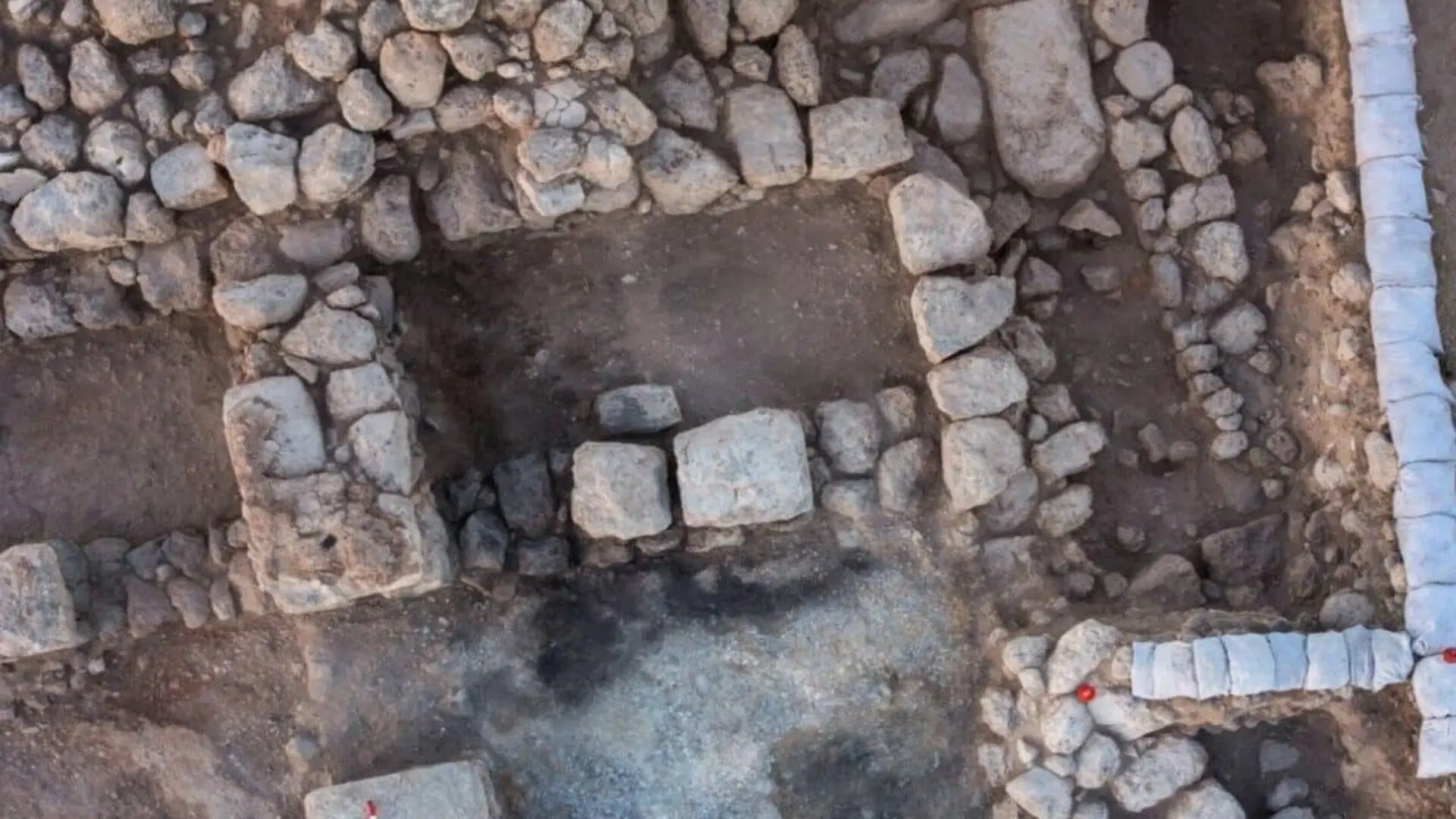
Archaeologists excavating the ancient site of Tel ‘Eton in Judah have uncovered a massive standing stone that may record a shift in religious practice dating to more than 2,700 years ago, a period traditionally linked to King Hezekiah’s reforms.
The existence of Hezekiah’s religious overhaul, as described in biblical texts, remains a contentious topic among scholars of early Judahite culture. Most material evidence for such reforms has come from public temples and shrines, but the new study looks at a private residence to shed light on the debate.
Published in the Jerusalem Journal of Archaeology, the research focuses on a large massebah—an upright stone—found inside Building 101, a structure interpreted as a governor’s house.
A Monument at the Heart of a Governor’s House
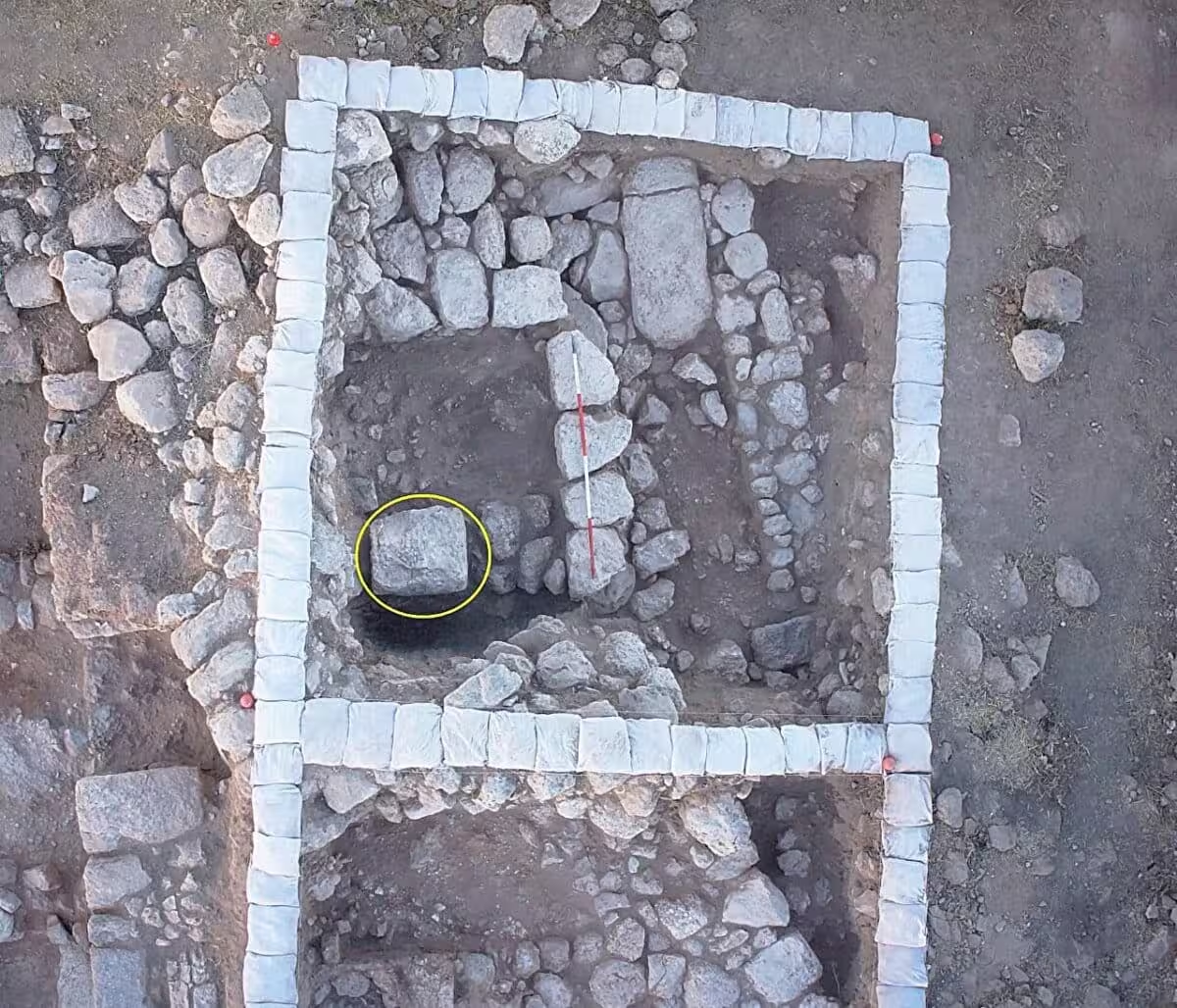
The investigation, led by ProfessorAvraham Faust of Bar‑Ilan University, describes the stone as measuring roughly 1.4 metres (4.6 feet) in height and weighing about 750 kilograms (1,650 pounds). It originally stood upright in the largest chamber of the building, directly opposite the entrance, making it impossible to overlook.
Archaeologists argue that the stone’s prominent placement served a ritual purpose rather than a purely structural one, noting the lack of any functional justification for such a massive block in that spot.
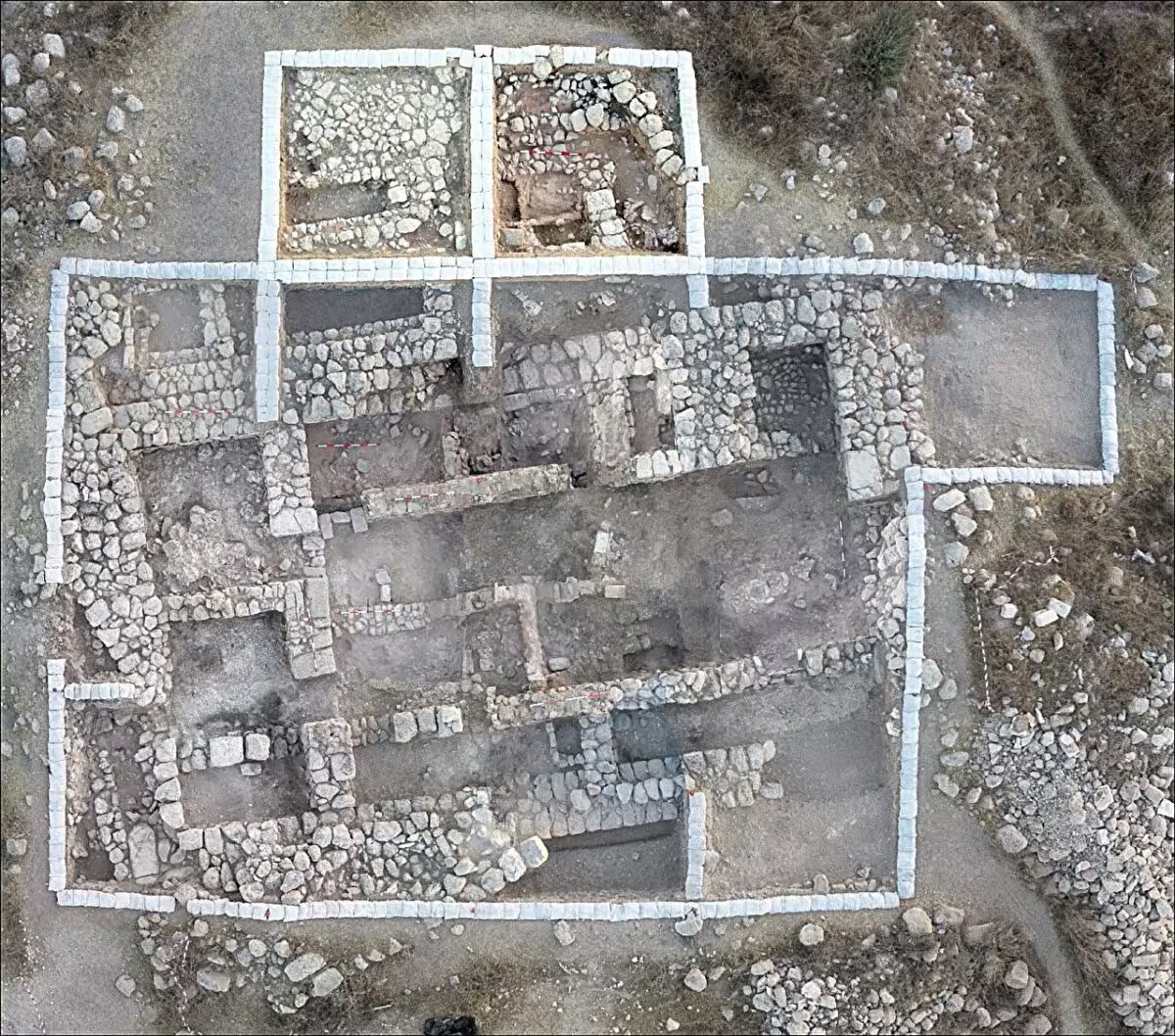
Similar standing stones are known from ritual contexts throughout the ancient Near East, and their positioning in this domestic setting suggests they played a central role in the occupants’ daily life.
“The location of the stone suggests that it played an important role in the lives of the building’s occupants,” Faust noted.
From Sacred Object to Inert Feature
Rather than being destroyed, the stone was toppled onto its side and encased within a later stone platform. The absence of breakage or deliberate defacement indicates a conscious decision to retire the stone’s cultic function while still treating it with a degree of reverence.
Faust interprets this as evidence of a community deliberately neutralizing a ritual element without desecrating the material itself.
“Those responsible for changing religious practices may have wished to eliminate the stone’s ritual function,” Faust explained.
“They removed it from use without destroying it, effectively neutralizing its cultic significance while preserving the object itself.
Domestic Spaces Reveal Subtle Religious Change
Finding such evidence inside a residential or administrative building is rare, as most archaeological markers of reform are located in public sanctuaries. Faust suggests that when household worship was abandoned, smaller cultic items could be taken away, leaving few traces for modern investigators.
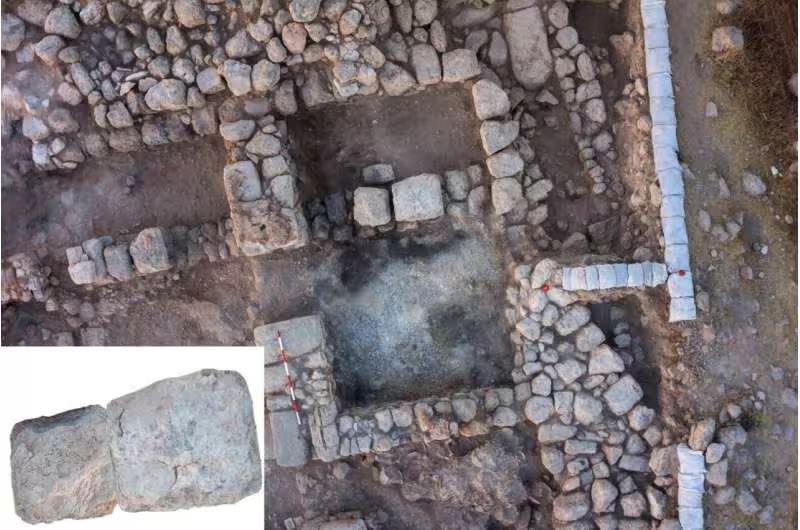
Because the stone’s size made it difficult to transport, the occupants opted to embed it within a newly constructed platform. This alteration occurred before the site’s destruction by the Assyrian Empire at the close of the 8th century BCE, a timeframe that overlaps with the era traditionally associated with Hezekiah.
While Faust does not claim the stone’s removal was a direct order from Hezekiah, the find aligns with a growing body of evidence that points to widespread religious transformation across Judah during that centuries‑long window.
The study, accessible via the research report, adds a new dimension to the ongoing discussion about how elite and household worship evolved in the lead‑up to Judah’s eventual fall.
This article has been fact checked for accuracy, with information verified against reputable sources. Learn more about us and our editorial process.
Last reviewed on .
Article history
- Latest version
Reference(s)
- “Faust Avraham | Department of General History.” <https://history.biu.ac.il/en/AvrahamFaust>.
- “Jjar09 03 Eton Faust.” <https://jjar.huji.ac.il/sites/default/files/jjar/files/jjar09_03_eton_faust.pdf>.
Cite this page:
- Posted by Zara Tariq