Skin Bacteria and Body Odor Explain Why Some People Attract More Mosquitoes Across Species
Study reveals mosquitoes favor certain people based on body odor and skin microbes, showing species-specific attraction to human scents.
A new study in the journal iScience sheds light on why certain people draw more mosquito bites than others, a factor that could influence future strategies to curb the spread of malaria, dengue, West Nile virus and other mosquito‑borne illnesses.
Different Mosquito Species Prefer Distinct Human Profiles
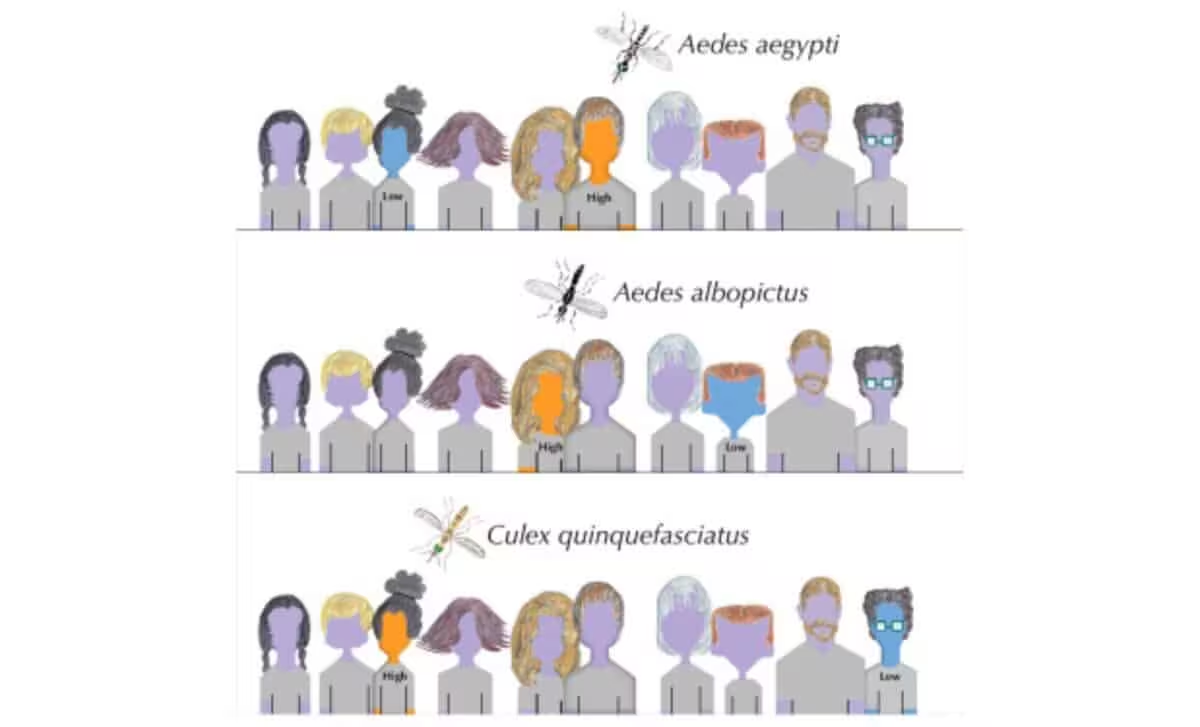
Researchers at Florida International University recruited 119 Miami residents and placed each participant’s arm inside an olfactometer, a device that channels odor to flying insects. The volunteers were exposed, one at a time, to three disease‑vector mosquitoes: Aedes aegypti, Aedes albopictus and Culex quinquefasciatus. By measuring how many insects entered the arm chamber, the team could compare the attraction of each species to individual human scent signatures.
Unlike earlier work that examined only one mosquito type at a time, this experiment evaluated multiple species against the same set of human odor profiles and skin microbiomes, revealing that attraction patterns are not uniform across the insects.
The data showed that participants who attracted one mosquito species did not necessarily lure the others. Notably, Aedes aegypti displayed a modest bias toward male volunteers, a trend absent in the other two species. Some overlap existed between the preferences of Aedes aegypti and Aedes albopictus, but each mosquito generally favored a different subset of people.
Human scent is composed of a complex mixture of volatile organic compounds (VOCs) generated when skin secretions interact with resident bacteria. The authors note that more than a thousand VOCs have been catalogued on human skin, making it challenging to pinpoint the exact chemicals that drive mosquito behavior. The study emphasizes the intricate nature of these odor cues.
Skin Microbes Linked to Higher Mosquito Appeal
To explore the microbial dimension of attraction, the team sequenced the skin microbiomes of all volunteers, uncovering 246 distinct bacterial taxa. Only a single bacterial species was shared across every participant, underscoring the diversity of skin flora.
Three bacterial groups—Corynebacterium kefirresidentii, Cutibacterium granulosum and Staphylococcus epidermidis—were consistently more abundant on individuals who attracted a greater number of mosquitoes from all three species. The researchers propose that metabolites produced by these microbes may serve as olfactory cues that enhance host detectability, although the exact chemical pathways differ among mosquito types.

Further analysis indicated that Aedes aegypti and Culex quinquefasciatus were drawn to volunteers with lower concentrations of certain VOCs associated with reduced attraction, suggesting these species may actively avoid specific odor signatures. In contrast, Aedes albopictus appeared to respond more strongly to particular odor compounds, highlighting species‑specific olfactory preferences.
The authors caution that the interplay between skin microbes, volatile metabolites, and mosquito behavior remains only partly understood. Nonetheless, identifying microbial and chemical markers that modulate attraction could inform novel interventions—ranging from targeted repellents to microbiome‑based strategies—to lower bite rates and limit disease transmission.
This article has been fact checked for accuracy, with information verified against reputable sources. Learn more about us and our editorial process.
Last reviewed on .
Article history
- Latest version
Cite this page:
- Posted by David Anderson