ISS Gears Up for Spacewalk, AI Tests and Health Experiments Ahead of Crew-13 Launch
NASA readies the ISS for a new era with intensive spacewalk training, health research, and the upcoming SpaceX Crew-13 mission.
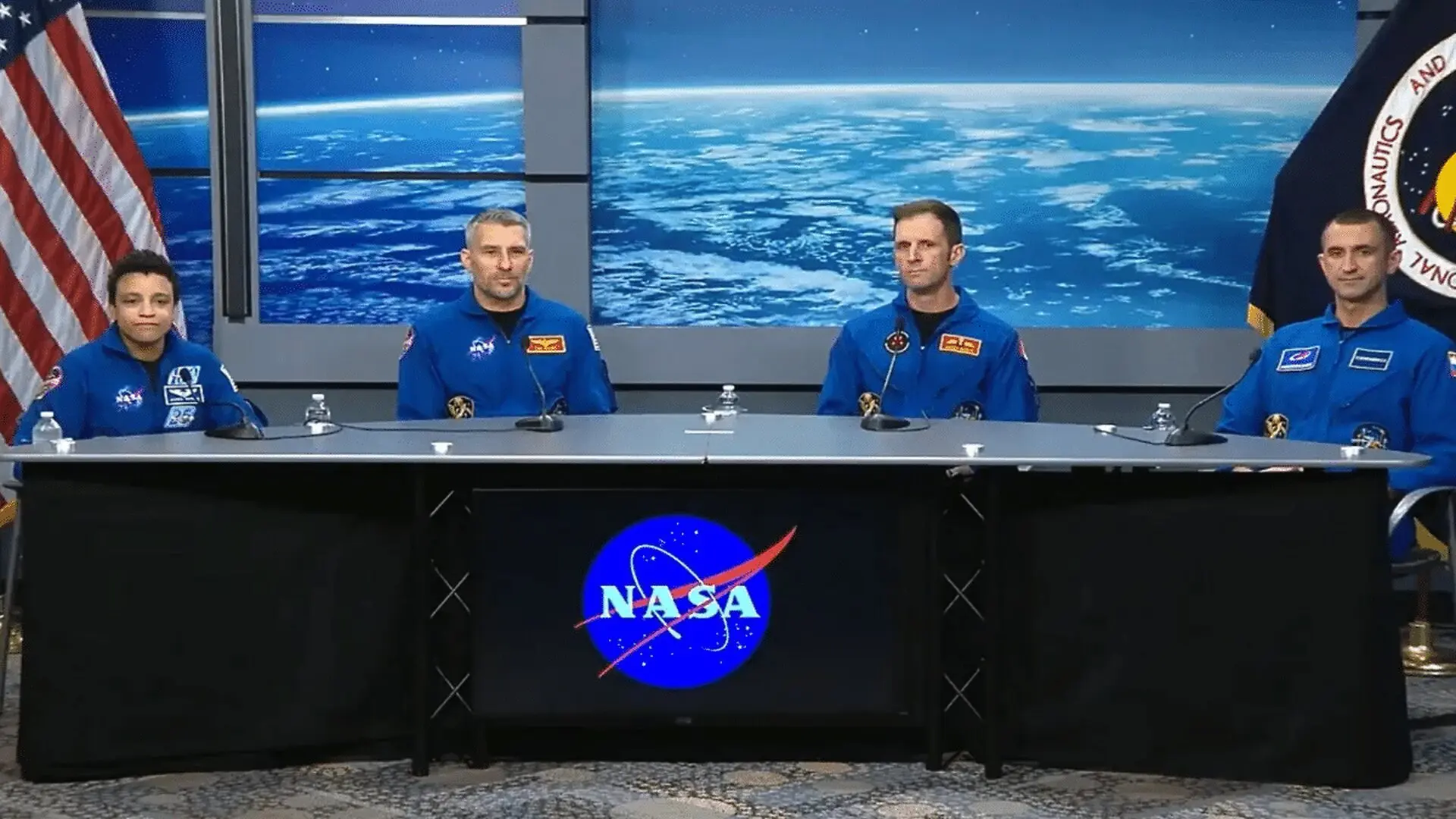
NASA is gearing up the International Space Station for a series of tasks that include a planned spacewalk, a suite of biomedical experiments, and the arrival of the next SpaceX Crew‑13 expedition.
Preparing for a Critical Extravehicular Activity and Crew Turnover
The orbital laboratory is entering a busy interval as Expedition 75 balances routine science, hardware checks, and readiness drills for an upcoming EVA. Astronauts are also finalising procedures that will support the arrival of a fresh crew later this month.
NASA reports that the crew has been conducting detailed briefings, suit inspections, and repeated rehearsals to guarantee that every task can be performed safely while encased in pressurised garments in the vacuum of space.
The EVA will target components of the station’s power‑generation system, with astronauts assembling hardware that will enable a future solar‑array deployment. The operation is slated to launch at 8:35 a.m. EDT on Thursday, and live streams will be available via NASA+ and official channels.
Emergency scenarios are also under review. Crew members practised the use of the Simplified Aid For EVA Rescue (SAFER) unit, a small propulsion device that can bring a wayward astronaut back to the station if a suit‑tether failure occurs.
These activities underscore the extensive preparation required to sustain a platform that has hosted uninterrupted human presence for more than twenty years.
Microgravity Research Aims to Safeguard Human Health
NASA continues to exploit the ISS as a laboratory for studying physiological changes that accompany long‑duration spaceflight, data that will inform missions to the Moon and Mars.
European Space Agency astronaut Sophie Adenot evaluated the EasyMotion‑2 workout suit, a device that delivers electrical stimulation to muscles during exercise on the COLBERT treadmill in the Tranquility module.
Maintaining muscular and skeletal health remains a priority, as the reduced loading environment of microgravity accelerates deconditioning.
NASA astronaut Jack Hathaway tested the European Enhanced Exploration Exercise Device (E4D) within the Columbus laboratory, probing methods to preserve strength on future deep‑space voyages.
Russian cosmonauts Pyotr Dubrov and Anna Kikina continued cardiovascular monitoring, employing sensors on their limbs to track blood‑pressure fluctuations caused by weightlessness.
Additional auditory assessments were performed inside the Quest airlock, contributing to a broader effort to understand how prolonged exposure to the space environment may affect hearing.
Cutting‑Edge Technologies Tested for Future Exploration
Beyond biomedical work, the ISS serves as a proving ground for systems that could support crews operating far from Earth with limited ground assistance.
Inside the Kibo laboratory, Jack Hathaway handled equipment linked to demonstrations of advanced space‑hardware, highlighting the unique challenges of operating devices in microgravity, radiation, and constrained repair conditions.
Artificial‑intelligence tools are also under evaluation. These algorithms aim to help astronauts manage complex tasks when communication delays make real‑time support from mission control impractical.
Roscosmos flight engineer Andrey Fedyaev trialled AI‑assisted applications while carrying out routine maintenance, part of a broader initiative to gauge how automation can augment human crews on deep‑space missions.
The technologies being vetted now could enable future explorers traveling to Mars to make autonomous decisions, allocate resources efficiently, and perform critical operations without immediate Earth‑based input.
Together, the station’s research agenda weaves together scientific inquiry and technology development, forming a bridge between today’s orbital activities and tomorrow’s exploration ambitions.
This article has been fact checked for accuracy, with information verified against reputable sources. Learn more about us and our editorial process.
Last reviewed on .
Article history
- Latest version
Cite this page:
- Posted by David Anderson