First 3‑D map shows hidden microbial fingerprint of daily life on the ISS
Scientists unveil the first 3D map of life aboard the ISS revealing unexpected microbial patterns in space
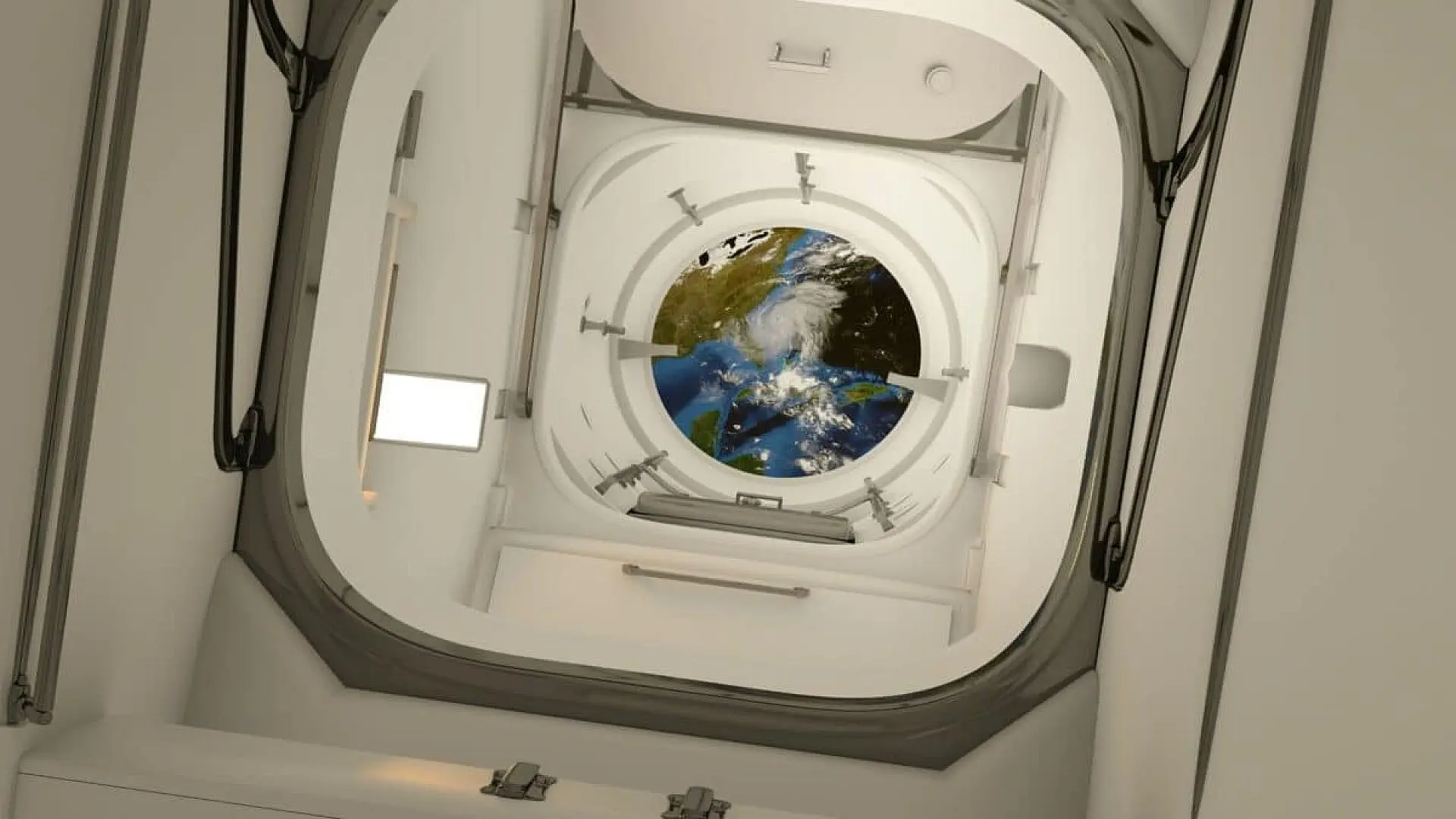
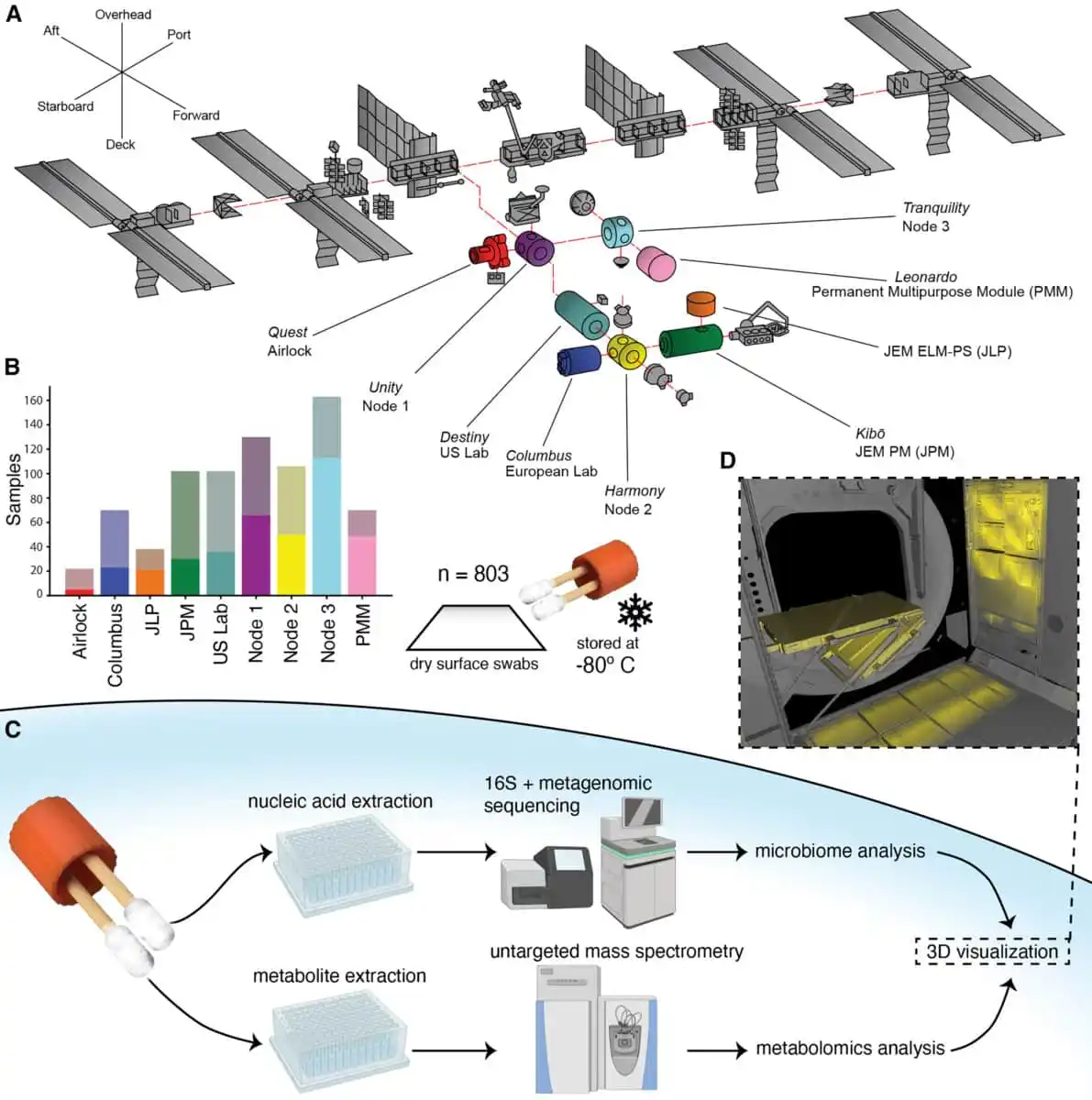
A novel three‑dimensional reconstruction now charts the distribution of bacteria, fungi and chemical residues across the International Space Station’s interior, revealing how crew‑related activities shape the orbital laboratory’s hidden ecosystem.
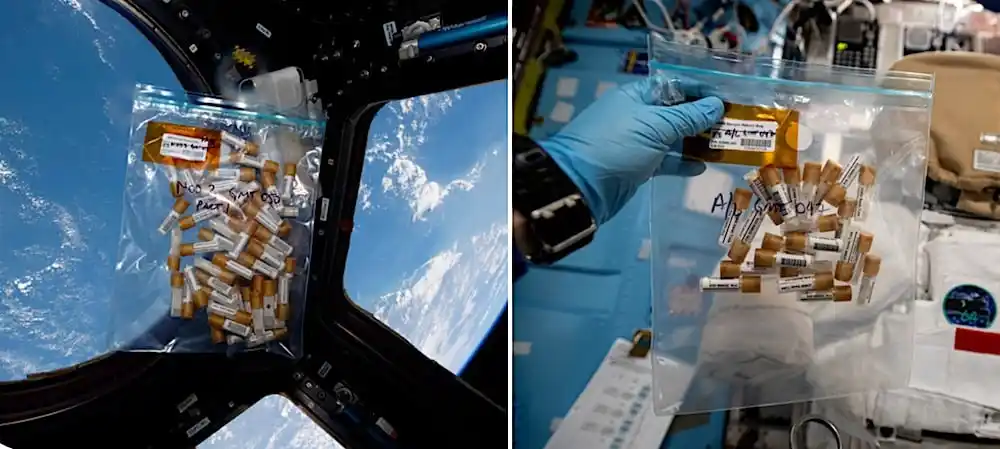
The map is based on swabs taken from 803 distinct spots spanning nine modules, ranging from wall panels and handrails to food‑prep tables, restroom fixtures and ventilation ducts. Researchers then applied untargeted mass‑spectrometry back on Earth, a method that simultaneously detects thousands of molecular signatures.
The investigation, led by scientists from the University of California, San Diego and NASA’s Jet Propulsion Laboratory, builds on a long‑term microbial monitoring program aboard the station.
Human Footprints Leave Chemical Traces in Microgravity
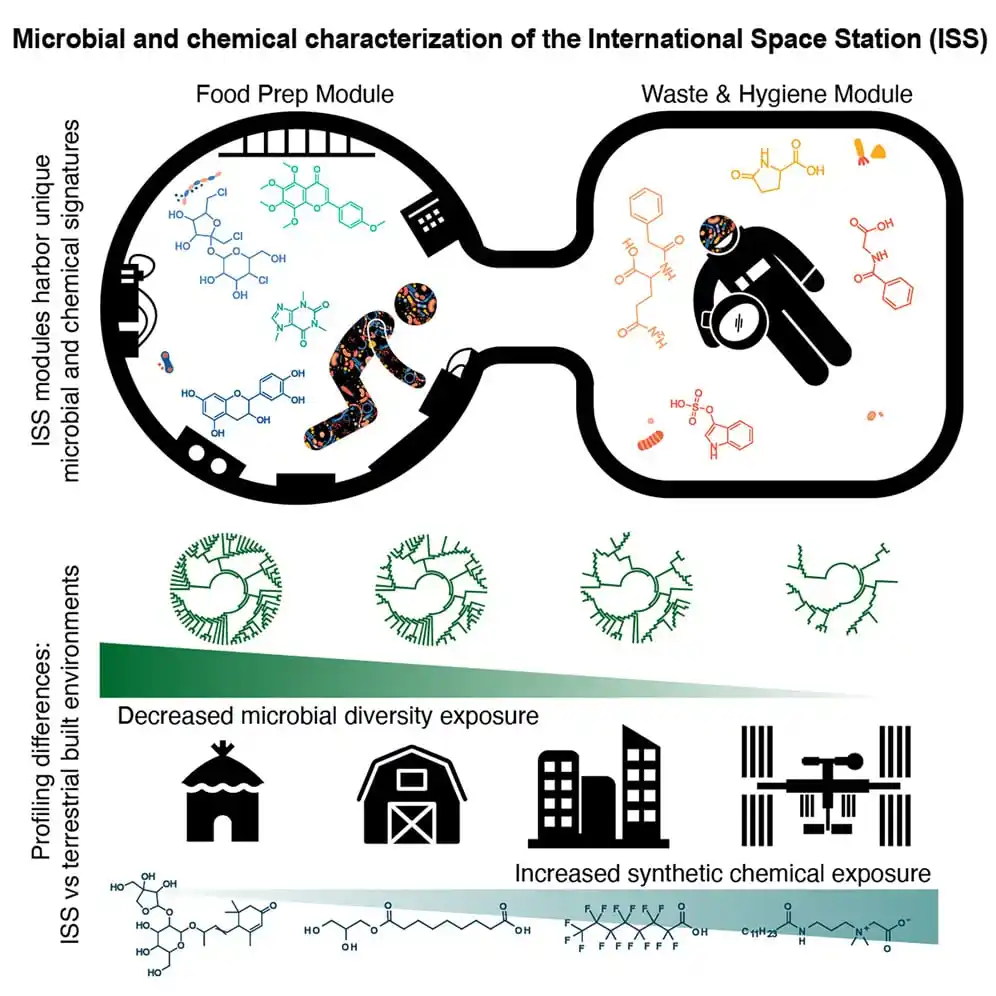
Analysis showed that specific locations harbor distinct molecular fingerprints. For example, the galley displayed residues associated with meals and beverages, while the hygiene area contained markers tied to human metabolism.
Postdoctoral researcher Nina Zhao (UC San Diego) noted that, despite the absence of gravity, many microorganisms and chemical compounds remained anchored to particular surfaces. “Essentially, the contaminants stay where they land,” she explained, adding that the patterns still mirror crew routines.
Skin shedding emerged as the dominant source, accounting for roughly 80 % of the detected microbial community.
Opportunistic Pathogens Persist in the Orbital Habitat
The team identified several organisms listed on the World Health Organization’s ESKAPE roster—pathogens notorious for causing hard‑to‑treat infections in hospitals. Notably, strains of Klebsiella pneumoniae and Pseudomonas species carried extensive arrays of antibiotic‑resistance genes, especially those conferring protection against beta‑lactam drugs.
A recurring inhabitant, Pantoea pearsonii, reappeared in samples taken in 2022, underscoring its resilience in the station’s environment.
“We haven’t been able to eliminate it,” said Kasthuri Venkateswaran of NASA’s JPL.
Researchers suggest that the station’s rigorous cleaning routines, constant radiation exposure and sealed atmosphere create selective pressures that favor microbes capable of enduring such stresses.
Jamie Foster, a space‑biology specialist at the University of Florida who was not involved in the work, remarked on the significance of the findings. “The presence of so many ESKAPE organisms and viruses surprised me,” she said, emphasizing the need for ongoing surveillance to prevent benign microbes from turning pathogenic.
A Large Portion of Detected Metabolites Remain Unidentified
Beyond microbes, untargeted chemical profiling uncovered a plethora of compounds that defy classification. Many of the recovered metabolites could only be loosely described as lipids or peptides, while others lacked any match in existing databases.
“The majority of the molecules we isolated are unknown,” Foster noted.
The authors caution that the presence of these organisms does not imply the station is unhygienic. They describe the habitat as remarkably clean, while acknowledging that a baseline microbial community can be beneficial. “If the environment is overly sterile, even low‑level pathogens may become problematic,” Venkateswaran explained, “a balanced microbiome helps keep harmful species in check.”
This article has been fact checked for accuracy, with information verified against reputable sources. Learn more about us and our editorial process.
Last reviewed on .
Article history
- Latest version
Reference(s)
- “Discovery.” <https://scholars.ufl.edu/jfoster>.
Cite this page:
- Posted by David Anderson