A Vanished Lake Suddenly Returned After 130 Years, Then Began to Evaporate Again After Swallowing 120,000 Acres of Land
California’s vanished lake resurfaces, flooding farmland and roads before mysteriously vanishing again
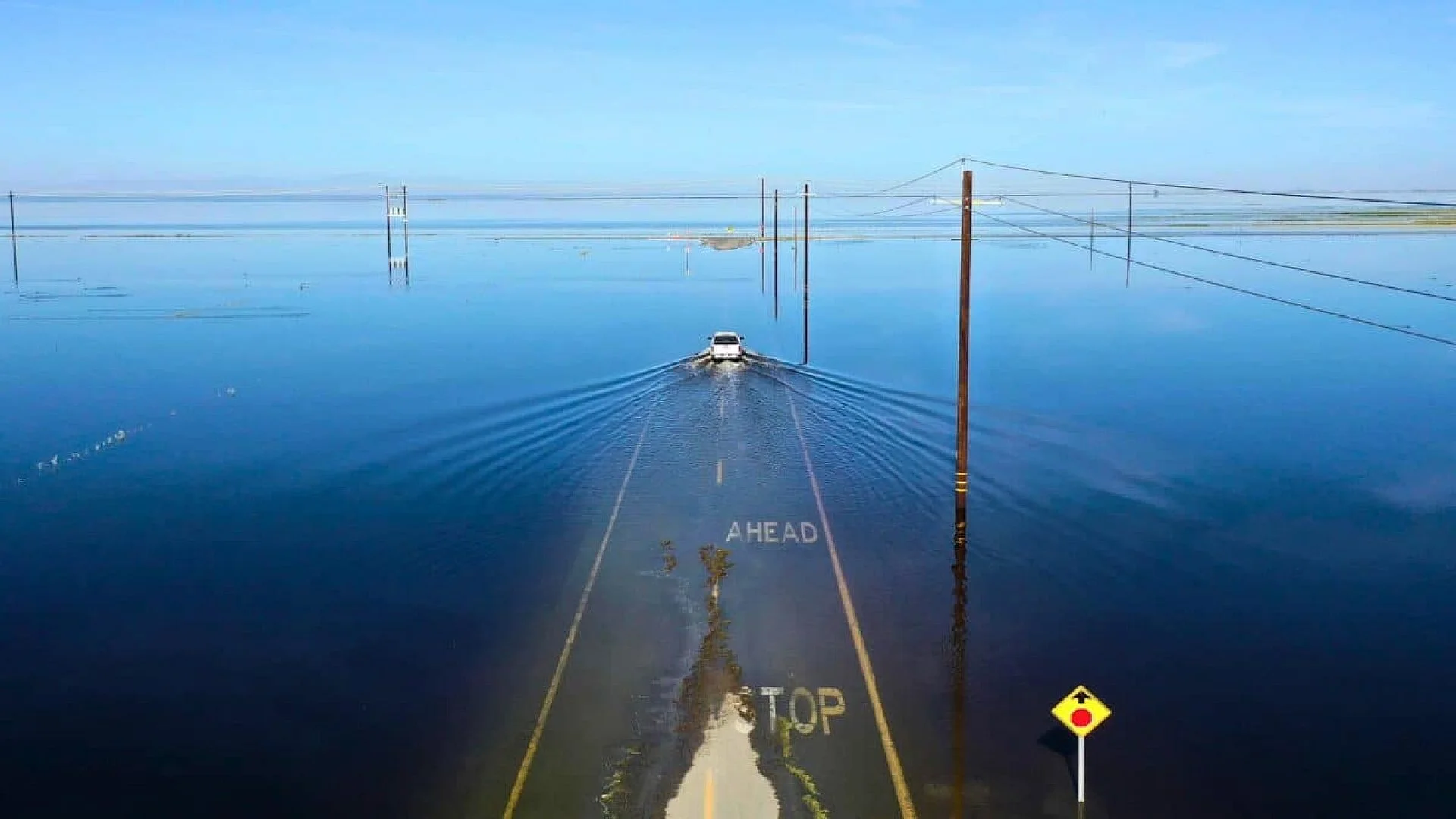
A brief surge of water transformed the flat expanse of California’s San Joaquin Valley, submerging highways, tomato rows, cotton fields and pistachio groves beneath a blue surface.
The water belonged to Tulare Lake, known to the Tachi Yokut people as Pa’ashi. Once among the largest freshwater lakes west of the Mississippi, it had been drained for agriculture more than a hundred years ago, only to reappear after a wet winter marked by atmospheric rivers and abundant snowmelt.
By the spring of 2023 the lake spanned over 100,000 acres, according to a March 2024 report by The Guardian. FOX26 News noted that the water body peaked at roughly 120,000 acres, covering more than one‑tenth of Kings County.
Within a year the lake had largely drained away again.
Extreme Weather Refills an Ancient Basin
The San Joaquin Valley is a dry, intensively farmed region where the former lakebed had long been turned into cropland. In February 2024, Northeastern University reported that a series of intense atmospheric rivers delivered heavy rain and snowfall, prompting the lake’s return.
Vivian Underhill, an ethnographer and environmental‑justice researcher who studied the lake at Northeastern, described Tulare Lake as once extending more than 100 miles in length and over 30 miles in width, dubbing it “the largest body of fresh water west of the Mississippi River.”
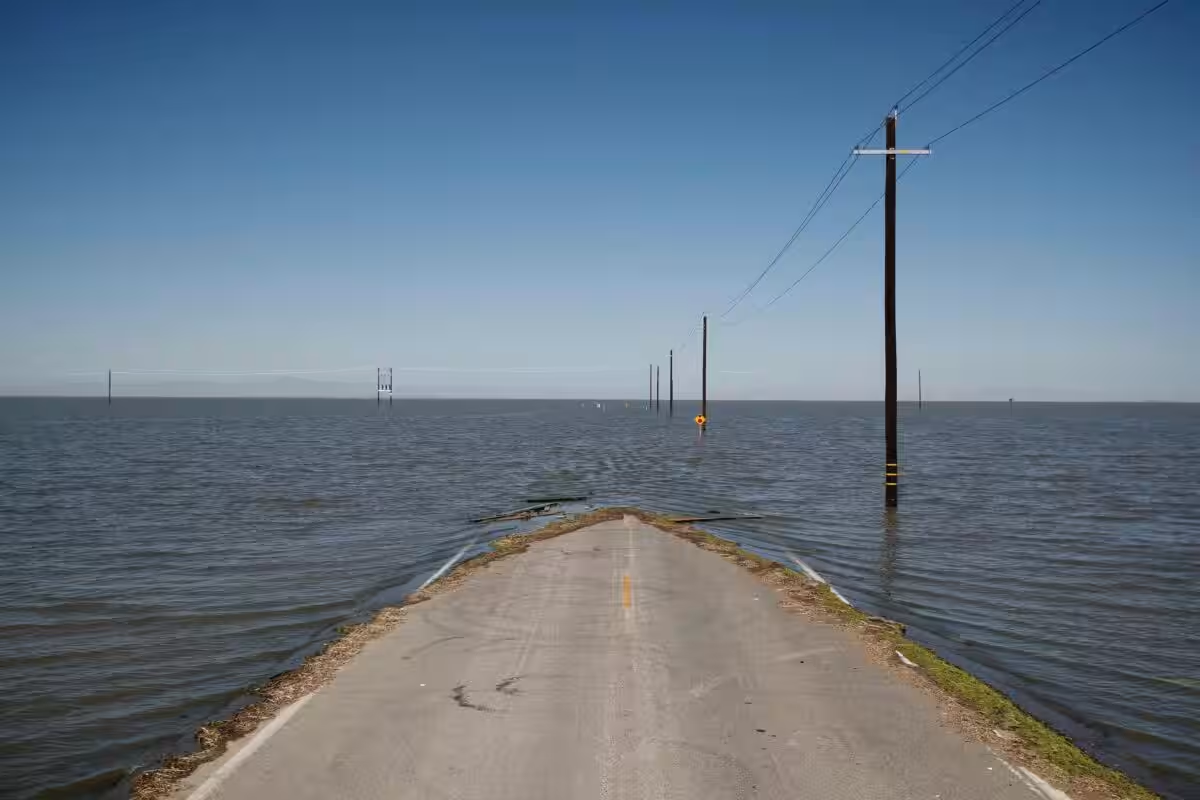
Underhill emphasized that the lake’s resurgence was not driven by local rain but by meltwater flowing from the Sierra Nevada. Because the valley lacks a natural outlet, sufficient runoff can accumulate in the low‑lying basin, recreating the lake.
That exact process unfolded in 2023, converting arid farmland back into a sizable body of water.
Historical Draining Turned Wetland Into Farmland
Tulare Lake had been largely absent from the modern landscape for generations. Northeastern traced its disappearance to the late 1850s and early 1860s, when California’s push for private land ownership led settlers to drain the marshes for agriculture.
Underhill referred to this effort as “reclamation,” a practice that often involved draining wet terrain or irrigating desert soils to make them cultivable. She linked the project to the broader transfer of Indigenous lands into private hands.
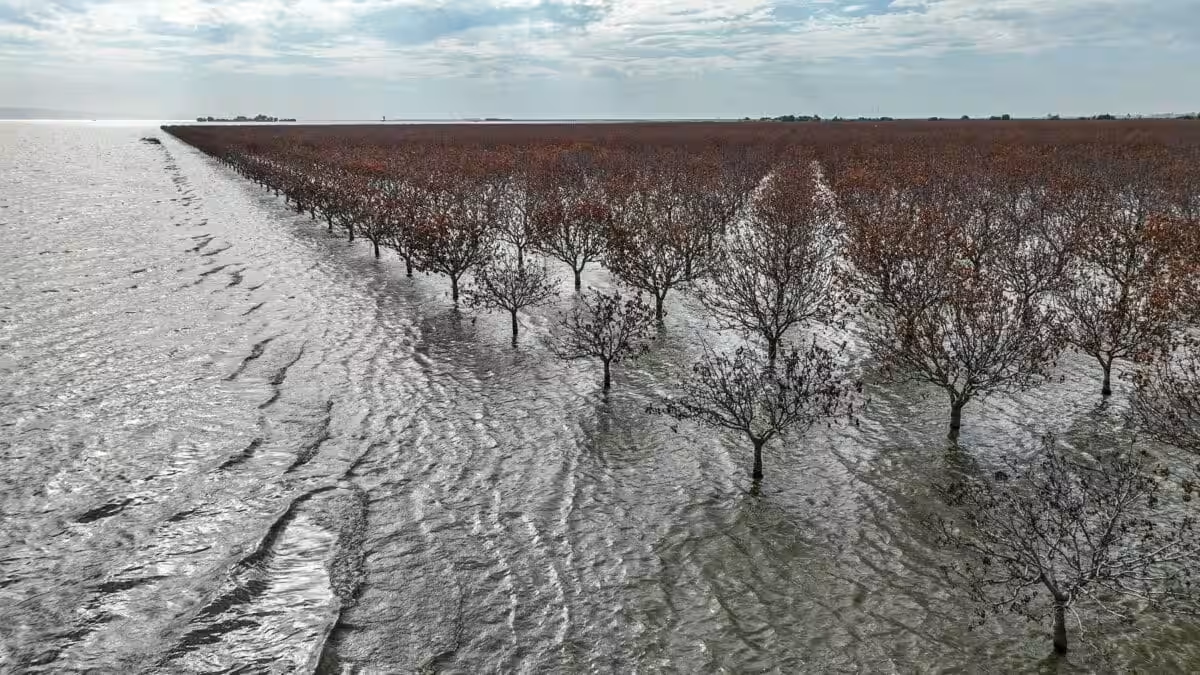
In an Open Rivers Journal piece, Underhill placed the lake’s resurgence within a larger narrative of colonial water management, coining the term “colonial unknowing” to describe how the disappearance of Tulare Lake was framed as purely a hydrological shift while erasing its cultural and ecological history.
The dual perception of the lake matters. Some officials and farmers described the 2023 inundation as a destructive flood, whereas the Tachi Yokut Tribe and scholars like Underhill viewed it as the restoration of a water body that historically belonged in the landscape.
Wildlife Returns Even as Agriculture Is Flooded
The lake’s reappearance attracted a surge of birds, fish and amphibians, according to Northeastern. Underhill reported sightings of pelicans, hawks, waterbirds and nesting burrowing owls along the new shoreline.
For the Tachi Yokut people, the water held spiritual significance. Underhill said ceremonies were conducted near the lake and traditional hunting and fishing activities resumed.
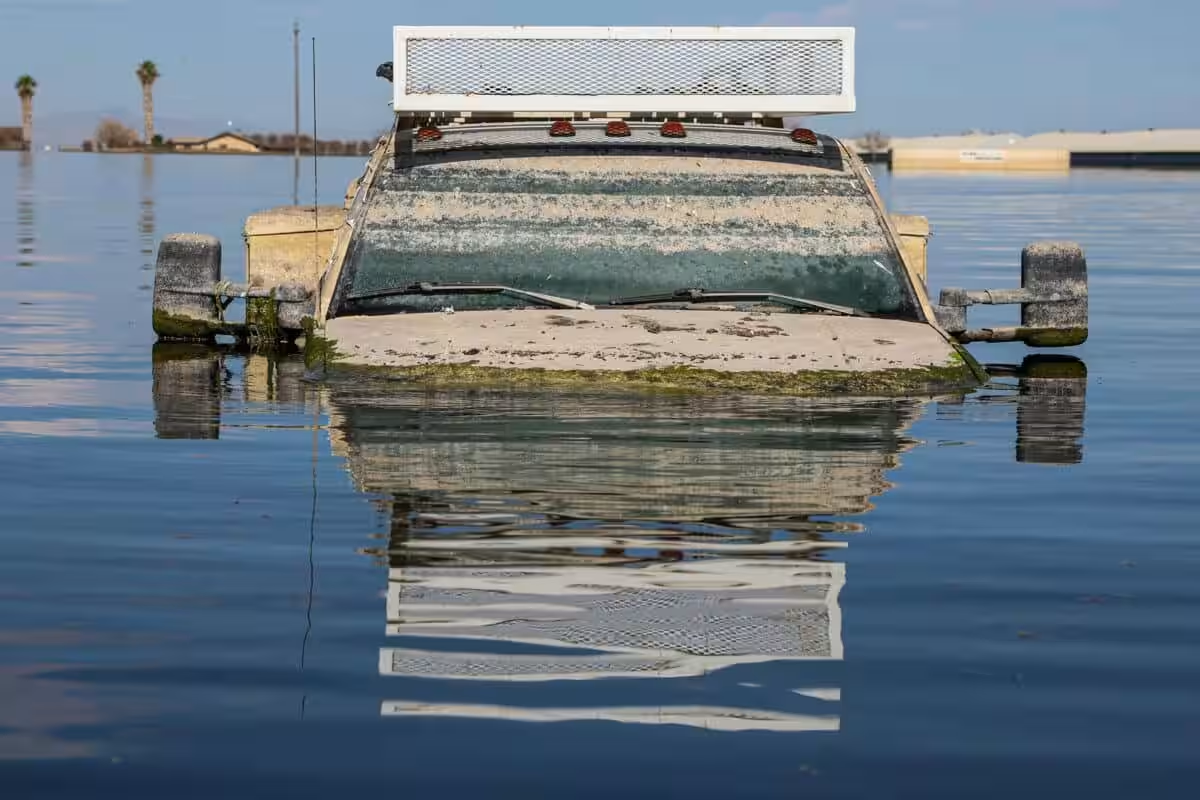
For farmers and local residents the water caused major disruption. The Guardian reported that fields and roads were inundated, towns faced threats, thousands of cattle were evacuated, and power lines were knocked down. FOX26 added that some electricity customers remained without service because the conditions prevented transformers from being reinstated.
Safety warnings accompanied the flood. Officials advised the public to stay out of the water, citing hazards such as irrigation hoses, manure and agricultural chemicals.
Lake Shrinks Faster Than Forecasts Predicted
Early projections suggested Tulare Lake might linger for years, but by March 2024 water levels were receding more quickly than anticipated.
On March 5, 2024, FOX26 reported that only about 2,600 acres remained underwater, down from the peak of roughly 120,000 acres. Sergeant Nate Ferrier of the Kings County Sheriff’s Office said agricultural activity was already resuming, with tractors and trucks moving across fields preparing for new crops.
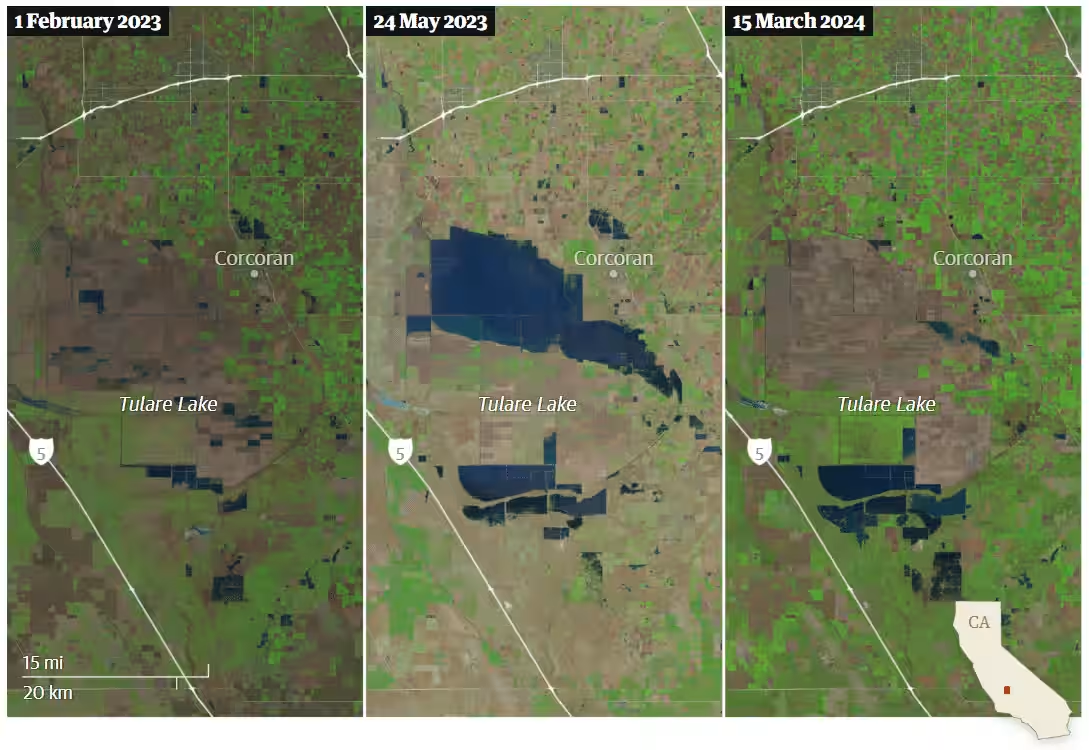
The Guardian later cited the Kings County Office of Emergency Services, noting the lake had contracted to 2,625 acres. Abraham Valencia of the office warned that the lake’s disappearance was imminent unless unexpected snowmelt caused additional upstream flooding.
The rapid retreat underscores that Tulare Lake’s 2023 return was a temporary phenomenon driven by an unusually wet winter, rather than a permanent restoration effort.
This article has been fact checked for accuracy, with information verified against reputable sources. Learn more about us and our editorial process.
Last reviewed on .
Article history
- Latest version
Reference(s)
- Anguiano, Dani. “California zombie lake turned farmland to water. A year later, is it gone for good?.”, March 24, 2024 The Guardian <https://www.theguardian.com/us-news/2024/mar/24/california-tulare-lake-shrinking>.
- STAFF, FOX26. “Tulare Lake barely remains after hitting peak of roughly 120,000 acres.”, March 5, 2024 KMPH <https://kmph.com/news/local/tulare-lake-barely-remains-after-hitting-peak-of-roughly-120000-acres>.
- Lloyd, Noah. “The largest body of water west of the Mississippi disappeared 130 years ago — now it’s back.”, February 5, 2024 Northeastern Global News <https://news.northeastern.edu/2024/02/05/tulare-lake-reappearance/>.
- “Vivian Underhill.” Vivian Underhill <https://www.vivianunderhill.com/>.
- “The Return of Pa’ashi: Colonial Unknowing and California’s Tulare Lake.”, November 14, 2023 Open Rivers Journal <https://openrivers.lib.umn.edu/article/the-return-of-paashi/>.
Cite this page:
- Posted by David Anderson