Inside Underwater Caves, Researchers Discovered More Than 1,100 Species That Had Never Been Documented Before
Scientists estimate oceans hide millions of undiscovered marine species beyond the known thousands
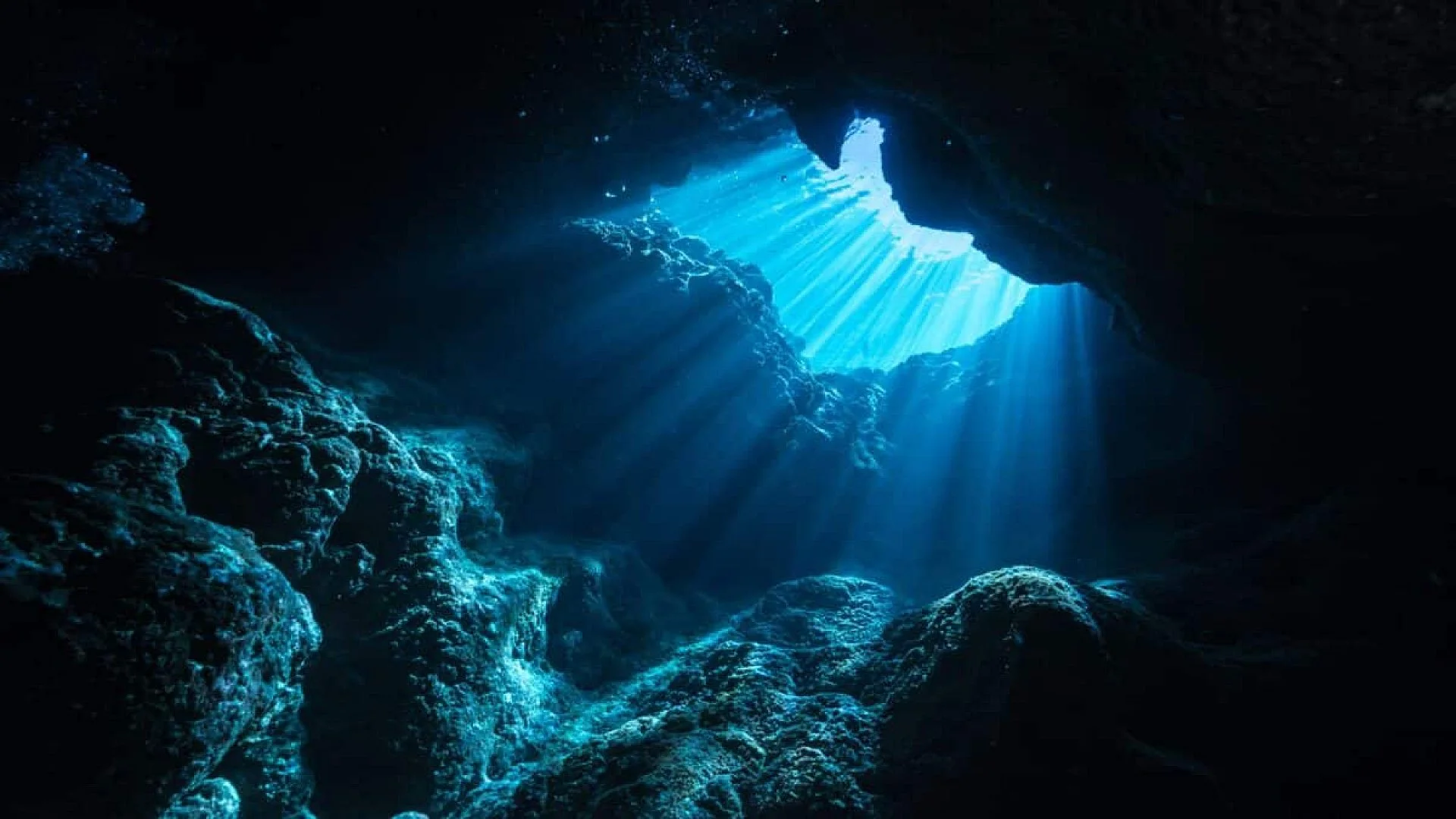
Over a thousand new marine species have been catalogued in the past twelve months, including a bizarre deep‑sea fish allied to sharks, a sponge that snares tiny crustaceans with microscopic hooks, and a cryptic shrimp dwelling in a coastal French cavern. The record comes from the Ocean Census, a joint effort of The Nippon Foundation and Nekton aimed at accelerating the discovery and description of ocean life.
Researchers stress that the pace of biodiversity loss is outstripping the ability to document it, making rapid assessment a growing priority.
In the last year the consortium launched 13 expeditions that spanned Mediterranean sea caves to abyssal zones deeper than 21,500 feet (6,575 meters). Those missions lifted the global marine‑species discovery rate by 54 percent, while scientists estimate that as much as 90 percent of oceanic taxa remain undiscovered.
Deep‑Sea Discoveries Expand Known Biodiversity
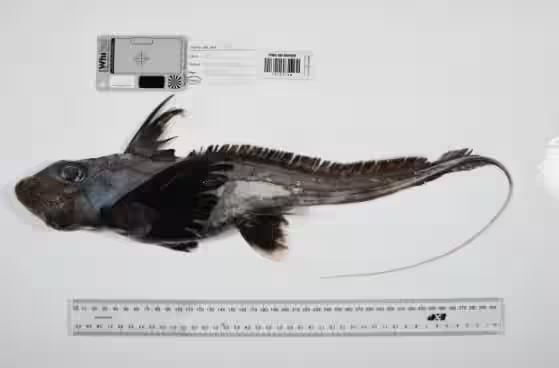
One of the standout findings emerged from the deep ocean, where a previously unknown chimaera—commonly called a “ghost shark”—was collected inside Australia’s Coral Sea Marine Park. Genetic data indicate that chimaeras diverged from sharks and rays nearly 400 million years ago, placing them among the most ancient lineages of vertebrate fish.
A separate venture near volcanic seamounts off Japan uncovered a novel bristle‑worm that inhabits the fragile silica framework of a glass sponge at almost 800 meters (2,624 feet) depth. Farther south, around the South Sandwich Islands, scientists documented a predatory sponge residing more than 11,800 feet (3,600 meters) beneath the surface. Unlike typical filter‑feeding sponges, this organism—dubbed the “death ball”—employs microscopic, hook‑like appendages to seize small crustaceans.
Coastal and Shallow‑Water Finds Reveal Hidden Fauna
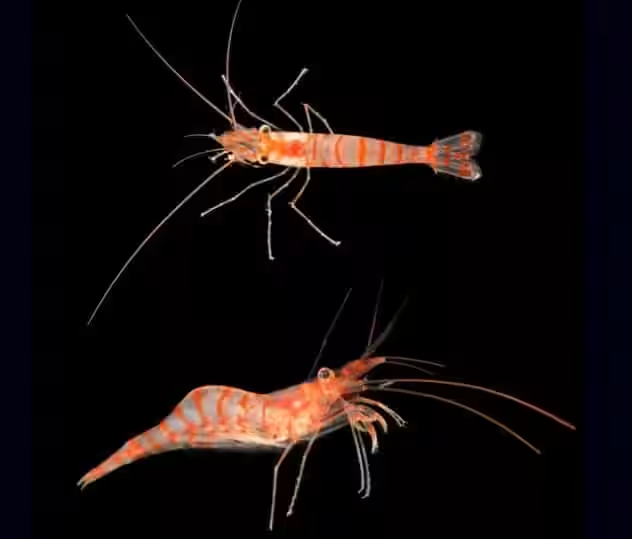
Not all breakthroughs required descent into the abyss. In a limestone cavity off Marseille, a team recorded an orange‑banded shrimp living between 15 and 35 meters (50‑115 feet) below the waterline, underscoring that even well‑explored coastal zones can harbor undiscovered life.
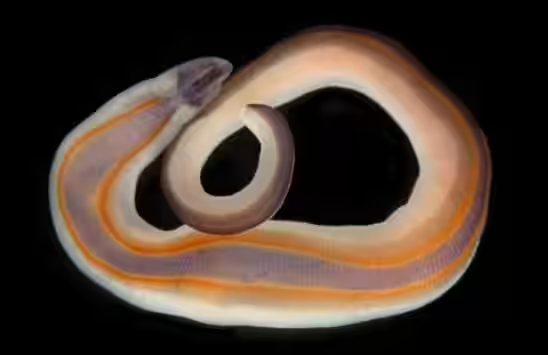
In the waters of Timor‑Leste, researchers also reported diminutive ribbon worms measuring less than 3 centimetres (1.2 inches). The organization highlighted that the toxins these worms produce are under investigation for potential therapies targeting Alzheimer’s disease and schizophrenia.
“Beyond their ecological role as predators, these worms may have biomedical significance; some of their unique toxins have been investigated as potential treatments for Alzheimer’s and schizophrenia,” the organization noted.
Accelerating Species Documentation in a Race Against Extinction
Identifying a novel organism is only the opening act; formal description and classification often span many years. Data from the Ocean Census reveal an average lag of roughly 13.5 years between specimen collection and publication, a delay that can leave vulnerable taxa unprotected.
“With many species at risk of disappearing before they are even documented, we are in a race against time to understand and protect ocean life,” said Michelle Taylor, head of science at the Ocean Census.
To shrink the documentation gap, the consortium recently unveiled NOVA, an open‑access portal that records new species within days or weeks, bypassing traditional bottlenecks. The platform now unites more than 1,400 scientists from 85 nations, according to the organization’s latest figures.
“This year, the Ocean Census has shown what is possible when ambition, partnership, and science come together…More than a thousand new marine species discovered in a single year is not just a scientific achievement — it is a reminder of how much there still is to know,” said Mitsuyuki Unno, Executive Director of The Nippon Foundation.
Also ReadWhy Some Kids Reject Broccoli but Love Mac and Cheese, And What Parents Can Actually Do About It
Even though oceans cover more than 70 percent of the planet’s surface, vast stretches remain largely uncharted, underscoring the importance of initiatives that accelerate discovery before ecosystems vanish.
This article has been fact checked for accuracy, with information verified against reputable sources. Learn more about us and our editorial process.
Last reviewed on .
Article history
- Latest version
Reference(s)
- “Coral Sea Marine Park | Australian Marine Parks | Parks Australia.” <https://australianmarineparks.gov.au/parks/coral-sea-marine-park/>.
- “Dr Michelle Taylor - Ocean Census.”, February 18, 2025 Ocean Census <https://oceancensus.org/team-member/dr-michelle-taylor/>.
- “Ocean Census NOVA | Latest Ocean Life Discoveries.”, January 13, 2026 Ocean Census <https://oceancensus.org/nova/>.
- “Mitsuyuki Unno - Ocean Census.”, February 18, 2025 Ocean Census <https://oceancensus.org/team-member/mitsuyuki-unno/>.
Cite this page:
- Posted by David Anderson