SpaceX Just Sent 6,500 Pounds Of Science To The International Space Station
SpaceX’s most recent cargo mission ferried 6,500 pounds of research gear to the International Space Station, including experiments poised to revolutionize medical treatments, advance materials technology, and deepen our knowledge of space itself.
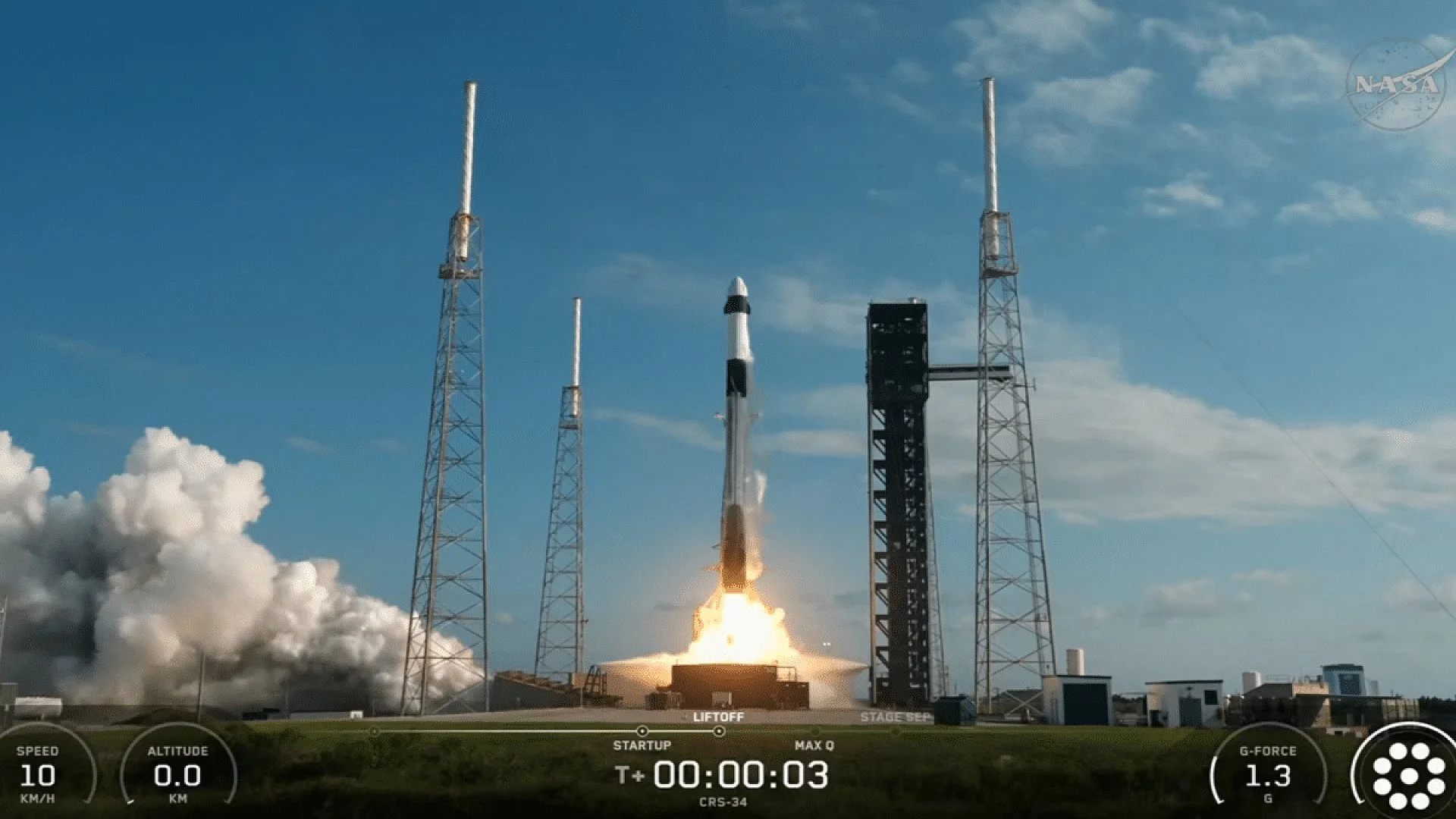
NASA and SpaceX have once again pushed the boundaries of space exploration with a groundbreaking research mission. On May 15, the 34th SpaceX commercial resupply mission launched from Cape Canaveral, carrying a payload of nearly 6,500 pounds of cargo, including cutting-edge experiments that could revolutionize our understanding of biology, materials science, and space physics. This remarkable delivery highlights the crucial role of the International Space Station (ISS) as a platform for conducting research that is impossible on Earth.
Pioneering Spacecraft Delivers Science With Unparalleled Precision
The Dragon spacecraft is scheduled to dock autonomously at the station’s Harmony module on May 17, ensuring that astronauts can immediately begin handling critical supplies and innovative experiments. Among the cargo are studies on bone scaffolds made from wood, which could potentially lead to breakthroughs in osteoporosis treatments, and investigations into how red blood cells and the spleen function in microgravity, offering valuable insights that could improve medical treatments on Earth.
Additionally, the Dragon spacecraft carries instruments to observe charged particles around Earth, which can impact satellites and power grids, as well as devices to measure sunlight reflection from Earth and the Moon, contributing to climate research and planetary science. NASA emphasizes that these investigations showcase the ISS’s unique ability to advance both fundamental science and practical applications.
Expanding Human Knowledge Beyond Earth’s Boundaries
For over 25 years, humans have lived and worked continuously aboard the ISS, conducting groundbreaking experiments in biology, biotechnology, physics, and Earth and space science. These studies not only improve our understanding of how the human body responds to microgravity, but also accelerate discoveries in medicine and materials science. The Dragon mission exemplifies the seamless cooperation between government and commercial spaceflight, enabling researchers to push the boundaries of knowledge while preparing for future long-duration missions.
The carefully timed experiments onboard will allow scientists to capture dynamic biological changes in microgravity, providing data that is unattainable on Earth. NASA notes that the mission contributes to research that could support sustained human presence on the Moon and Mars under the Artemis program, laying the groundwork for humanity’s next steps into deep space.
Paving The Way For Future Space Exploration
Once its mission concludes in mid-June, the Dragon spacecraft will return to Earth with time-sensitive research, allowing scientists to immediately study results and accelerate discoveries. This process exemplifies how cargo resupply missions are central to advancing human spaceflight, offering both logistical support and experimental opportunities.
As commercial partnerships with NASA grow, low Earth orbit becomes an increasingly important laboratory for science, commerce, and innovation. Each resupply mission like this one contributes not just to immediate research goals but to the larger mission of preparing humanity for long-term life beyond Earth.
Anderson, David. “SpaceX Just Sent 6,500 Pounds Of Science To The International Space Station.” BioScience. BioScience ISSN 2521-5760, 16 May 2026. <https://www.bioscience.com.pk/en/subject/health/spacex-just-sent-6-500-pounds-of-science-to-the-international-space-station>.
Anderson, D. (2026, May 16). “SpaceX Just Sent 6,500 Pounds Of Science To The International Space Station.” BioScience. ISSN 2521-5760. Retrieved May 16, 2026 from https://www.bioscience.com.pk/en/subject/health/spacex-just-sent-6-500-pounds-of-science-to-the-international-space-station
Anderson, David. “SpaceX Just Sent 6,500 Pounds Of Science To The International Space Station.” BioScience. ISSN 2521-5760. https://www.bioscience.com.pk/en/subject/health/spacex-just-sent-6-500-pounds-of-science-to-the-international-space-station (accessed May 16, 2026).