Crescent Moon Dives Through Beehive Cluster as Mercury, Jupiter & Venus Align June 17
Spot a crescent Moon near bright planets in the western sky, with the layout shifting as each celestial body sets.
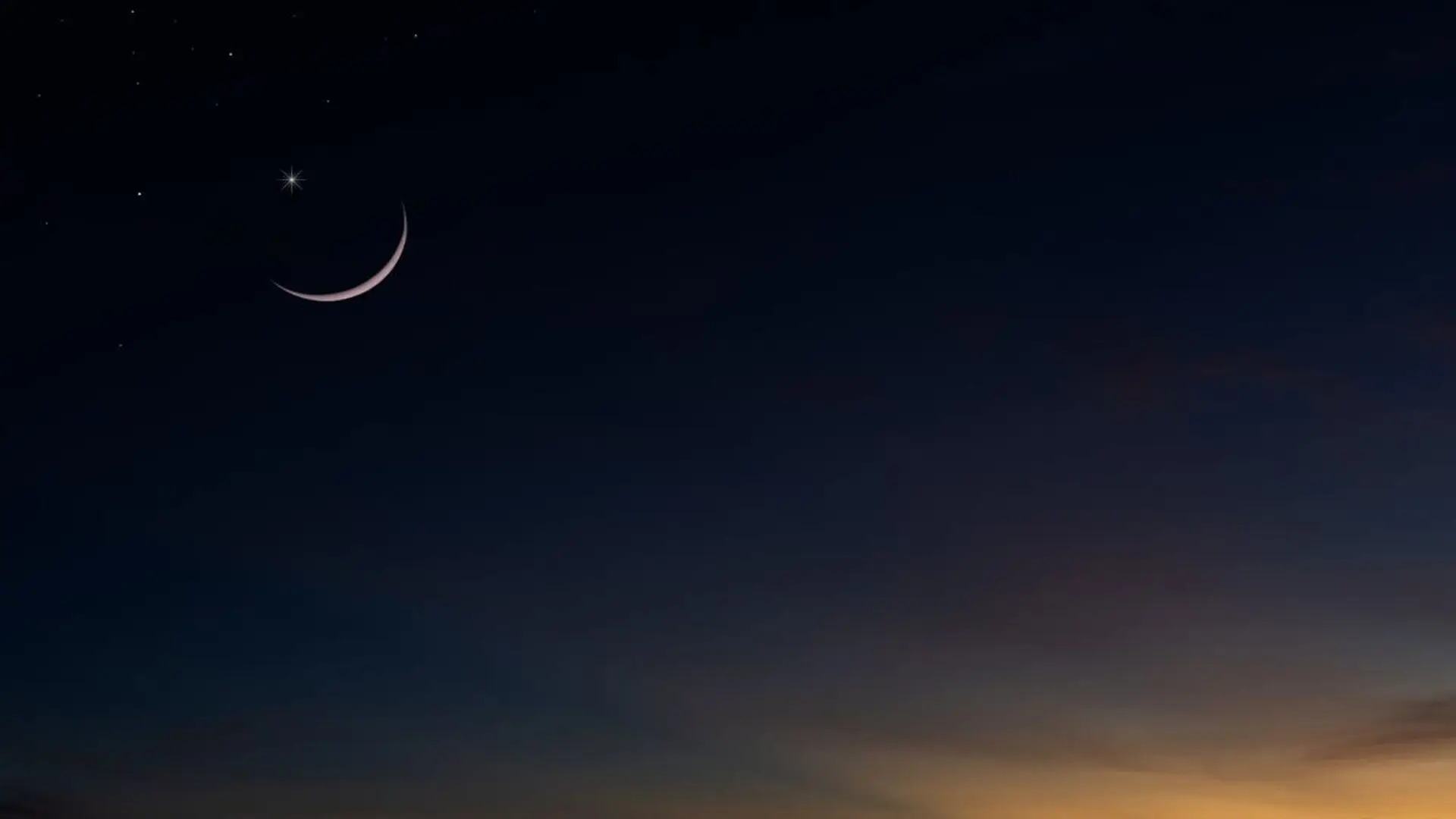
After sunset on June 17 a thin crescent Moon will rise in the western sky together with Mercury, Jupiter and Venus, creating a striking layered alignment. The Moon’s path will cut straight through the Beehive open star cluster, offering a rare chance to see a young lunar crescent against a dense stellar backdrop.
All of these objects lie close to the ecliptic, the plane in which the Sun, Moon and planets travel across the heavens. When the geometry lines up, we often see groups of bright objects, but a crescent Moon intersecting a rich cluster such as the Beehive is an especially uncommon sight for observers with an unobstructed horizon.
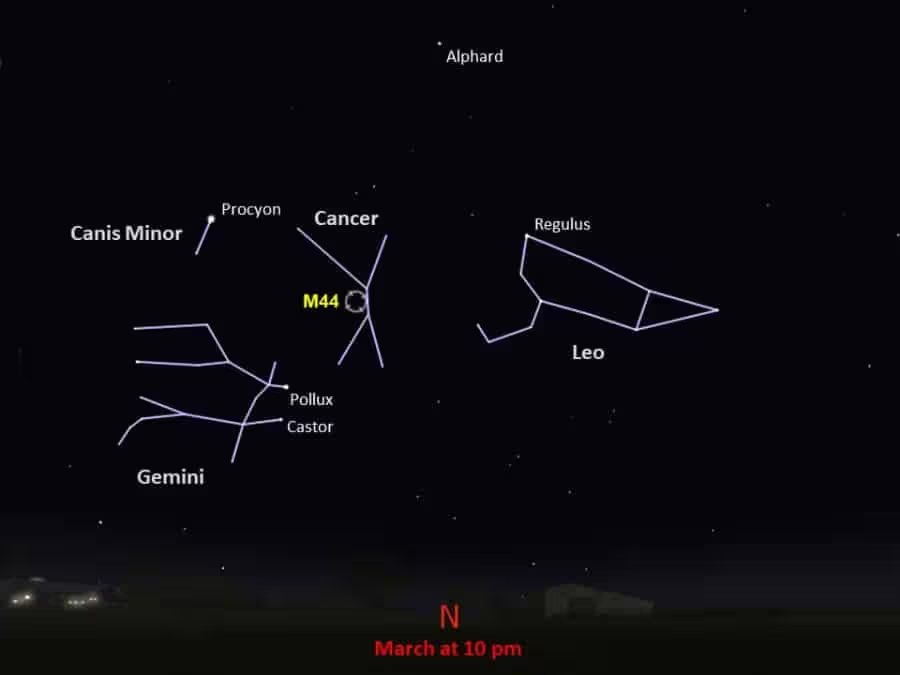
The Beehive Cluster (M44), located in Cancer, contains roughly 1 000 stars. Because the cluster sits on the ecliptic, the Moon can drift through it on occasion, producing a brief but memorable alignment that can be followed throughout a single evening.
Evening Sky Showcase: Mercury to Jupiter
Just after twilight, Mercury will be visible low on the western horizon, caught in the lingering glow of dusk. It will set about two hours after sunset, a behavior typical of the planet’s close orbit to the Sun, as noted by Space.com. Higher up, Jupiter will appear as a steady, bright point, while Venus follows along the same line. The crescent Moon completes the diagonal pattern, extending from the horizon upward and forming a “striking planetary sequence,” even though the actual distances between the bodies remain immense.
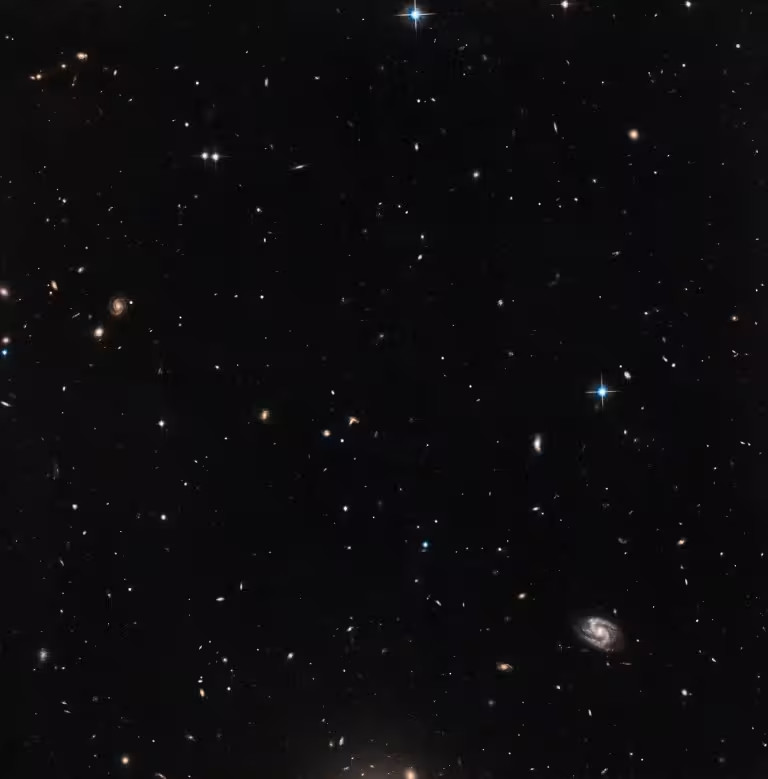
The Beehive Cluster forms a faint veil of stars behind the planetary line‑up. For U.S. observers, the Moon will stay visible for roughly an hour after Mercury disappears, before it finally slips below the western horizon.
Earthshine and Binocular Views of the Cluster
As the sky darkens, the thin crescent may be faintly illuminated on its dark side by earthshine. This subtle glow results from sunlight reflected off Earth reaching the Moon, outlining its shape against the twilight.
Using 10×50 binoculars can dramatically improve the view, revealing dozens of individual stars belonging to the Beehive Cluster that are otherwise lost to the naked eye. A modest telescope with a 4‑inch aperture will bring out additional details, such as Jupiter’s cloud belts and its four Galilean moons, provided the atmosphere remains steady.
What Comes Next: Moon and Planet Motions
After the June 17 event, the Moon will continue its eastward trek away from the Beehive Cluster and Venus, heading toward Leo and the bright star Regulus. This star, a multiple system at Leo’s heart, will serve as a useful landmark for future evening observations.
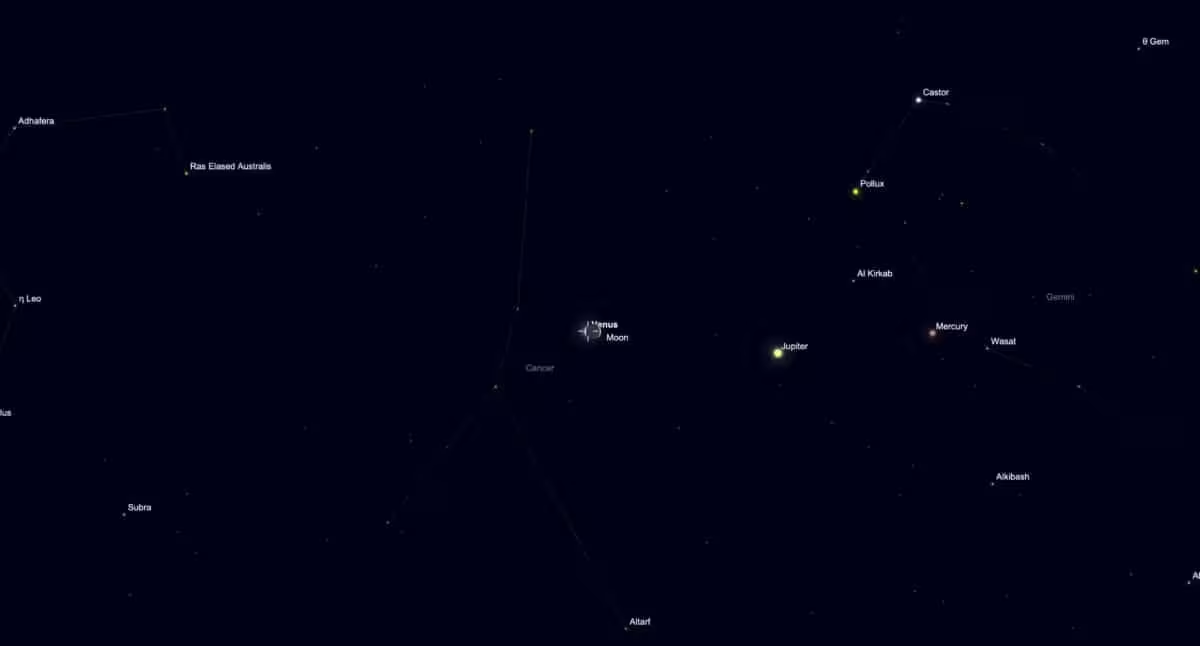
Meanwhile, the planets will keep shifting along the ecliptic. Mercury will sink ever lower each night, becoming increasingly difficult to spot after dusk. Venus will drift through Cancer, gradually pulling away from Jupiter as the grouping disperses. A notable upcoming event is a close approach of Venus to Regulus on July 9, when the planet will pass within about one degree of the star system.
This article has been fact checked for accuracy, with information verified against reputable sources. Learn more about us and our editorial process.
Last reviewed on .
Article history
- Latest version
Reference(s)
- Wood, Anthony. “The crescent moon joins 3 planets in a beautiful sunset sky show tonight.”, June 16, 2026 Space <https://www.space.com/stargazing/dont-miss-the-moon-lead-a-dazzling-mini-planet-parade-on-june-17>.
- Vogel, Tracy. “Messier 44 - NASA Science.”, March 8, 2024 NASA <https://science.nasa.gov/mission/hubble/science/explore-the-night-sky/hubble-messier-catalog/messier-44/>.
Cite this page:
- Posted by David Anderson