Space Plants Can Produce Medicines On‑Demand Using a Non‑Destructive Harvest
New study shows astronauts could manufacture vital medicines in space, offering a self‑sufficient solution when Earth resupply fails.
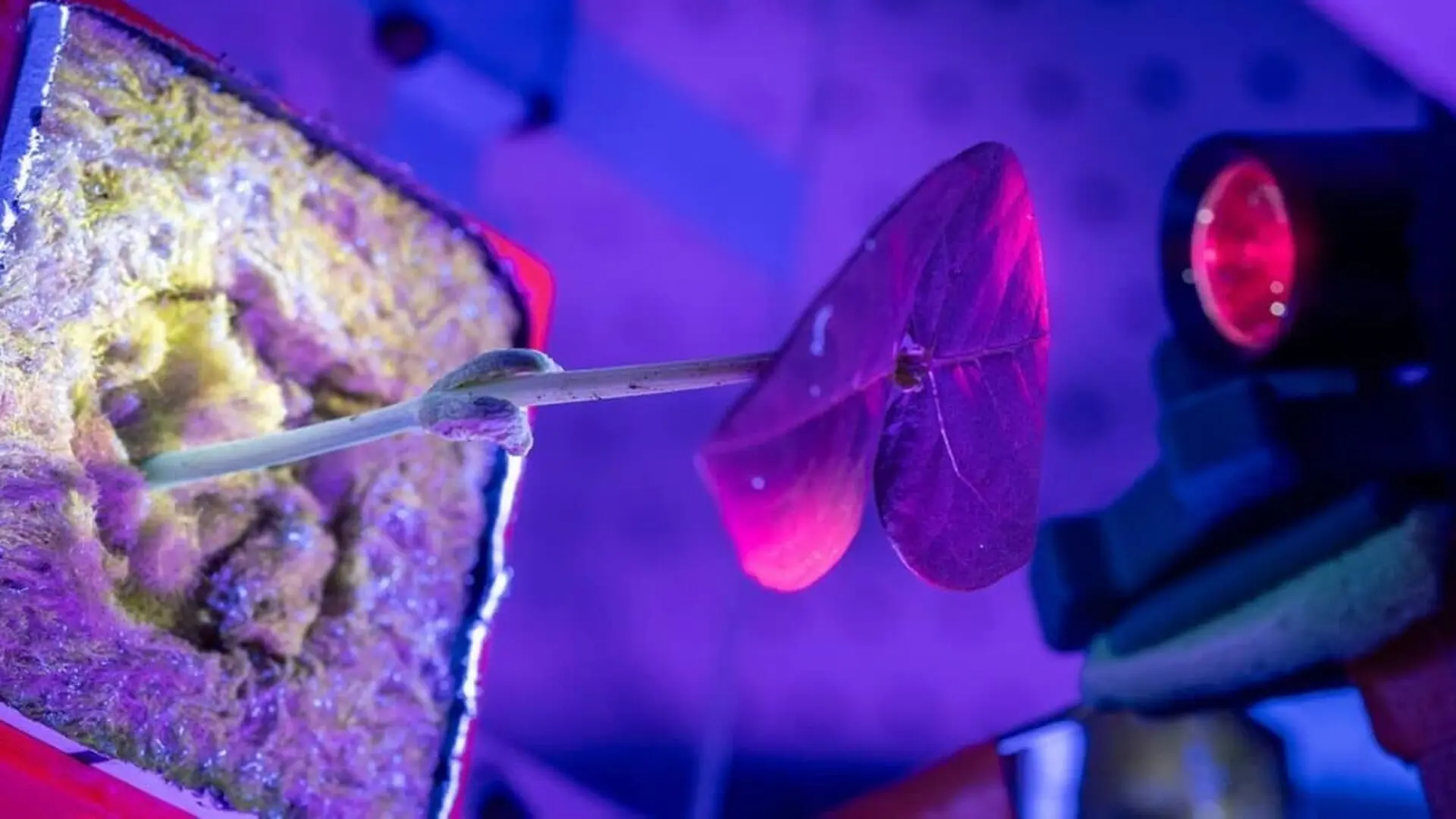
Long‑duration missions to the Moon or Mars will need a way to manufacture essential medicines far from Earth. Scientists at the University of California, San Diego have devised a technique that pulls therapeutic compounds from living plants without harming the host, opening the door to onboard pharmaceutical factories.
Traditional resupply missions can keep low‑Earth‑orbit crews stocked, but deep‑space voyages cannot rely on frequent cargo flights. Every gram of payload must be justified, and maintaining a stable drug inventory over months or years becomes a logistical hurdle.
Beyond providing food and air regeneration, plants are poised to become compact bioreactors that synthesize complex drugs with minimal inputs. A recent study demonstrates that a common legume virus can be harvested directly from intact foliage, dramatically simplifying the production chain.
A Legume‑Derived Virus as a Therapeutic Tool
The investigation, appearing in npj Science of Plants, centers on the cowpea mosaic virus (CPMV), a pathogen that naturally infects beans and peas. UC San Diego researchers have spent more than ten years exploring CPMV’s ability to trigger anti‑cancer immune responses, with promising results in mouse models and canine patients.
To generate the virus, the team cultivated Nicotiana benthamiana and black‑eyed pea plants, species known for rapid biomass accumulation. While growing CPMV inside the leaves proved straightforward, extracting the particles using conventional grinding methods created a thick slurry that is difficult to process and would require laboratory‑scale equipment unsuitable for spacecraft.
“The result looks like a smoothie, and isolating your target from that mess is a major obstacle,” said Patrick Opdensteinen, a postdoctoral researcher at UC San Diego and the study’s lead author, in a statement released by the university.
He noted that the standard extraction setup occupies an entire lab bench, making it impractical for the confined environment of a spacecraft.
Gentle Extraction Keeps Plants Growing
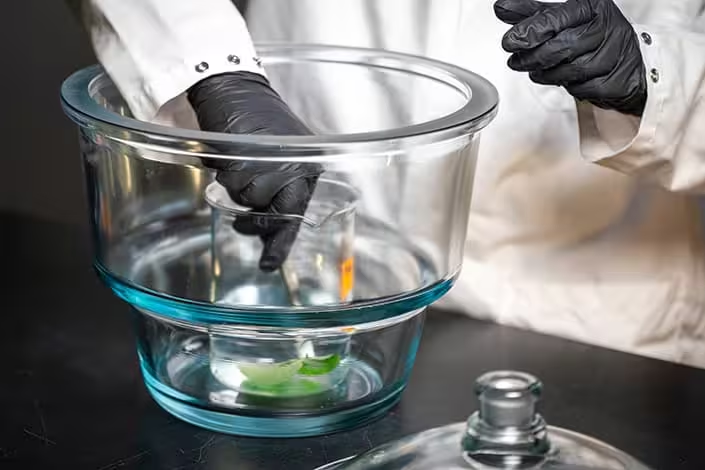
Instead of grinding, the researchers applied a technique called product secretion, commonly used with microbes and mammalian cells, to coax the virus into the plant’s apoplastic space – the extracellular channels surrounding each cell. By immersing leaves in a buffer and applying vacuum, the fluid fills these compartments, allowing CPMV particles to be collected without destroying tissue.
After vacuum treatment, the leaves are placed in low‑speed centrifuges that spin out a liquid rich in viral particles. Simple filtration then removes cellular debris while retaining the much larger virus, producing a relatively pure preparation.
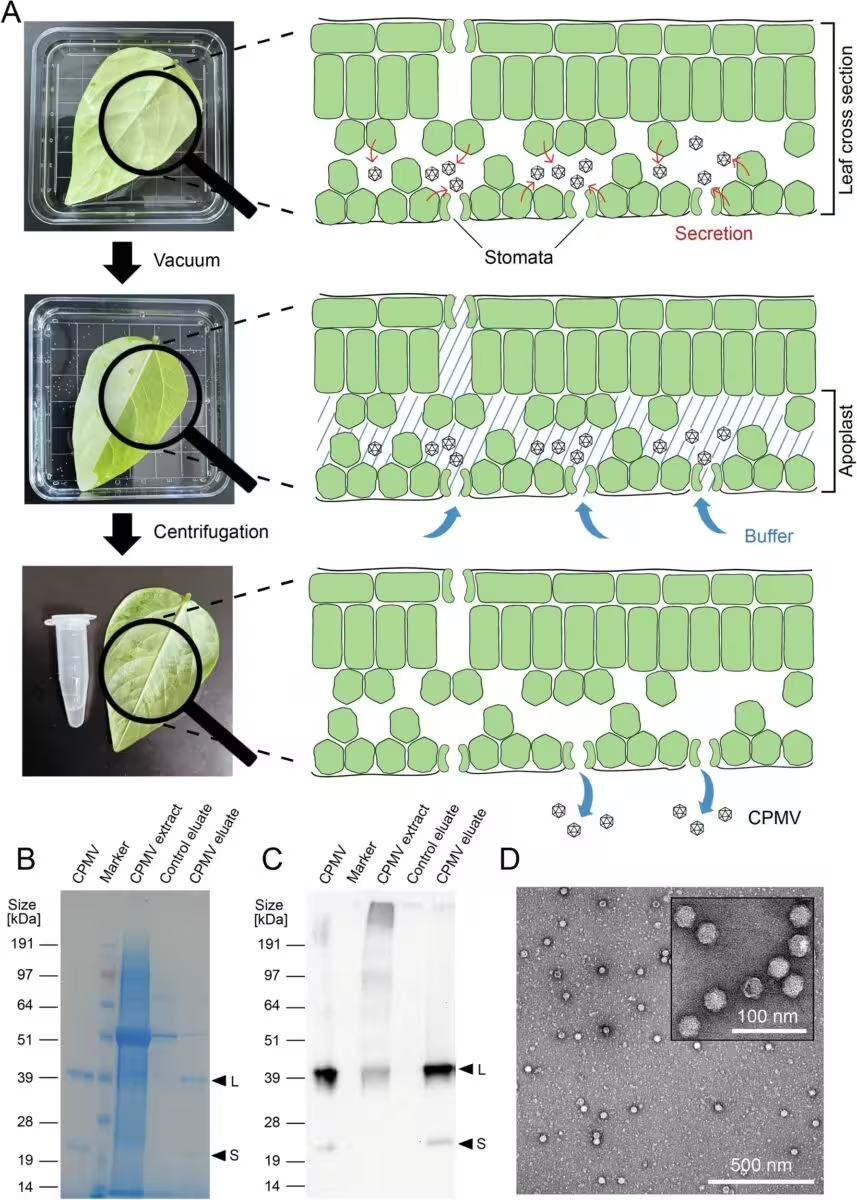
Because the foliage remains viable, the same plants can be harvested repeatedly, dramatically extending the yield per growth cycle. The team demonstrated scalability by processing more than fifty plants in under two hours, confirming that the method can keep pace with the demands of a space habitat.
Microgravity Simulations Reveal Robust Performance
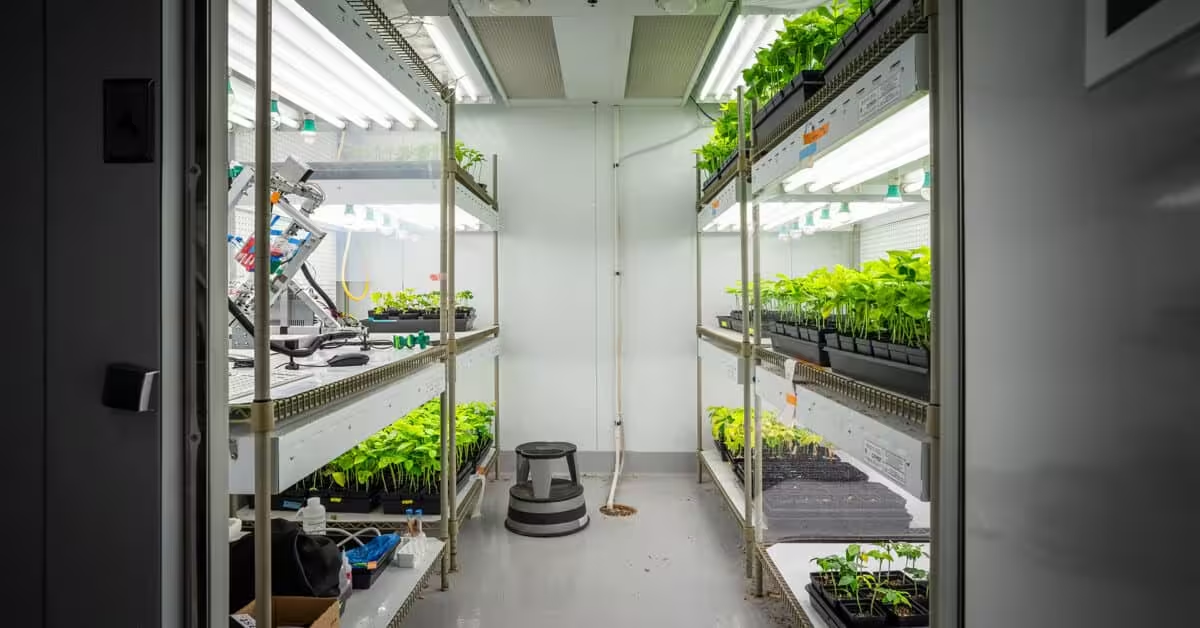
To gauge how the system would behave under space‑like conditions, the scientists partnered with Professor Maziar Ghazinejad and colleagues from UC San Diego’s Mechanical and Aerospace Engineering department. They employed a custom random positioning machine that continuously rotates the plants, mimicking the weightless environment of orbit.
“Stress makes plants more vulnerable to disease, which is usually a downside,” Opdensteinen explained. “But because our target is a virus, that stress actually boosts production.”
Previous research on the International Space Station highlighted that many pharmaceuticals lose potency faster in orbit, with more than half expiring within three years. For a Mars expedition lasting six to nine months one way, a reliable in‑situ drug supply could be a mission‑critical capability.
“Plants let you synthesize intricate therapeutics using only light, water and soil,” noted Nicole Steinmetz, the Leo and Trude Szilard Chancellor’s Endowed Chair in UC San Diego’s Chemical and Nano Engineering department.
The researchers plan to extend their work to actual spaceflight experiments, probing how microgravity and radiation affect both plant growth and virus yield, with the ultimate goal of enabling autonomous medical production on future deep‑space habitats.
This article has been fact checked for accuracy, with information verified against reputable sources. Learn more about us and our editorial process.
Last reviewed on .
Article history
- Latest version
Reference(s)
- Opdensteinen, Patrick. “Streamlined molecular farming of plant virus therapeutics for space flight and other low-resource environments - npj Science of Plants.”, vol. 2, no. 1, June 5, 2026, pp. 16 Nature, doi: 10.1038/s44383-026-00030-y. <https://www.nature.com/articles/s44383-026-00030-y>.
- “Patrick Opdensteinen • UCSD Profiles.” <https://profiles.ucsd.edu/patrick.opdensteinen>.
- “Plants Could Be Used to Grow Medicines in Space, Study Shows.”, June 05, 2026 <https://today.ucsd.edu/story/plants-could-be-used-to-grow-medicines-in-space-study-shows>.
- “Maziar Ghazinejad | Jacobs School of Engineering.” <https://jacobsschool.ucsd.edu/node/3628>.
- “Nicole F. Steinmetz Honored Chancellor’s Endowed Chair.” <https://iem.ucsd.edu/news-events/news/news-archives/2026-02-nicoles-endowed-chair.html>.
Cite this page:
- Posted by David Anderson