Ancient Turkish Tomb Yields Wrestler Coins, But Who Was Buried Inside Remains a Mystery
A 2,400‑year‑old Aspendos tomb may hold an ancient wrestler, but coins hinting at athletics aren’t conclusive enough to confirm the identity.
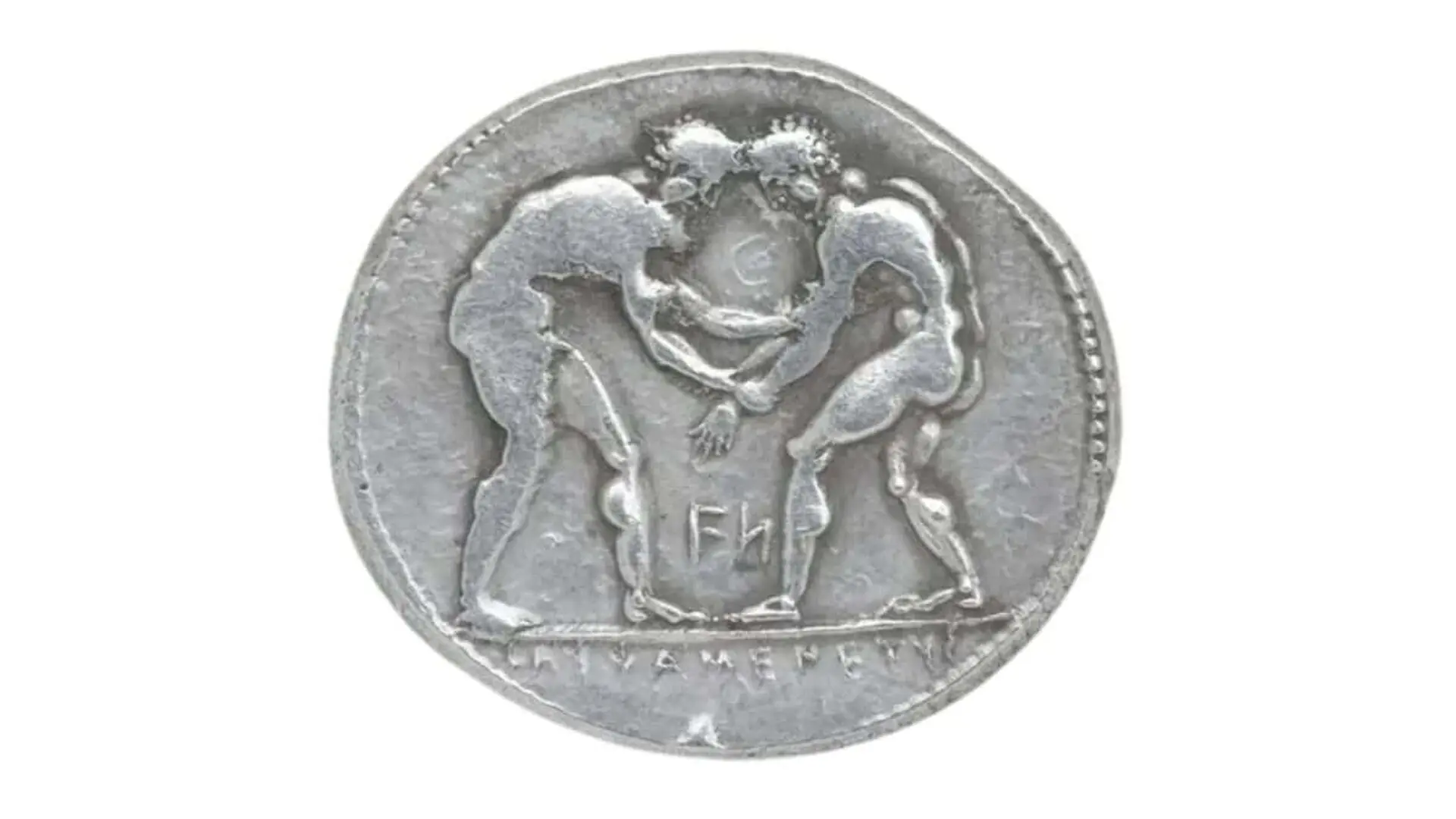
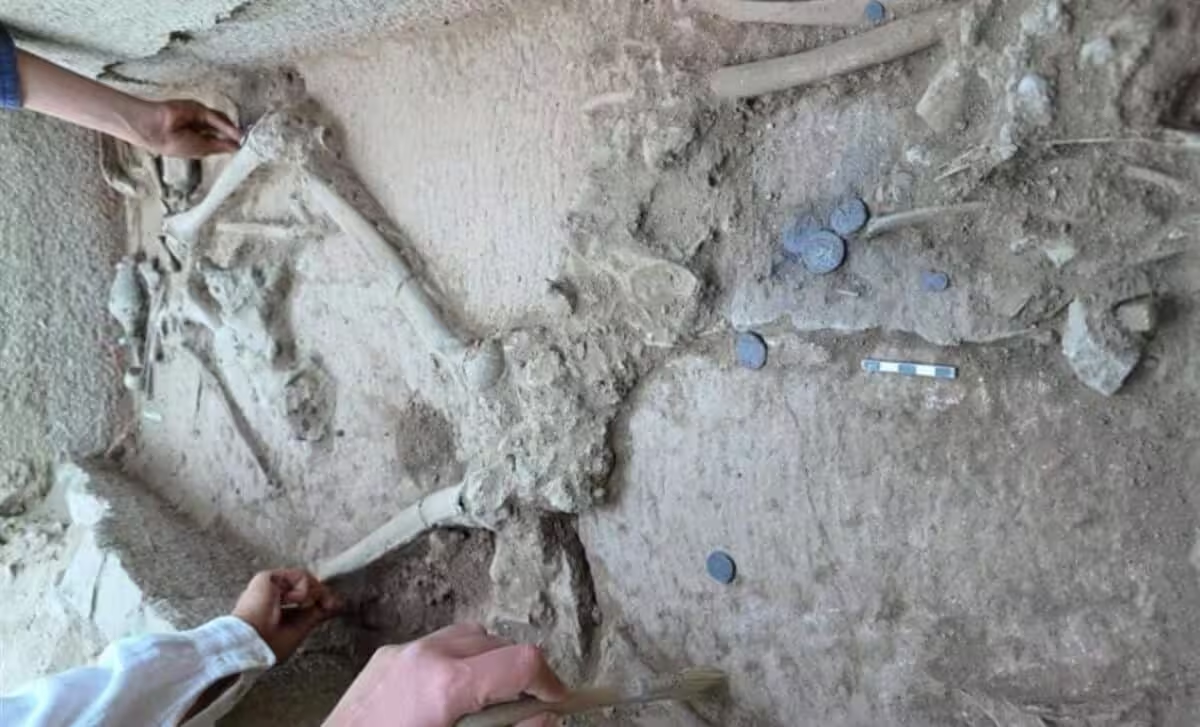
Archaeologists excavating the ancient site of Aspendos in southwestern Turkey have uncovered a stone‑lined tomb dating to the Classical era, roughly 2,400 years ago. Inside the burial chamber lay a single human skeleton accompanied by several silver coins that depict wrestlers in action.
The tomb was discovered in a previously unknown burial district termed the Eastern Necropolis, located along a slope that leads from the city’s eastern fortifications toward its famed theater. Turkey’s Ministry of Culture and Tourism notes that the find fills a gap in the archaeological record for Aspendos’ early classical period, a phase that is less documented than its later Roman occupation.
Coins Show Wrestlers, But Identity Remains Uncertain
The sealed chamber was constructed from stone slabs arranged in a rectangular box, and the accompanying coins feature images of nude wrestlers on one side and a slinger on the other. Culture and Tourism Minister Mehmet Nuri Ersoy suggested that the presence of such imagery could indicate that the interred individual had a connection to athletic pursuits, perhaps even as a competitor in the city’s wrestling contests.
Aspendos minted silver staters that regularly displayed wrestling scenes, a motif that persisted across multiple series and variations of the coinage. In a 2000 study of the city’s monetary iconography, numismatist Oğuz Tekin highlighted the wrestler series as one of the most prolific groups among Aspendos’ silver issues, noting that the depictions include a range of grappling techniques such as arm locks, neck holds, and leg grips [source].
While the coins confirm that wrestling held a prominent place in the civic symbolism of Aspendos, historian Sarah E. Bond of the University of Iowa cautions against assuming a direct link to the deceased’s profession. “A much more detailed analysis of the skeletal remains is required before we can confidently label the individual as a wrestler,” Bond told Live Science. She added that evidence of healed injuries or other physical markers could strengthen the case, though no such data have been released yet.
Aspendos, situated roughly ten miles inland from the Mediterranean, originated as a Greek colony in the fifth century B.C. and later evolved into a bustling trade hub for commodities such as salt, olive oil, timber, and horses. Its Roman‑era remains are renowned, particularly the expansive gymnasium, an 8,000‑seat stadium that hosted footraces, javelin throws, and wrestling bouts, and a remarkably preserved theater.
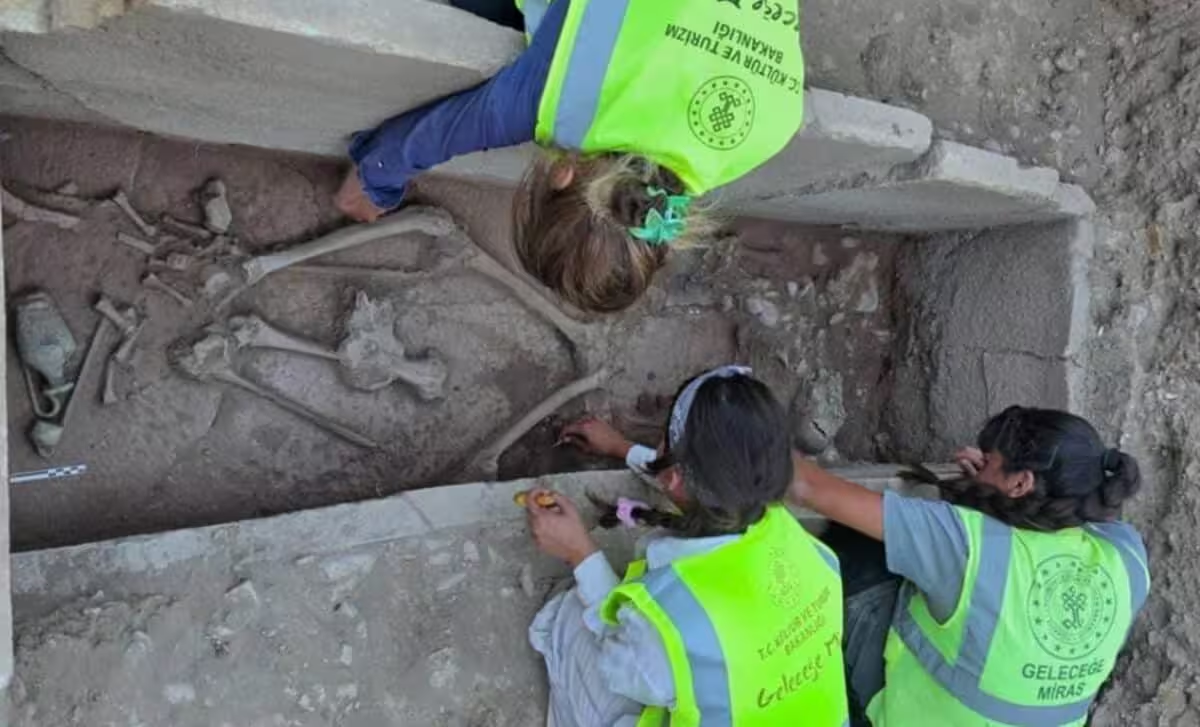
The Eastern Necropolis discovery, announced by the Turkish Ministry of Culture and Tourism, marks one of the most significant Classical‑period finds at Aspendos, a period for which archaeological evidence has been relatively sparse. The ministry emphasized that the burial offers fresh insight into funerary customs and the social hierarchy of the city during its early development.
Future analysis of the skeletal remains and associated artifacts will be essential to determine whether the tomb indeed belonged to a celebrated athlete or to another member of Aspendos’ population. Until then, the wrestler‑themed coins remain an intriguing clue, highlighting the complex interplay between civic iconography and personal identity in ancient Greek societies.
This article has been fact checked for accuracy, with information verified against reputable sources. Learn more about us and our editorial process.
Last reviewed on .
Article history
- Latest version
Reference(s)
- “Minister.” <https://www.ktb.gov.tr/EN-113297/minister.html>.
- Tekin, Oğuz. “Aspendian 'Wrestlers' : an iconographic approach.”, vol. 12, no. 1, January 1, 2000, pp. 159-169. <https://www.persee.fr/doc/anatv_1013-9559_2000_act_12_1_956>.
Cite this page:
- Posted by Zara Tariq