Victorian Candy Tragedy: Arsenic Mistake Killed 20, Prompted Food Safety Laws
1858 Bradford candy tragedy: accidental arsenic substitution killed 20 people, exposing historic food safety failures.
In October 1858 a batch of the beloved Bradford hard candy known as humbug became the source of one of the deadliest poisoning episodes in Victorian England, claiming dozens of lives and reshaping public health policy.
The sweets were sold by the itinerant confectioner William Hardaker, famed as “Humbug Billy,” but they were actually manufactured by Joseph Neal, a candy maker on Stone Street who had begun substituting a cheaper filler for part of the sugar in the recipe.
Neal’s cost‑saving measure involved replacing a portion of the refined sugar with powdered gypsum—a material then marketed as “daft” and later identified as plaster of Paris.
How a Cost‑Cutting Shortcut Triggered a Deadly Poisoning
Needing additional gypsum before the October 30 market, Neal sent a representative to a local druggist to purchase twelve pounds of the powder. The shop’s proprietor, Charles Hodgson, was away, leaving apprentice William Goddard in charge.
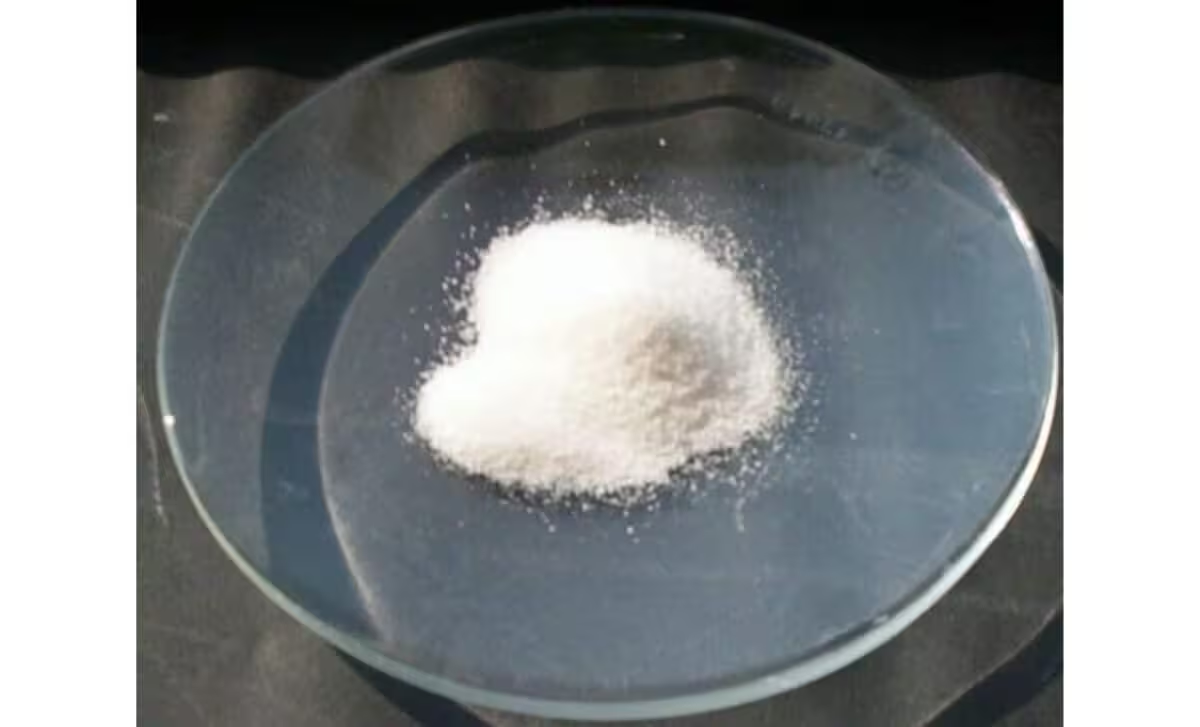
Goddard rummaged through the back of the shop, found two unlabeled casks of white powder, and mistakenly handed the arsenic to Neal’s agent instead of the intended gypsum. Although Britain had enacted the Arsenic Act of 1851, which required record‑keeping for arsenic sales, the law did not enforce professional standards for druggists, allowing such substances to be stored loosely.
Armed with the toxic powder, Neal produced a fresh batch of humbugs and delivered them to Hardaker on the day of the market. Hardaker noted an unusual discoloration but, reassured by Neal’s claim that the candy was safe—Neal even reported having tasted it himself—he accepted the batch and negotiated a discount before putting the sweets on sale.
Arsenic‑Laced Humbugs Spark a Fatal Outbreak in Bradford
The candies sold rapidly, as usual, but the following morning a wave of severe illness swept through the market’s patrons. Among the first victims were 14‑year‑old Joseph Scott, 9‑year‑old Elijah Wright, 5‑year‑old Orlando Burran and his 2‑year‑old brother John Henry Burran.
Physician Dr John Henry Bell suspected poisoning after other doctors considered infectious disease. He arranged for the sweets to be tested, employing the Reinsch test, which reveals arsenic by depositing a metallic film on heated copper strips.
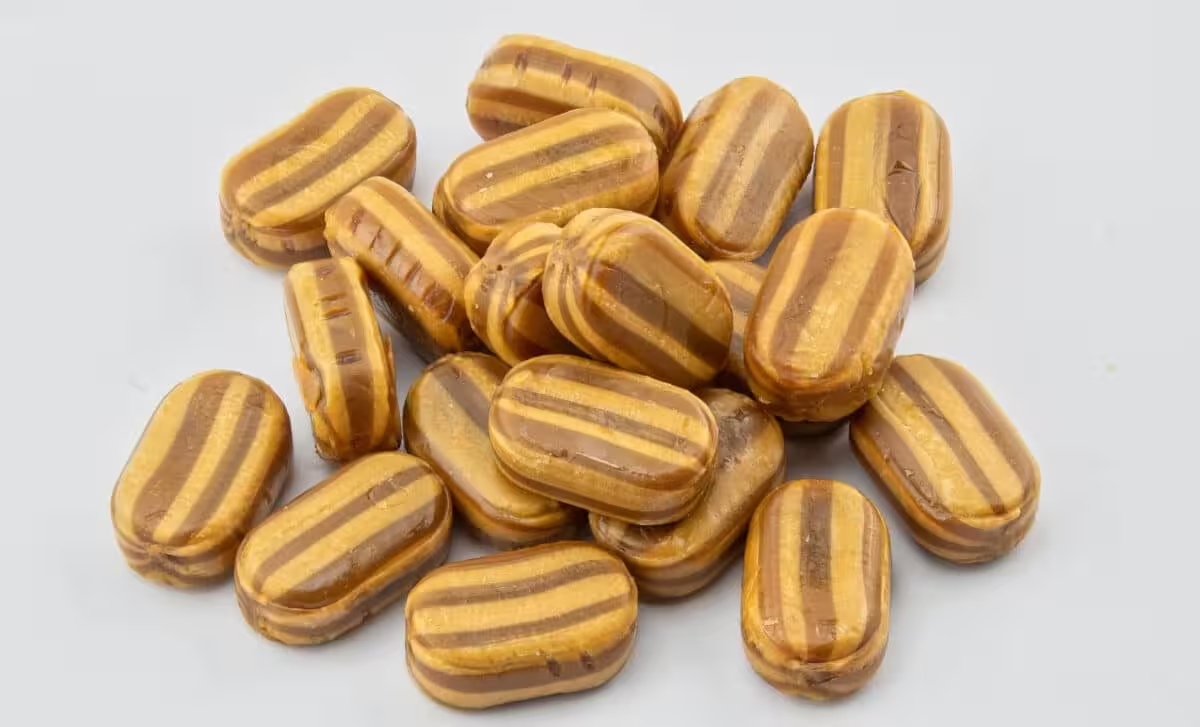
The analysis confirmed lethal concentrations of arsenic. According to Popular Mechanics, twenty people died and roughly two hundred suffered illness, with cases reported as far afield as Leeds and Bolton. By early November, eighteen deaths had been recorded, and Hardaker estimated that about one thousand contaminated pieces had changed hands.
The Bradford Observer described the tragedy as “the most dreadful calamity that perhaps ever befell the district,” emphasizing the community’s collective grief.
Aftermath and the Birth of Modern Food‑Safety Laws
Police investigations traced the arsenic back to Hodgson’s drugstore, leading to the arrests of William Goddard, Charles Hodgson, and Joseph Neal. The case proceeded to trial in December 1858 before Judge Baron Warren.
The judge dismissed charges against Neal, noting that he was not present when the powder was purchased, and released Goddard on the basis that he was merely an apprentice. Hodgson avoided conviction when the judge concluded that evidence was insufficient to sustain a prosecution.
Public outrage over the lack of accountability intensified demands for stricter controls over food adulteration and the sale of hazardous substances. The episode helped pave the way for the Adulteration of Food or Drink Act of 1860 and the Pharmacy Act of 1868, which introduced licensing requirements for pharmacists and tighter regulation of poisonous compounds.
Hardaker himself suffered lingering effects; after ingesting one of the tainted sweets he experienced paralysis on one side of his body. He died in 1866 and was interred in an unmarked grave that was rediscovered in March 2026 according to the BBC.
The tragedy was memorialized in a satirical illustration for Punch magazine titled “The Great Lozenge‑Maker. A Hint to Paterfamilias,” depicting a skeletal figure stirring a pot of humbug beside containers labeled plaster of Paris and arsenic. The drawing was created by John Leech, famed for his work on Charles Dickens’s A Christmas Carol.
This article has been fact checked for accuracy, with information verified against reputable sources. Learn more about us and our editorial process.
Last reviewed on .
Article history
- Latest version
Reference(s)
- “Sale of Arsenic Regulation Act 1851.” <https://www.legislation.gov.uk/ukpga/Vict/14-15/13/section/I/enacted>.
- Colman, Beth. “How Peppermint Candy Caused One of Britain’s Deadliest Mass Poisonings.”, October 1, 2025 Mental Floss <https://www.mentalfloss.com/food/candy/bradford-candy-poisoning>.
- Natale, Michael. “A Candymaker Tried to Save Money on Sugar. His Candy Killed 20 People and Changed History..”, July 21, 2026 Popular Mechanics <https://www.popularmechanics.com/science/a71921706/bradford-sweets-poisoning/>.
- “Grave found of Bradford's 'Humbug Billy' whose sweets killed 21.”, March 9, 2026 <https://www.bbc.com/news/articles/c4g4lvpzgryo>.
Cite this page:
- Posted by Zara Tariq