Meteoritic Iron Rings Reveal Elite Egyptian Trade in Bronze Age Greece
Bronze Age Greek rings contain a surprising secret: trace amounts of extraterrestrial metal, linking elite craftsmanship to space‑borne material.
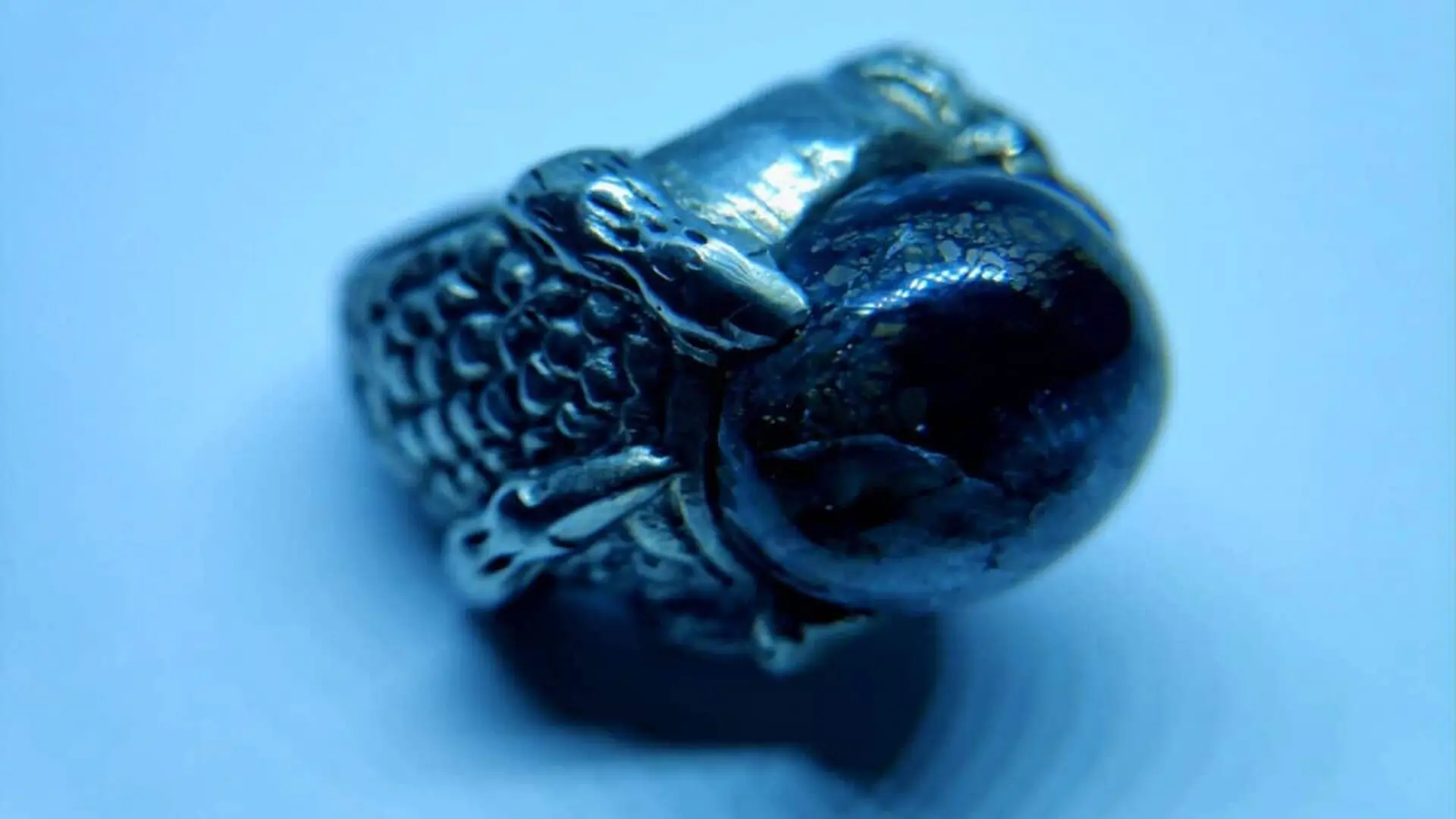
A recent investigation of 91 iron artifacts recovered from Greece and Crete revealed that 13 of them— all ring‑shaped pieces—contain unusually high concentrations of nickel, suggesting a meteoritic origin for the metal in ten of the specimens.
The analysis formed part of the 2026 Journal of Archaeological Science study titled Iron in Greece in the second millennium B.C. led by Matthieu Gounelle and Eleni Mantzourani. Using portable X‑ray fluorescence (XRF), the team conducted non‑destructive compositional scans on objects sourced from 33 archaeological sites.
Ring Artifacts Reveal Nickel‑Rich Iron
Only the ring‑type objects displayed measurable nickel levels. Most of the 13 nickel‑bearing pieces were either complete signet rings or fragments attached to engraved metal plates, indicating their use as personal seals. Nine of the rings were deemed very likely, and one quite likely, to derive from meteoritic iron, while three require additional testing.
These rings frequently combine nickel‑rich iron with gold, silver or bronze, pairing the exotic metal with precious alloys typically reserved for high‑status items.
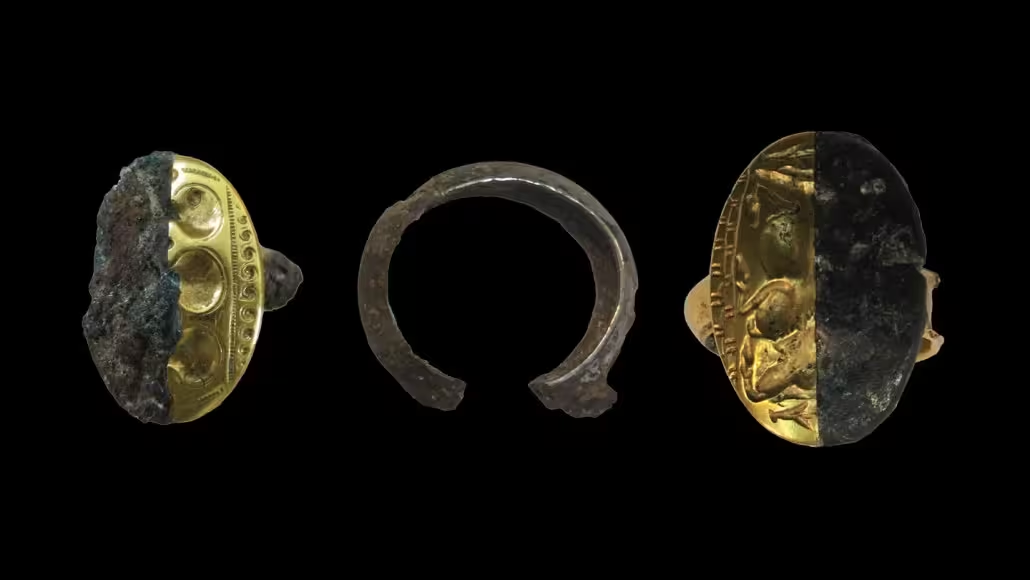
The archaeological contexts reinforce the prestige of these objects. The rings originate from elite tombs, affluent domestic settings, and a temple on Crete. One specimen was recovered from the Anemospilia sanctuary, while the others came from tholos and chamber graves where they accompanied other valuable goods.
Mantzourani interprets the data as evidence that meteoritic iron functioned as a status symbol among the Minoan and Mycenaean elites, treated with the same reverence as gold or silver.
Egyptian Deserts Proposed as the Source
Because meteorite falls are rare in the Greek and Cretan landscape, the authors suggest that raw meteoritic iron was likely imported from Egypt, where desert environments preserve meteorites more abundantly. This hypothesis aligns with known Bronze Age trade routes linking the eastern Mediterranean societies.
A precedent for Egyptian use of space‑derived iron comes from a 2016 portable XRF study of Tutankhamun’s iron dagger. That analysis identified 10.8 % nickel and 0.58 % cobalt in the blade, a signature strongly indicative of meteoritic material.
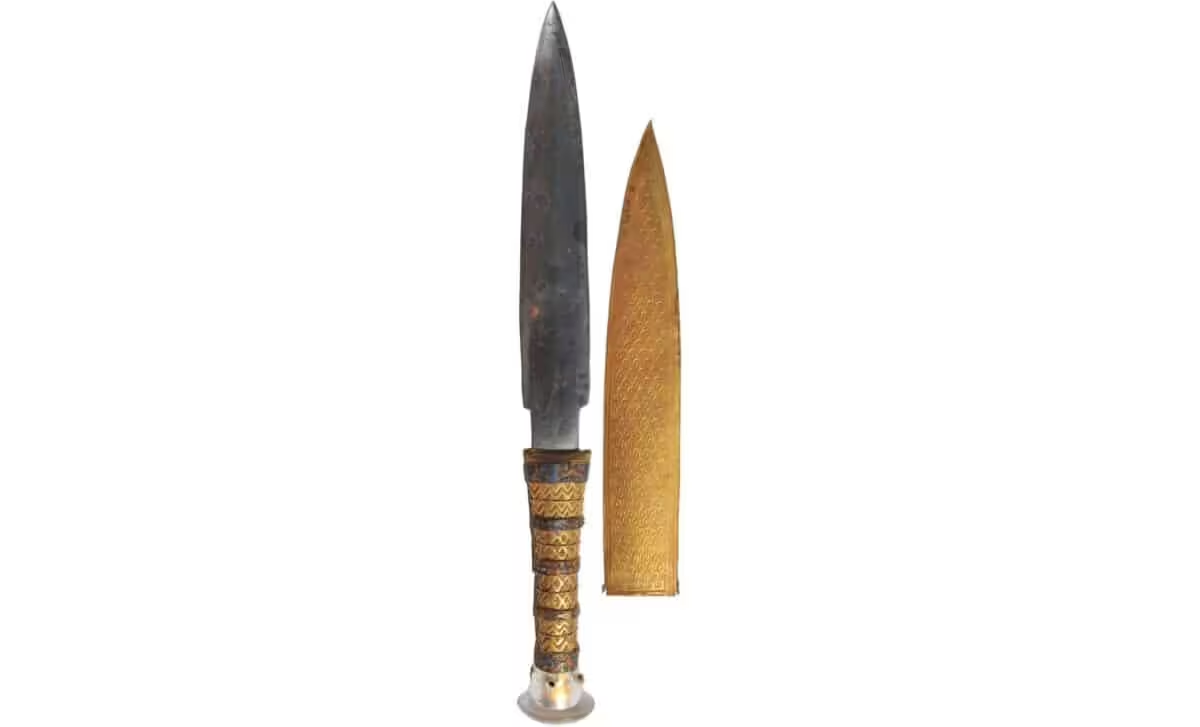
Discovered in 1925 within the mummy’s wrappings, the dagger combined a meteoritic iron blade with an ornate gold handle and sheath, underscoring the ancient Egyptian appreciation for celestial metal in elite objects.
While the Greek rings have not been directly linked to Egyptian material, the trade‑based hypothesis remains plausible given the scarcity of local meteorite sources.
Decline of Meteoritic Iron after the Late Bronze Age
The study also highlights a shift in metal usage during the Late Bronze Age. Meteoritic iron, identifiable by its nickel content, appears exclusively in finely crafted rings, whereas smelted iron from terrestrial ores was employed for more utilitarian items.
No meteoritic iron rings have been documented in the region after the 12th century B.C., a disappearance that coincides with the widespread societal disruptions of the Late Bronze Age collapse and the fall of Mycenaean palace culture in southern Greece.
This article has been fact checked for accuracy, with information verified against reputable sources. Learn more about us and our editorial process.
Last reviewed on .
Article history
- Latest version
Reference(s)
- Gounelle, Matthieu., et al. “Iron in Greece in the second millennium B.C.E..” Journal of Archaeological Science, vol. 192, August 1, 2026, pp. 106622 Elsevier BV, doi: 10.1016/j.jas.2026.106622. <https://www.sciencedirect.com/science/article/abs/pii/S0305440326001524?via%3Dihub>.
Cite this page:
- Posted by Zara Tariq