Mysterious Mars Gullies May Be Carved by Dry Ice Instead of Water
New observations of Mars reveal that an unexpected force may be responsible for the planet’s most mysterious and intriguing geological formations.
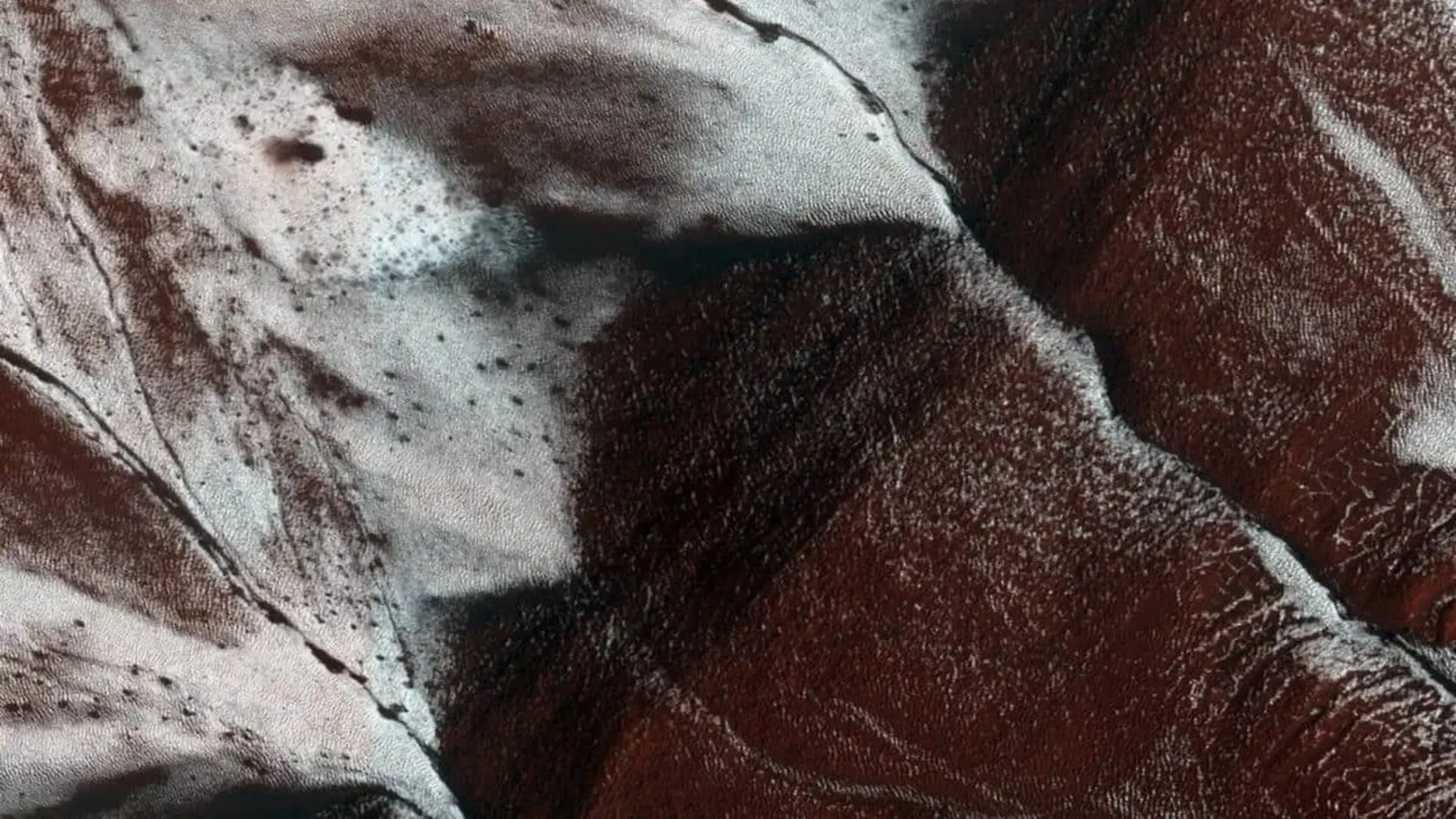
When planetary scientists first identified gully-like structures on the Martian surface over two decades ago, the findings sparked intense debate about the Red Planet’s recent geological past. These features, characterized by narrow channels and fan-shaped debris aprons, bore a striking resemblance to landforms on Earth carved by liquid water. Early hypotheses suggested that these formations were the result of groundwater discharge, melting snow, or the thawing of ancient subsurface ice.
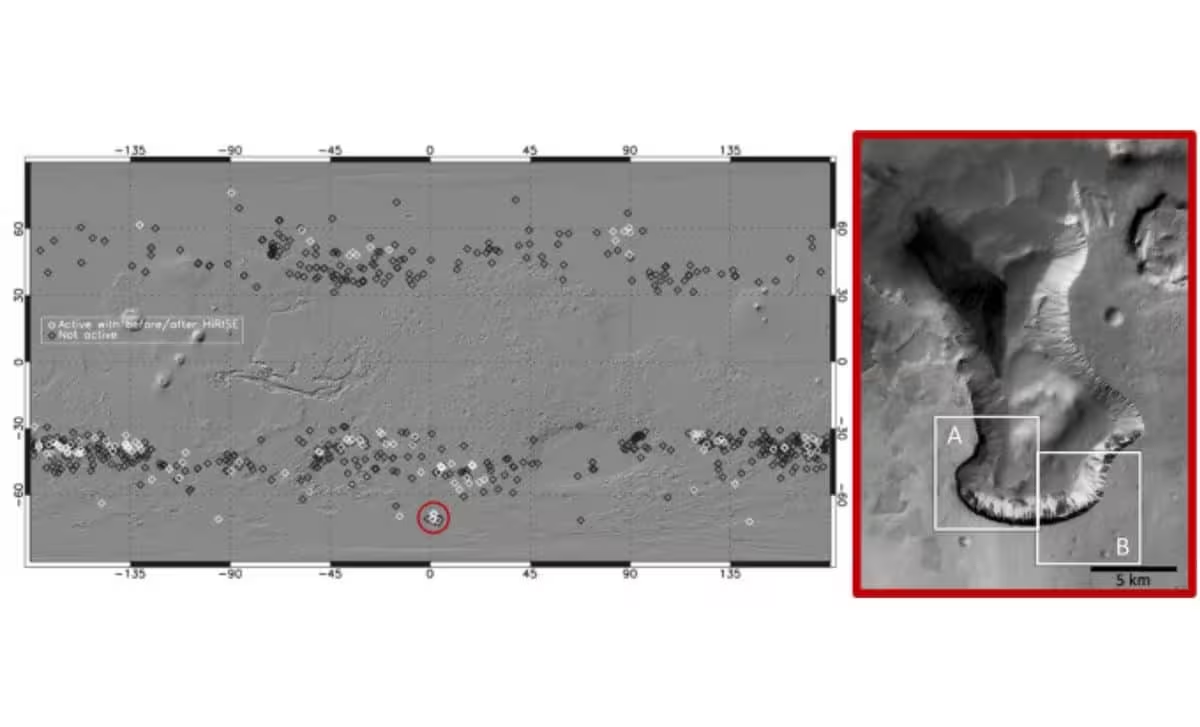
However, long-term monitoring from orbit has challenged the notion that liquid water is the primary architect of these landscapes. Researchers have observed gullies undergoing active changes during periods when Martian temperatures remain far below the freezing point of water. A new preprint study—currently undergoing peer review—shifts the focus toward seasonal dry ice as the driving force behind these modern geological shifts in Sisyphi Cavi, a region near the planet’s south pole.
Dry Ice Cycles Overturn Previous Assumptions
The mystery of Martian gullies deepened following imagery from NASA’s Mars Global Surveyor in 2000, which revealed evidence of relatively recent erosion. While initial theories favored water-based activity, subsequent data from NASA’s Mars Reconnaissance Orbiter (MRO) showed that these slopes were not merely historical relics; they were evolving in real-time. By 2014, researchers had documented active changes at dozens of monitored sites, noting that these events consistently correlated with the presence of seasonal carbon dioxide frost.
On Mars, the thin, carbon-dioxide-rich atmosphere undergoes a dramatic transformation during the frigid polar winter, depositing solid dry ice directly onto the surface. As solar radiation increases, this ice sublimates, transitioning directly from a solid state to a gas. This phase change bypasses the liquid stage entirely, yet the energetic release of gas can physically displace soil and rock, mimicking the erosive patterns typically attributed to flowing fluids.
Spectral Data Points to Atmosphere, Not Aquifers
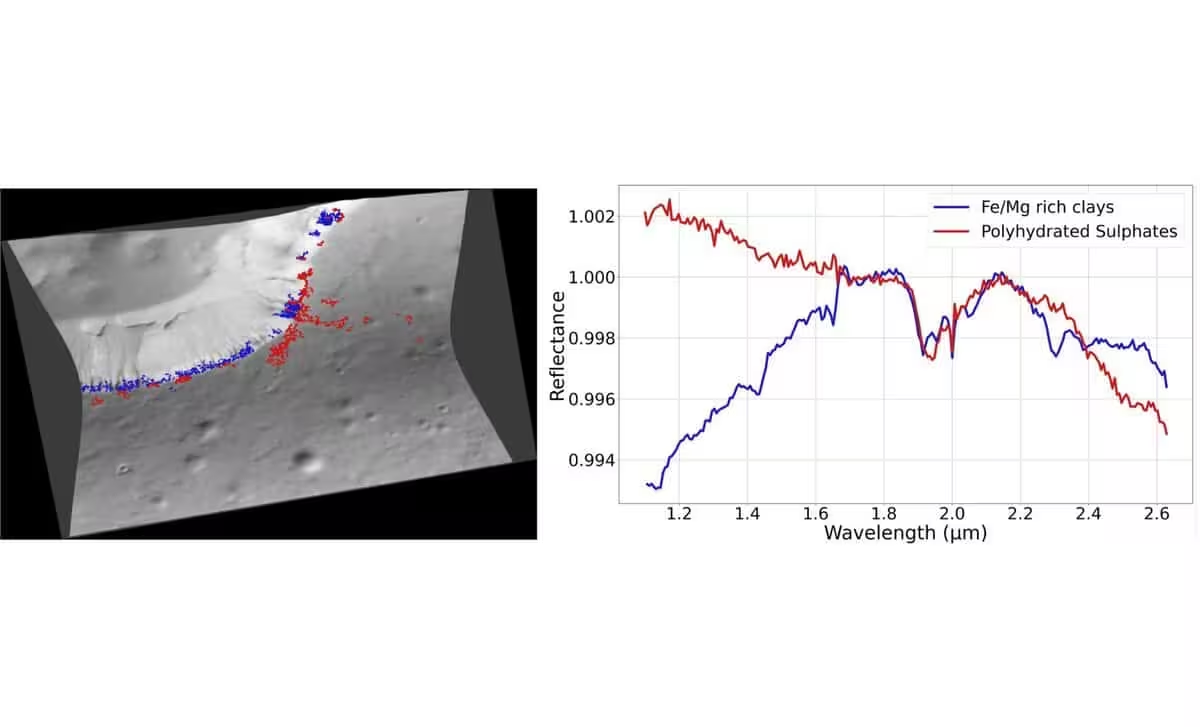
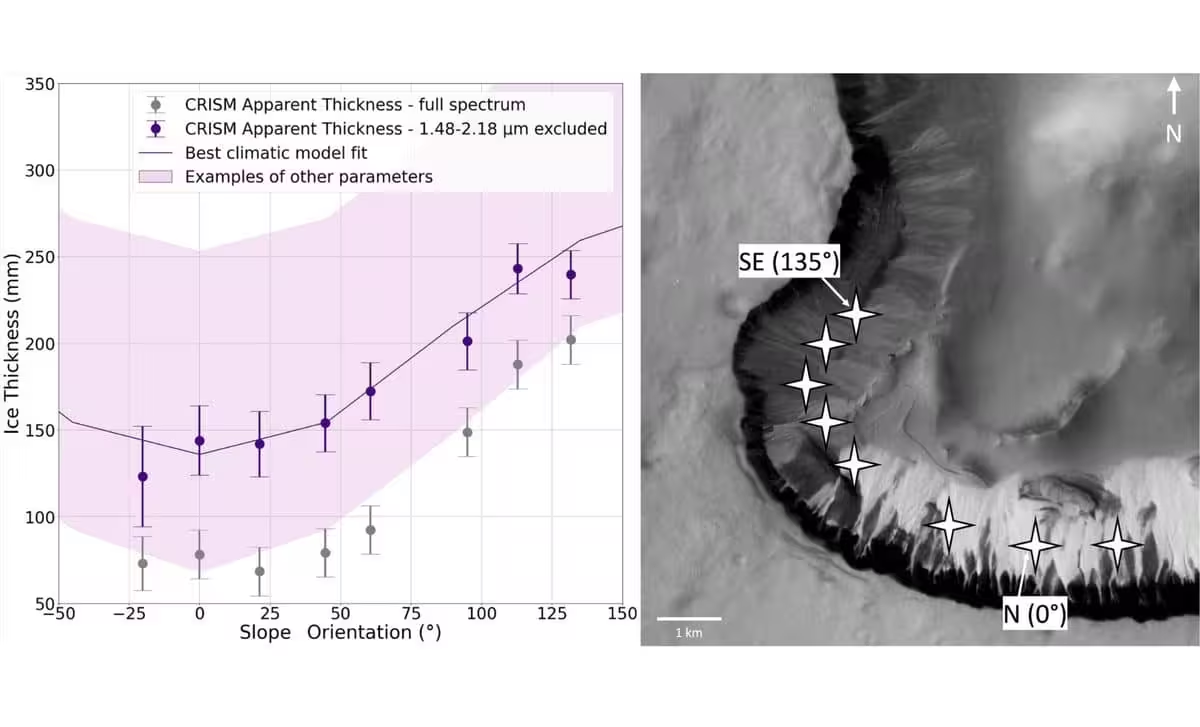
To test this mechanism, a team led by researchers at Université Paris-Saclay examined the Sisyphi Cavi region using infrared spectrometers—CRISM and OMEGA—aboard NASA and ESA orbiters. These instruments allow scientists to identify the unique chemical signatures of materials on the surface. The data revealed a clear abundance of carbon dioxide ice during the peak of gully activity in late spring, but found no evidence of independent water ice deposits.
While the team identified signatures of sulfate salts and clay minerals, these were primarily located on nearby plateaus rather than within the active channels. Such minerals are often associated with liquid water in other contexts, but their distribution here suggests they were simply exposed by erosion rather than acting as a lubricant for liquid flow. According to reporting by ZME Science, the lack of liquid water evidence reinforces the case for a dry, atmospheric process.
The Physics of Gas-Lubricated Avalanches
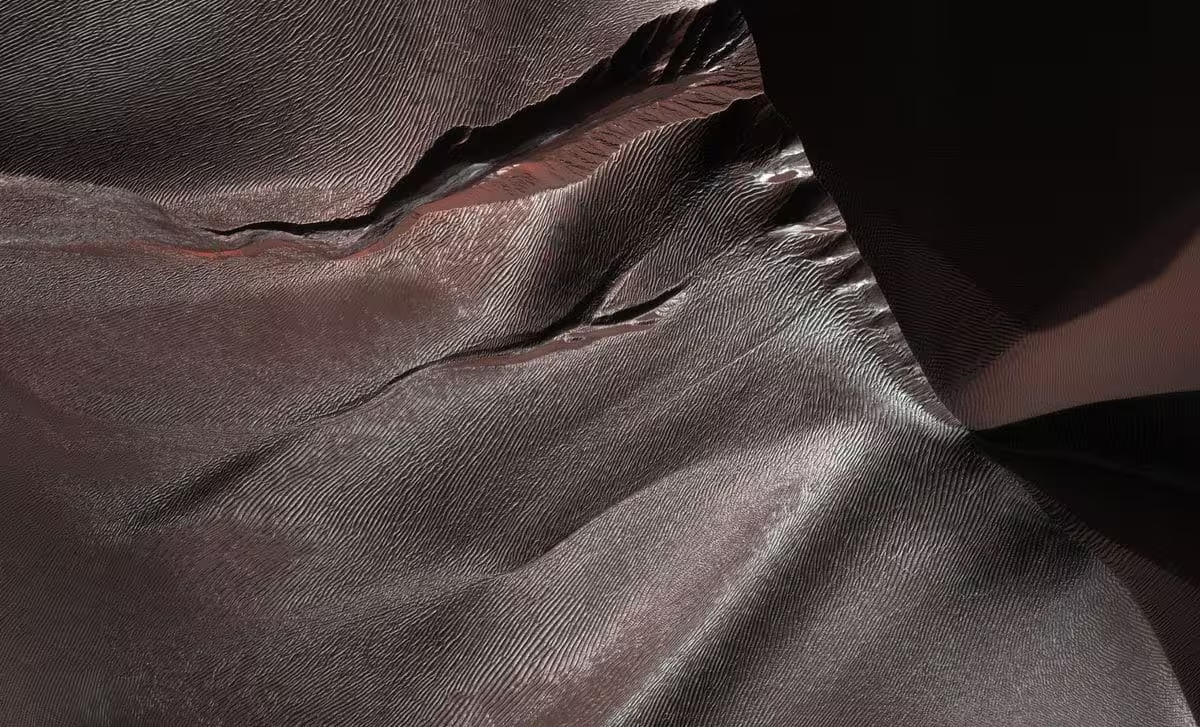
The research team proposes that as dry ice sublimates within the sediment, the trapped gas acts as a lubricant. By infiltrating the loose soil, this gas may reduce the friction between grains, allowing mixtures of rock and dust to cascade downhill in a fluid-like avalanche. This “air-hockey” effect could explain how debris is transported across the surface to form the observed fan-shaped deposits.
This study does not suggest that water played no role in Mars’ ancient history; instead, it highlights the complex and deceptive nature of the planet’s modern-day surface activity. By distinguishing between ancient water-carved features and contemporary dry-ice-driven erosion, scientists are gaining a more nuanced understanding of how Mars continues to reshape its own face through exotic, non-aqueous means.
This article has been fact checked for accuracy, with information verified against reputable sources. Learn more about us and our editorial process.
Last reviewed on .
Article history
- Latest version
Reference(s)
- Leclef, Apolline. “Properties of Seasonal Ice at Sisyphi Cavi and Implications for Current Modification of Martian Gullies.” arXiv.org, doi: 10.1016/j.pss.2026.106341. <https://arxiv.org/abs/2609.03885>.
- Cermak, Alicia. “Mars Global Surveyor - NASA Science.”, December 21, 2017 NASA <https://science.nasa.gov/mission/mars-global-surveyor/>.
- Cermak, Alicia. “Mars Reconnaissance Orbiter - NASA Science.”, December 5, 2017 NASA <https://science.nasa.gov/mission/mars-reconnaissance-orbiter/>.
- Strickler, Jordan. “Scientists Thought Water Carved These Gullies on Mars. Now They Suspect Something Much Stranger.”, October 19, 2026 ZME Science <https://www.zmescience.com/science/news-science/mars-gullies-carved-by-co2/>.
Cite this page:
- Posted by David Anderson