NASA Is Developing A New Way To Use Alien Atmospheres As A Cosmic Brake
NASA is partnering with startup Inversion to test a new spacecraft maneuver that could revolutionize how we enter orbit around other worlds.
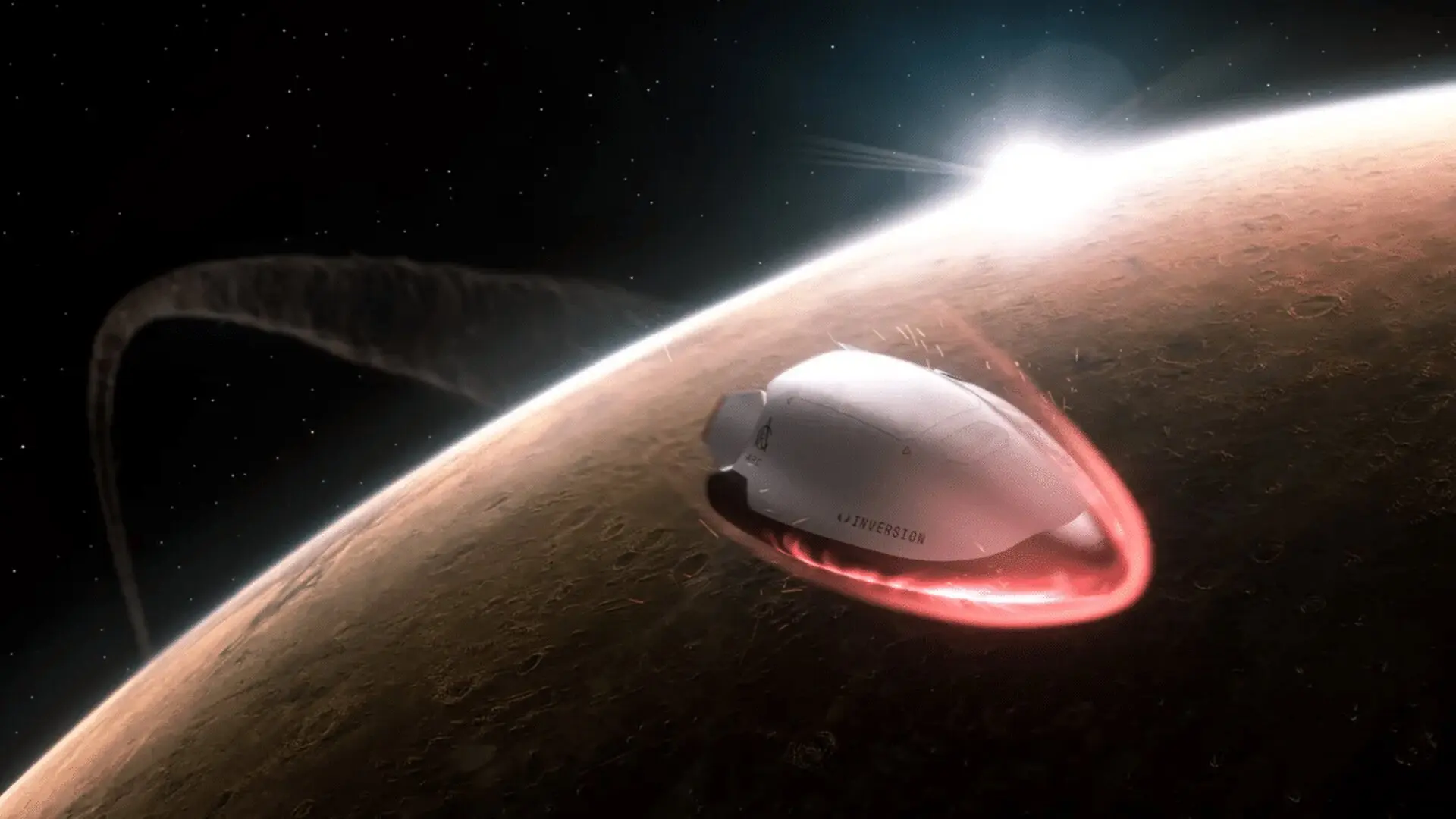
NASA has entered into a strategic collaboration with California-based startup Inversion to refine a cutting-edge maneuver that could transform how we explore the solar system. By leveraging planetary atmospheres to slow down spacecraft—a process known as aerocapture—the space agency aims to slash the massive fuel requirements typically needed for missions to destinations like Mars, Venus, and Titan.
Rethinking Orbital Insertion
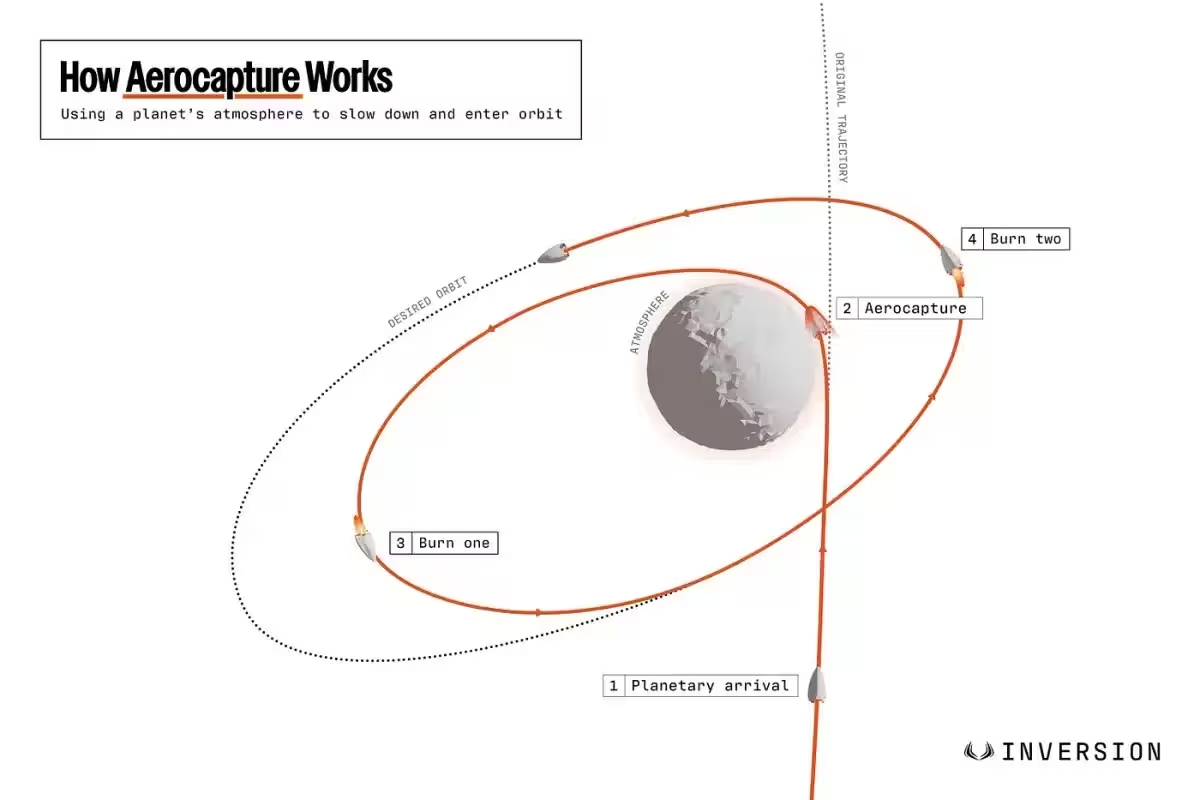
The primary barrier to deep-space exploration often isn’t the journey itself, but the arrival. To transition from a high-speed interplanetary trajectory into a stable orbit, a spacecraft must shed a significant amount of velocity. Traditionally, this is achieved through fuel-heavy rocket burns, which significantly increases launch mass and limits the volume of scientific payloads a mission can carry.
Aerocapture offers a radical alternative. Instead of relying solely on propellant, a spacecraft dips into the upper reaches of a target planet’s atmosphere, utilizing aerodynamic drag to sap its kinetic energy. While the theory has been a staple of orbital mechanics for decades, it remains an engineering tightrope walk. A vehicle must hit a precise entry corridor; descend too shallowly, and it will sail past the planet, but strike too deep, and the intense heat and atmospheric pressure could prove catastrophic.
According to reports from Universe Today, this new partnership focuses on maturing the specific technologies required to move aerocapture from a theoretical concept to a flight-ready tool, aiming to achieve orbital capture in a single, high-stakes pass through a planetary atmosphere.
Adapting Earth-Bound Tech for the Solar System
The Arc vehicle relies on sophisticated thermal protection systems and advanced guidance, navigation, and control surfaces to survive the extreme heat and pressure of hypersonic reentry. These same features are critical for aerocapture, where a spacecraft must survive the intense thermal load of an atmospheric encounter without being destroyed, only to emerge on the other side in a stable orbit.
“Our Arc spacecraft was designed to precisely control the transition from space through an atmosphere at hypersonic velocities,” said Justin Fiaschetti, Co-Founder and CEO of Inversion. “Aerocapture applies many of those same fundamental capabilities to an entirely new class of missions. We’re excited to work with NASA to demonstrate what advanced reentry technologies can enable, both at Earth and across the solar system.”
Testing Near Home
Before testing this maneuver at distant worlds, NASA and Inversion plan to conduct a demonstration closer to home. The contract emphasizes trajectory modeling, aerodynamic analysis, and vehicle design specifically for an Earth-based demonstration. By validating the control systems and thermal management in a familiar environment, engineers can refine the technology before applying it to the distinct atmospheric compositions of other planets.
While a concrete launch date remains elusive, Inversion has shown it can move quickly, having moved from inception to an orbital mission with its Ray prototype in just four years. However, the company and NASA acknowledge that landing on Earth and successfully capturing into orbit are vastly different technical challenges, requiring a level of precision that remains experimental.
The Future of Deep Space Access
The implications for future exploration are profound. Missions to Mars could carry significantly more scientific instrumentation if they didn’t have to carry the massive fuel reserves currently required for breaking. Meanwhile, the dense atmospheres of Venus and Saturn’s moon, Titan, present ideal, albeit challenging, environments for using aerocapture to shed excess velocity.
Although this technology remains in the developmental phase, the collaboration highlights a growing trend: the shift toward using the natural environment of a target destination as a primary component of a spacecraft’s design. If successful, the atmosphere could evolve from a dangerous hurdle to a resource, effectively acting as an orbital brake for the next generation of interplanetary voyagers.
This article has been fact checked for accuracy, with information verified against reputable sources. Learn more about us and our editorial process.
Last reviewed on .
Article history
- Latest version
Reference(s)
- Tomaswick, Andy. “How Inversion and NASA Plan to Unlock Interplanetary Aerocapture MB edits.”, October 21, 2026 Universe Today <https://www.universetoday.com/articles/how-inversion-and-nasa-plan-to-unlock-interplanetary-aerocapture-mb-edits>.
Cite this page:
- Posted by Karan Das