Scientists May Have Finally Solved the Mystery of the 300 Million Year Old Tully Monster
The mysterious 300-million-year-old Tully monster continues to baffle scientists. Discover why this bizarre creature remains an evolutionary enigma today.
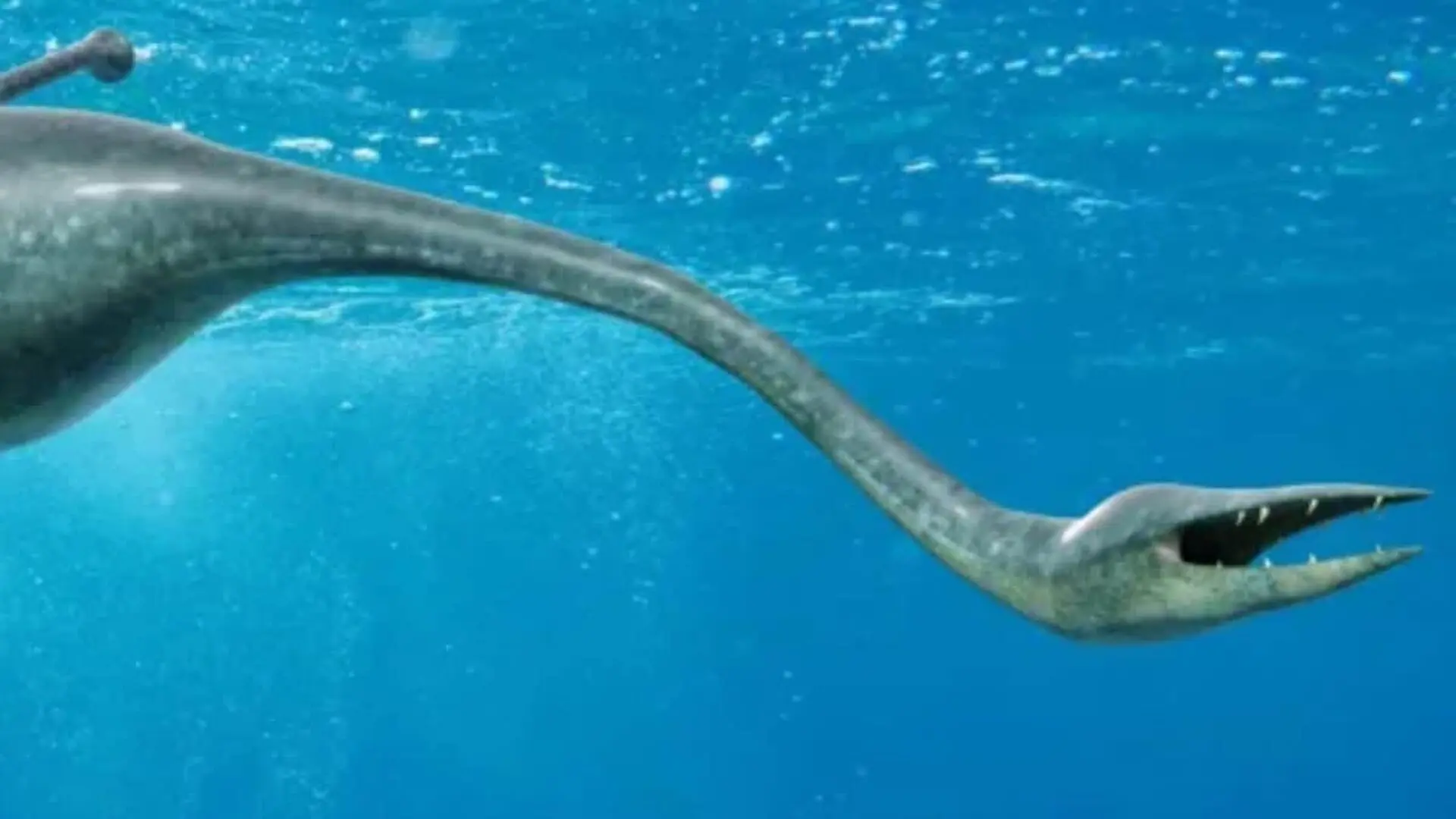
A bizarre, alien-like creature that haunted the shallow waters of Illinois 300 million years ago continues to challenge the foundations of evolutionary biology. Known as the Tully Monster (Tullimonstrum gregarium), this soft-bodied enigma has spent decades resisting classification, with scientists split on whether the creature was an obscure invertebrate or a primitive relative of fish.
An Evolutionary Puzzle
The Tully Monster, which typically measured between 6 and 35 centimeters, presents a baffling anatomical montage. It possessed a streamlined, worm-like body, a tail reminiscent of a fin, and a rigid bar extending from its head with an eye at each end. Most distinctively, a long, slender proboscis tipped with pincer-like jaws protruded from its front. When first discovered in the Mazon Creek fossil beds in 1966, researchers were left without a clear analog in the modern world, as noted by Victoria McCoy, a paleontologist at the University of Wisconsin, Milwaukee.
Chemical Signatures Reveal Hidden Clues
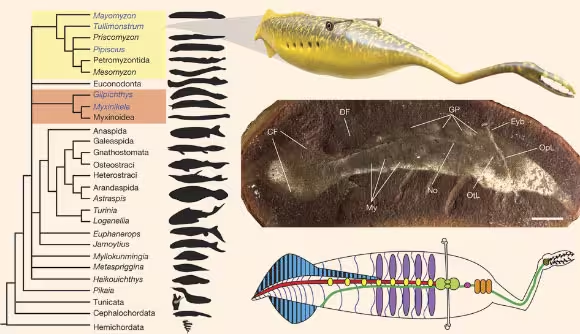
For years, the debate remained locked in a stalemate, with competing theories labeling the creature a snail, a worm, or a chordate—an animal possessing a notochord or backbone. A 2016 anatomical analysis led by McCoy suggested the creature was a vertebrate, but a follow-up study in 2017 challenged those findings. To move beyond the limitations of visual observation, McCoy collaborated with Jasmina Wiemann of Yale University to conduct a chemical analysis of 32 fossils from the Mazon Creek collection.
By studying the chemical degradation of soft tissues, the team aimed to distinguish between chordates and invertebrates. Wiemann noted that, despite the age of the fossils, distinct biological markers remained. Their analysis grouped the Tully Monster firmly within the chordate lineage, leading researchers to hypothesize that the creature may be related to modern jawless fish such as lampreys and hagfish, potentially using its pincer-like snout to forage for food along the seabed.
Scientific Caution Persists
Despite the sophisticated chemical evidence, some experts remain unconvinced. Maria McNamara of University College Cork argues that the unique preservation environment of the Mazon Creek site could potentially skew chemical results. Previous research by McNamara, focusing on the metallic composition of the creature’s eyes, pointed toward it being a cephalopod—a group that includes modern octopuses and squids.
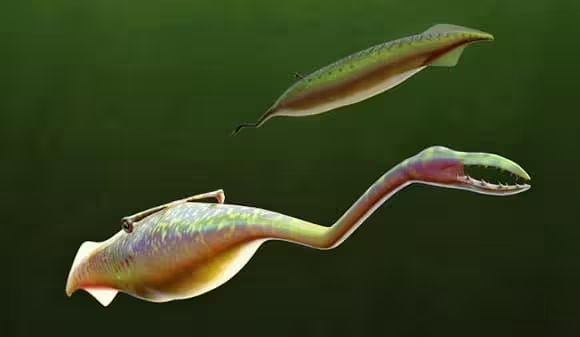
Robert Sansom of the University of Manchester, a co-author of the 2017 rebuttal study, emphasizes that the Tully Monster represents a morphological outlier regardless of its classification. “If it’s a mollusc, it’s a weird mollusc. If it’s a vertebrate, it’s a weird vertebrate,” he noted.
Ultimately, solving the mystery of the Tully Monster may require the discovery of additional, related fossils to provide context for its strange evolutionary trajectory. Until then, the creature remains one of paleontology’s most enduring and peculiar anomalies.
This article has been fact checked for accuracy, with information verified against reputable sources. Learn more about us and our editorial process.
Last reviewed on .
Article history
- Latest version
Reference(s)
- McCoy, Victoria E.., et al. “Chemical signatures of soft tissues distinguish between vertebrates and invertebrates from the Carboniferous Mazon Creek Lagerstätte of Illinois.” Geobiology, vol. 18, no. 5, April 28, 2020, pp. 560-565. Wiley, doi: 10.1111/gbi.12397. <https://onlinelibrary.wiley.com/doi/10.1111/gbi.12397>.
Cite this page:
- Posted by Hassan Raza