Hubble Finds Exploding Stars May Be Blocking The Light That Shaped The Early Universe
Hubble observations reveal that powerful galactic winds from exploding stars may unexpectedly trap radiation, hindering the early universe’s reionization.
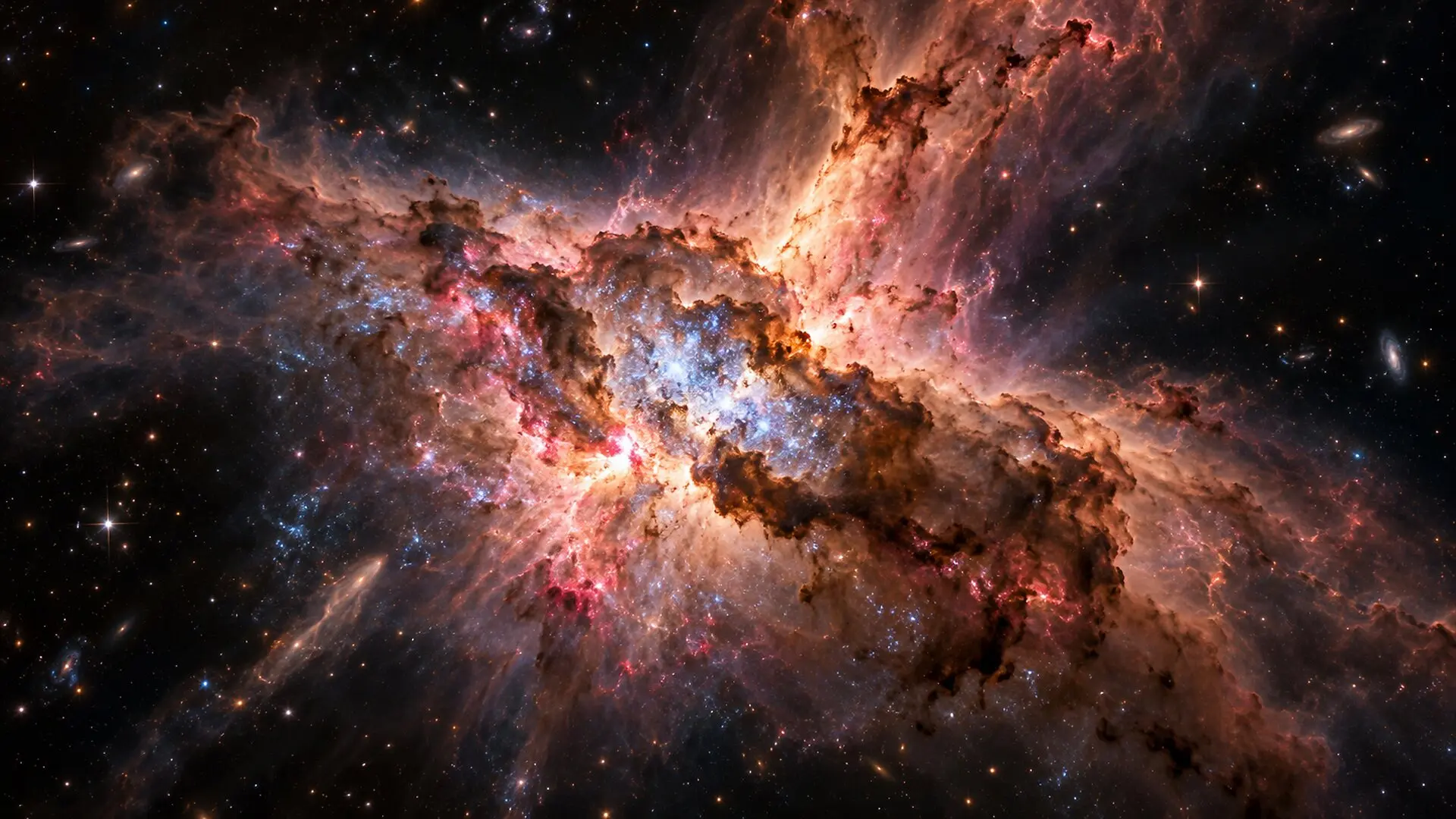
New research using the Hubble Space Telescope suggests that the mechanisms allowing radiation to escape from early galaxies may be more counterintuitive than previously assumed. While it has long been standard theory that supernova-driven winds carve out pathways for ionizing light to reach intergalactic space, a study of six compact starburst galaxies reveals that more powerful outflows are actually linked to a decrease in the amount of escaping radiation.
The findings, published in Nature Astronomy, indicate that radiation leakage is most efficient during an earlier phase, dominated by the output of young, massive stars before the intense, material-heavy winds of a full-scale supernova outburst fully develop. As these outflows grow, they appear to bring enough neutral gas and dust with them to act as a barrier, rather than a gateway, for ionizing photons.
Rethinking the Drivers of Reionization
During the universe’s first billion years, the cosmos transitioned from a state filled with neutral hydrogen to one of ionized gas—a process known as reionization. For this to occur, ultraviolet photons produced by stars had to successfully escape their host galaxies. Astronomers have typically focused on how galactic feedback, particularly from exploding stars, might clear away the dense interstellar medium to allow this light to permeate the intergalactic void.
Lead researcher Cody Carr, now at the University of Michigan, notes that the observed behavior of these galaxies suggests a more nuanced reality. “Basically, how these galaxies were leaking ionizing radiation isn’t what we thought,” Carr explained. By analyzing six nearby, compact galaxies as analogs for their ancient counterparts, the team identified that the highest escape fractions occurred in the youngest stellar populations, where radiation pressure from stars—rather than the force of supernovae—likely created the clearest exit routes.
Spectral Analysis of Galactic Outflows
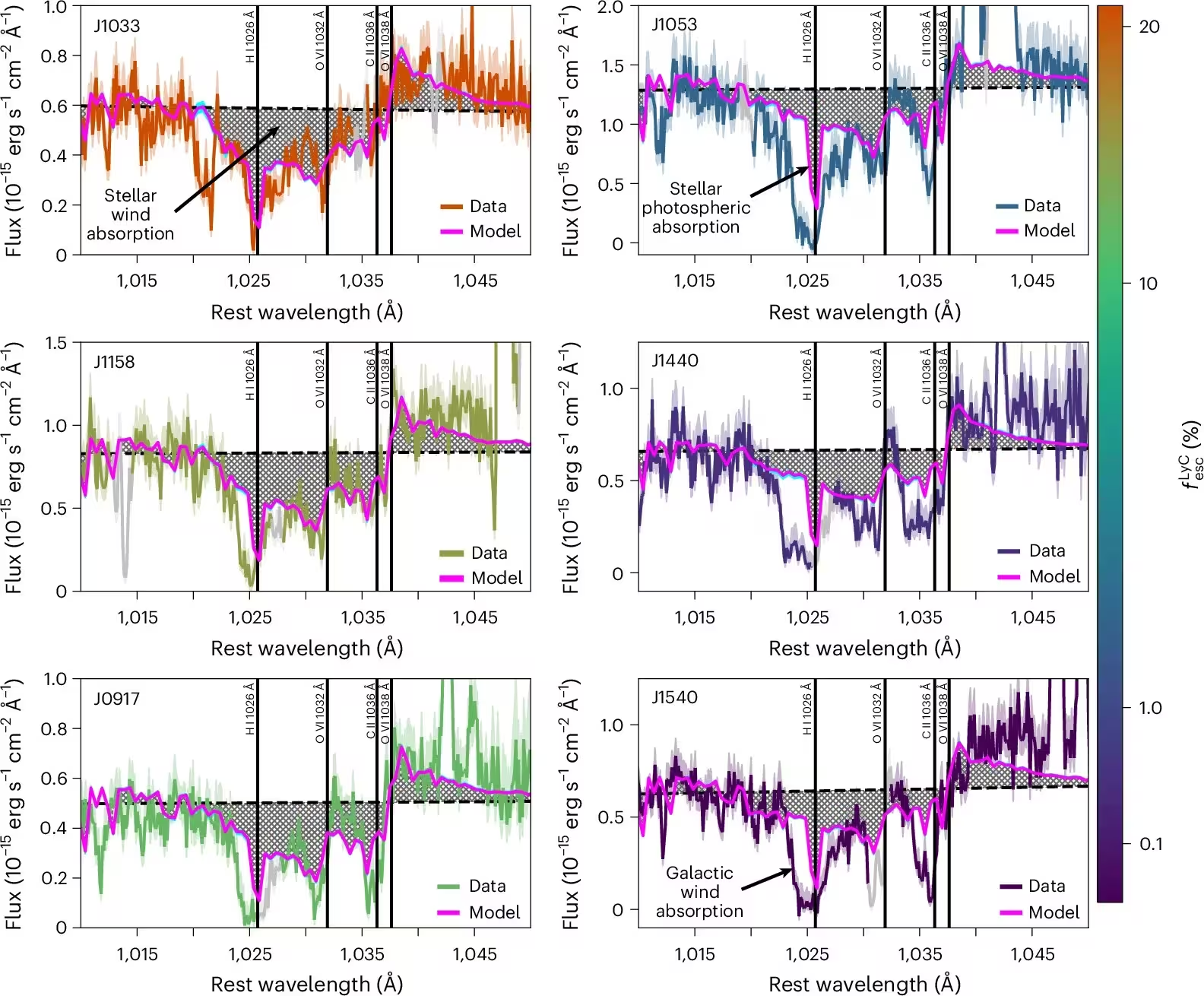
The research team, which included contributors from Zhejiang University and Johns Hopkins University, utilized Hubble’s Cosmic Origins Spectrograph to break down the ultraviolet light of their subjects. By isolating the signatures of stars from the absorption features of surrounding gas, they were able to trace the velocity and density of the outflows.
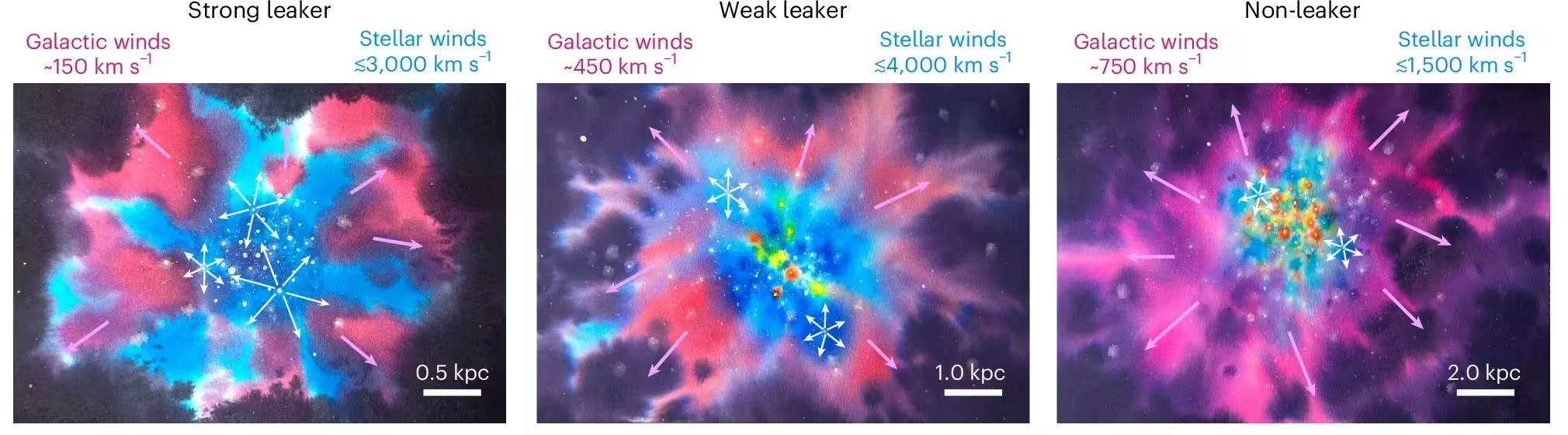
Their data indicated that as the starburst progressed and the galactic winds accelerated, the column density of neutral hydrogen along the line of sight increased. This dense, wind-swept material effectively smothered the escaping Lyman continuum (LyC) radiation. Even when the winds appeared to be actively “blowing,” they were depositing enough neutral gas to increase local absorption, effectively trapping the ionizing light within the galaxy.
Implications for Cosmological Models
This discovery challenges the current generation of simulations, which often predict that radiation escape reaches its peak only after supernova activity becomes widespread. The study suggests that if these local galaxies are accurate proxies for the early universe, then theorists may need to adjust how they model stellar feedback and gas dynamics in their simulations.
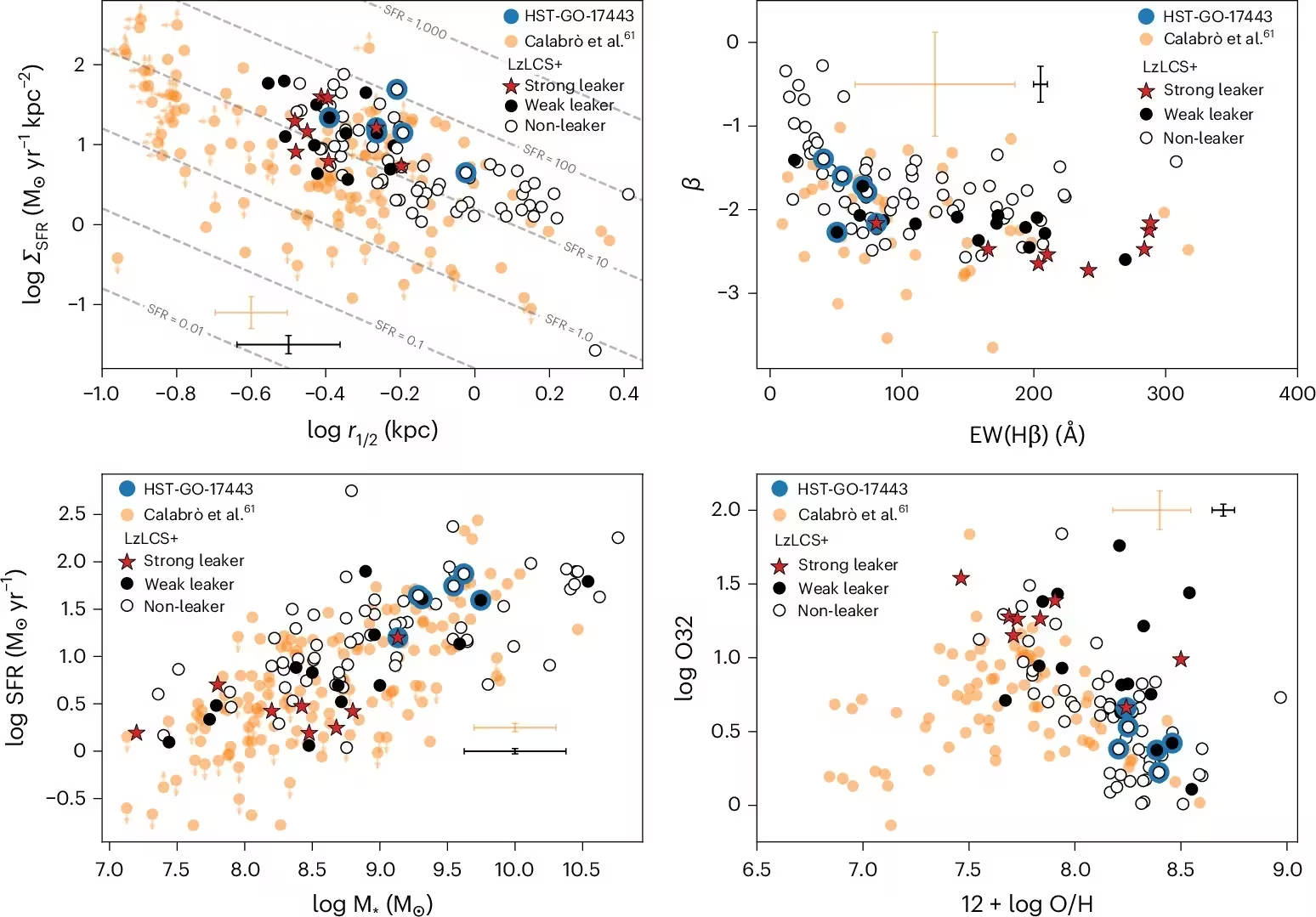
While the team emphasizes that their sample of six galaxies is limited and does not represent the full diversity of galactic evolution, the consistency of the results across their targets provides a compelling argument for an early-window escape mechanism. Future observations, particularly those targeting a broader range of evolutionary stages, will be essential to determine if this short, initial burst of radiation was indeed the primary driver behind the reionization of the early universe.
By moving beyond the assumption that galactic winds are universally helpful for radiation escape, this work opens a new chapter in our understanding of how the first galaxies lit up the dark, neutral hydrogen-filled void of the early cosmos.
Key Research and Citations
- Witnessing the onset of reionization through Lyman-α emission at redshift 13 (Nature, 2025)
- Most of the photons that reionized the Universe came from dwarf galaxies (Nature, 2024)
- The Low-Redshift Lyman Continuum Survey – Unveiling the ISM properties of low-z Lyman-continuum emitters (Astronomy & Astrophysics, 2022)
- The Low-redshift Lyman Continuum Survey. I. New, Diverse Local Lyman Continuum Emitters (The Astrophysical Journal Supplement Series, 2022)
- Wind from a starburst galaxy nucleus (Nature, 1985)
This article has been fact checked for accuracy, with information verified against reputable sources. Learn more about us and our editorial process.
Last reviewed on .
Article history
- Latest version
Reference(s)
- Carr, Cody. “Lyman continuum escape during the onset of galactic winds in compact starbursts - Nature Astronomy.”, October 15, 2026, pp. 1-9. Nature, doi: 10.1038/s41550-026-02999-z. <https://www.nature.com/articles/s41550-026-02999-z>.
- Witstok, Joris. “Witnessing the onset of reionization through Lyman-α emission at redshift 13 - Nature.”, vol. 639, no. 8056, pp. 897-901. Nature, doi: 10.1038/s41586-025-08779-5. <https://www.nature.com/articles/s41586-025-08779-5>.
- Atek, Hakim. “Most of the photons that reionized the Universe came from dwarf galaxies - Nature.”, vol. 626, no. 8001, pp. 975-978. Nature, doi: 10.1038/s41586-024-07043-6. <https://www.nature.com/articles/s41586-024-07043-6>.
- Saldana-Lopez, Alberto., et al. “The Low-Redshift Lyman Continuum Survey.” Astronomy & Astrophysics, vol. 663, July 12, 2022, pp. A59 EDP Sciences, doi: 10.1051/0004-6361/202141864. <https://doi.org/10.1051/0004-6361/202141864>.
- Flury, Sophia R.., et al. “The Low-redshift Lyman Continuum Survey. I. New, Diverse Local Lyman Continuum Emitters.” The Astrophysical Journal Supplement Series, vol. 260, no. 1, April 21, 2022, pp. 1 American Astronomical Society, doi: 10.3847/1538-4365/ac5331. <https://doi.org/10.3847/1538-4365/ac5331>.
- Chevalier, R.. “Wind from a starburst galaxy nucleus - Nature.”, vol. 317, no. 6032, pp. 44-45. Nature, doi: 10.1038/317044a0. <https://www.nature.com/articles/317044a0>.
Cite this page:
- Posted by Aisha Ahmed