Webb’s Mysterious Little Red Dots May Be Early Black Holes Caught In A Growth Spurt
New supercomputer simulations suggest dense gas and intense radiation may explain the origins of mysterious supermassive black holes in the early universe.
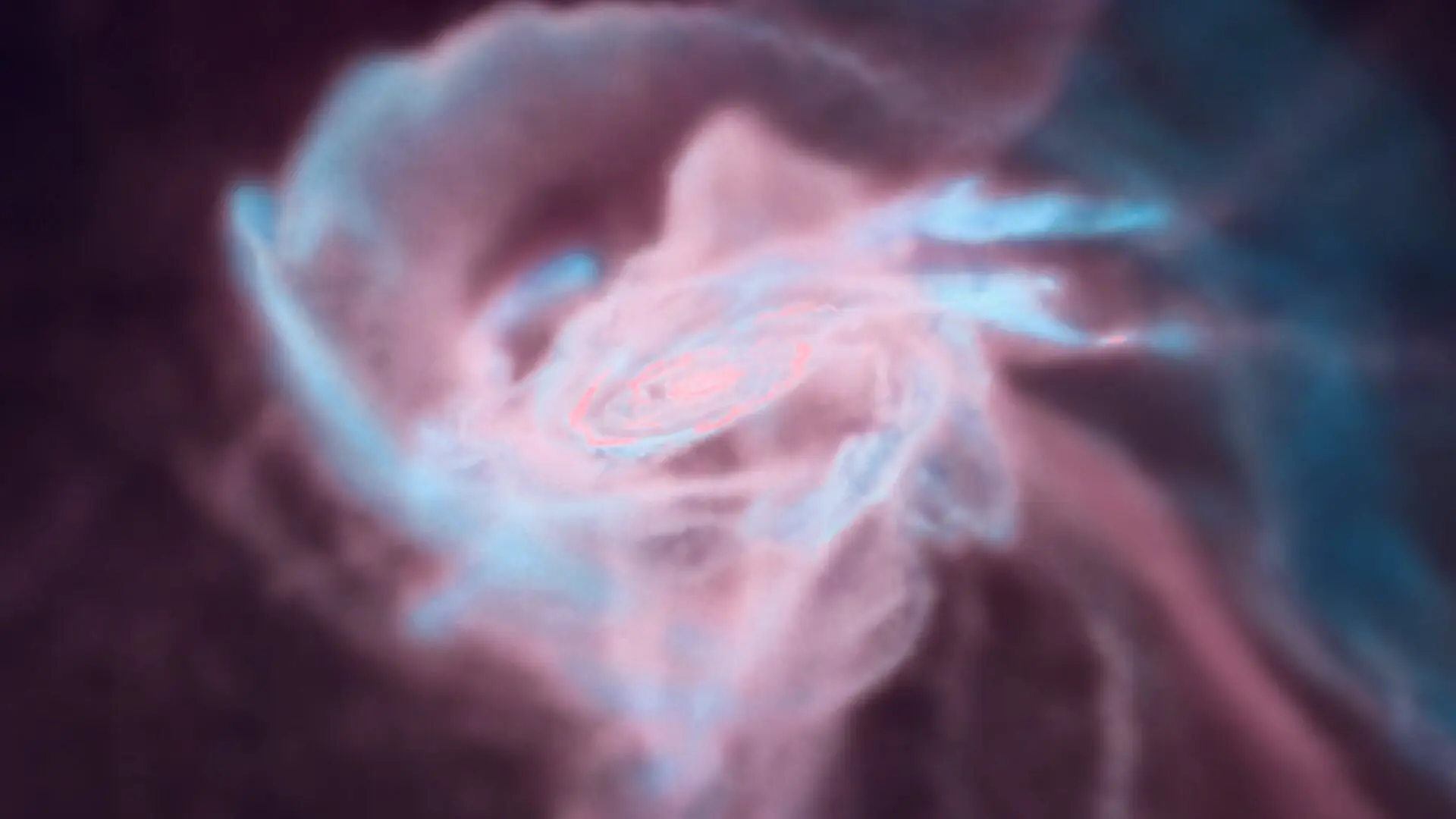
Among the most perplexing targets identified by the James Webb Space Telescope (JWST) are the so-called “Little Red Dots”—compact, crimson-hued objects scattered across the early universe. These entities have long confounded researchers, exhibiting broad hydrogen emission lines and inferred masses that defy standard models of galaxy evolution. New supercomputer simulations now suggest these enigmatic dots may represent a critical, fleeting phase in the rapid development of supermassive black holes.
The research, published in Nature, utilized the ATERUI III supercomputer at the National Astronomical Observatory of Japan to model how these objects emerge within the dense, turbulent environment of the infant cosmos. Led by Sunmyon Chon of the Max Planck Institute for Astrophysics, the team found that the specific signatures observed by JWST arise naturally through a sequence involving high-mass stellar precursors and extreme accretion rates.
How Ultraviolet Light Shapes the First Seeds
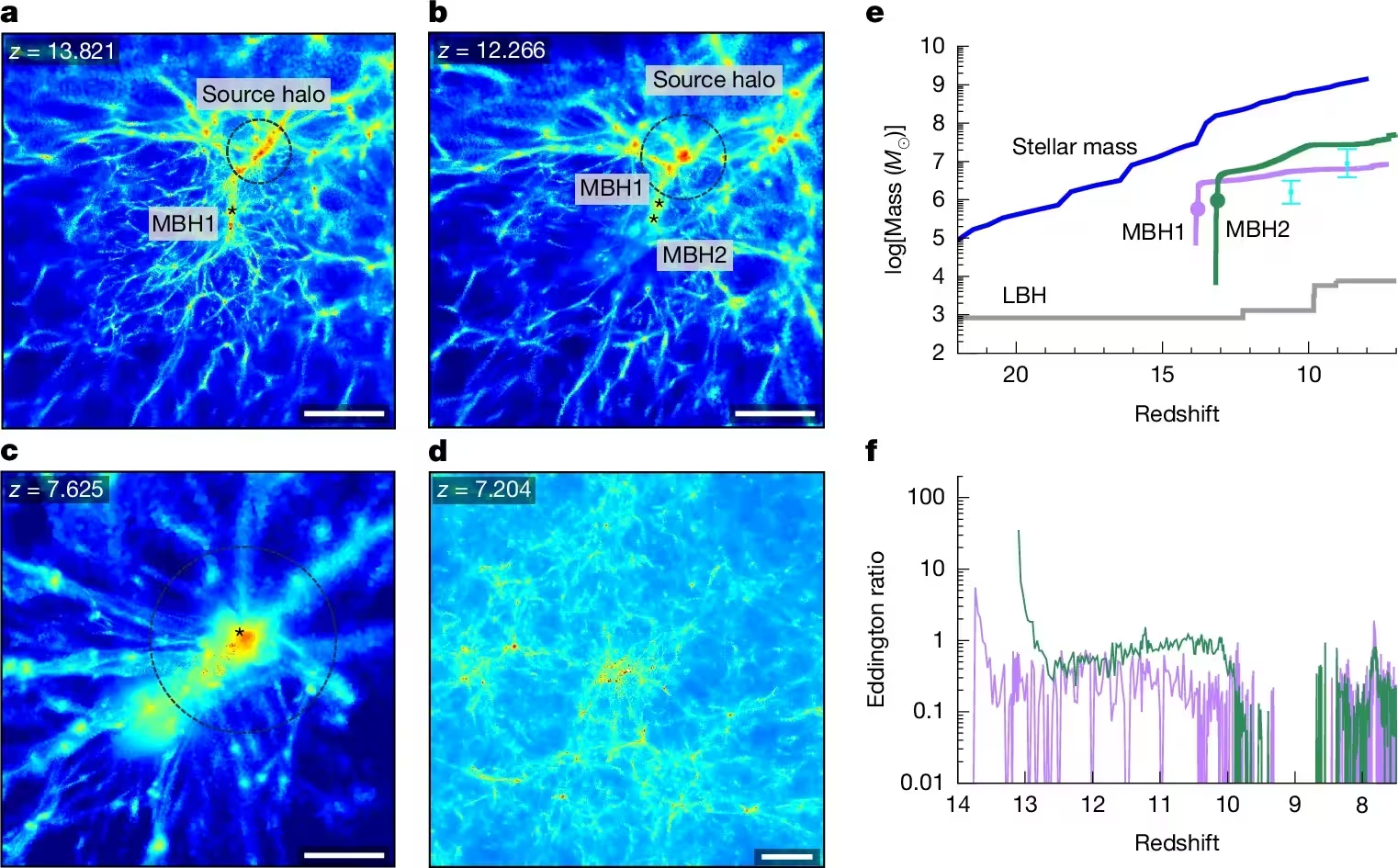
A primary challenge in cosmology is explaining how black holes reached millions or billions of solar masses within the first billion years of the Big Bang. Conventional models, which rely on the collapse of standard massive stars, struggle to account for such rapid growth because radiation feedback from these stars typically clears out the gas necessary for further expansion.
The simulations suggest a different mechanism: within overdense protoclusters, nearby star-forming galaxies generate intense far-ultraviolet radiation. This radiation disrupts molecular hydrogen, which acts as a cooling agent for gas clouds. By suppressing this cooling process, the environment prevents premature fragmentation, allowing vast reservoirs of gas to gather before collapsing into massive protostars. These stars can reach between 500,000 and 900,000 solar masses, eventually creating “heavy” black hole seeds far larger than those produced by typical stellar evolution.
Breaking the Eddington Speed Limit
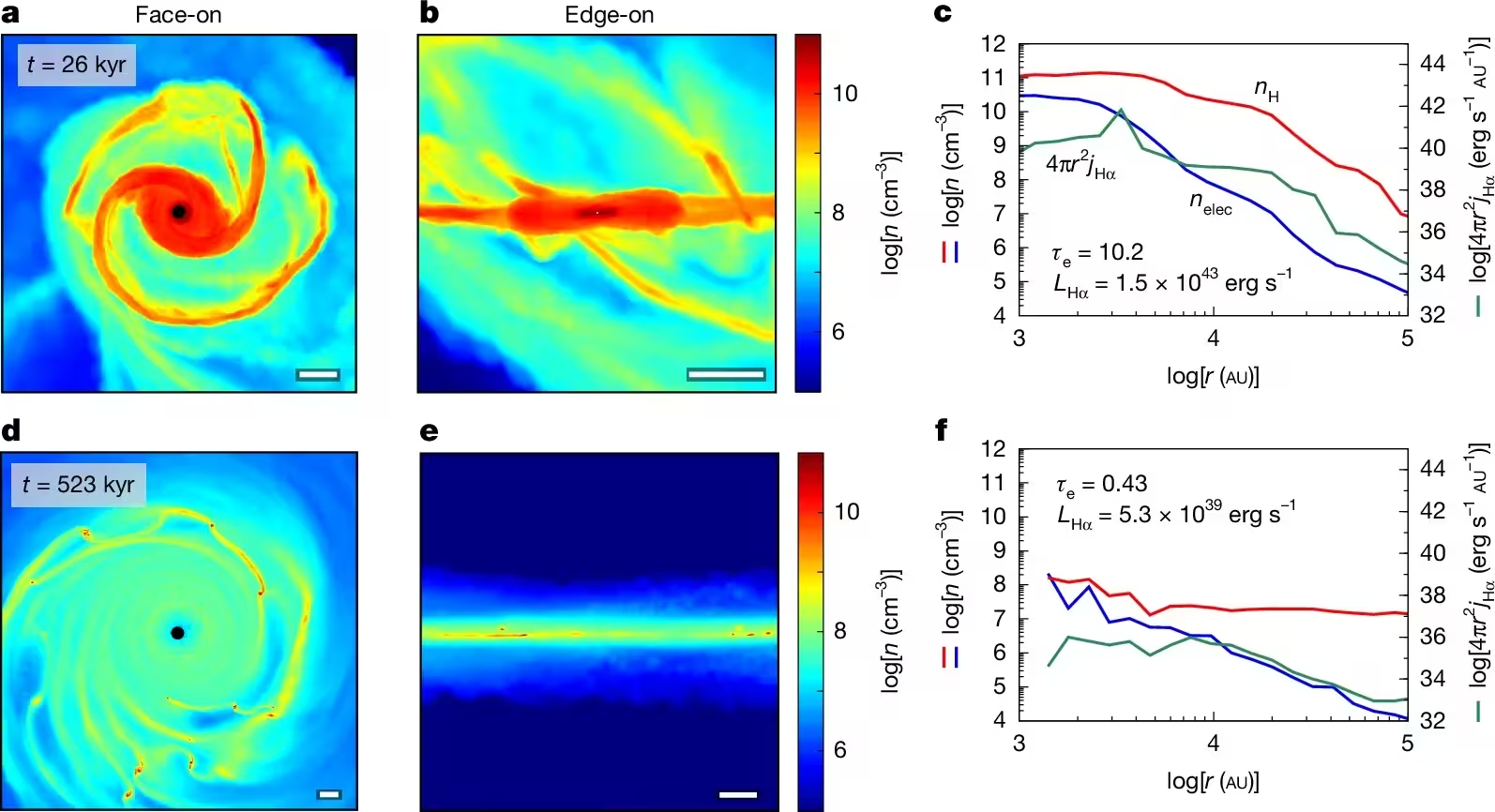
Once formed, these massive seeds require an efficient fuel supply. The study indicates that these black holes remain shrouded in optically thick, dense gas, which facilitates a period of “super-Eddington” accretion. Under standard conditions, the Eddington limit dictates that the radiation pressure from an accreting black hole eventually pushes away surrounding material, capping growth. However, in these extremely dense environments, photons become trapped and are pulled inward alongside the infalling gas, effectively bypassing the limit.
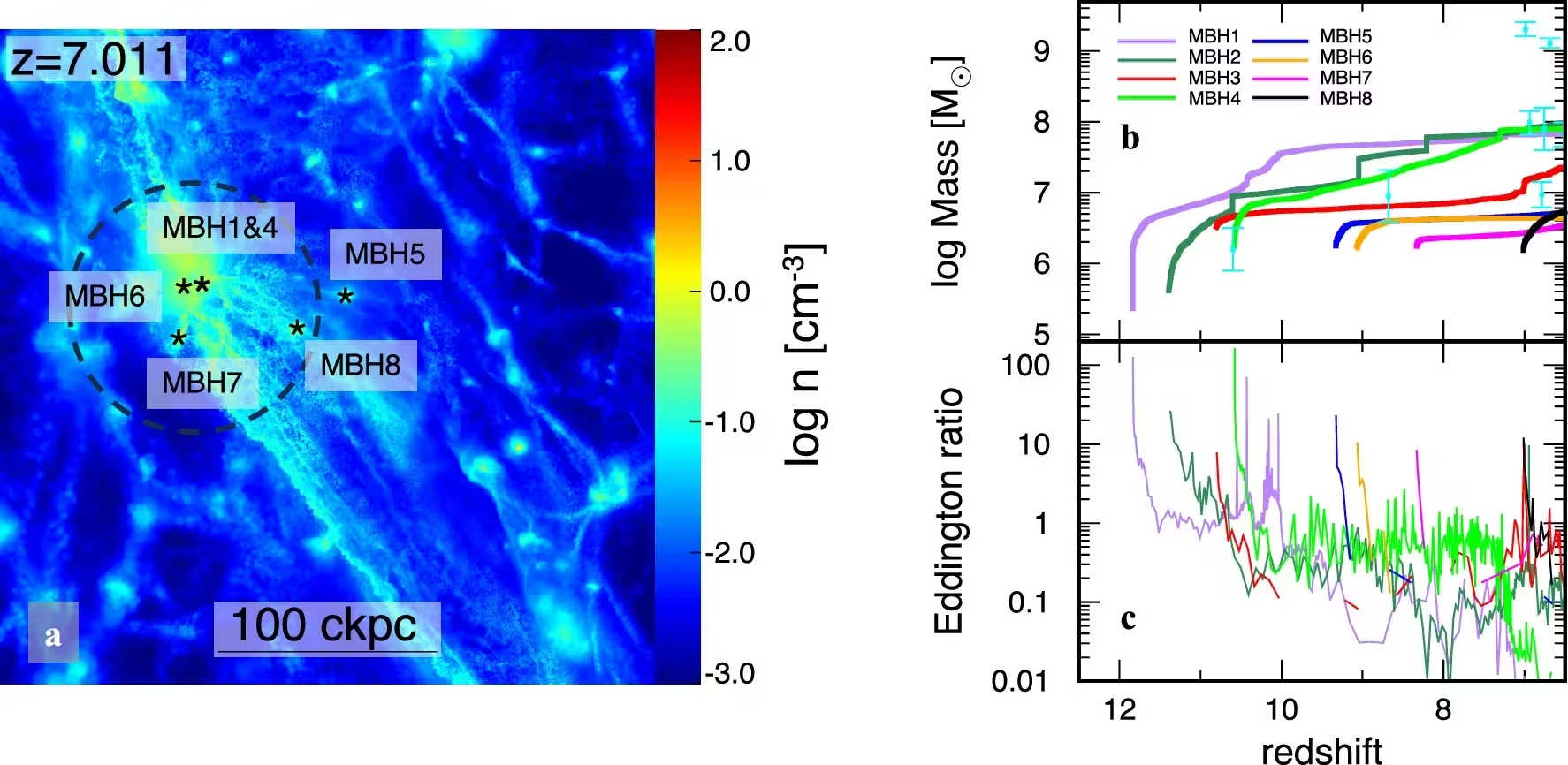
The models show these black holes accreting at tens of times the Eddington rate for roughly a million years, rapidly ballooning to millions of solar masses. This growth spurt is significantly more efficient than that of black holes originating from smaller, 800-solar-mass Population III stars, which often exhaust their fuel supply too quickly to achieve such sizes.
Matching Observed Cosmic Signatures
Crucially, the dense gaseous envelopes surrounding these simulated black holes replicate the distinctive spectral features captured by JWST. Gas densities reaching 10 billion atoms per cubic centimeter alter how light is absorbed and emitted, creating the observed Balmer absorption and broad hydrogen profiles. Furthermore, electron scattering within the thick shroud can broaden emission lines to over 1,000 kilometers per second, providing an alternative to the assumption that these lines reflect extreme orbital speeds.
As the dense envelope disperses after several hundred thousand years, the object transitions into a standard active galactic nucleus (AGN). This suggests that Little Red Dots are not a distinct class of objects but rather a transient, high-growth developmental stage common to massive black holes in the early universe.
Solving the Early Galaxy Mass Imbalance
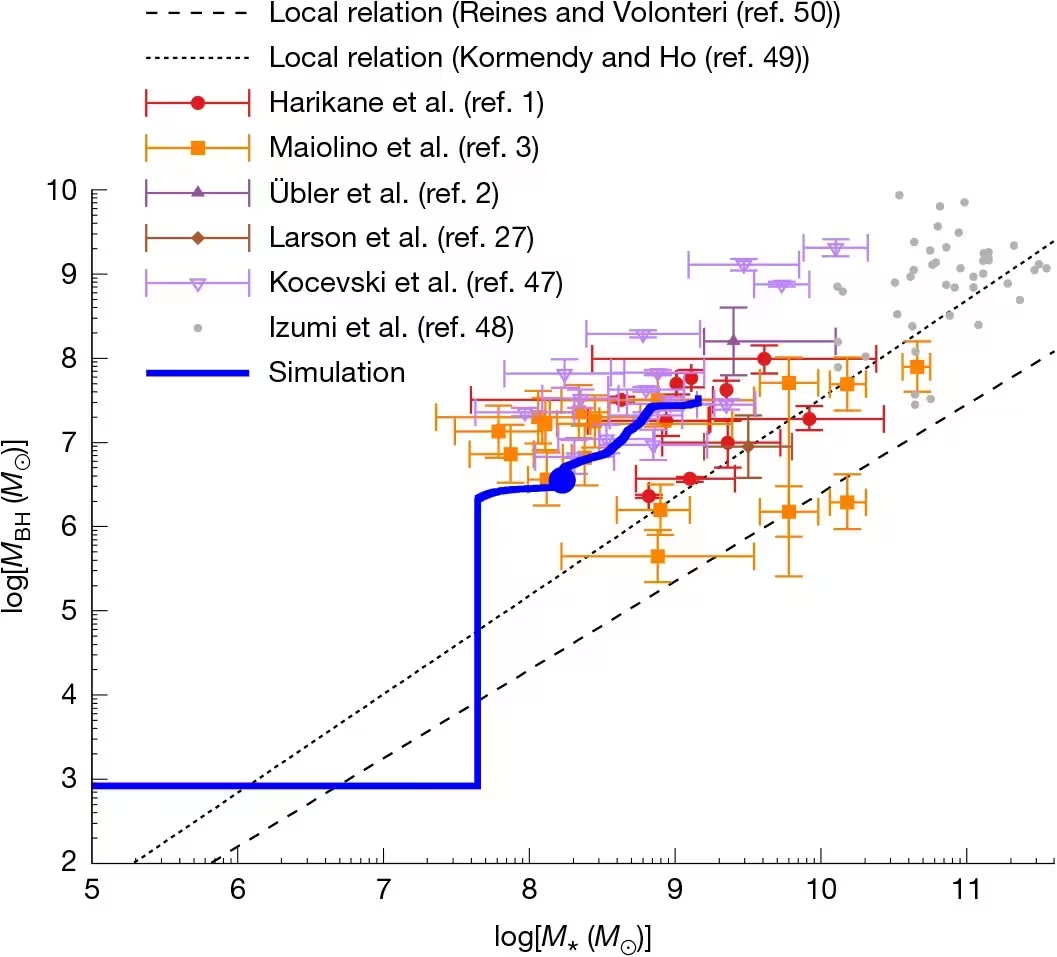
The simulations also address the observation that JWST has identified black holes that appear disproportionately large relative to their host galaxies. By a redshift of 8, the simulated black holes accounted for approximately 1% of their host galaxy’s stellar mass—an order of magnitude higher than the ratio observed in the modern local universe. This alignment between simulated results and real-world astronomical data strengthens the case that these objects represent the foundational, rapid growth phase of the first quasars.
While these findings offer a compelling framework, the researchers note that further study is required to understand the long-term gas supply mechanics and the broader distribution of these systems across different environments in the early cosmos.
Essential References and Further Reading
- Little Red Dots: An Abundant Population of Faint Active Galactic Nuclei at z ∼ 5 Revealed by the EIGER and FRESCO JWST Surveys, The Astrophysical Journal (2024).
- Little red dots as young supermassive black holes in dense ionized cocoons, Nature (2026).
- A gas-enshrouded and gas-reddened black hole at cosmic dawn, Nature (2026).
- Sustained super-Eddington accretion in high-redshift quasars, Astronomy & Astrophysics (2024).
- The Assembly of the First Massive Black Holes, Annual Review of Astronomy and Astrophysics (2020).
This article has been fact checked for accuracy, with information verified against reputable sources. Learn more about us and our editorial process.
Last reviewed on .
Article history
- Latest version
Reference(s)
- Chon, Sunmyon. “Overmassive black holes and little red dots naturally form in simulations - Nature.”, vol. 657, no. 8132, pp. 621-625. Nature, doi: 10.1038/s41586-026-10985-8. <https://www.nature.com/articles/s41586-026-10985-8>.
- Matthee, Jorryt., et al. “Little Red Dots: An Abundant Population of Faint Active Galactic Nuclei at z ∼ 5 Revealed by the EIGER and FRESCO JWST Surveys.” The Astrophysical Journal, vol. 963, no. 2, March 7, 2024, pp. 129 American Astronomical Society, doi: 10.3847/1538-4357/ad2345. <https://doi.org/10.3847/1538-4357/ad2345>.
- Rusakov, V.., et al. “Little red dots as young supermassive black holes in dense ionized cocoons.” Nature, vol. 649, no. 8097, January 14, 2026, pp. 574-579. Springer Science and Business Media LLC, doi: 10.1038/s41586-025-09900-4. <https://doi.org/10.1038/s41586-025-09900-4>.
- Naidu, Rohan P.., et al. “A gas-enshrouded and gas-reddened black hole at cosmic dawn.” Nature, vol. 656, no. 8127, August 12, 2026, pp. 329-333. Springer Science and Business Media LLC, doi: 10.1038/s41586-026-10846-4. <https://doi.org/10.1038/s41586-026-10846-4>.
- Lupi, Alessandro., et al. “Sustained super-Eddington accretion in high-redshift quasars.” Astronomy & Astrophysics, vol. 686, June 18, 2024, pp. A256 EDP Sciences, doi: 10.1051/0004-6361/202348788. <https://doi.org/10.1051/0004-6361/202348788>.
- Inayoshi, Kohei., et al. “The Assembly of the First Massive Black Holes.” Annual Review of Astronomy and Astrophysics, vol. 58, no. 1, August 18, 2020, pp. 27-97. Annual Reviews, doi: 10.1146/annurev-astro-120419-014455. <https://doi.org/10.1146/annurev-astro-120419-014455>.
Cite this page:
- Posted by Aisha Ahmed